
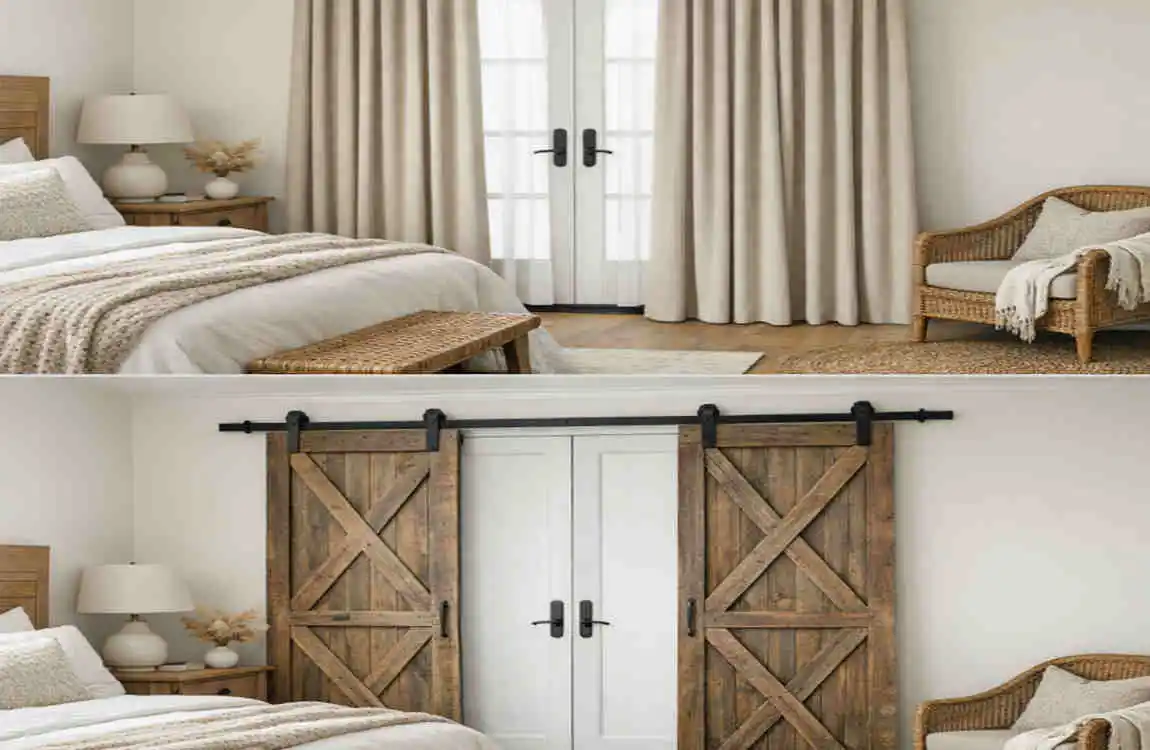
If you are trying to figure out how to cover French doors in a bedroom, the main goal is usually simple: you want privacy, light control, comfort, and style all at the same time. French doors look beautiful, but in a bedroom they can also create a few problems. They may let in too much sunlight, show silhouettes at night, or make the room feel less private than you want.
The good news is that you have several good options. Some coverings soften the room and still let in light. Others give you full darkness for better sleep. A few can also help with drafts and noise. The best choice depends on how you use the room and the look you want.
Why Cover French Doors in a Bedroom?
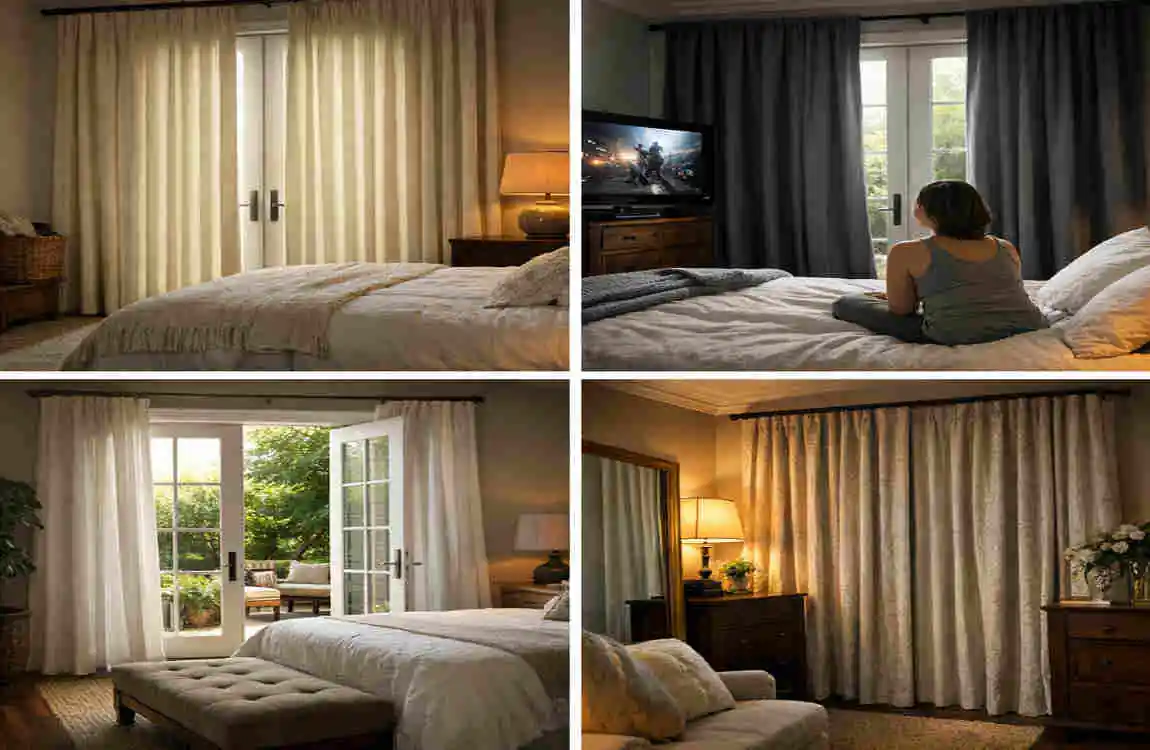
French doors can add charm and natural light, but bedrooms need more than looks. They also need privacy and control.
Privacy is often the biggest concern.
Because French doors usually have glass panes, they can make it easy for people outside the room to see in. That may be fine during the day, but at night it can become a real issue.
If the bedroom faces a hallway, patio, balcony, or other shared space, privacy becomes even more important. You want to feel comfortable in your room without worrying about visibility.
Light can affect sleep.
Bedrooms should feel calm and restful. But French doors can let in a lot of morning light or streetlight at night.
If you are sensitive to light while sleeping, you will probably want a covering that helps block or soften it. This can make a big difference in how well you rest.
Drafts and noise may also matter.
Glass doors can sometimes let in more of the outside temperature than solid walls. They may also allow more sound to come through.
A good covering can help reduce that effect. It may not completely solve the problem, but it can improve bedroom comfort.
Coverings can improve the room’s style.
A door covering is not just practical. It can also become part of the room design. The right treatment can make the room feel more finished, softer, and more balanced.
That is why choosing the right style matters as much as choosing the right function.
Best Ways to Cover French Doors in a Bedroom
There is no single best answer for everyone. The right option depends on how much privacy, light control, and visual softness you want.
Curtains and drapes
Curtains are one of the most common ways to cover French doors in bedroom spaces. They are simple, familiar, and easy to style.
Full-length curtains
Full-length curtains give strong privacy and can make the room feel taller. They work well if you want a soft, classic look.
Blackout curtains
Blackout curtains are a good choice if your top priority is sleep. They block a lot of light, helping make the bedroom darker at night and in the early morning.
Sheer curtains
Sheer curtains are best if you want daytime light but do not want the doors to look bare. They soften the look of the glass and add a light, airy feel.
Roman shades
Roman shades are a clean and attractive option. They fold neatly when open and create a smoother look than many other coverings.
They are a great choice if you want something that feels neat and simple. You can also choose light-filtering or room-darkening versions depending on your needs.
Blinds
Blinds can be very practical for French doors, especially if you want better control over light and privacy.
Venetian blinds
These offer adjustable slats, so you can tilt them to control sunlight and visibility. They give good flexibility.
Vertical blinds
Vertical blinds are often used for larger door openings. They can work well, but they may feel more functional than decorative.
Cellular blinds
Cellular blinds can help with insulation and light control. They are a smart option if you want a more energy-conscious solution.
Window film
Window film is one of the simplest ways to increase privacy without adding bulk.
Frosted film
Frosted film blocks the view while still letting in daylight. It is a great option if you want privacy without changing the room’s look too much.
Privacy film
Privacy film can help reduce outside visibility while keeping the space bright. It works especially well when you want a cleaner, low-profile solution.
How to Choose the Right French Door Covering
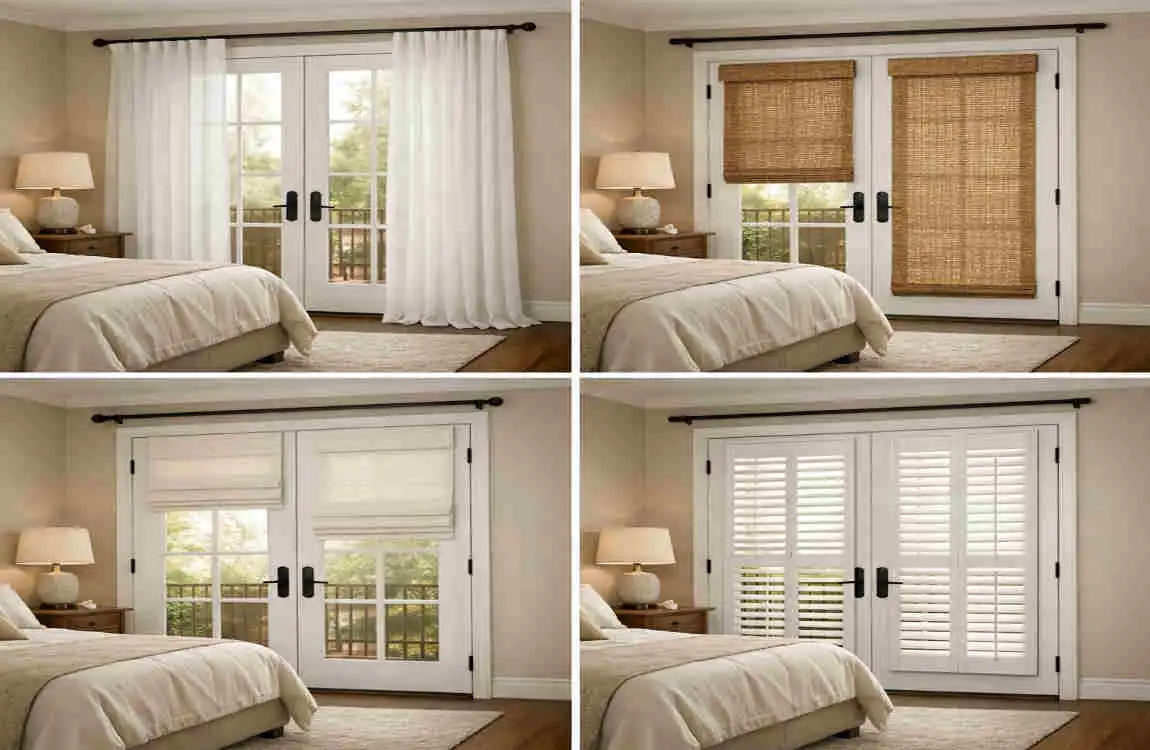
The best treatment is the one that fits your room, your routine, and your style.
Think about privacy first.
Ask yourself how much privacy you really need. If the doors face a private yard, you may not need full blackout coverage. If they face a shared space or street, stronger coverage may be better.
Decide how much natural light you want
Some people love a bright bedroom. Others want the room as dark as possible. Your answer will help you choose between sheer curtains, shades, film, or blackout options.
Match the bedroom style.
Your covering should fit the room. A modern bedroom may look best with simple shades. A traditional room may suit drapes better. The covering should feel like part of the design, not an afterthought.
Measure carefully
French doors need correct sizing. Measure the full door area before buying anything. This helps you avoid gaps, poor coverage, or treatment that interferes with the handles.
Think about cleaning and maintenance.
Some materials collect dust faster than others. Some are easier to wipe clean than others. If you want low maintenance, choose something simple and durable.
Check how the doors open.
French doors may open inward or outward. That matters because your covering should not block the door movement or make it hard to use the handles.
Covering TypePrivacyLight ControlStyleBest For
Curtains High Medium to High Soft and decorative Bedrooms that need both style and privacy
Blackout Curtains Very High Very High Cosy and practical Sleep-focused rooms
Roman Shades Medium to High Medium to High Clean and tailored Simple, polished bedrooms
Blinds High High Functional Adjustable light and privacy
Window Film Medium Medium Minimal and clean Light-filled rooms that still need privacy
How to Cover French Doors for Better Bedroom Privacy
Privacy at night is usually the biggest reason people look for door coverings. The goal is to stop outside visibility without making the room feel closed in.
Blackout curtains work well at night.
If you want strong nighttime privacy, blackout curtains are one of the best choices. They cover the glass fully and block light from passing through.
They are especially useful if your bedroom is near a street, hallway, or neighbour-facing area.
Blinds give you control.
Blinds let you adjust the angle of the slats. That means you can let in some light while still limiting how much people can see in.
This is a good balance if you do not want to go fully dark.
Privacy film keeps the room bright.
If you want privacy without adding heavy fabric or bulky hardware, frosted or privacy film may be the answer. It works well when the room needs light but not visibility.
Layering gives the most flexibility.
Some homeowners use two treatments together. For example, you might use privacy film during the day and curtains at night. Or you may pair shades with sheers.
This gives you more control depending on the time of day.
Keep the room comfortable, not closed off.
Privacy is important, but you do not want the room to feel heavy or dark all the time. The best design gives you privacy when needed and still keeps the room pleasant to be in.
French Door Covering Ideas for Different Bedroom Styles
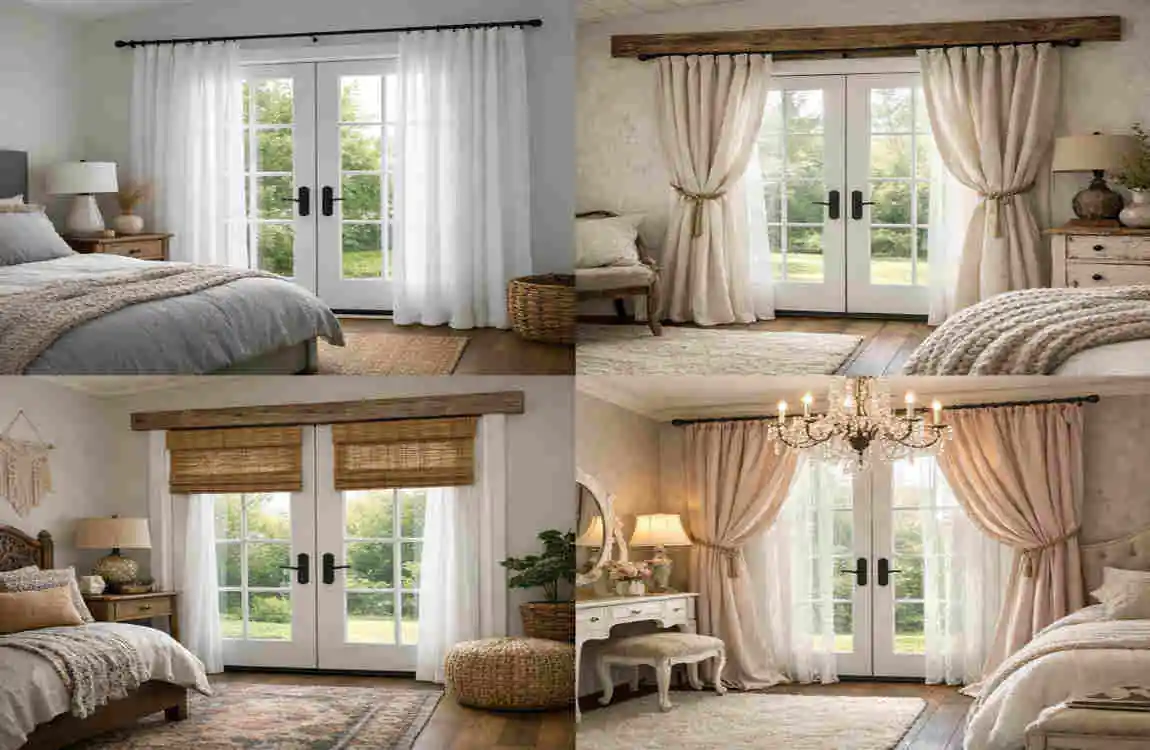
Different rooms need different looks. The right covering should fit the bedroom’s style as well as its function.
Modern bedrooms
Modern bedrooms usually look best with simple roller shades, neutral curtains, or clean-lined Roman shades. The goal is to keep the look calm and uncluttered.
Stick to soft colours and avoid anything too decorative.
Traditional bedrooms
Traditional rooms often work well with elegant drapes, curtain rods, and layered treatments. These can add softness and a more classic feel.
If your room already has warm tones or detailed furniture, curtains may fit very naturally.
Small bedrooms
In smaller rooms, you want the covering to feel light and not overpower the space. Light-colored blinds, slim shades, or privacy film can work very well.
Heavy fabrics can make a small room feel crowded, so keep the treatment simple.
Rental bedrooms
If you rent, you may need a no-drill option. Tension rods, removable film, and temporary coverings can help you add privacy without permanent changes.
That makes it easier to update the room while keeping it renter-friendly.
Style tips to remember
- Modern rooms: simple and minimal
- Traditional rooms: soft and layered
- Small rooms: light and space-saving
- Rental rooms: removable and no-drill options
Common Mistakes to Avoid When Covering French Doors
A good idea can still go wrong if it is not chosen carefully. These are the most common mistakes to watch for.
Choosing curtains that block the door handles
Always make sure the treatment does not get in the way when you open or close the doors. This is especially important with longer curtains or wide rods.
Blocking too much natural light
A bedroom should feel restful, but not dark and closed in all the time. Try to balance privacy with daylight.
Forgetting to measure properly
French doors are a precise space. If you measure wrong, the covering may leave gaps or hang awkwardly.
Picking hard-to-clean materials
Bedrooms collect dust, so choose a covering that fits your cleaning routine. A beautiful treatment is not worth it if it becomes a burden to maintain.
Ignoring insulation and drafts
If the door area feels cold or drafty, consider coverings that add some insulation. Thick curtains or cellular shades can help more than very thin options.
Making the room look too small
Heavy treatments can overwhelm a bedroom, especially if the room is already compact. Use soft colours and lighter materials if space is limited.
Not thinking about nighttime privacy.
Some coverings look good during the day but do not block silhouettes at night. Always check how the room feels when the lights are on inside.
FAQ: How to Cover French Doors in a Bedroom
What is the best way to cover French doors in a bedroom?
The best option depends on your needs. Curtains, blinds, shades, and privacy film all work well in different situations. Choose based on privacy, light control, and style.
What can I use to cover French doors without curtains?
You can use blinds, shades, shutters, or frosted window film if you prefer not to use curtains.
Are blackout curtains good for French doors in bedrooms?
Yes. Blackout curtains are great if you want privacy, darkness, and better sleep.
How can I cover French doors while still letting in natural light?
Sheer curtains, light-filtering shades, and frosted film are good choices if you want to keep the room bright.
Can I cover French doors without drilling?
Yes. Tension rods, adhesive products, and removable treatments can work in some situations, especially for renters.
Should bedroom French doors have curtains?
They can, especially if you want softness and privacy. But shades or film may be better if you want a cleaner look or less fabric.
How do I make French doors more private at night?
Use blackout curtains, privacy shades, or layered treatments. These options reduce nighttime visibility and help the room feel more secure.
| Idea | Best For | Key Benefit |
|---|---|---|
| Blackout Curtains | Maximum privacy & darkness | Blocks light and improves sleep |
| Sheer + Blackout Curtains | Style + privacy | Flexible light control |
| Roman Shades | Modern bedrooms | Clean, elegant appearance |
| Roller Blinds | Small spaces | Simple and space-saving |
| Cellular Shades | Energy efficiency | Helps reduce heat and cold transfer |
| Privacy Film | Daytime privacy | Keeps natural light while obscuring views |
| Plantation Shutters | Classic interiors | Durable and highly adjustable |
