
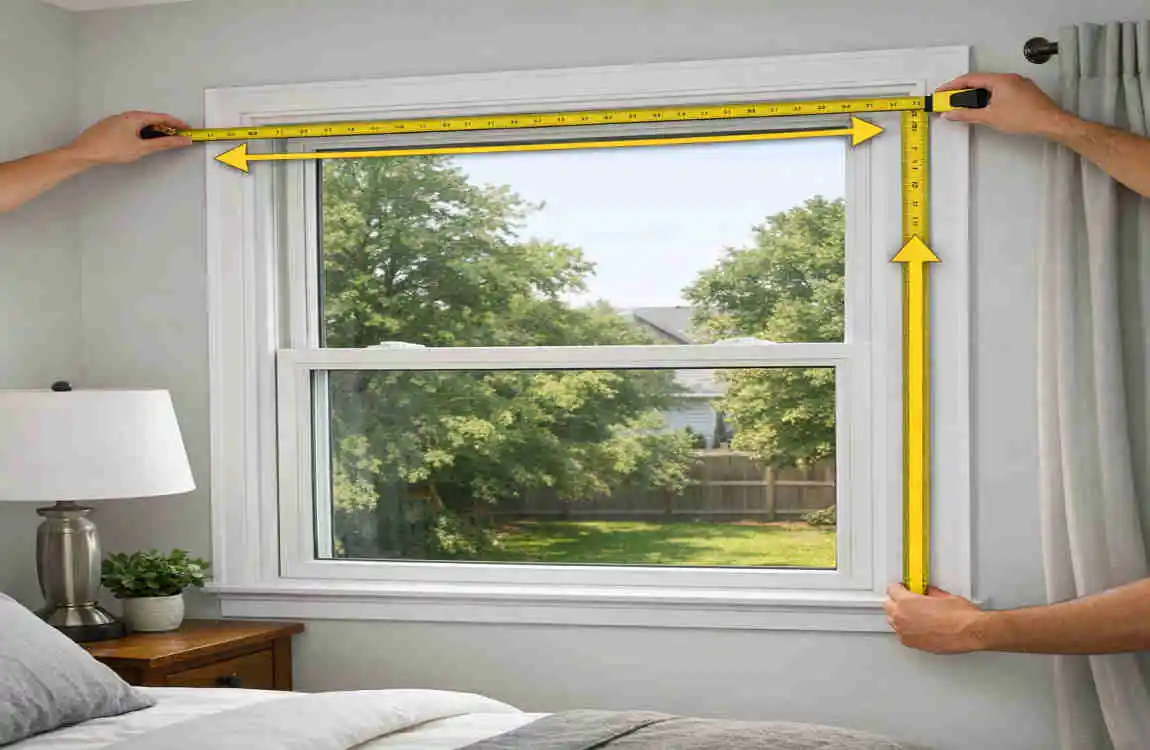
Measuring a bedroom window may seem simple at first, but getting the size right matters. If your measurement is off, you may end up with the wrong replacement window, extra costs, or remodel delays.
That is why knowing the bedroom window size in feet is so useful. It helps you plan for replacement windows, new construction, and bedroom updates with more confidence. When you measure the width, height, and frame correctly, you can choose a window that fits well and works the way you need it to.
You only need a few basic tools to get started: a measuring tape, pencil, and notebook. In some cases, a small step stool also helps. The process is easy once you know what to measure and how to record it.
Understanding Bedroom Window Size in Feet
What bedroom window size in feet means
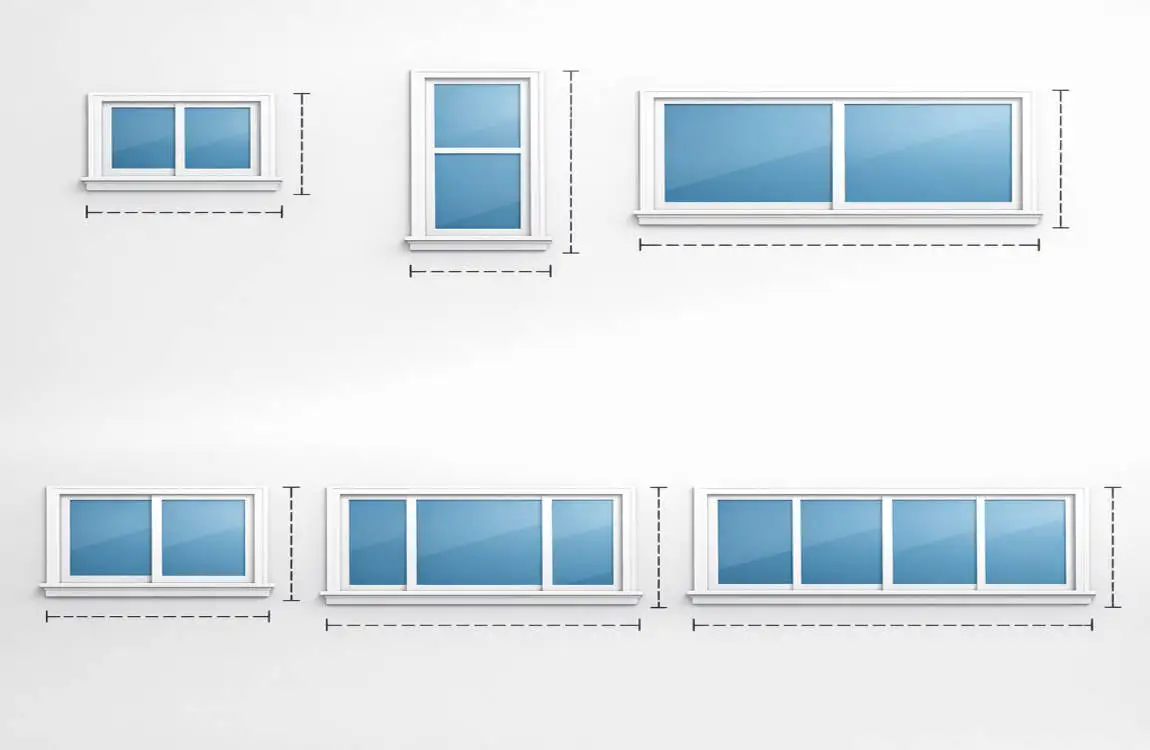
When people talk about bedroom window size in feet, they usually mean the window’s width and height in feet rather than inches. This makes the size easier to understand and compare.
For example, a window that is 48 inches wide and 36 inches high is usually thought of as a 4 by 3 foot window. That doesn’t always mean the exact outside frame size, but it’s a helpful reference.
Width, height, and overall dimensions
A window has more than one measurement. The width goes from side to side. The height goes from top to bottom. Overall dimensions may also include the frame, depending on what you measure.
That is why it is important to know whether you are measuring:
- The window frame
- The glass area
- The rough opening for a new window
Each one serves a different purpose.
Why bedroom window sizes vary
Bedroom windows are not all the same size. Some are small for privacy. Others are larger to bring in more daylight and fresh air. The right size often depends on the room layout, available wall space, the home’s design, and local building requirements.
A bigger window can bring in more light. A smaller one may fit better in a compact bedroom. The best size usually balances comfort, appearance, and function.
Tools and Preparation for Measuring a Bedroom Window
Basic tools you will need
Before you start, gather a few simple tools. You do not need anything fancy.
Helpful tools
- Measuring tape
- Pencil
- Notebook or phone notes
- Step stool if the window is high
- Flashlight if the area is dim
These tools speed up the job and help you avoid mistakes.
Prepare the window area first.
Clear away curtains, blinds, or anything blocking the window. You want a clean view of the frame and edges so you can measure correctly.
If dust or clutter hides the corners, your numbers may be off. A clear area makes the process much easier.
Know what you are measuring.
This is one of the most important parts. If you are replacing an old window, you may need the existing window size. If you are installing a new window, you may need the rough opening.
The rough opening is the space in the wall where the window fits. It is usually not the same as the glass size. That is why you should be clear about your goal before measuring.
Stay safe while measuring.
If the window is on an upper floor, use extra care. Do not lean too far out. If needed, use a stable step stool and ask someone to help.
Safety should always come first. A quick measurement is never worth a fall.
How to Measure Bedroom Window Width and Height
Measure the width first.
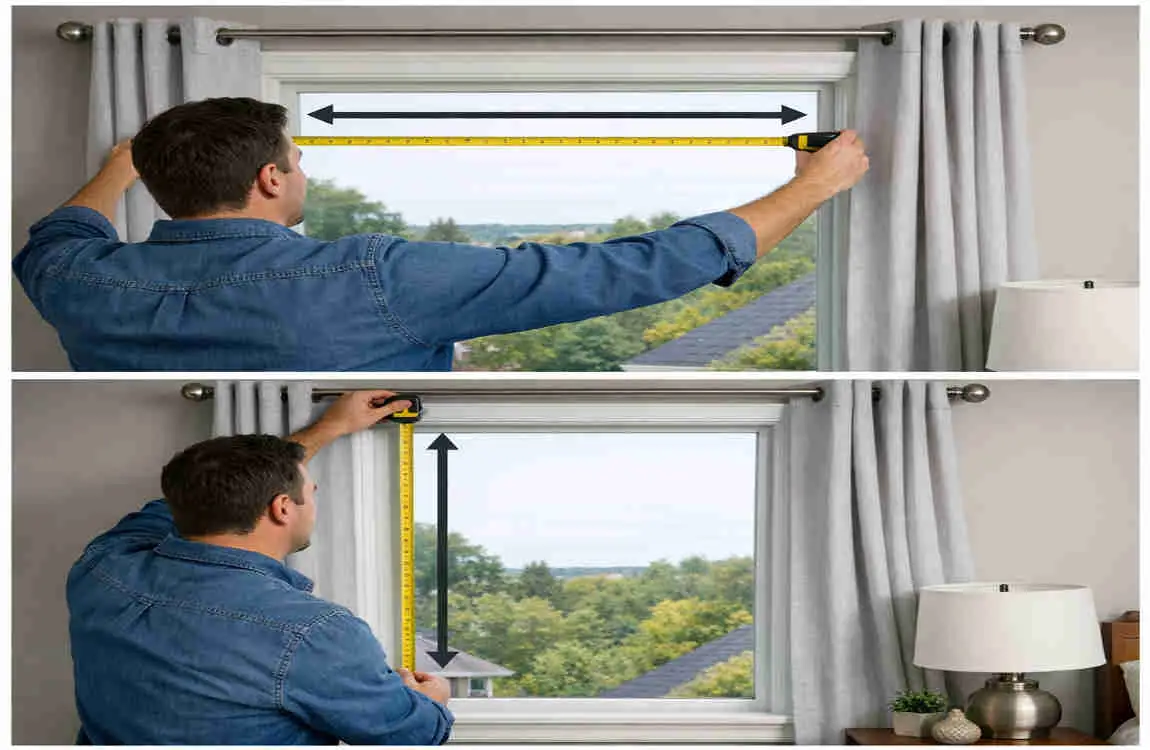
To measure width, place the tape measure from one inside side of the frame to the other. Keep the tape straight and level.
If possible, measure across the top, middle, and bottom. Some frames are not perfectly even, and these extra checks help you find the true size.
Measure the height next.
For height, measure from the top of the frame to the bottom. Again, it helps to check more than one point.
If the frame is uneven, use the smallest measurement when ordering a replacement window unless the manufacturer says otherwise.
Record the numbers carefully.
Write your measurements in inches first. That is the easiest way to avoid confusion. Later, you can convert them into feet if needed.
For example:
- 48 inches wide = 4 feet
- 36 inches high = 3 feet
Example of a simple window measurement
If your bedroom window is 48 inches wide and 36 inches high, the size is usually written as 4 x 3 feet.
That means the window is 4 feet wide and 3 feet tall. It is a simple way to understand the dimensions.
Follow manufacturer instructions
If you are ordering a replacement window, always check the manufacturer’s instructions. Some windows are made to fit exact openings, while others need a little extra space.
Following the instructions helps prevent ordering the wrong size.
Standard Bedroom Window Dimensions and Size Comparisons
Common bedroom window sizes
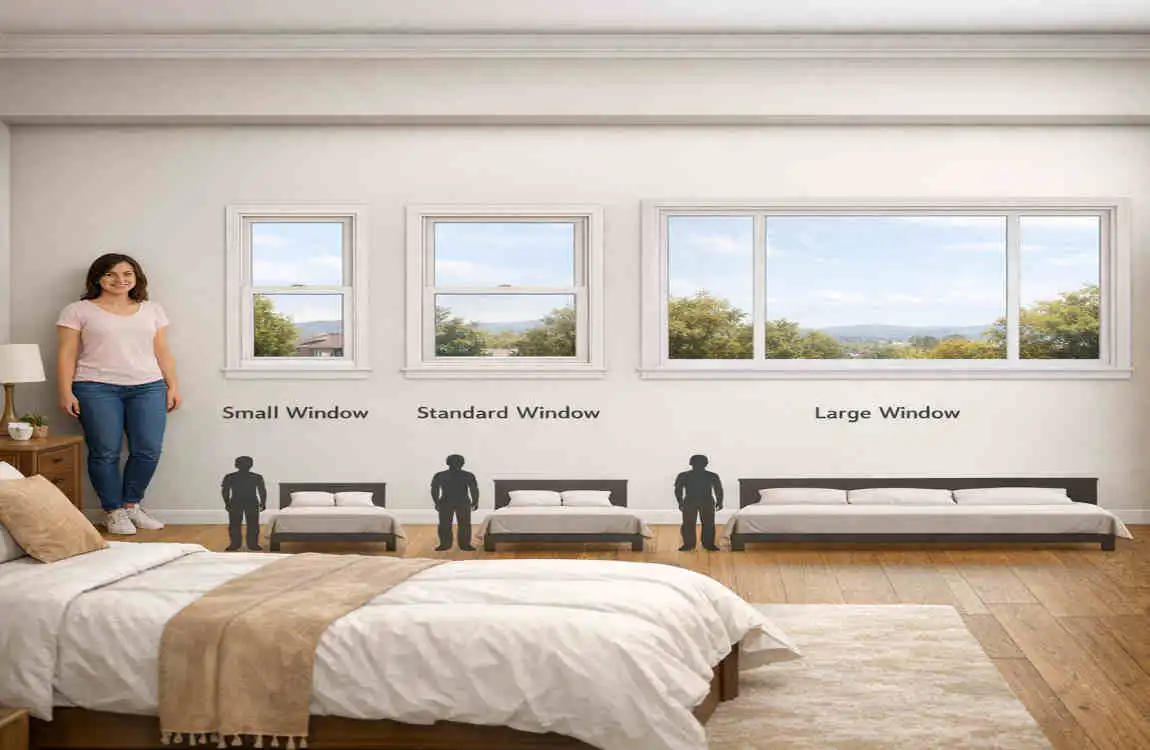
No single bedroom window size works for every home. Still, some sizes are used often because they fit many room layouts.
Smaller windows may work well in compact bedrooms. Medium sizes often balance light and privacy. Larger windows can make the room feel more open and bright.
How window size affects the room
Window size changes how the bedroom feels.
- Small windows can give more privacy but less light
- Medium windows often work well in most bedrooms
- Large windows bring in more daylight and widen the view
Think about how you use the room. If you want a brighter space, a larger window may be helpful. If privacy matters more, a smaller one may be better.
Why wall space matters too
A window should fit the wall around it. If the bedroom has large furniture, consider placement as well as size. You do not want a window to conflict with a bed headboard, dresser, or closet layout.
Code requirements may apply.
Some bedroom windows must meet local building rules. These can include emergency escape openings, natural light, and ventilation requirements.
Because codes vary by location, always check local rules before buying or installing a new window.
Common Measuring Mistakes and How to Avoid Them
Measuring only the glass
One of the most common mistakes is measuring only the glass. The glass is not the same as the full window opening.
Always confirm whether you need the glass size, the frame size, or the rough opening. That small detail can make a big difference.
Mixing up width and height
Another common mistake is writing the numbers in the wrong order. Width goes side to side. Height goes up and down.
A good habit is to label your measurements right away so you do not confuse them later.
Writing inches as feet
This mistake happens more often than people think. A measurement of 48 inches is not 48 feet. It is 4 feet.
Always convert carefully. If needed, divide inches by 12 to get feet.
Forgetting to double-check
Do not rely on one quick measurement. Measure more than once if possible. A second check helps you catch small errors before they become expensive problems.
Mistakes to avoid at a glance
- Measuring the glass only
- Mixing up width and height
- Recording inches as feet
- Skipping a second measurement
- Ignoring the frame unevenness
Frequently Asked Questions
How do I measure bedroom window size in feet?
Measure the width from side to side and the height from top to bottom. Record the numbers in inches first, then convert them to feet by dividing by 12.
What is the standard bedroom window size in feet?
There is no single standard size for every bedroom. Common sizes vary based on room layout, design, and local rules.
How do I convert window measurements from inches to feet?
Divide the number of inches by 12. For example, 48 inches equals 4 feet.
Should I measure the window frame or the glass?
That depends on what you need. For replacement windows, the frame or rough opening usually matters more than the glass alone.
How much space should be left around a bedroom window for installation?
This depends on the product and manufacturer instructions. Always check the specific installation guide before ordering.
Can bedroom windows have different sizes in the same house?
Yes. Many homes have different window sizes from room to room depending on design, wall space, and function.
Why is accurate window measurement important before replacement?
Accurate measurements help you order the right window, avoid fit issues, and reduce extra costs.
| Measurement Step | How to Measure | Important Tip |
|---|---|---|
| Window Width | Measure horizontally from the left edge to the right edge. | Record the width in feet and inches. |
| Window Height | Measure vertically from the top edge to the bottom edge. | Measure the window frame accurately. |
| Frame Size | Measure the window frame separately if needed. | Follow the manufacturer’s measuring instructions. |
| Window Opening | Measure the width and height of the wall opening if installing a new window. | Check multiple points for accuracy. |
| Convert Inches to Feet | Divide inches by 12 to convert them into feet. | 36 inches = 3 feet. |
| Record Measurements | Write down width × height. | Example: 4 ft × 5 ft. |
| Double-Check | Repeat each measurement to confirm accuracy. | Measure before ordering curtains or replacement windows. |
