
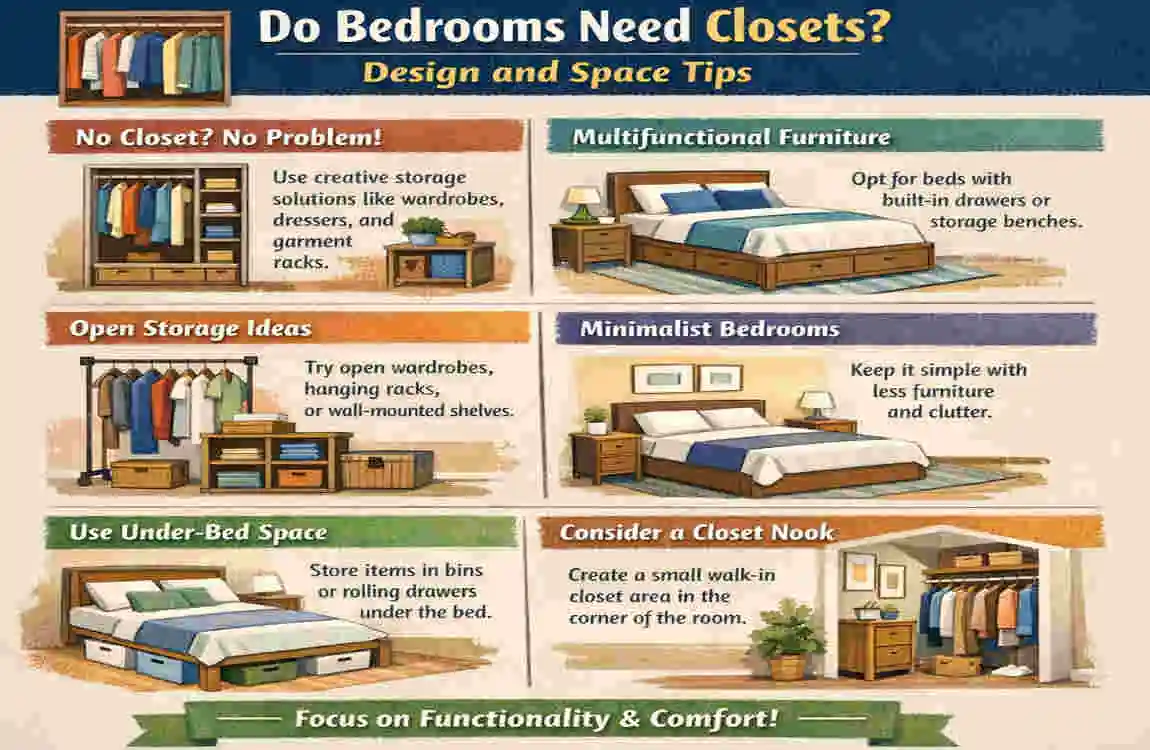
Bedrooms are meant to feel calm, useful, and easy to live in. That is why storage matters so much. For many homes, closets are the first thing people expect in a bedroom. But that does not mean every room must have one. Whether bedrooms need closets depends on space, lifestyle, building rules, and personal taste.
Some people love built-in closets because they keep everything neat and hidden. Others prefer freestanding wardrobes, dressers, or open storage because these options feel more flexible and often work better in small rooms. The right choice usually depends on how you use the room, how much clothing you own, and how much floor space you want to keep open.
Do Bedrooms Need Closets? Understanding the Basics
What a closet really is
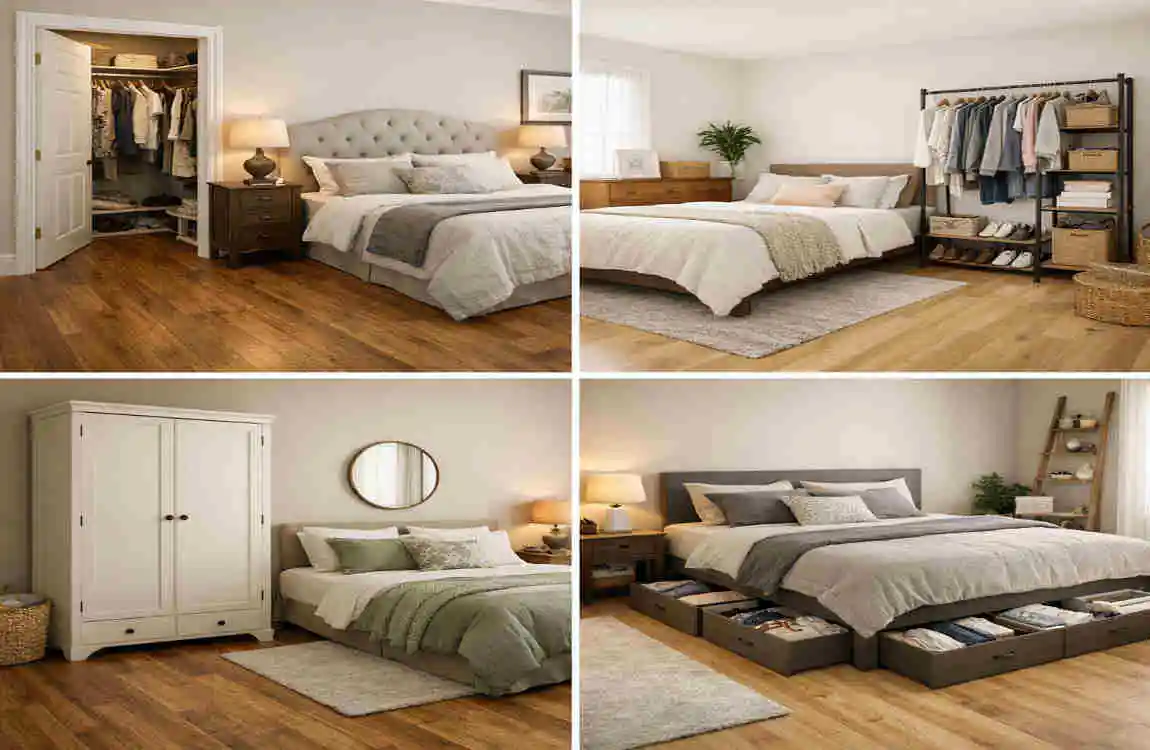
A closet is built-in storage, usually part of the room’s structure. It often includes hanging space, shelves, and sometimes drawers. A wardrobe does a similar job, but it is usually a separate piece of furniture rather than built into the wall.
A dressing room is different again. It is a larger space used mainly for getting dressed and organising clothes. A freestanding storage unit may include shelves, drawers, or hanging space, but you can move it when needed.
So, when people ask whether bedrooms need closets, they are really asking whether the room needs built-in storage or whether another storage style can do the same job.
When a bedroom can work without one
Not every bedroom needs a built-in closet to feel complete. A bedroom can work very well without one if there is enough space for a wardrobe, dresser, or other storage furniture.
This is common in:
- Small apartments
- Older homes
- Guest rooms
- Minimalist spaces
- Rooms with custom storage solutions
If the room is used lightly, a closet may not be essential. For example, a guest room may only need a dresser and a small hanging rack. A child’s room may work better with low shelves, bins, and a simple wardrobe.
Practical needs vs local rules
Storage needs differ from property rules. A room may work perfectly well as a bedroom without a closet in daily life, but local building codes or real estate rules may define a bedroom differently.
That means a room without a closet may still be a legal bedroom in one area and not in another. If you are building, buying, renting, or selling, it is always smart to check local rules first.
How closets affect room function and style
Closets do more than store clothes. They also affect how the whole bedroom looks and feels. A closet can help keep the room tidy, reduce clutter, and create a more finished appearance.
At the same time, a closet takes up wall space in a small room, which may reduce flexibility. You might have less room for a larger bed, a desk, or a reading chair. That is why storage planning matters so much.
Benefits of Having a Closet in Your Bedroom
Better organization
One of the biggest benefits of a closet is simple organisation. Clothes, shoes, bags, and accessories all have a place. This makes it easier to find what you need and easier to keep the room clean.
A well-designed closet can include:
- Hanging rails for shirts, dresses, and jackets
- Shelves for folded clothing
- Drawers for smaller items
- Boxes or bins for seasonal pieces
This setup helps you stay organised without having piles of clothes around the room.
Space efficiency
Closets can make great use of wall space, especially when they run floor to ceiling. Sliding doors also help because they don’t swing out into the room.
This matters a lot in smaller bedrooms. A smart closet design can store a lot without making the room feel crowded.
Improved appearance
A bedroom with hidden storage often looks cleaner and calmer. When clothes and personal items are tucked away, the room feels less busy.
This is useful if you want a restful space. Many people sleep better in rooms that feel open and uncluttered. A closet can help create that feeling.
Convenience in daily life
Having clothes close at hand makes mornings easier. You can grab what you need quickly, see your wardrobe clearly, and keep your routine simple.
That convenience becomes even more valuable in busy households. When several people are getting ready at once, built-in storage can save time and reduce stress.
Property appeal
Closets can also affect how buyers or renters see a home. Many people like bedrooms with built-in storage because it makes the room feel move-in ready.
That said, a closet is not the only thing people value. Good layout, enough natural light, and smart storage can matter just as much.
Possible drawbacks
Closets are useful, but they are not perfect. They can take up space, cost money to build or upgrade, and sometimes limit where you can place furniture.
In a small room, a large closet may make the layout feel tight. In that case, a wardrobe or custom cabinet might be a better fit.
Smart Bedroom Storage Alternatives Without a Closet
Freestanding wardrobes
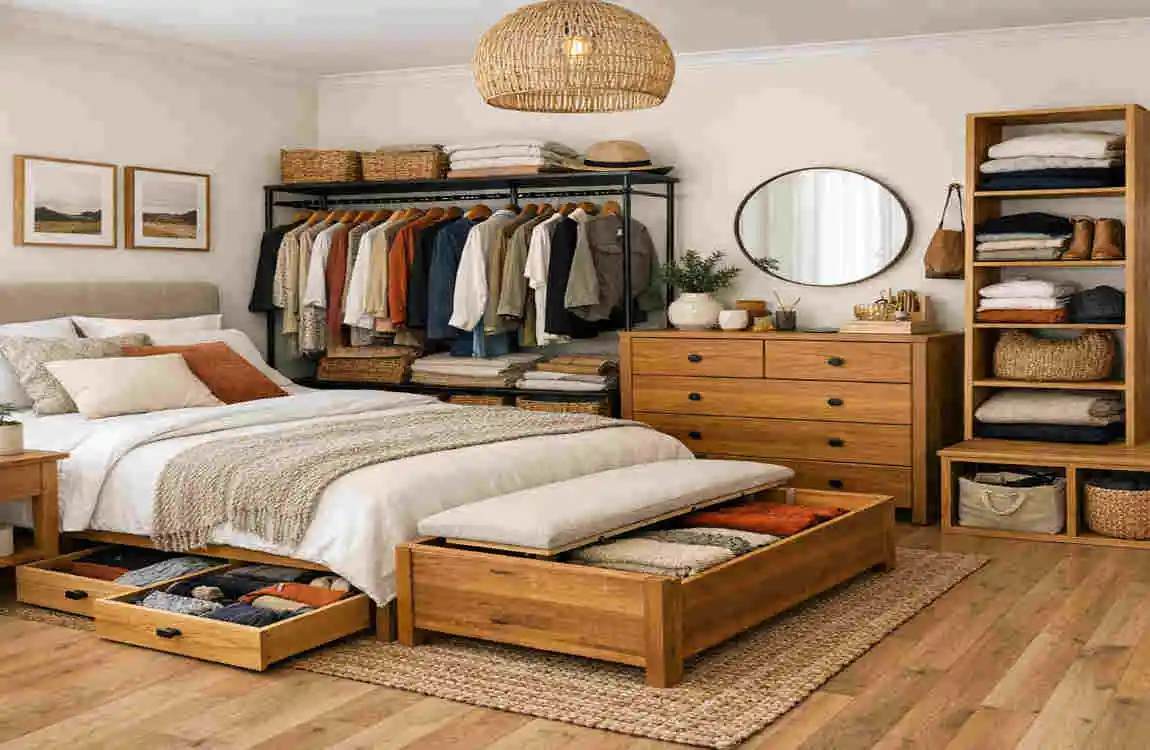
A wardrobe is one of the best alternatives to a built-in closet. It gives you enclosed storage without permanent construction.
Choose a wardrobe that fits your room size and style. It is also easy to move if your needs change later.
Clothing racks
Open clothing racks work well in minimalist rooms or smaller spaces. They are simple, affordable, and easy to access.
They are best for:
- Everyday outfits
- Small wardrobes
- Temporary storage
- Guest rooms or studio apartments
The main downside is that everything stays visible, so the room must stay neat.
Under-bed storage
The space under the bed is often wasted, but it can be very useful. Storage boxes, drawers, or lift-up bed frames can hold extra clothes, shoes, blankets, and seasonal items.
This is one of the easiest ways to add storage without using more floor space.
Dressers and chests
Dressers are great for folded clothing, socks, accessories, and personal items. They work well in bedrooms of all sizes and can also add style.
A tall chest can be especially useful in narrow rooms because it uses vertical space instead of wide floor space.
Built-in cabinets and open shelving
Custom cabinets can be designed to fit your room’s exact shape. This makes them work well in awkward corners, under sloped ceilings, or along narrow walls.
Open shelves and baskets are another option. They keep items within reach and can look attractive when neatly arranged.
Storage beds and benches
Multifunctional furniture can solve many storage problems. A storage bed gives you hidden space underneath. A storage bench can hold blankets, shoes, or extra linens.
These pieces are especially useful in compact bedrooms where every inch matters.
Quick comparison of storage alternatives
Storage OptionBest ForMain BenefitMain Drawback
Freestanding wardrobe Medium to large bedrooms Closed storage, flexible placement Takes up floor space.
Clothing rack Small or minimalist rooms Easy access, low cost Items stay visible.
Under-bed storage Tight spaces Uses hidden space well Less convenient for daily use.
Dresser or chest Folded clothes and accessories Simple and practical Limited hanging space.
Built-in cabinets Custom layouts Efficient and tidy Higher cost
Storage bed/bench Compact rooms Multi-use furniture Can be harder to access
Bedroom Layout and Space-Saving Design Tips
Start with room measurements.
Before choosing any storage solution, measure the room carefully. Look at wall length, ceiling height, door swing, and window placement.
This step helps you avoid furniture that is too large or storage that blocks important areas.
Place storage where it makes sense
Place wardrobes and closets where they don’t interrupt movement. Leave a clear walking path and keep doors easy to open.
If possible, place storage on a long wall. This often makes the room feel more balanced.
Use sliding doors when space is tight.
Sliding doors are a smart choice in smaller bedrooms because they don’t need extra space to open. Hinged doors can take up valuable floor space when opened.
This small change can make the room easier to move around in.
Think vertically
Tall storage is often better than wide storage in compact rooms. Floor-to-ceiling units use wall height well and help free up floor space.
Higher shelves can hold seasonal items or things you don’t use every day.
Make the room feel larger.
A few design choices can make a bedroom feel more open:
- Use mirrors to reflect light
- Choose light or neutral colours
- Keep furniture coordinated
- Add good lighting
- Avoid too many bulky pieces
These details help the room feel calm and spacious, even when storage is limited.
Building Requirements, Costs, and Choosing the Best Storage Solution

Why rules can vary
Closet requirements vary by location. They can depend on local building codes, property type, and how the room is used.
A bedroom in one area may require a closet to be listed or permitted a certain way, while another area may not require one at all. This is why it is important to check local rules before making changes.
Costs to consider
Storage costs depend on your choice.
- Custom closets usually cost more because they are made to fit your room.
- Built-in wardrobes can also be costly if they need installation.
- Freestanding furniture is often more affordable.
- DIY storage is usually the cheapest option, but it may not last as long.
Costs can also change based on materials, size, finishes, drawers, hardware, and labour.
How to choose the right option
Use this simple checklist:
- How much space do you have?
- How many clothes and items do you need to store?
- Do you want a fixed or flexible solution?
- What is your budget?
- Do you want the room to look open or fully built-in?
- Will the storage need to last for many years?
If you answer these questions honestly, the best choice usually becomes clear.
Frequently Asked Questions
Do bedrooms need closets to be considered bedrooms?
Not always. It depends on local rules and how the property is defined in your area.
Can a bedroom without a closet still be functional?
Yes. A bedroom can be very functional with a wardrobe, dresser, shelves, or under-bed storage.
Do small bedrooms need built-in closets?
Not always. In small rooms, a wardrobe or storage bed may work better than a built-in closet.
What can I use instead of a bedroom closet?
You can use a wardrobe, dresser, clothing rack, storage bed, built-in cabinets, or under-bed storage.
Does a closet increase a home’s resale value?
It can help, especially because many buyers like built-in storage. But layout, space, and overall design also matter.
Are wardrobes better than built-in closets?
That depends on your needs. Wardrobes are more flexible, while built-in closets often save space better.
How can I maximise storage in a bedroom without a closet?
Use vertical storage, under-bed boxes, a dresser, open shelves, and furniture with hidden storage.
What is the best closet design for a small bedroom?
A slim, floor-to-ceiling design with sliding doors is often the best choice for a small bedroom.
| Feature | Key Information |
|---|---|
| Bedroom Closets | Provide organized storage for clothes, shoes, and accessories. |
| Are Closets Necessary? | Not always; wardrobes and other storage solutions can replace them. |
| Built-In Closets | Save space and create a clean, integrated look. |
| Walk-In Closets | Offer extra storage and room for dressing. |
| Reach-In Closets | Ideal for small and medium-sized bedrooms. |
| Small Bedroom Solutions | Use sliding doors, under-bed storage, or compact wardrobes. |
| Design Tips | Match closet finishes with the bedroom’s style and color scheme. |
| Space Planning | Keep enough room for doors, drawers, and comfortable movement. |
