
When people look at a home, one of the first details they notice is the number of bedrooms. That number affects almost everything: the asking price, how buyers judge the space, how landlords advertise rentals, and even whether a room can legally be counted in a property listing.
But here’s the tricky part: a room with a bed is not always a bedroom.
That may sound surprising, but it is one of the most common mistakes in real estate and home design. A spare room, basement area, den, or converted office may look like a bedroom at first glance, but it may not meet the requirements for a true bedroom under local building codes or housing rules.
So, what constitutes a bedroom in a house? The answer depends on a mix of legal standards, safety rules, and practical design features. Some rules are universal, like having a safe exit route and enough space to sleep comfortably. Others vary by state, city, or country.
What Constitutes a Bedroom in a House? The Core Definition
A bedroom is a room in a house designed and intended for sleeping. That sounds simple, but in practice, it is more than just a place with a bed.
A true bedroom usually meets a few basic conditions. It should offer privacy, have proper access, allow for safe escape in an emergency, and meet local requirements for size, ventilation, and light. In many places, it also needs a door, a window, and enough floor space to count as a livable sleeping room.
The biggest difference between a room with a bed and a legally recognized bedroom is compliance. For example, if you place a bed in a walk-through room that has no window or emergency exit, many local codes would not consider it a bedroom. It might be a sleeping area, but not an official bedroom.
This is where people often get confused. In everyday conversation, people may call any sleeping space a bedroom. But in real estate and building code terms, the label must match the room’s actual features.
Another important point is that the exact definition can change from one area to another. Some places are strict about closet space. Others do not require a closet at all. Some regions have firm minimum square footage rules, while others are more flexible. That is why the local rules matter so much.
At a basic level, though, a bedroom should do three things well:
- Support sleep and rest
- Provide privacy
- Allow safe use and emergency exit
If a room does not meet those basic needs, it may not qualify as a bedroom, even if it looks like one.
Legal Requirements for a Bedroom
The legal side of bedroom classification is where things get serious. Building codes and housing laws are designed to protect people from unsafe living spaces. A bedroom is not just about comfort. It is also about habitability and safety.
While exact rules vary by region, several common standards recur in many building codes.
Minimum Room Size Standards
Many regions require a bedroom to meet a minimum floor area. The idea is simple: a room must be large enough to fit a bed and allow a person to move around safely.
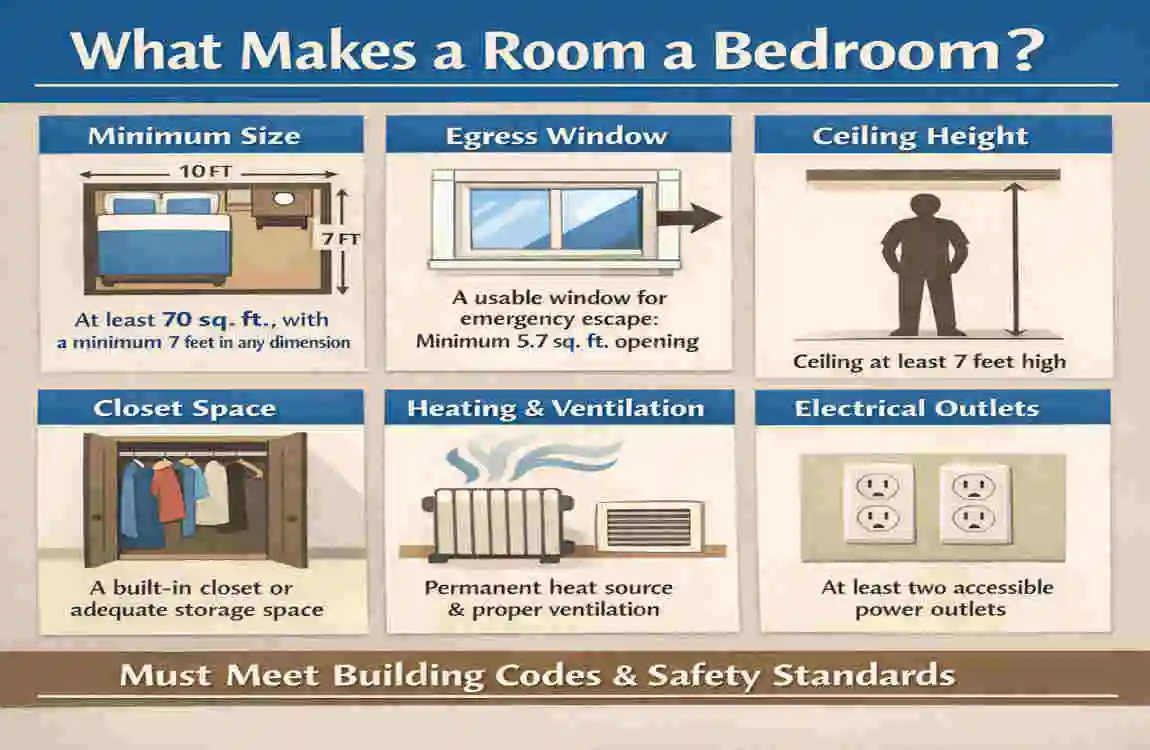
A commonly used benchmark in some areas is about 70 square feet per bedroom, though some jurisdictions require more. In other places, the rule may be based on the room’s minimum dimension rather than the total square footage.
For example, a room might need to be at least 7 feet wide in one direction or have a minimum ceiling area to be considered habitable. The exact rule depends on the local code language.
This matters because a tiny room may be usable for storage or as a small office, but is not legally permitted as a bedroom. If it is too small, it may not provide enough safe living space for a person to sleep in regularly.
Egress Requirements: Emergency Exit
One of the most important bedroom requirements is egress, which means a way to escape in an emergency. Usually, this involves a door leading out of the room and, in many cases, a window large enough to escape through.
Why does this matter? Because a bedroom is a place where someone may be sleeping with the door closed. In case of fire or another emergency, the person must be able to get out quickly, or rescuers must be able to get in.
In many regions, a bedroom window must meet specific size and accessibility rules. It often has to be openable from the inside without special tools or keys. The opening must also be large enough for a person to pass through.
Basement bedrooms are a common example of where egress rules become critical. A basement room can sometimes count as a bedroom, but only if it has a proper emergency exit, typically an egress window or direct access to the outside.
Without this safety feature, the room may fail inspection and may not be legal as a sleeping room.
Ceiling Height Standards
Ceiling height is another common requirement. A bedroom should feel livable, not cramped or unsafe. That is why many building codes set a minimum ceiling height.
In some codes, the required minimum is around 7 feet for most of the room. Sloped ceilings, such as those found in attic conversions, may have special rules. Often, only part of the room needs to meet the full height requirement. At the same time, the lower areas may be excluded from floor-area calculations.
Ceiling height matters because it affects airflow, comfort, and how usable the room feels. A person should be able to move, stand, and sleep comfortably without feeling boxed in. Low ceilings can also pose safety risks, especially if they make the room difficult to ventilate or escape from.
Heating, Cooling, and Ventilation
A bedroom must also be comfortable enough to live in year-round. That means it should have some form of heating and ventilation, and in many places, cooling may also be important.
Some building codes require a bedroom to have a source of heat that is safely and consistently controlled. Others focus more on ventilation and natural airflow. A room that gets stuffy quickly, has poor air circulation, or traps moisture may not meet habitability standards.
Ventilation can come from:
- A window that opens
- Mechanical ventilation systems
- HVAC supply and return systems
- Fans or air exchange systems, depending on local code
Natural ventilation is often preferred when possible, but mechanical systems may also satisfy local requirements. The goal is always the same: fresh air, safe air movement, and a healthy sleeping environment.
Essential Physical Features of a Bedroom
Beyond the legal basics, a bedroom usually has a few physical features that make it function well. These features help the room feel private, comfortable, and practical for everyday use.
A Window for Light and Ventilation
In most homes, a bedroom should have a window. This is not just for looks. A window provides natural light during the day and supports airflow when it opens.
Natural light helps the room feel more pleasant and less closed off. It also makes the space more suitable for daily living, not just sleeping. In many places, the window is also part of the emergency exit requirement.
A Door for Privacy
A bedroom should be a private space. That usually means it needs a proper door that closes securely. The door helps separate the room from hallways, shared areas, and other parts of the house.
Privacy is one of the main reasons a bedroom differs from an open den or living area. If the room cannot be closed off, it is much harder to classify it as a true bedroom.
Electrical Outlets and Lighting
A bedroom also needs practical electrical access. You need outlets for lamps, chargers, and other common devices. Good lighting is important too.
Most people expect a bedroom to have enough light for reading, dressing, and moving around safely. While the exact number of outlets can vary, the room should have sufficient power outlets to function as a real sleeping space.
Flooring and Comfort
Flooring may not define a bedroom legally in every case, but it affects how the room is used. A bedroom should have safe, clean, and comfortable flooring. Carpet, wood, laminate, or other finished surfaces are common.
Unfinished floors, exposed concrete, or visibly damp surfaces may make the room feel more like a utility area than a bedroom. Comfort and safety both matter here.
Closet Requirements
A closet is one of the most misunderstood features in bedroom classification. In some places, a closet is expected. In others, it is not required at all.
This is why people should not assume that a closet automatically makes a room a bedroom, or that a lack of a closet means it cannot be one. The answer depends on local law. In modern housing markets, many buyers prefer bedrooms with closets, but that preference is not always a legal requirement.
Functional Characteristics of a Bedroom
A bedroom is not just a room with certain features. It also has a purpose. That purpose shapes how the room should be designed and used.
Designed for Sleep and Rest
The main function of a bedroom is simple: sleeping and resting. Everything else should support that purpose.
That means the room should feel calm, private, and away from the busiest parts of the home. People should be able to relax there without too much noise, traffic, or distraction.
Privacy from Main Living Areas
Bedrooms are usually located away from common spaces such as kitchens, living rooms, and dining rooms. That layout helps create privacy and quiet.
This does not mean every bedroom must be far away from everything else. But it should not feel like a pass-through area or a shared walkway. If people have to cross through the room to reach another part of the house, it may not function as a proper bedroom.
Noise Control and Insulation
A good bedroom should help reduce noise. You do not want every conversation, footstep, or television sound reaching the sleeping area. That is why walls, doors, and windows matter so much.
Thicker walls, better insulation, and solid doors can all improve bedroom comfort. Even though these features may not always be part of the legal definition, they strongly affect how livable the space feels.
Placement in the Home Layout
Bedrooms usually work best when they are arranged thoughtfully within the home. Family bedrooms may be grouped. Guest bedrooms may be located on a separate floor. A primary bedroom may have more privacy or a larger footprint.
Location does not always determine whether a room is a bedroom. Still, it does influence how practical and desirable it is.
Bedroom vs. Multipurpose Room
Some rooms are designed to serve more than one function. A home office might also be used as a guest room. A finished basement may double as a playroom and sleeping area.
That flexibility is useful, but it can create confusion. A multipurpose room may be great for daily life. Yet, it may still not meet the legal standards for a bedroom unless it includes the required safety and structural features.
Bedroom vs Other Rooms in a House
It is easy to blur the lines between different rooms, especially in modern homes where open layouts and flexible spaces are common. But the differences matter, especially in real estate listings and legal definitions.
Bedroom vs Living Room
A living room is built for gathering, relaxing, and spending time with others. A bedroom is built for rest and privacy.
A living room usually sits near the center of activity in the home. It often has larger shared space, more seating, and more foot traffic. A bedroom, on the other hand, should be quieter and more enclosed.
Bedroom vs Den or Study
A den or study is often used for reading, working, or watching TV. It may be private, but it is not always set up for sleeping.
If a den has the right size, door, window, and emergency exit, it may qualify as a bedroom. But if it lacks those features, it remains a den, even if a bed is placed inside it.
Bedroom vs Bonus Room
A bonus room is a flexible space that can be used in many ways. It may be above a garage, in a loft, or in another unusual part of the house.
A bonus room can sometimes be converted into a bedroom if it meets local code requirements. But before calling it that, you need to check the requirements for ceiling height, egress, ventilation, and size.
Bedroom vs Basement Conversion
A basement conversion is one of the most common gray areas. A finished basement may look like a great sleeping space, but it still needs to meet all relevant bedroom rules.
That often means the room must have:
- Proper egress
- Enough ceiling height
- Safe ventilation
- Dry, finished conditions
- Legal permits, if required
Here is a simple comparison to make the differences clearer:
Room TypeMain PurposeCan It Be a Bedroom?Common Limitation
Living Room Gathering and relaxing Usually no Too public and open
Den/Study Work or quiet use Sometimes May lack egress or size
Bonus Room Flexible use Sometimes Depends on code compliance
Basement Room Storage or living space Sometimes Must meet safety rules
Bedroom Sleeping and privacy Yes Must meet local standards
Misclassification is a real issue in real estate. A seller may call a room a bedroom to make the home seem larger. But if the room does not meet code, that claim can create problems later during an inspection, appraisal, or sale.
Real Estate Perspective: Why Bedroom Classification Matters
In real estate, the number of bedrooms often has a strong effect on value. Even one extra bedroom can change how buyers see a home.
Property Value Impact
More bedrooms often mean a higher asking price. That is because many buyers search by bedroom count first. A home with three bedrooms may appeal to a family differently than a home with two.
If a room is incorrectly counted as a bedroom, the seller may overprice the property, or the buyer may feel misled later.
Listing Accuracy
Accurate listings build trust. When a property is labeled correctly, buyers understand exactly what they are getting.
If a room is really a den or an office, it should be described as such. If it can legally be a bedroom, then that should be supported by the relevant features and documentation.
Mortgage and Appraisal Implications
Appraisers often use the number of bedrooms as one factor in determining a home’s value. If the count is inflated, the appraisal may not match the listing.
That can create delays or even reduce the loan amount a buyer can secure. In some cases, a lender may question the home’s classification if the bedroom count does not match the property’s actual layout or legal status.
Rental Compliance and Legal Risk
For landlords, bedroom classification is even more important. Rental laws may require a room used for sleeping to meet specific standards. If a landlord advertises an unsafe room as a bedroom, that can create legal exposure.
This is especially important in basement units, accessory dwelling units, and older homes. A compliant bedroom protects both the landlord and the tenant.
Misleading Listings Can Cause Problems
A misleading listing may seem harmless at first, but it can lead to disputes, renegotiation, or even legal complaints. That is why it is always better to be accurate and transparent.
If a room is not a legal bedroom, it is better to describe it honestly as an office, den, flex space, or finished room.
Common Myths About Bedrooms
There are many myths about bedroom classification. Let’s clear up some of the most common ones.
Any Room with a Bed Is a Bedroom
This is probably the biggest myth of all. A bed alone does not make a room a bedroom.
The room also needs to meet local requirements for size, access, safety, and ventilation. Without those features, it may just be a room with a bed.
Closets Are Always Required
Not always. Some people think a closet is the deciding factor, but that is not true everywhere.
In some regions, a closet may be expected by buyers or required by local rules. In others, it is not part of the legal definition at all.
Basements Can Never Be Bedrooms
This is false. A basement room can be a legal bedroom if it meets the right standards.
The key issues are safety, egress, ceiling height, dryness, and code compliance. A basement bedroom is possible, but it usually needs careful planning.
Small Rooms Automatically Disqualify a Bedroom
Not always, but size does matter. A small room may still qualify if it meets the minimum code requirements in your area.
The important thing is whether the room meets the local standard, not whether it feels small to you personally.
If It Looks Like a Bedroom, It Counts
Looks can be misleading. A nicely decorated room may still fail code if it has no window, no safe exit, or is too small.
The legal definition matters more than appearance.
Building Code Variations by Region
One of the most important things to remember is that bedroom rules are not the same everywhere.
Differences Between Countries
In the United States, bedroom rules often come from local or state building codes, which can vary widely. In the United Kingdom, room standards may be described differently, and local housing regulations may focus on habitability in another way.
In other countries, bedroom rules can be even more different. Some places care a lot about the minimum room area. Others focus more on safety and occupancy.
Local Municipality Rules
Even within the same country, two cities can have different standards. One town may require a closet. Another may not. One region may have a strict window size rule. Another may be more flexible.
This is why local building departments matter so much. They know the exact rules that apply in your area.
Why Checking Local Codes Matters
If you are building, buying, selling, or converting a room, do not rely on general advice alone. Always check local codes before calling a room a bedroom.
A room that qualifies in one place may not qualify in another. That difference can affect permits, occupancy, and property value.
Example of Regional Variation
For instance, one area may require a bedroom to be at least 70 square feet with a window that meets egress standards. Another area may require a larger floor area or different window dimensions. Some regions may also require heating or smoke detector placement nearby.
The lesson is simple: local rules control the final answer.
Tips for Converting a Room Into a Legal Bedroom
If you want to turn a room into a bedroom, you need more than a bed and a nice paint color. You need to make the space safe, legal, and practical.
Add a Proper Egress Window
This is one of the most important upgrades. If the room does not already have a legal emergency exit, you may need to install one.
An egress window must usually be large enough and easy to open from inside. For basement rooms, this step is especially important.
Make Sure the Room Meets Minimum Size Rules
Measure the room carefully. Do not guess. Check the square footage and room dimensions against local requirements.
If the space is too small, it may not qualify, even if everything else looks fine.
Improve Ventilation and Lighting
A legal bedroom should not feel airless or dark. Add proper windows, fans, vents, or HVAC support if needed.
Good lighting also makes the room more usable and more appealing.
Install a Privacy Door
A real bedroom should be closed off from the rest of the home. If the room has no door, that is a problem.
A solid door helps with privacy, quiet, and separation from shared areas.
Check Permits Before You Start
If you are making structural changes, you may need permits. This is especially true if you are adding a window, changing walls, or converting a basement.
Skipping permits can cause trouble later when you try to sell the home or pass inspection.
Consider a Safety Inspection
Once the conversion is complete, it can be a good idea to have the room inspected. A professional can help confirm whether it meets the local rules for a bedroom.
That peace of mind is worth a lot, especially if you plan to use the room as a sleeping space or list it in a sale.
Bedroom Design Best Practices
Even after a room meets the legal definition of a bedroom, good design still matters. A well-designed bedroom feels calm, welcoming, and easy to use.
Lighting Matters
Bedrooms work best with a mix of natural light and soft artificial light. Daylight helps the room feel open. At night, warmer lighting creates a more restful mood.
Try to avoid harsh overhead lighting alone. Instead, use lamps or layered lighting that gives you more control.
Storage Should Be Easy to Use
Good storage keeps the room tidy. That might mean a closet, dresser, under-bed storage, or built-in shelving.
A bedroom does not need to be huge to work well. Smart storage can make a small room feel much larger.
Color Can Affect Mood
Soft, neutral, or calming colors often work well in bedrooms. Light blues, warm grays, beige, and muted earth tones can create a relaxed feeling.
That said, the best color is the one that makes you feel comfortable. Your bedroom should reflect your style while still supporting rest.
Furniture Layout Should Support Movement
A good bedroom layout leaves enough room to walk around easily. The bed should not block doors or windows. Nightstands, dressers, and chairs should fit naturally into the room without making it feel crowded.
The goal is simple: the room should feel easy to live in, not hard to navigate.
FAQ: What Constitutes a Bedroom in a House?
What constitutes a bedroom in a house legally?
A bedroom must usually meet local building code requirements, which often include minimum size, safe egress, proper ventilation, and privacy. The exact standards depend on your city, state, or country.
Does a bedroom need a closet?
Not always. In some places, a closet is not legally required. In others, it may be expected by local rules or by common real estate practice. Always check your local code.
Can a basement room be considered a bedroom?
Yes, it can. A basement room may count as a bedroom if it has proper egress, sufficient ceiling height, safe ventilation, and complies with all other local safety rules.
Is a window required in a bedroom?
In most regions, yes. A window is often needed for natural light, ventilation, and emergency escape. The window usually has to meet specific size and accessibility rules.
What is the minimum size for a bedroom?
The minimum size varies by region, but many places use a benchmark somewhere around 70 to 120 square feet. Some jurisdictions also require a minimum width or ceiling height.
| Requirement | Explanation | Why It Matters |
|---|---|---|
| Minimum Size | Usually around 70–80 sq. ft. (varies by local building codes) | Ensures enough space for a bed and basic movement |
| Egress Window | A window large enough for emergency escape | Required for fire safety and ventilation |
| Closet Space | Often required in many regions (not universal) | Helps define the room as a usable sleeping space |
| Ceiling Height | Typically at least 7–7.5 feet | Ensures livable comfort and safety standards |
| Heating & Ventilation | Proper airflow and temperature control | Makes the room safe for year-round living |
| Access | Must be accessible from a hallway or main living area | Ensures practical use and privacy |
| Privacy | A door that closes fully | Distinguishes it from open living areas |
