
A humidifier adds moisture to the air, which can make your bedroom feel more comfortable, especially when the air is dry. If you often wake up with a dry throat, itchy skin, stuffy sinuses, or irritated eyes, a humidifier can help.
But where to place a humidifier in the bedroom matters just as much as using one. A poor location can make the room too damp in one spot, leave other areas dry, or even create moisture problems on walls, bedding, or furniture.
What Is a Humidifier and How Does It Work?

Understanding Humidifiers
A humidifier is a device that releases water vapor or mist into the air. Its job is simple: add moisture to dry indoor air.
This extra moisture can help reduce dryness in your nose, throat, skin, and lips. It can also make a bedroom feel less harsh during winter or in air-conditioned rooms.
Types of Bedroom Humidifiers
There are a few common types of humidifiers:
- Cool mist humidifiers release a cool fine mist.
- Warm mist humidifiers produce warm vapor.
- Ultrasonic humidifiers use vibration to create a very fine mist.
- Evaporative humidifiers use a fan and a wick filter to add moisture.
Each type works a little differently, but the main goal is the same: to improve air moisture.
Why Proper Humidifier Placement Matters
Improves Air Moisture Distribution
If a humidifier is placed in the wrong spot, the mist may stay in one area instead of spreading throughout the room. Good placement helps moisture move more evenly, so the whole bedroom feels comfortable.
Promotes Better Sleep Quality
Dry air can make sleep feel restless. It can leave your throat dry and your nose irritated. When the humidifier is positioned properly, it supports smoother breathing and a more restful night.
Reduces Dry Skin and Sinus Problems
Too little moisture in the air can make your skin feel tight and your sinuses feel irritated. Proper placement helps the humidifier work better, which can reduce those uncomfortable effects.
Prevents Moisture Damage and Mold Growth
If a humidifier is too close to furniture, bedding, or walls, it can create unwanted dampness. Over time, that moisture can lead to mold, mildew, or water damage.
Where to Place Humidifier in Bedroom
On a Stable Elevated Surface
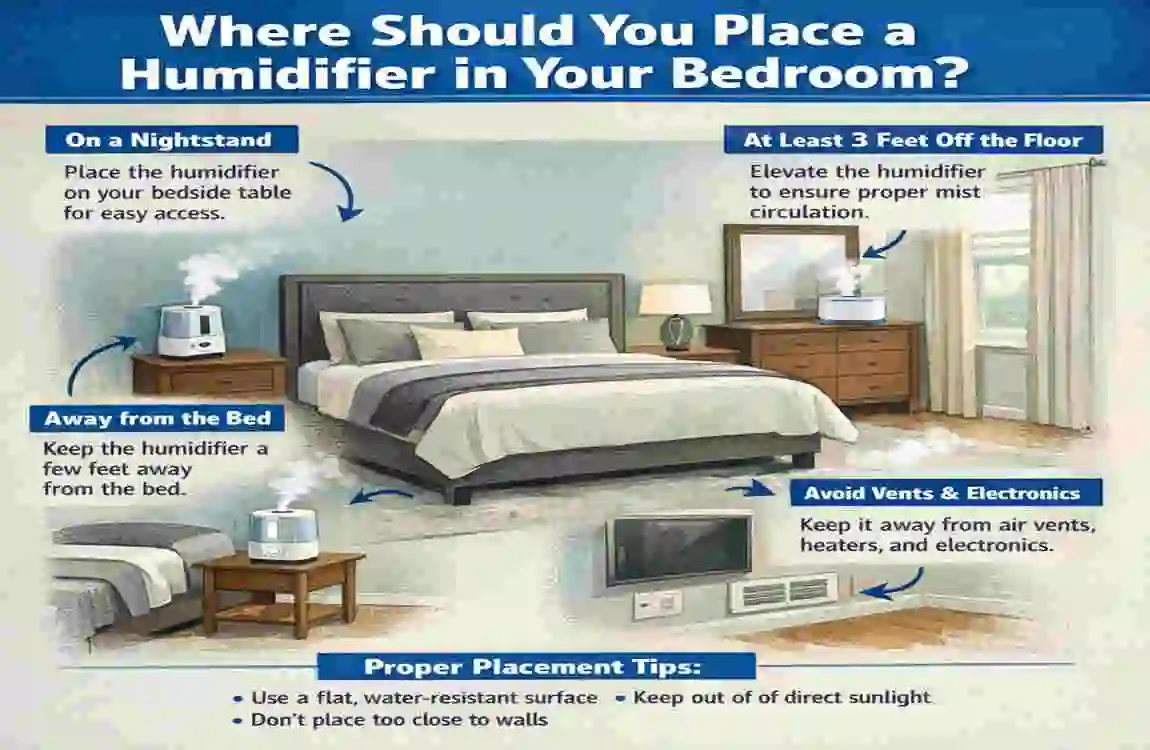
The best place for most humidifiers is on a dresser, table, or nightstand. A raised surface helps the mist spread more evenly across the room.
Make sure the surface is flat and steady. This reduces the risk of spills and helps the unit operate properly. A small, sturdy table is often better than a soft or shaky surface.
Keep It Several Feet Away From the Bed
Try to place the humidifier about 3 to 6 feet away from your bed. This helps avoid direct mist hitting your pillows, blanket, or mattress.
You want the moisture to spread through the room, not soak one area. If the humidifier is too close, your bedding may become damp, which is uncomfortable and may lead to mildew.
Position Near the Center of the Room
When possible, place the humidifier closer to the center of the bedroom. This helps the moisture circulate more evenly around the space.
You do not need to place it exactly in the middle, but avoid corners if you can—the more open the location, the better the airflow.
Keep Away From Electronics
Moisture and electronics do not mix well. Keep the humidifier away from TVs, laptops, chargers, alarm clocks, and power strips.
Even small amounts of moisture can damage devices over time. It is better to be safe and give electronics plenty of space.
Place Away From Walls and Curtains
Avoid putting the humidifier too close to walls, drapes, or curtains. Direct mist can collect on these surfaces, causing condensation.
That extra moisture can leave marks, damage paint, or create a setting where mold can grow. A little open space around the unit goes a long way.
Ensure Proper Airflow Around the Unit
A humidifier needs room to breathe. Do not block vents or trap it inside a tight space.
Good airflow helps the mist spread and prevents moisture from building up in one area. If air cannot move freely, the humidifier may not work as well.
Quick Placement Guide
Location: Good or Bad? Why
Dresser or table Good Helps mist spread evenly
Next to the bed Bad Can dampen bedding
Near walls Bad May cause condensation
Center of room Good Supports better airflow
On carpet Bad Can trap moisture
Near electronics Bad Risk of water damage
Places to Avoid When Positioning a Humidifier
Directly Beside Your Bed
Putting the humidifier right beside your bed is usually not a good idea. The mist may blow directly onto you, your sheets, or your pillow.
This can make your bedding wet and may even feel too cold or too humid while you sleep. A little distance works much better.
On Carpeted Floors
Carpet can retain moisture, making it harder to notice spills or dampness. If a humidifier leaks or creates condensation, the carpet may stay wet for too long.
That can lead to odors or mold. An elevated hard surface is safer.
Near Windows
Windows are often cooler than the rest of the room. When humid air hits a cold window, it can turn into water droplets.
That extra moisture may collect on the glass and window frame. Over time, this can lead to mildew or damage.
Inside Closets or Tight Corners
A humidifier should not be hidden in a small enclosed space. Tight corners and closets prevent air from moving properly.
Instead of spreading moisture through the room, the unit may create a damp pocket in one spot. That is not what you want.
Close to Wooden Furniture and Artwork
Wood and paper items can be damaged by too much moisture. Keep the humidifier away from wooden dressers, books, photos, and artwork.
Even if the mist seems light, long-term exposure can warp wood or damage surfaces.
Additional Tips for Using a Bedroom Humidifier Safely
Maintain Indoor Humidity Between 30% and 50%
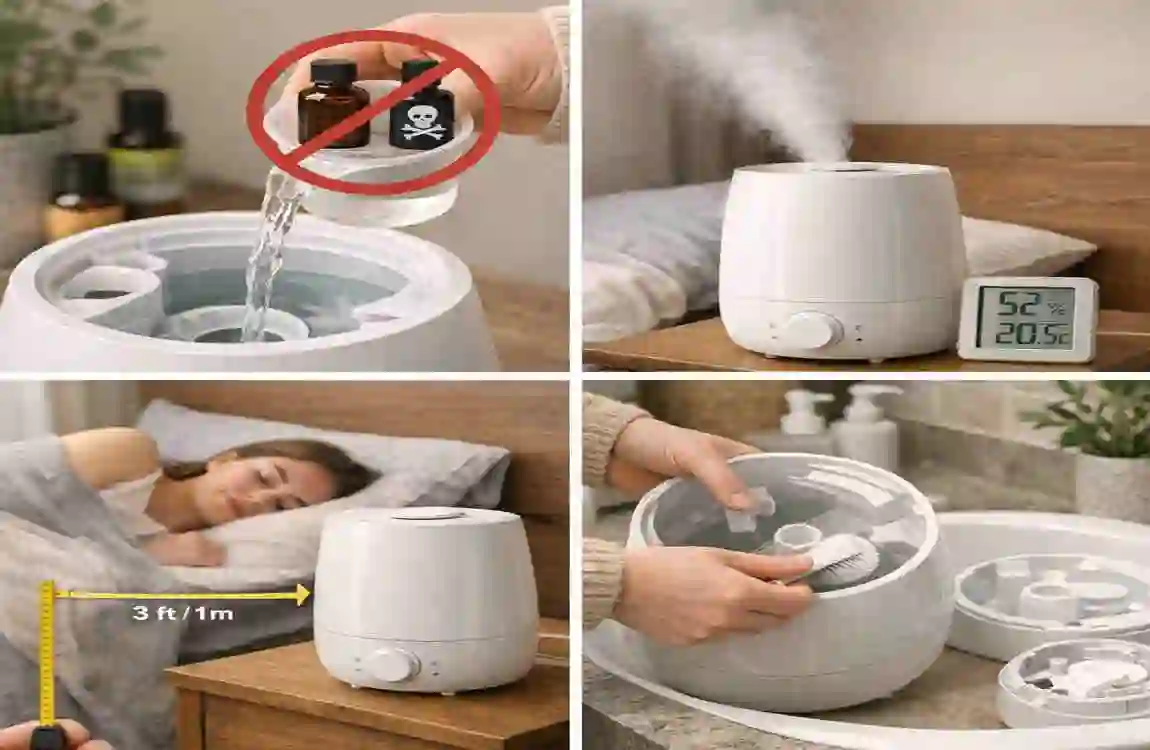
This is the sweet spot for most bedrooms. Too little humidity can feel dry and uncomfortable. Too much can make the room damp and encourage mold.
Please use a simple humidity monitor to track the room’s humidity level.
Clean the Humidifier Regularly
A dirty humidifier can spread dust, buildup, and bacteria into the air. Clean it often so it stays safe and works well.
Rinse it, wipe it down, and follow the care steps that come with the unit. Clean equipment always performs better.
Use Distilled Water When Possible
Distilled water can help reduce mineral buildup inside the humidifier. It may also lower the amount of white dust some models release.
This is especially helpful if your tap water is hard.
Refill and Empty the Tank Daily
Do not let water sit in the tank for too long. Empty leftover water and refill the tank each day.
This helps keep the unit fresh and reduces the chance of unwanted buildup or odors.
Replace Filters According to Manufacturer Instructions
If your humidifier uses a filter, replace it when needed. A worn filter can lower performance and affect air quality.
Fresh filters help the device work properly and keep the room more comfortable.
Signs Your Humidifier Is in the Wrong Location
Watch for these warning signs:
- Damp bedding or furniture
- Water droplets on windows
- Musty odors
- Excessive condensation
- Uneven room humidity
If you notice these problems, move the humidifier to a more open and balanced spot.
Frequently Asked Questions
Where should I place a humidifier in my bedroom?
Place it on an elevated, stable surface a few feet away from your bed and away from walls, curtains, and electronics.
Can I put a humidifier right next to my bed?
It is generally not recommended because direct mist can dampen bedding and create excess moisture.
Should a humidifier be on the floor or on a table?
A table or dresser is usually better because elevated placement helps distribute moisture more evenly.
How far should a humidifier be from the bed?
Keep it approximately 3 to 6 feet away from your sleeping area.
Can improperly placed humidity cause mold?
Yes. Poor placement can lead to excess condensation and increase the risk of mold and mildew growth.
| Placement Factor | Recommended Position |
|---|---|
| Distance from bed | 3–10 feet away |
| Height | At least 2 feet off the floor (ideally 3–4 feet) |
| Distance from walls | At least 3 feet from any wall |
| Room location | Near the center of the room, not in a corner |
| Surface | Firm, flat, elevated surface (dresser, stand, nightstand) with waterproof tray |
| Mist direction | Do not direct mist toward the bed |
| Avoid | Direct sunlight, corners, tight spaces, and near curtains/electrical outlets |
