
If you are trying to understand the minimum bedroom size in the UK, the first thing to know is this: there is no single rule for every home. The answer depends on the type of property, where it is located, and how the room is used.
That is why this topic can feel confusing at first. A bedroom in a normal family home is not always judged the same way as a room in a new-build property or a House in Multiple Occupation (HMO). In England, the nationally described space standard gives clear minimum sizes for certain new homes, while licensed HMOs have separate legal room-size rules.
What Is the Minimum Bedroom Size UK?
A simple explanation
The phrase “minimum bedroom size UK” usually refers to the smallest bedroom area accepted under certain housing or planning rules. But the important word here is certain.
That is because the UK does not have one universal bedroom-size rule that applies to every home in every situation. A bedroom in an older house may be perfectly acceptable even if it is smaller than the size expected in a new development.
Why bedroom rules vary
Bedroom size rules vary by property type because different homes serve different purposes.
For example:
- Existing homes may not have to follow the same size rules as new developments.
- New-build homes may need to meet planning standards.
- HMOs have their own legal minimum room sizes.
So when people ask about the minimum bedroom size in the UK, the right answer depends on what kind of property you are dealing with.
Why this matters to you
This is useful whether you are a:
- Homeowner
- Buyer
- Tenant
- Landlord
- Property investor
A small room can affect comfort, value, rental rules, and planning approval. So it is worth knowing the difference between a room that is small, a room that is too small for a certain use, and a room that is actually not compliant.
Planning standard, not universal law
In England, the nationally described space standard is a planning standard. That means it is mainly used when planning new homes or certain types of housing projects. It is not the same thing as a universal building regulation for every bedroom in every existing house.
That distinction matters a lot.
Minimum Bedroom Sizes for New Homes
Single bedroom size
Under the nationally described space standard in England, a single bedroom should have a minimum floor area of 7.5 m² for one bedspace.
The standard also expects a minimum width of 2.15 m. That width matters because a room can have enough total area but still feel awkward if it is too narrow.
Double bedroom size
For a double bedroom, the standard gives a minimum floor area of 11.5 m² for two bedspaces.
That size helps make the room more usable. It gives space for a bed, movement around the bed, and at least some storage without the room feeling cramped.
Why width matters too
Floor area is important, but width can change how the room feels in real life. A room that is technically large enough may still be difficult to furnish if it is very narrow.
For example, if a bed fits but leaves barely any walking space, the room may not function well as a bedroom. That is why both area and shape matter.
Ceiling height and usable space
Ceiling height can also affect how useful a bedroom really is. This matters especially in loft spaces or rooms with sloping ceilings.
The standard states that the room should have a minimum ceiling height of 2.3 m over at least 75% of the gross internal area. In simple terms, you need enough full-height space for the room to feel practical.
If a large part of the floor area sits under low eaves, that space may not be as usable as it first appears.
Minimum Bedroom Size for HMOs in the UK
What is an HMO?
An HMO, or House in Multiple Occupation, is a property where several people live and share facilities such as the kitchen or bathroom. Because HMOs involve more occupants and shared living, the rules are stricter.
That is why bedroom-size rules for HMOs differ from those for ordinary homes.
HMO minimum room sizes in England
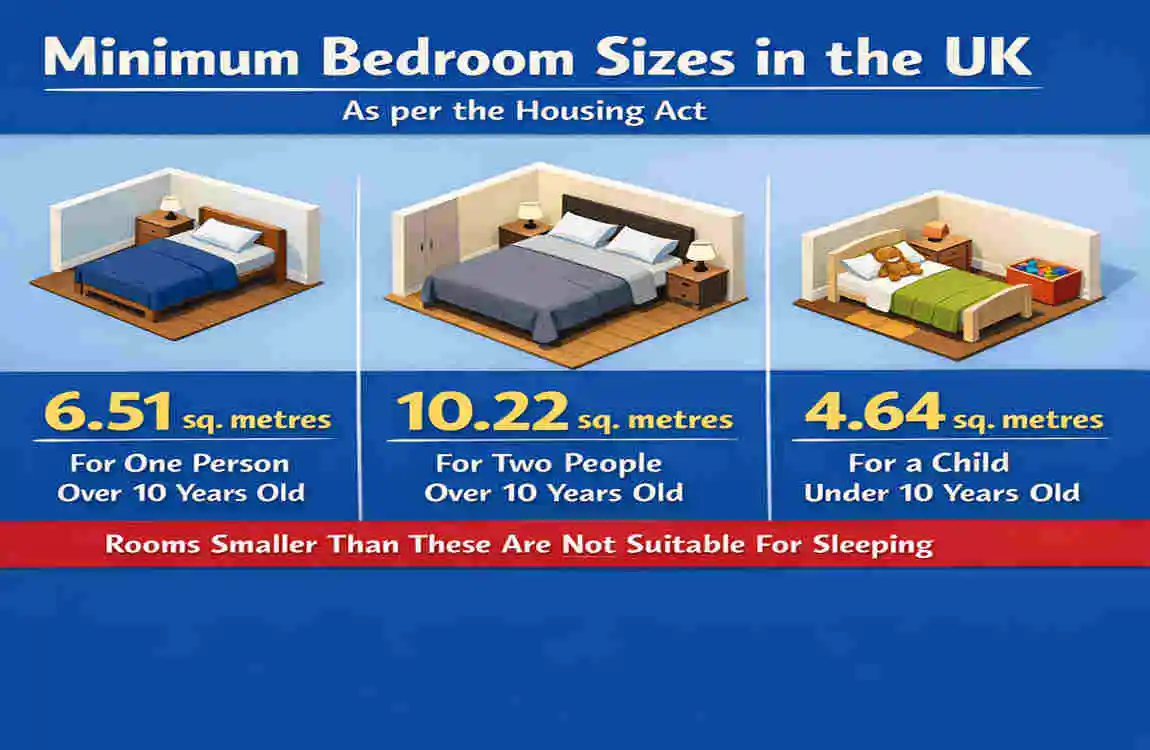
For licensed HMOs in England, the statutory minimum sleeping-room sizes are:
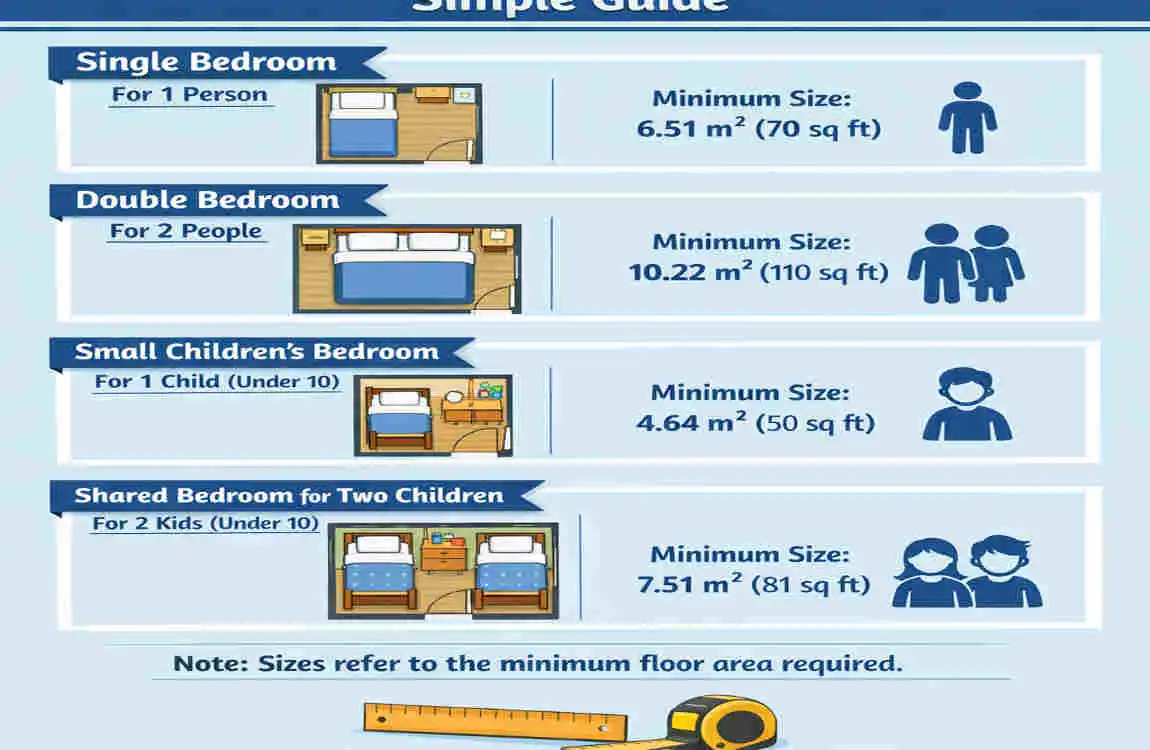
- 6.51 m² for one person over age 10
- 10.22 m² for two people over age 10
- 4.64 m² for one child under age 10
A room below 4.64 m² cannot be used as sleeping accommodation in a licensed HMO.
Why these rules exist
These rules are there to protect health, safety, and living standards. In shared housing, very small rooms can quickly become uncomfortable and unsafe when used as bedrooms.
The law aims to ensure people have enough space to sleep, move, and live reasonably.
Local authority rules may be stricter.
Even though these are the national HMO minimums in England, local councils can sometimes impose higher standards or additional requirements.
So if you own or manage an HMO, do not rely on the national figure alone. Always check what your local authority expects.
Don’t confuse HMO rules with family homes.
These HMO sizes should not be treated as the ideal size for a normal family bedroom. They are minimum legal figures for licensed shared housing, not a comfort guide for everyday home design.
How to Measure a Bedroom Correctly
The basic formula
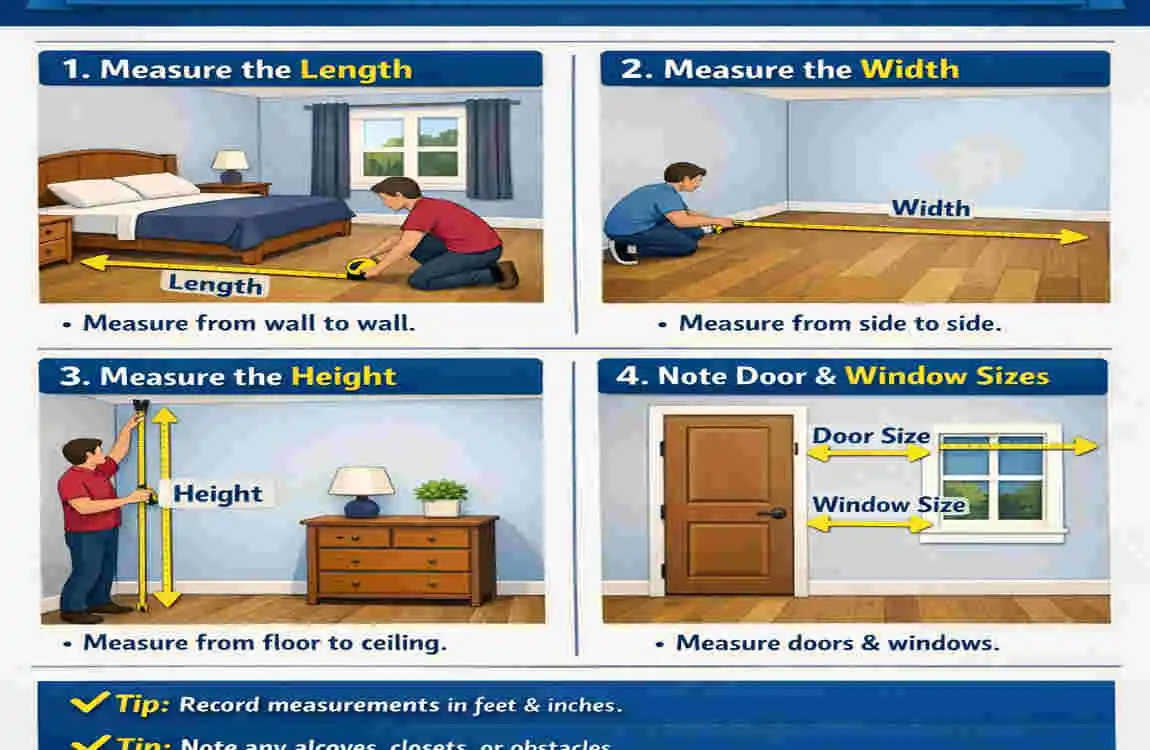
The easiest way to work out bedroom size is:
Length × Width = Floor Area
That gives you the room size in square metres if you measure in metres.
Simple examples
Here are two easy examples:
- 3 m × 2.5 m = 7.5 m²
- 3.5 m × 3.3 m = 11.55 m²
These examples help you see how small changes in room dimensions can make a big difference.
What counts as usable space?
When you measure a bedroom, the room’s full shape matters. You also need to think about:
- Built-in wardrobes
- Door swing space
- Alcoves
- Sloping ceilings
- Awkward corners
A room may look bigger or smaller depending on how useful the layout is.
Sloping ceilings and loft rooms
Loft bedrooms can be tricky. A room may have a decent floor area on paper, but if large parts of it sit under low rooflines, that space may not be very practical.
This is why usable floor area matters, not just total floor area.
Is a Small Bedroom Legal in the UK?
The short answer
It depends on the property and the rules that apply to it.
That is the most honest answer.
No single nationwide bedroom rule for every existing home
There is no single minimum bedroom size that applies to every bedroom in every existing home in England. That is why a small room does not automatically make a property illegal.
A bedroom may be small and still be part of a perfectly acceptable home, especially if the property is older or was built under different standards.
Legal minimum vs planning standard vs comfort
It helps to separate these ideas:
Legal minimum
This is the lowest size allowed under a rule that applies to a certain type of property, such as an HMO.
Planning standard
This is the size expected in certain new-build housing projects, like the nationally described space standard in England.
Practical or comfortable size
This is the size that feels usable in daily life. A room may be legal but still feel cramped.
Why a small room does not always mean an illegal property
A small bedroom might be a feature of an older property, a compact layout, or a loft conversion. That does not automatically make the home unlawful.
What matters is whether the room is used in compliance with the rules for that property type.
When to check local authority guidance
You should check with the local authority if:
- You are converting a property
- You are creating an HMO
- You are applying for planning approval
- You are unsure whether a room can legally be used as a bedroom
That extra check can save trouble later.
How to Make a Small UK Bedroom Feel Bigger
Use light colours
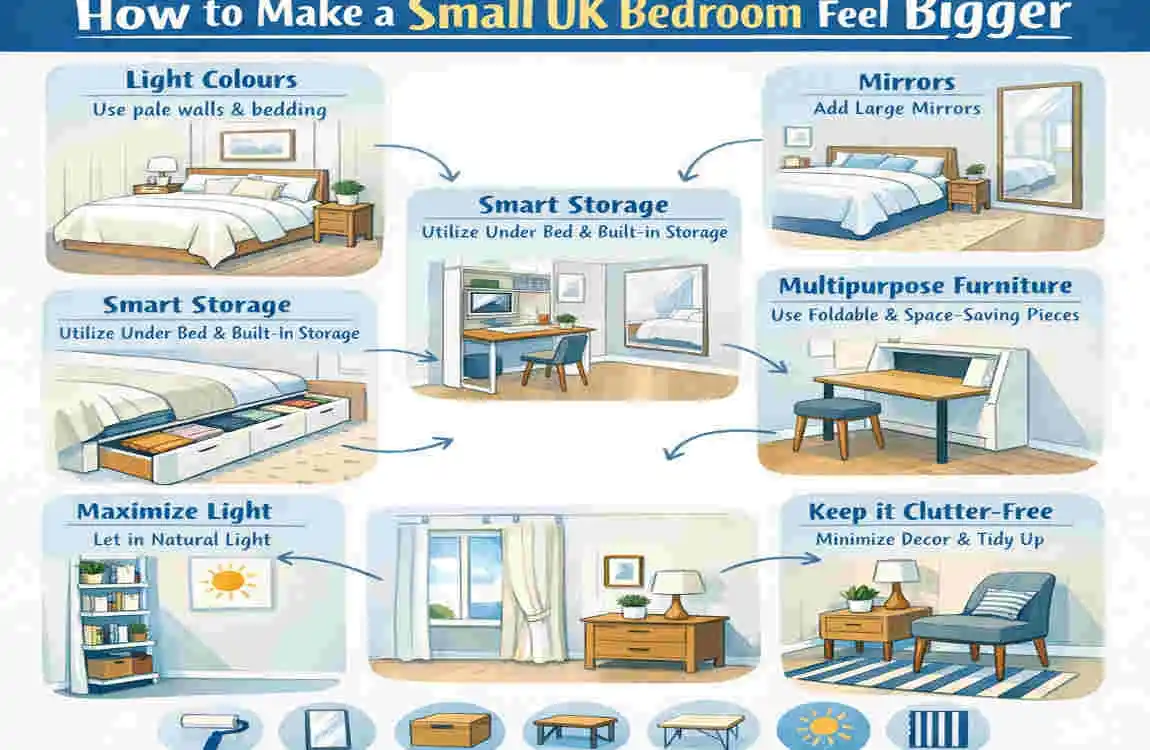
Light colours make rooms feel more open. Soft whites, pale grey, cream, and gentle neutral tones can help a small bedroom feel less crowded.
Dark colours are not always wrong, but they can make a tight room feel even smaller if they are used too heavily.
Choose the right furniture.
In a small bedroom, furniture size matters a lot. Oversized beds and bulky wardrobes can take over the room very quickly.
Instead, choose furniture that fits the room properly. A slightly smaller bed or a slimmer wardrobe may give you much more space to move around.
Use vertical storage
If floor space is limited, go up instead of out. Tall shelves, wall-mounted storage, and over-bed units can help you keep the room neat without filling it with too many large items.
Keep the floor clear.
A clear floor makes a bedroom feel bigger right away. When the eye can travel across the room without many obstacles, the space feels more open.
Try to avoid too many items on the floor, especially in narrow rooms.
Use mirrors and good lighting.
Mirrors can make a room feel brighter and more spacious. Good lighting also helps a lot, especially if the bedroom has only one window or gets limited daylight.
A well-lit room usually feels more comfortable and less cramped.
Choose multifunctional furniture
Furniture that does two jobs can be very helpful. For example:
- A bed with storage underneath
- A bedside table with drawers
- A desk that doubles as a dressing table
These kinds of choices help you save space without losing usefulness.
Smart placement matters
Sometimes the issue is not the room size itself but the layout. Moving the bed, reducing clutter, or changing where storage sits can make the room feel much better.
In other words, how you use the space matters almost as much as the size of the space.
Minimum Bedroom Size UK: FAQs
What is the minimum bedroom size in the UK?
There is no single figure for every type of UK home. In England’s nationally described space standard, a single bedroom is 7.5 m² and a double bedroom is 11.5 m².
Is a 7 m² bedroom legal in the UK?
The answer depends on the property type and the applicable rules. A 7 m² room may be too small for some situations but acceptable in others.
What is the minimum bedroom size for an HMO?
For licensed HMOs in England, the minimum sleeping-room sizes are 6.51 m² for one person aged 10 or over and 10.22 m² for two people aged 10 or over. A room under 4.64 m² cannot be used as sleeping accommodation.
Is 10 m² big enough for a bedroom?
It can be, depending on the bed size, furniture, and layout. A 10 m² room may work well as a single bedroom or a compact double, but it may still feel tight for some uses.
What is a good size for a double bedroom?
A room around 11.5 m² meets the nationally described space standard for two bedspaces in qualifying new homes. Bigger rooms usually feel more flexible and comfortable.
Do bedroom sizes differ across the UK?
Yes. Housing and planning rules can differ between England, Scotland, Wales, and Northern Ireland. Always check the rules for the exact location.
Does a built-in wardrobe count toward bedroom floor area?
Under the nationally described space standard, built-in wardrobe areas can count toward the bedroom floor area, as long as the required effective widths are still maintained.
What should I do if my bedroom is smaller than recommended?
Do not assume the room is automatically unlawful. Check the property type, planning status, HMO requirements, and local authority guidance before making any decisions.
| Topic | Simple Information |
|---|---|
| Minimum bedroom size | There is no single minimum size for every UK home, as rules can vary by nation and housing type. |
| England | Space standards may apply to certain new homes and developments, depending on the planning requirements. |
| Scotland | Minimum space requirements can apply under housing and overcrowding rules. |
| Wales | Housing standards may set requirements for room occupancy and usable space. |
| Northern Ireland | Bedroom space can be assessed under statutory overcrowding standards. |
| Practical size | Around 7–10 m² is often considered a more comfortable starting point for a single bedroom, depending on layout. |
| What to consider | Allow enough room for a bed, storage, access, ventilation, windows, and safe movement. |
