
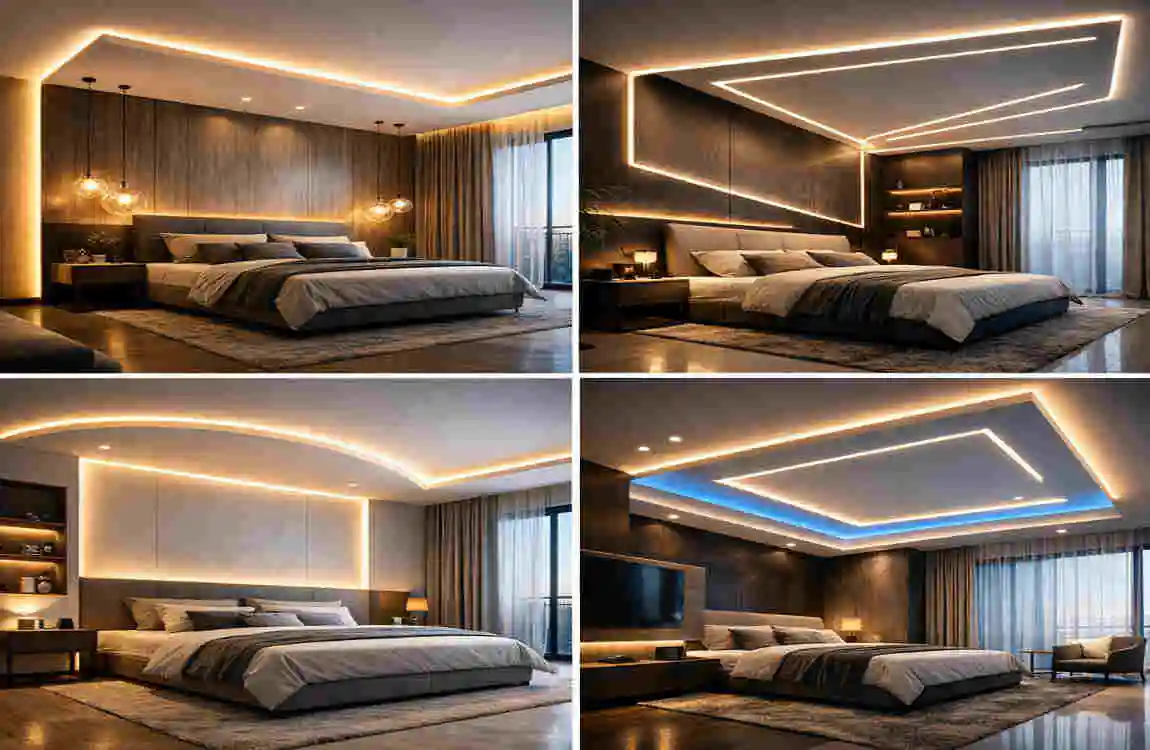
If you want to give your bedroom a clean, modern, and cozy look, LED strip lights on the ceiling are one of the easiest upgrades you can make. They can change the room’s mood, add soft light, and make the space feel more stylish without taking up much room.
| Idea | Short Description |
|---|---|
| Cove Lighting | Hide LED strips around the ceiling edge for a soft glow |
| False Ceiling | Add strips inside recessed ceiling sections for a modern look |
| Perimeter Lighting | Run LED strips around the bedroom ceiling border |
| Tray Ceiling | Highlight the recessed area with indirect LED lighting |
| Headboard Connection | Extend ceiling LED lighting toward the bed wall |
| Color-Changing LEDs | Create different moods with adjustable colors |
| Warm White Light | Add a cozy and relaxing bedroom atmosphere |
| Smart LED Strips | Control brightness and colors with a phone or remote |
| Minimalist Design | Use concealed strips for a clean, simple ceiling style |
Why LED Strip Lights Are Perfect for Modern Bedroom Ceilings
What LED Strip Lights Are and How They Work
LED strip lights are thin, flexible strips with tiny LED bulbs built in. You can stick them along the ceiling edge, inside a tray ceiling, behind molding, or around design features. They connect to a power supply and glow with steady, even light.
Because they are slim and flexible, they fit into places where normal lights would look too bulky. That is one reason people love them in bedrooms.
Benefits of Ceiling LED Strip Lighting in Bedrooms
Bedroom lighting should feel calm, soft, and comfortable. LED strip lights do that very well. They can light the room without feeling harsh or too bright.
They also save space. If your bedroom is small, ceiling strips can make it feel less crowded. You get light without adding a large lamp or fixture.
Ambient, Accent, and Decorative Lighting
LED strip lights work well in three ways:
- Ambient lighting gives the whole room a gentle glow.
- Accent lighting highlights ceiling edges, borders, or design details.
- Decorative lighting adds style and makes the room feel more modern.
This is why LED strips are so popular in bedrooms. They do more than brighten the room. They also help shape the mood.
How LED Strips Can Make a Bedroom Feel Larger and More Relaxing
When you place LED strips around the ceiling, the light spreads softly across the room. This creates a wider and more open look. A dark corner can feel smaller, while a softly lit ceiling can make the room feel more balanced.
The effect is especially nice in the evening. Instead of a harsh overhead light, you get a relaxing glow that feels warm and calm.
Choosing Warm White vs. Cool White Lighting
For bedrooms, warm white usually feels better because it creates a soft, cozy look. Cool white is brighter and crisper, but it can feel less relaxing at night.
If you want a peaceful bedroom, warm white is often the better choice. If you want a cleaner, sharper look, cool white can work too. Some people choose adjustable LED strips so they can switch between both.
Energy Efficiency and Long-Term Use
LED strip lights use less power than many other lights. That means lower energy use over time. They also last a long time when installed correctly.
This makes them a smart choice for bedroom ceilings. You get style, comfort, and efficiency in one simple setup.
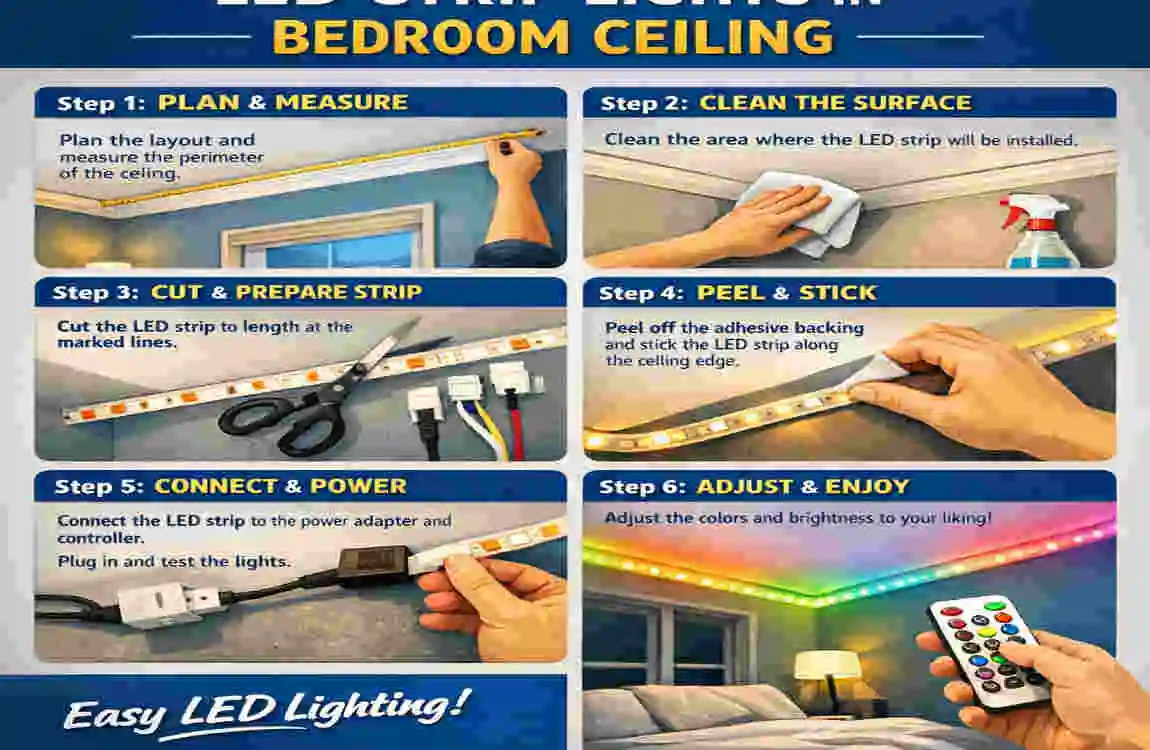
How to Install LED Strip Lights in Bedroom Ceiling
Planning the Lighting Layout Before Installation
Before you start, decide where the light should go. Think about whether you want the strips around the ceiling border, inside a tray ceiling, behind a headboard wall, or along a floating ceiling edge.
Good planning saves time later. It also helps you avoid gaps, uneven lines, and wiring problems.
Measuring the Bedroom Ceiling
Measure the exact length of the area where the strips will go. Use a tape measure and write everything down carefully.
If the ceiling has corners, curves, or multiple sections, measure each part separately. This helps you buy the right amount of strip lighting and avoids waste.
Choosing the Correct LED Strip Length
Once you have the measurements, choose strips that match the total length. It is usually smart to buy a little extra, just in case you need to trim or adjust.
If you are working with corners, make sure the strip type can bend properly. Flexible strips are usually the best option for bedrooms.
Selecting LED Strips, Power Supplies, Connectors, and Controllers
You will need more than just the strip lights. A complete setup usually includes:
- LED strip lights
- Power supply
- Connectors
- Controller
- Mounting clips or channels
Make sure all parts are compatible. The strip and power supply voltages must match. If they do not, the lights may not work properly.
Preparing and Cleaning the Ceiling Surface
A clean surface is very important. Dust, oil, and moisture can weaken the strip’s adhesive.
Before installation, wipe the ceiling area with a dry or slightly damp cloth. Let it fully dry before attaching anything. This helps the strip stick better and last longer.
Installing Aluminum Channels or Mounting Tracks
Aluminum channels are a smart choice if you want a neat and stable result. They help hold the strip in place and can also improve heat control.
Mounting tracks are useful when you want a more finished look. They keep the strip straight and help hide the edges. If you want a professional look, this step is worth considering.
Attaching the LED Strip Securely
Peel the backing slowly and press the strip firmly along the planned line. Do not rush this step. A straight and secure fit will make the final result much better.
If the strip needs extra support, use clips or channels. Do not rely only on weak adhesive if the strip is long or will be installed in a warm area.
Connecting the Power Supply and Controller
Next, connect the strip to the power supply. If your setup includes a dimmer or smart controller, connect that too.
Check all connections carefully. Loose wiring can cause flickering or failure. If you are not sure about wiring, it is better to get help from a qualified person.
Testing the Lights Before Completing the Installation
Always test the full setup before you finish. Turn the lights on and check the brightness, color, and connection points.
Look for any dark spots, flickering, or loose sections. Fix problems now, before you close everything up.
Basic Electrical Safety Considerations
Safety matters. Turn off the power before handling wires. Do not overload one power source with too many strips. Keep the setup dry and away from heat damage.
If the installation seems complicated, ask an electrician to help. That small step can save time and prevent mistakes.
Best Bedroom Ceiling LED Strip Light Design Ideas
Cove Lighting Around the Ceiling Perimeter
Cove lighting is one of the most popular bedroom styles. The strips are hidden around the ceiling edge so the light reflects softly upward.
This creates a calm glow and makes the room feel elegant without showing the light source directly.
Recessed Ceiling LED Strip Designs
Recessed designs place the strip inside a built-in ceiling groove or channel. This creates a clean, modern look.
It works especially well if you want a minimal style. The strip is there, but it does not distract from the room.
Tray Ceiling LED Lighting
Tray ceilings and LED strips are a perfect match. The light can sit inside the border and highlight the ceiling’s depth.
This gives the room a more luxurious look. It also adds visual interest without making the room feel busy.
LED Strips Behind Ceiling Borders
If your ceiling has a border, molding, or frame, placing strips behind it creates a hidden glow. The light appears to come from the structure itself.
This is a great choice if you want a soft, floating effect.
Floating Ceiling Effect
A floating ceiling effect makes it look like the ceiling is separated from the wall by light. This is bold, modern, and very stylish.
It can make your bedroom feel more spacious and artistic.
Headboard-to-Ceiling Lighting
Some people connect the lighting style from the headboard area up toward the ceiling. This creates a smooth visual flow.
It works well in modern bedrooms where the bed is the main focal point.
Geometric and Linear Ceiling Patterns
For something unique, use LED strips in straight lines or geometric shapes. This creates a strong design look.
It is a good choice for people who want their bedroom to feel modern and creative.
Minimalist Hidden LED Lighting
Hidden lighting is ideal if you want a clean room with no visible clutter. The strip stays out of sight, while the glow becomes the main feature.
This is one of the best ways to keep a bedroom calm and uncluttered.
Combining LED Strips with Pendant or Recessed Lights
You do not need to use LED strips alone. You can combine them with pendant lights or recessed ceiling lights for more flexibility.
The strips can give soft mood lighting, while the other lights can provide stronger task lighting when needed.
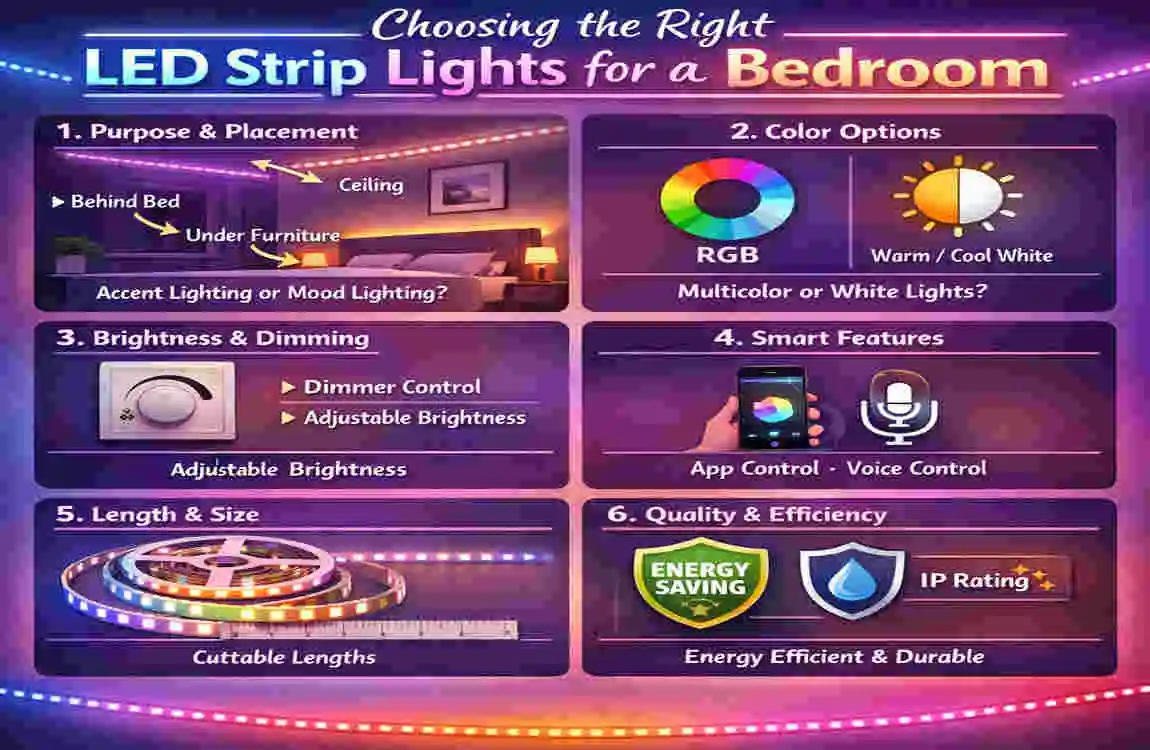
Choosing the Right LED Strip Lights for a Bedroom
LED Brightness and Lumen Considerations
Brightness matters a lot. Too dim, and the room may feel dull. Too bright, and it may feel uncomfortable at night.
For a bedroom, softer brightness is usually best. You want light that feels warm and easy on the eyes.
Color Temperature for Bedrooms
Color temperature affects mood. Here is a simple guide:
Light Type | Look and Feel | Best For
Warm White Soft, cozy, relaxing Bedrooms, evening use
Neutral White Balanced and clean General room lighting
Cool White Bright and crisp Modern looks, task lighting
For most bedrooms, warm white is the safest and most comfortable choice.
RGB and RGBW LED Strips
RGB strips can change color, which is fun if you want mood lighting. RGBW strips also add true white light, which makes them more useful for everyday use.
If you want flexibility, RGBW is often better than RGB alone.
Dimmable LED Strip Options
Dimmable strips let you change the brightness based on the time of day. This is very helpful in a bedroom.
You can keep the light low at night and brighter when you need more visibility.
Waterproof vs. Non-Waterproof Strips
Most bedroom ceiling strips do not need waterproof protection. Non-waterproof strips are usually lighter and easier to install.
Waterproof strips are more often used in wet places, so they are not always necessary here.
Flexible vs. Rigid LED Lighting
Flexible strips bend around corners and fit most bedroom ceiling designs. Rigid lights are more structured and may suit straight lines better.
For most ceiling jobs, flexible strips are easier and more practical.
Selecting the Correct Voltage
Common LED strip voltages include 12V and 24V. Both can work, but you must match the strip with the right power supply.
A 24V setup can be useful for longer runs because it may reduce voltage drop. If this sounds technical, remember this: the strip and power supply must match.
Understanding LED Density and Light Quality
LED density means how many small LED chips are on the strip. Higher density often provides smoother, more even light.
If the strip has low density, you may see light dots. For a clean glow, choose a higher-density strip.
Choosing a Suitable Power Supply
The power supply must be strong enough to run the full length of the strip. If it is too weak, the lights may flicker or fail.
It is always better to choose a power supply with extra capacity than one that is too small.
Common Mistakes to Avoid When Installing Ceiling LED Strips
Using the Wrong Power Supply
This is one of the biggest mistakes. A weak or mismatched power supply can cause poor performance and shorten the lights’ life.
Always check the voltage and wattage before buying.
Installing Strips on Dusty or Uneven Surfaces
If the surface is dirty, the adhesive will not hold well. If it is uneven, the strip may peel off or look crooked.
Take time to clean and prepare the area first.
Choosing Excessive Brightness
Brighter is not always better in a bedroom. Too much light can make the room feel cold and less relaxing.
The goal is comfort, not just power.
Leaving LED Strips Exposed When a Hidden Effect Is Preferred
If you want a soft glow, do not leave the strip fully visible. Exposed strips can look harsh and may create glare.
Use covers, channels, or hidden placement for a more elegant result.
Incorrectly Measuring the Ceiling
Small measuring mistakes can create big problems later. You may end up with too little strip or with awkward gaps.
Measure twice before you buy anything.
Overloading One Power Source
Too many strips on one supply can overload the system. This can lead to overheating or failure.
Spread the load properly if your setup is large.
Poor Cable Management
Messy wires can ruin the look of an otherwise beautiful ceiling. Keep cables neat, hidden, and secured.
A clean finish makes the entire design feel more professional.
Ignoring Heat Management
LEDs make less heat than many other lights, but they still need space to breathe. If heat builds up, the strip may wear out faster.
Aluminum channels can help manage heat better.
Using Weak Adhesive Alone for Long-Term Installation
The sticky backing on many strips is useful, but it may not be enough for long-term hold.
If you want the lights to last, use clips, tracks, or channels for extra support.
Forgetting to Test the Complete System
Always test before finalizing the setup. It is much easier to fix problems early than after everything is installed.
A quick test can save time and stress.
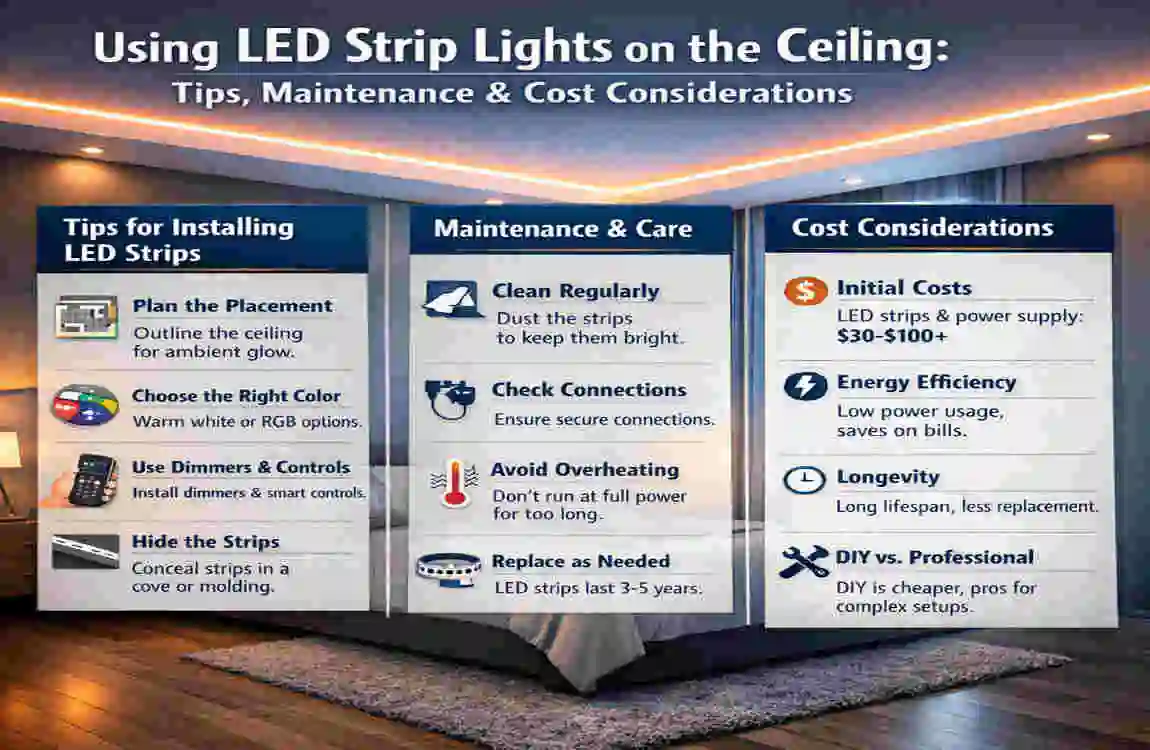
Modern Bedroom Lighting Tips, Maintenance, and Cost Considerations
How to Position LED Strips for Balanced Lighting
Try to place the strips so the light spreads evenly across the room. Avoid aiming all the light at one corner.
Balanced lighting makes the bedroom feel calm and comfortable.
Combining Ceiling Strips with Bedside Lighting
Ceiling strips work best as part of a larger lighting plan. A bedside lamp or wall light can help with reading or other tasks.
This gives you both style and function.
Smart LED Controls and Remote Operation
Smart controls make life easier. You can turn the lights on or off, dim them, or change colors with a remote or app.
This is especially useful when you want to adjust the room without getting out of bed.
Motion Sensors and App-Controlled Lighting
Motion sensors can turn on low light when you enter the room at night. App control gives you even more comfort and flexibility.
These features can make your bedroom feel modern and easy to use.
How to Reduce Glare
Glare happens when the light source is too visible or too bright. To reduce it, hide the strip inside a channel or direct it toward the ceiling edge.
Soft reflection is usually better than direct light in a bedroom.
Cleaning and Maintaining LED Strips
LED strips don’t need much maintenance, but they should stay clean. Dust can build up over time and reduce the neat look.
Wipe them gently as needed, and check the adhesive or clips occasionally.
When LED Strips Need Replacement
If the lights flicker, dim too much, or stop working in sections, it may be time to replace part of the strip or the power supply.
Good-quality strips can last a long time, but no light lasts forever.
Basic Installation Cost Factors
The total cost depends on several things:
- Room size
- Strip quality
- Power supply type
- Smart controls
- Installation method
A simple DIY setup can be affordable. A more detailed ceiling design will cost more.
DIY Installation vs. Professional Installation
DIY works well if the layout is simple and you are comfortable handling basic tools. It can save money and give you full control.
Professional installation is better for complex ceiling shapes, hidden wiring, or larger rooms. It often gives a cleaner finish.
How Ceiling Design, Room Size, and LED Quality Affect the Overall Cost
A small room with a simple border will cost less than a large room with trays, recesses, and smart controls. Higher LED quality also increases the price, but it usually gives better light and longer life.
For the best value, balance style, function, and budget carefully.
Frequently Asked Questions About Bedroom Ceiling LED Strip Lights
How do I install LED strip lights in a bedroom ceiling?
Start by planning the layout, measuring the ceiling, and choosing the right strip length. Clean the surface, attach the strip with adhesive or channels, connect the power supply, and test the lights before finishing.
Can LED strip lights be installed directly on a bedroom ceiling?
Yes, you can install them directly, but a clean, smooth surface is important. For a better and longer-lasting result, many people use mounting tracks or aluminum channels.
What type of LED strip is best for a bedroom ceiling?
A warm white, dimmable LED strip is usually the best choice for a bedroom. For more flexibility, RGBW strips are also a good option.
Should bedroom LED strip lights be warm white or cool white?
Warm white is usually better for bedrooms because it feels softer and more relaxing. Cool white can work if you want a brighter and more modern look.
Can LED strip lights damage the ceiling?
They usually do not damage the ceiling if installed properly. Problems happen when the adhesive is too strong, the surface isn’t prepared, or wires are installed carelessly.
Do LED strip lights need a special power supply?
Yes, they need a compatible power supply that matches the strip voltage and wattage. Using the wrong one can cause flickering or poor performance.
How do you hide LED strip lights on a ceiling?
You can hide them inside channels, behind molding, inside tray ceilings, or along ceiling borders. Hidden placement creates a softer, more polished glow.
Can LED strip lights be controlled with a phone?
Yes, many modern LED strips can connect to a smart controller or app. This lets you change brightness, colors, and timing from your phone.
How long do bedroom ceiling LED strip lights last?
Good-quality LED strips can last for many years, especially if they are installed well and used with the correct power supply. Heat control and proper care also help them last longer.
Are LED strip lights safe to leave on overnight?
Yes, they are generally safe when installed correctly and used with quality parts. Still, it is smart to use a trusted power supply and avoid overloading the circuit.
