

When you plan a basement bedroom, the window is more important than many people realize. It is not just there for looks. It helps bring in natural light, adds fresh air, and may also serve as an emergency exit.
That is why the question of what size a basement bedroom window should be matters so much. The right size depends on your local building codes, the room layout, and whether the window must meet egress rules. In simple terms, a basement bedroom window must be large enough to allow someone to get out safely in an emergency.
What Size Should a Basement Bedroom Window Be?
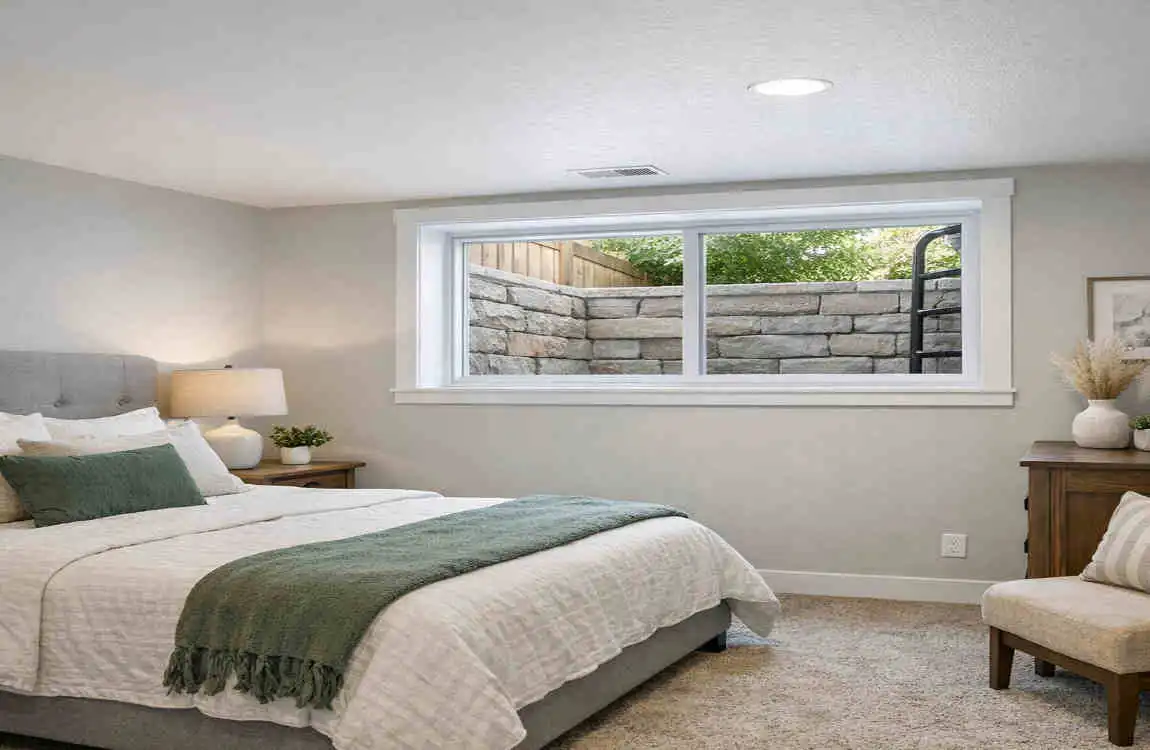
There is no single window size that works for every basement bedroom. The right size depends on the space, the window style, and local code requirements.
If the window is part of a sleeping room, it often must meet egress requirements. That means it must be large enough for a person to escape through without difficulty. This is especially important in basement bedrooms because basements are below ground level and need a safe exit route.
Common Basement Bedroom Window Dimensions
You may hear about common basement window sizes such as taller casement windows or wider sliding windows. But the number printed on the window label is not always the number that matters most.
The most important part is the clear opening. That is the actual open space someone can pass through. A window may look large on paper, but if the frame takes up too much room, the usable opening may be too small.
It also helps to understand three different measurements:
- Rough opening: the framed wall opening before the window is installed
- Window size: the actual product size
- Clear opening: the open space available when the window is fully open
What Is a Basement Egress Window?
An egress window is a window large enough to serve as an emergency escape route. In a basement bedroom, this is often required by code.
This matters because if a fire or other emergency blocks the stairs, the window may be the only safe way out. It also gives firefighters another access point if they need to enter the room.
Key Measurements for a Basement Bedroom Window
Before you choose a window, you need to understand the measurements that matter most.
Measurement Why It Matters
Width Affects how easily someone can exit
Height Helps determine escape space
Clear opening The actual usable open area
Window sill height Important for safe emergency exit
Window well size Provides exterior access and space
These measurements are more important than the outer frame size. A window can look large and still fail to meet code if the opening is not correct.
Basement Bedroom Window Egress Requirements
Egress rules exist to protect people. They make sure a bedroom has a safe way out in an emergency.
Why Clear Opening Size Matters
The clear opening is the real usable space when the window is open. This is not the same as the full window size.
For example, a window may be 36 inches wide on the outside, but the frame and sash can reduce the actual opening. That is why you should never guess based only on the label size.
Does Every Basement Window Need to Be an Egress Window?
Not every basement window has to meet egress rules. A storage room window or small utility window may have different requirements.
But if the space is a bedroom, the window usually needs to function as an emergency exit. That is why it is smart to check your local building department before you buy anything.
How to Choose the Right Basement Bedroom Window Size
Choosing the right window size is easier when you focus on a few key points.
Check Local Code First
This should always be your first step. Building rules vary by location, so do not assume one size works everywhere.
Measure the Room and Opening
Look at the room layout, wall thickness, and current opening. Some basements have enough space for a large window, while others need structural changes.
Think About Light and Air
A basement bedroom should feel comfortable, not closed in. A window that lets in more daylight can make the room feel much more livable.
Plan for Emergency Escape
The window must be easy to open and large enough for someone to use in a hurry. That is why operation matters as much as size.
Check the Window Well
If the window is below ground, the exterior well must also be large enough to allow safe exit.
Best Types of Windows for Basement Bedrooms
Some window styles work better than others in basement spaces.
Casement Windows
Casement windows are often a strong choice because they open wide and can create a large clear opening. They also provide good airflow.
If your wall space is limited, this style may be especially useful.
Sliding Windows
Sliding windows are simple and easy to use. They can work well in basements, but the opening may not be as large as a casement style.
That means you should check the clear opening carefully.
Single-Hung Windows
Single-hung windows are common, but they sometimes have a more limited opening. That can make it harder for them to meet egress rules.
Awning Windows
Awning windows open outward from the top and can provide nice ventilation. But they are not always the best choice for egress because their opening shape may be too limited.
Basement Window Well Size and Requirements
A basement window well is the space outside the window that allows light and access for escape. It is a very important part of the setup.
If the window sits below ground, the well must give enough room for someone to climb out. It should not feel tight or blocked.
Why the Window Well Matters
Even if the window itself is large enough, a cramped window well can make escape difficult. That is why the well size matters just as much as the window size.
A good well should also include proper drainage so water does not collect around the window.
When a Window Well Ladder May Be Needed
If the window well is deep, local codes may require a ladder or steps. This helps make the escape route safer and easier to use.
How to Measure for a Basement Bedroom Window
Here is a simple process you can follow:
- Measure the current window opening.
- Measure the width at more than one point.
- Measure the height at more than one point.
- Check the sill height from the floor.
- Confirm the required clear opening.
- Measure the window well on the outside.
- Compare everything with local code requirements.
This step-by-step approach helps you avoid costly mistakes.
Common Mistakes When Choosing a Basement Bedroom Window
Many homeowners make the same errors when they shop for a basement window.
- Choosing based only on overall window size
- Ignoring clear-opening measurements
- Forgetting about the window well
- Picking a window that is hard to open
- Skipping local code checks
- Focusing only on appearance
A window should look good, but it must also work safely.
Basement Bedroom Window Size: New Construction vs. Replacement
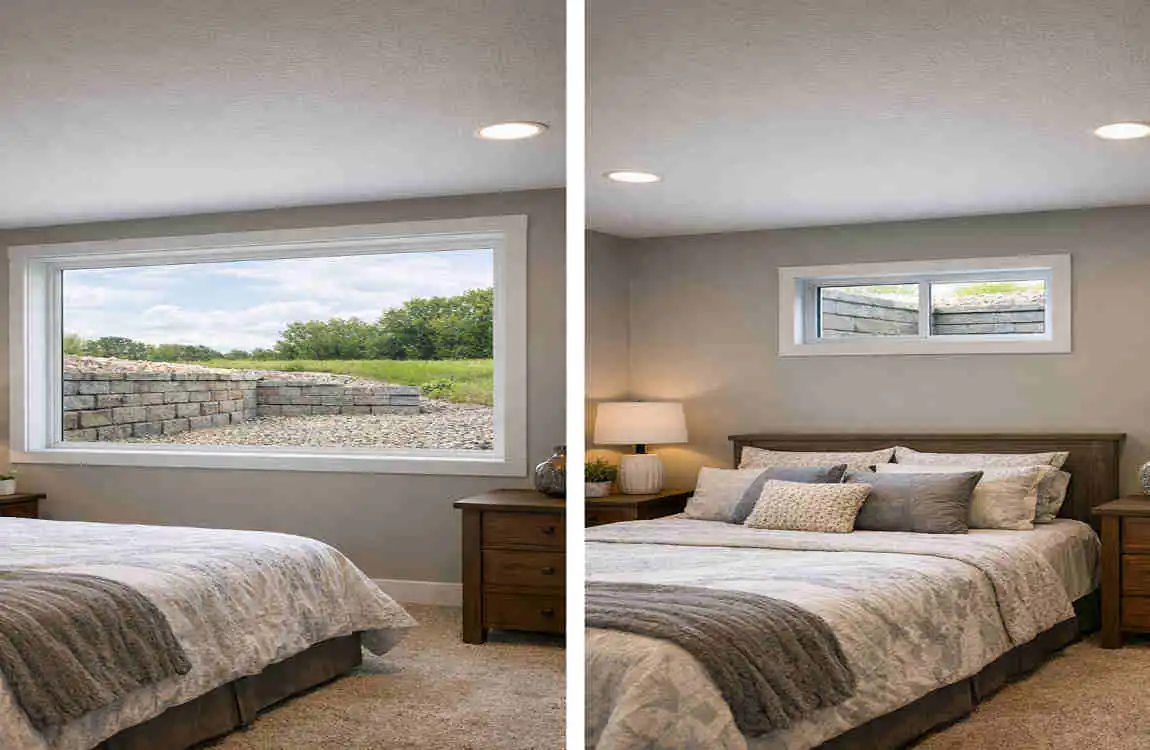
The right window choice can depend on whether you are building new or replacing an old one.
New Basement Construction
New construction gives you more flexibility. You can plan the opening, well, drainage, and window style together.
That usually makes it easier to meet code from the start.
Replacing an Existing Basement Window
A replacement project may be more limited. The old opening may be too small, or the wall structure may need to be changed.
If you want to enlarge the opening, you may need professional help. This is especially important if the foundation needs to be cut or modified.
Cost Factors for Installing a Larger Basement Window
A larger basement window can improve safety and comfort, but it may also cost more.
Common cost factors include:
- Window material and style
- Window size
- Foundation cutting or enlargement
- Window well installation
- Drainage work
- Labor and finishing
- Permits and inspections
The more work needed, the higher the total cost may be.
How to Make a Basement Bedroom Window Safer
A good basement bedroom window should be easy to use and maintain.
Keep the Opening Clear
Do not block the window with furniture, storage, or heavy coverings.
Maintain the Window Well
Remove leaves, dirt, and debris to keep the exit path open.
Use Safe, Easy Hardware
Choose locks and handles that are simple to operate, even in an emergency.
Inspect the Window Regularly
Check for rust, cracks, leaks, or hard-to-open parts. Small issues can become bigger problems later.
Frequently Asked Questions
What size should a basement bedroom window be?
It depends on building codes and whether the window must serve as an emergency escape window.
What is the minimum size for a basement egress window?
The minimum clear opening size is usually set by local code, so check your area’s requirements.
Can a basement bedroom have a small window?
Yes, but it may not qualify as an egress window, which can be a problem for a bedroom.
How high can a basement bedroom window be from the floor?
That depends on local code, especially for egress windows.
Does a basement bedroom window need a window well?
If the window is below ground, a window well is often needed for safe escape.
What type of window is best for a basement bedroom?
Casement windows are often a strong choice because they open wide and can meet egress needs more easily.
Can I enlarge an existing basement window?
Yes, but it may require structural changes and professional help.
Do basement bedroom windows need to open?
If the window is used as an emergency exit, yes, it must be operable.
| Factor | Recommended Guidance |
|---|---|
| Minimum Size | Follow your local building code, especially for emergency egress. |
| Window Opening | Choose an opening large enough for safe escape and firefighter access. |
| Common Size | Around 36″ × 48″ is a popular basement bedroom window size. |
| Window Type | Casement windows often provide a larger clear opening than sliding windows. |
| Window Well | Allow enough space for the window to open fully and for safe exit. |
| Natural Light | A larger window can make a basement bedroom feel brighter and more spacious. |
| Best Tip | Check local egress requirements before purchasing or installing the window. |
