
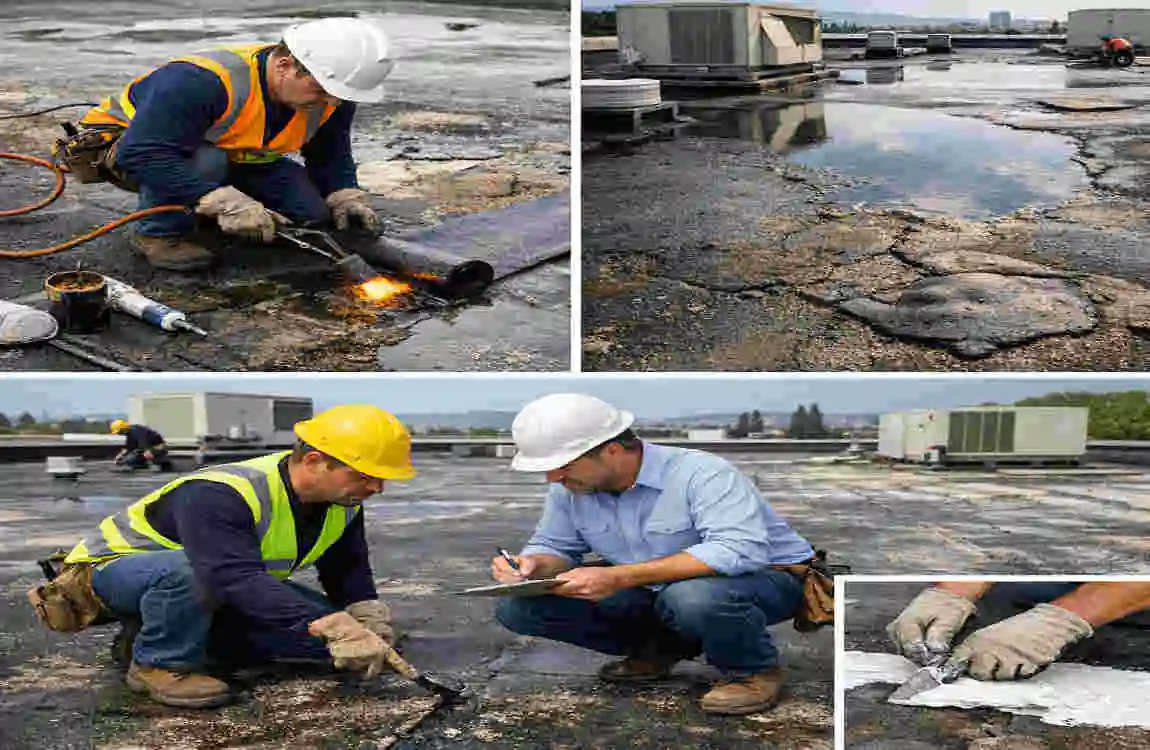
Commercial flat roof repairs are a normal part of owning or managing a business property. Flat roofs work well for many commercial buildings, but they also require regular maintenance because they are exposed to water, sun, wind, and foot traffic every day.
When a flat roof starts to fail, the damage can spread quickly. A small leak can turn into stained ceilings, mold, insulation damage, and even business disruption. That is why timely repair matters so much.
If you handle problems early, you can often avoid major expenses. You also protect the building structure and keep your operations running smoothly.
What Are Commercial Flat Roof Repairs?
Definition of Flat Roof Repair
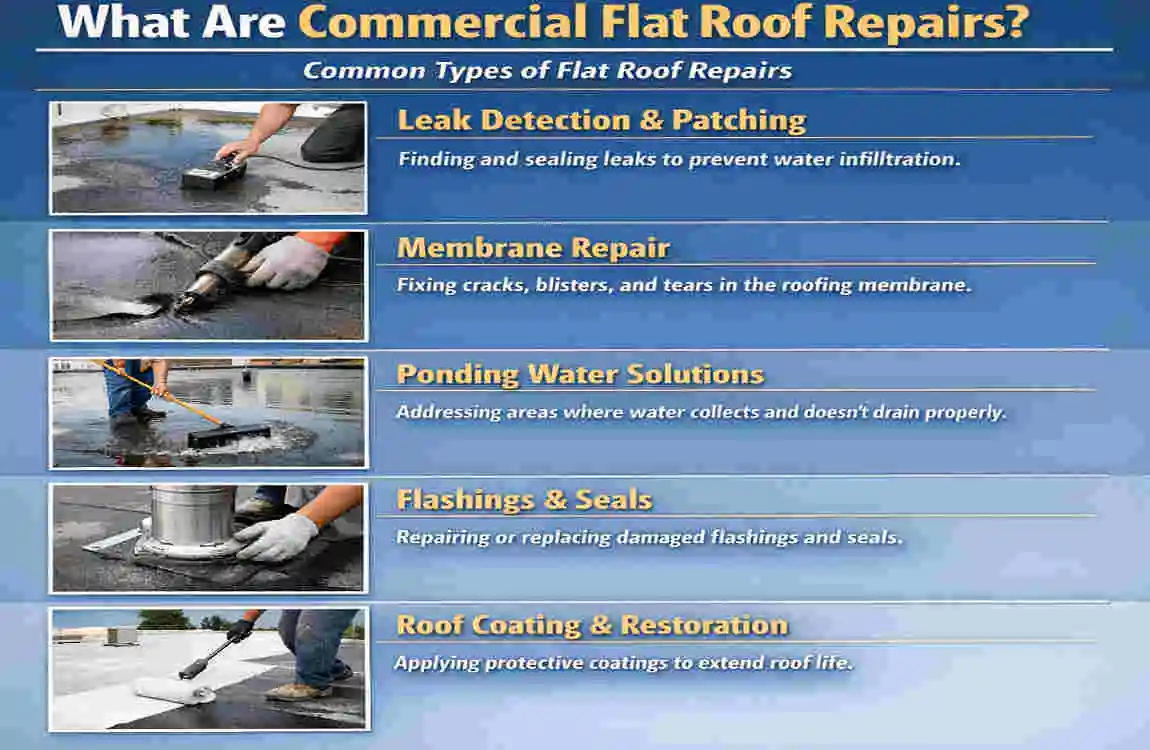
Flat roof repair means fixing damaged parts of the roofing system so it can continue to block water and protect the building. This may involve sealing leaks, patching membranes, fixing flashing, or improving drainage.
Why Commercial Roofs Need Regular Repairs
Commercial roofs often cover large areas. That means even a small issue can affect a large area. They also face more wear from weather and maintenance activity.
Regular repairs help keep the roof strong, dry, and efficient.
Common Types of Commercial Flat Roof Systems
Different roofing materials need different repair methods:
- EPDM
- TPO
- PVC
- Modified Bitumen
- Built-Up Roofing (BUR)
Each system has its own strengths, but each can also develop leaks or wear over time.
Common Causes of Commercial Flat Roof Damage
Aging Roofing Materials
Over time, roofing materials naturally wear out. They may crack, shrink, or lose flexibility.
Ponding Water
Flat roofs are more likely to hold water after rain. If drainage is poor, standing water can weaken the roof surface.
Storm and Wind Damage
Heavy rain, hail, and strong winds can loosen materials or create tears.
UV Exposure
Constant sun exposure can dry out roofing membranes and speed up aging.
Foot Traffic Damage
Workers walking on the roof for repairs, HVAC access, or inspections can cause punctures or surface wear.
Poor Installation
If the roof was not installed correctly, problems may appear much sooner than expected.
Lack of Roof Maintenance
Skipping inspections and repairs usually makes small issues grow into bigger ones.
Warning Signs Your Commercial Flat Roof Needs Repairs
Water Leaks
The clearest sign is water coming through the roof. Even a small leak should be taken seriously.
Ceiling Stains
Brown stains on ceiling tiles or walls often point to moisture getting inside.
Cracks and Blisters
Visible cracks or bubbles in the roof membrane can indicate damage beneath it.
Membrane Shrinkage
Some roofing materials shrink over time, pulling away from edges or seams.
Standing Water
If water sits on the roof long after a storm, drainage may be failing.
Loose Flashing
Flashing seals roof edges and joints. If it lifts or separates, leaks can start.
Mold and Mildew Growth
Moisture inside the building can create mold and mildew, which should never be ignored.
Rising Energy Bills
A damaged roof can affect insulation and air sealing, causing heating and cooling costs to rise.
Commercial Flat Roof Inspection Process
Exterior Roof Inspection
A contractor first checks the roof surface for cracks, tears, standing water, and visible wear.
Interior Building Inspection
They also look inside for stains, damp areas, or signs of hidden leaks.
Moisture Detection
Special tools may be used to find trapped moisture under the membrane.
Professional Roof Assessment
A roofer can judge how serious the damage is and whether repair or replacement makes more sense.
Repair Report and Recommendations
After inspection, you should receive a clear report explaining the problem and the best solution.
Types of Commercial Flat Roof Repairs
Leak Repair
Leak repair is one of the most common fixes. It usually involves sealing the source of water entry.
Flashing Replacement
If flashing around vents, edges, or equipment has failed, replacing it can stop leaks.
Membrane Patching
Small tears or holes can often be patched without replacing the whole roof.
Seam Repair
Seams can split over time, especially in membrane roofs. Resealing them can restore protection.
Drainage Improvements
If the roof drains poorly, repairs may include clearing or redesigning drainage paths.
Ponding Water Correction
This may involve slope adjustments, drain fixes, or surface repairs.
Roof Coating Application
Roof coatings add a protective layer that can help seal minor damage and extend roof life.
Commercial Flat Roof Repair Costs
Average Repair Cost
The cost of commercial flat roof repairs varies widely. Small fixes may cost only a few hundred dollars, while major repairs can reach thousands.
Cost by Roof Size
Larger roofs usually cost more because they need more material and labor.
Material Costs
Some roofing systems are easier and cheaper to repair than others. Material type makes a big difference.
Labor Costs
Labor depends on the roof’s condition, access, and repair complexity.
Emergency Repair Costs
Emergency repairs usually cost more because they need a fast response and urgent labor.
Repair Type Estimated Cost
Leak Repair $300–$1,200
Flashing Repair $500–$2,000
Membrane Patch $400–$1,500
Roof Coating $2–$5 per sq. ft.
Drain Repair $500–$2,500
Major Roof Repair $3,000–$15,000+
Costs can change based on roof size, damage level, and material type. It is always smart to get a few estimates.
Repair vs Roof Replacement
When Repairs Are Enough
Repairs usually make sense when the roof is still in fair condition, and the problem is limited to one area.
When Replacement Is the Better Option
If the roof has repeated leaks, widespread wear, or structural failure, replacement may be more cost-effective.
Cost Comparison
Repairs cost less upfront, but frequent patching can become expensive over time. Replacement costs more at first, but it may save money later.
Lifespan Considerations
A repaired roof may last several more years if the rest of the system is still sound. But if the roof is near the end of its life, replacement may be the better investment.
Best Repair Solutions for Different Roofing Materials
EPDM Roof Repairs
EPDM roofs often need patching and seam sealing. These repairs are usually straightforward when damage is caught early.
TPO Roof Repairs
TPO roofs often require careful seam work and membrane patching. Heat-welded repairs are common.
PVC Roof Repairs
PVC roofing is durable, but seams and flashing may still need repair over time.
BUR Roof Repairs
Built-up roofing may need surface patching, blister repair, or added waterproof layers.
Modified Bitumen Repairs
This system often uses torch, cold adhesive, or self-adhering patches depending on the damage.
Preventive Maintenance Tips
Schedule Annual Inspections
A roof should be checked at least twice a year and after major storms.
Clean Roof Drains
Blocked drains create standing water, one of the biggest problems with flat roofs.
Remove Debris
Leaves, dirt, and trash can trap moisture and damage the roof surface.
Repair Small Damage Early
A small crack is easier and cheaper to fix than a large leak.
Limit Foot Traffic
Allow access only when needed, and use walk pads if possible.
Apply Protective Roof Coatings
A coating can help protect the surface and slow down wear.
Benefits of Professional Commercial Flat Roof Repairs
Longer Roof Lifespan
Professional repairs help the roof last longer by stopping damage early.
Lower Long-Term Costs
Fixing issues before they grow usually saves money.
Better Waterproofing
A trained roofer knows how to properly seal problem areas.
Improved Energy Efficiency
A healthy roof helps insulation perform better.
Reduced Business Interruptions
Fast, effective repairs can reduce downtime for your business.
Warranty Protection
Using the right contractor can help keep your warranty valid.
How to Choose the Right Commercial Roofing Contractor

Verify Licensing and Insurance
Always check that the contractor is properly licensed and insured.
Check Experience
Choose someone with real experience in commercial flat roof repairs.
Read Customer Reviews
Reviews can tell you how the contractor handles quality, timing, and communication.
Request Detailed Estimates
A clear estimate should explain the repair type, cost, and materials.
Ask About Warranties
Good contractors stand behind their work.
Compare Multiple Quotes
A few quotes help you understand fair pricing and service quality.
Mistakes to Avoid
- Ignoring minor leaks
- Delaying repairs
- Hiring inexperienced contractors
- Using incompatible roofing materials
- Skipping routine inspections
- Neglecting drainage issues
These mistakes often make a repair problem worse and more expensive.
Commercial Flat Roof Maintenance Checklist
Use this simple checklist to stay ahead of problems:
- Inspect roof twice a year
- Clear drains and gutters
- Remove debris
- Check flashing
- Repair cracks immediately
- Inspect after storms
- Document maintenance activities
A small maintenance habit can save you from major roof trouble later.
Frequently Asked Questions
How much do commercial flat roof repairs cost?
Most repairs range from $300 to over $15,000, depending on roof size, damage, and material.
How long do commercial flat roof repairs last?
High-quality repairs can last 5–15 years with proper maintenance.
What is the most common problem with commercial flat roofs?
Common issues include water leaks, ponding water, flashing failure, membrane damage, and drainage problems.
Can a leaking commercial flat roof be repaired without replacement?
Yes. Many leaks can be fixed with patching, seam repair, flashing replacement, or roof coatings.
How often should a commercial flat roof be inspected?
At least twice a year and after major storms.
Is roof coating a good repair option?
Yes, if the roof is still in decent shape. Roof coatings can improve waterproofing and extend roof life.
| Topic | Information |
|---|---|
| Service | Commercial Flat Roof Repairs |
| Purpose | Fix leaks, cracks, ponding water, membrane damage, and extend roof lifespan. |
| Common Roofing Types | TPO, EPDM, PVC, Modified Bitumen, Built-Up Roofing (BUR), Metal Flat Roofs |
| Common Signs of Damage | Water leaks, bubbling or blistering, standing water, cracked seams, roof punctures, mold, rising energy bills |
| Main Causes | Aging materials, severe weather, poor installation, foot traffic, clogged drains, UV exposure |
| Repair Methods | Leak patching, seam resealing, membrane replacement, flashing repair, drain cleaning, coating application |
| Average Repair Cost | Minor repairs: $300–$1,000; Moderate repairs: $1,000–$5,000; Major repairs: $5,000–$15,000+ (depends on roof size and damage). |
