
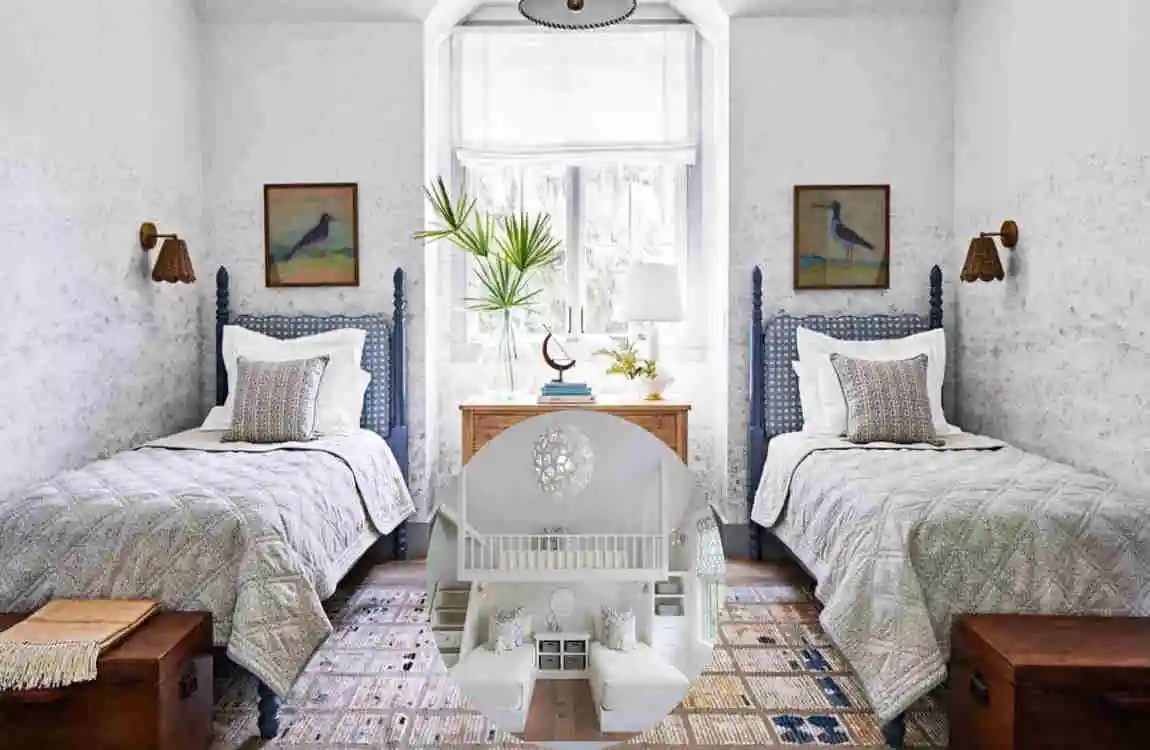
Designing a bedroom with two beds can be both practical and stylish. Whether you are creating a shared room for children, a comfortable guest room, or a space for two adults, the right layout can make a big difference.
The main challenge is using the available space wisely. Two beds can quickly make a room feel crowded if furniture, storage, and walking areas are not planned carefully. Fortunately, with the right bed sizes, layout, lighting, and storage solutions, you can create a room that feels organized and comfortable.
How to Plan a Bedroom With Two Beds
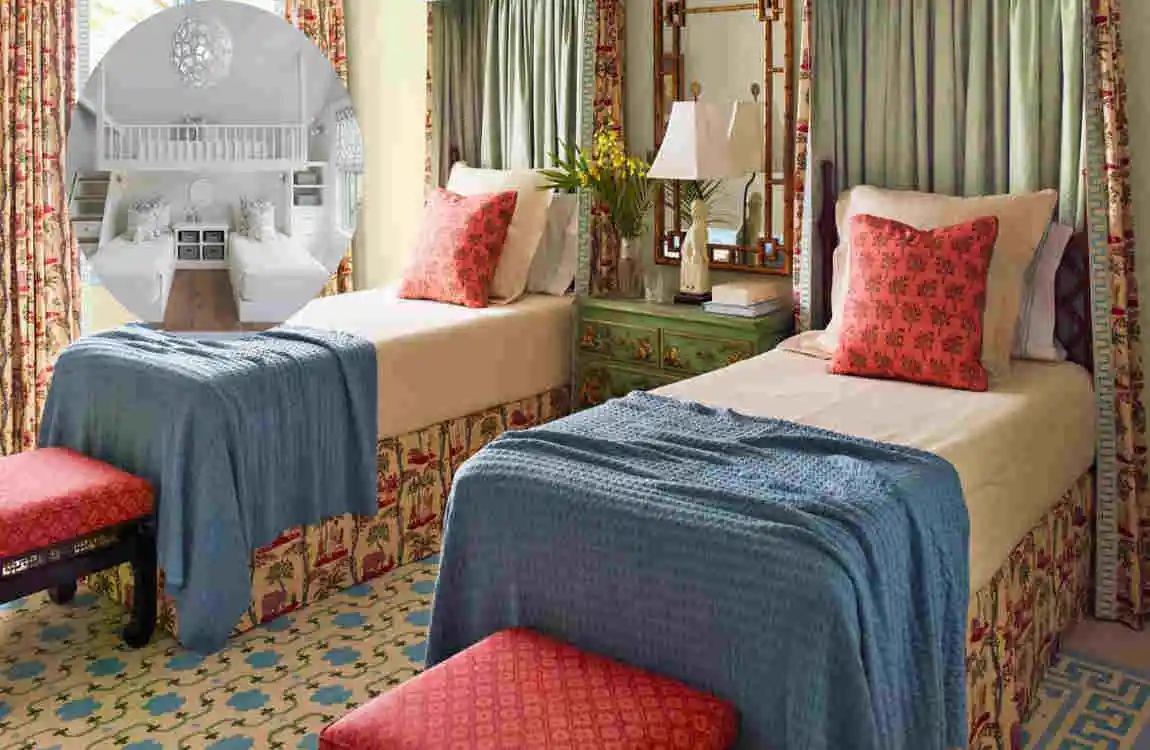
Measure the Room First
Before buying beds or furniture, measure the room carefully. Check the length and width, and note the locations of doors, windows, closets, electrical outlets, and heating or cooling units.
Try to imagine how people will move through the room. You should have clear paths between the beds, door, closet, and other important areas.
Decide Who Will Use the Room
The best design depends on who will sleep in the room.
A children’s room may need space for toys and study areas, while teenagers usually need more storage and personal space. A guest room should focus on comfort and easy access, while an adult bedroom may require larger beds and additional privacy.
Choose the Right Bed Size
The bed size has a major effect on the available floor space. Twin beds are often the easiest option for a bedroom with two beds because they provide comfortable sleeping space without taking up too much room.
Other choices include:
- Twin beds: Great for children, teenagers, and guest rooms.
- Twin XL beds: Useful for taller sleepers.
- Full-size beds: Better for adults but require more space.
- Bunk beds: Excellent for small bedrooms.
- Daybeds: Useful when the room needs to serve multiple purposes.
Best Layout Ideas for a Bedroom With Two Beds
Two Beds Side by Side
Placing two beds parallel to each other is one of the most traditional arrangements. You can position a small nightstand between them or place a shared table in the center.
This layout works particularly well in a wider bedroom because it creates a balanced appearance.
Two Beds Against Opposite Walls
For more personal space, place each bed against a different wall. This arrangement can work well for siblings, teenagers, or guests.
Each person can have their own nightstand, lighting, and storage area, making the shared room feel more individual.
Beds in an L-Shaped Layout
An L-shaped arrangement places the beds along two adjoining walls. This can be an excellent choice for a square room because it makes better use of corners.
The open center can provide useful floor space for a desk, a rug, a play area, or a small seating arrangement.
Two Beds Facing the Same Direction
Matching beds facing the same direction can create a clean and symmetrical design. Use similar bedding, nightstands, and lamps to create visual balance.
This approach works especially well in modern and minimalist bedrooms.
Bunk Beds for Maximum Floor Space
If the room is small, bunk beds can save a significant amount of floor space. Instead of placing two beds on the floor, one sleeping area is positioned above the other.
This leaves room for storage, a desk, or a play area. Make sure the bunk bed is appropriate for the occupants and follow the manufacturer’s safety recommendations.
How Much Space Do Two Beds Need?
Recommended Walking Space
A comfortable bedroom needs clear walking paths. Avoid placing beds or furniture where they make it difficult to reach the door, closet, or window.
Remember that drawers and closet doors also need room to open.
Creating Space Between Two Beds
A narrow nightstand can work well between two beds. If space is very limited, consider a small shared table or wall-mounted shelf.
The goal is to provide useful bedside space without making the room feel cramped.
Making a Small Bedroom Feel Larger
A small room can still accommodate two beds if you use space carefully. Light wall colors, simple furniture, mirrors, and vertical storage can make the room appear more open.
Keeping the floor free from unnecessary items is also one of the easiest ways to improve the sense of space.
Smart Furniture Ideas for a Two-Bed Bedroom
Use Multi-Functional Furniture
Furniture that serves more than one purpose is especially useful in a shared bedroom. Consider beds with drawers, storage benches, wall shelves, foldable desks, and storage ottomans.
These pieces reduce the need for additional cabinets and help keep the floor open.
Choose Matching Nightstands
Matching nightstands can create symmetry and give both occupants equal storage space.
If the room is small, choose narrow tables rather than large bedside cabinets.
Consider Built-In Storage
Built-in wardrobes and wall cabinets can provide substantial storage without taking up too much floor space.
Under-bed drawers are another smart option for clothing, blankets, shoes, toys, and other belongings.
Storage Solutions for a Bedroom With Two Beds
Under-Bed Storage
The area underneath a bed is often wasted. Beds with built-in drawers or storage boxes can turn this unused space into useful storage.
This is particularly helpful when two people need to share one closet.
Vertical Storage
Use the walls instead of filling the floor with furniture. Tall wardrobes, floating shelves, and wall-mounted cabinets can provide additional storage while keeping the room open.
Shared Closet Organization
When two people share a closet, organization becomes important. Divide the available space fairly and use baskets, bins, shelves, and hanging organizers.
Giving each person a clearly defined storage area can also reduce clutter and disagreements.
Keep the Room Clutter-Free
Every item should have a designated place. Avoid filling the bedroom with furniture that serves no useful purpose.
A simple room with good storage will usually feel more comfortable than a decorated room filled with unnecessary items.
Lighting Ideas for a Bedroom With Two Beds
Give Each Bed Its Own Light
Individual lighting makes a shared bedroom more comfortable. Wall sconces, reading lamps, or adjustable bedside lights allow each person to control their own lighting.
This is especially useful when one person wants to read while the other is sleeping.
Use Layered Lighting
A well-designed bedroom can use three basic types of lighting:
- General lighting for the entire room
- Task lighting for reading or studying
- Accent lighting for decoration and atmosphere
Using several lighting sources creates a warmer and more flexible space.
Take Advantage of Natural Light
Keep windows as open as possible. Avoid placing tall wardrobes directly in front of windows.
Light curtains can help natural light enter the room while maintaining privacy.
Color and Decor Ideas for Two Beds
Use a Neutral Color Palette
Light colors can make a shared bedroom appear larger and brighter. White, cream, beige, soft gray, and light blue are versatile choices.
You can add stronger colors through bedding, artwork, cushions, or small decorative pieces.
Create Symmetry With Matching Bedding
Matching bedding makes two beds look intentional and organized. However, you do not have to use the same patterns.
For a more personalized room, choose bedding in the same color family but with slightly different patterns.
Add Personality Without Overcrowding
Wall art, small rugs, plants, cushions, and decorative accessories can add character without taking up much space.
Avoid covering every surface with decorations. A little visual simplicity can make a two-bedroom feel much larger.
Create Separate Zones
If two people share the room, give each person a personal area. A separate shelf, nightstand, lamp, or storage section can help create a sense of ownership.
Bedroom With Two Beds for Different Users
Two Beds for Children
A shared children’s bedroom should be practical and durable. Choose furniture that can handle everyday use and provide easy-to-access storage.
Bunk beds can be useful in very small rooms, while separate twin beds may be better when floor space allows.
Two Beds for Teenagers
Teenagers often need more privacy and personal storage. Try to provide individual desks, shelves, lighting, and places for personal belongings.
Allowing each person to personalize their side of the room can make sharing more comfortable.
Two Beds in a Guest Room
A two-bed guest room is flexible because it can accommodate friends, relatives, or children.
Use neutral colors, comfortable bedding, individual bedside lighting, and enough space for luggage.
Two Beds for Adults
For adults, comfort should be the priority. Choose appropriately sized beds and provide individual nightstands and lights.
If the room is shared regularly, consider how each person can have enough privacy and storage.
Common Mistakes to Avoid With Two Beds
When designing a bedroom with two beds, avoid these common problems:
- Choosing beds that are too large for the room
- Blocking doors or windows
- Leaving very narrow walking paths
- Adding too much furniture
- Ignoring storage requirements
- Using poorly positioned lighting
- Mixing too many colors and patterns
- Forgetting individual privacy
- Filling the center of the room with unnecessary objects
Good design is not about adding more furniture. It is about using the available space efficiently.
Bedroom With Two Beds: Layout Comparison
LayoutBest ForMain AdvantagePotential Challenge
Side by Side Siblings, guests Simple and symmetrical Needs wall space
Opposite Walls Adults, guests More personal space May reduce open floor area
L-Shaped Small rooms Uses corners efficiently Less symmetrical
Bunk Beds Children Saves floor space Requires safety planning
Parallel Beds Shared bedrooms Easy movement May need a wider room
How to Make a Bedroom With Two Beds Look Stylish
Create a Balanced Layout
Try to distribute furniture evenly throughout the room. If one side of the room has a large wardrobe while the other side is empty, the room may feel unbalanced.
Symmetrical furniture arrangements can make the room look more organized.
Use a Consistent Design Theme
Choose one overall style rather than mixing too many design ideas. Modern, minimalist, Scandinavian, farmhouse, and contemporary styles can all work well.
A consistent style makes it easier to coordinate beds, bedding, furniture, and wall decor.
Add a Rug
A rug can make two beds feel connected and add warmth to the room. Depending on the room size, you can place one larger rug beneath the beds or a smaller rug in the open area.
Make sure the rug does not interfere with doors or furniture.
Decorate the Walls
Wall art, framed prints, shelves, or decorative panels can add personality without reducing floor space.
Keep the size of your wall decorations proportional to the room. Too many large pieces can make a small bedroom feel busy.
Small Bedroom With Two Beds: Space-Saving Ideas
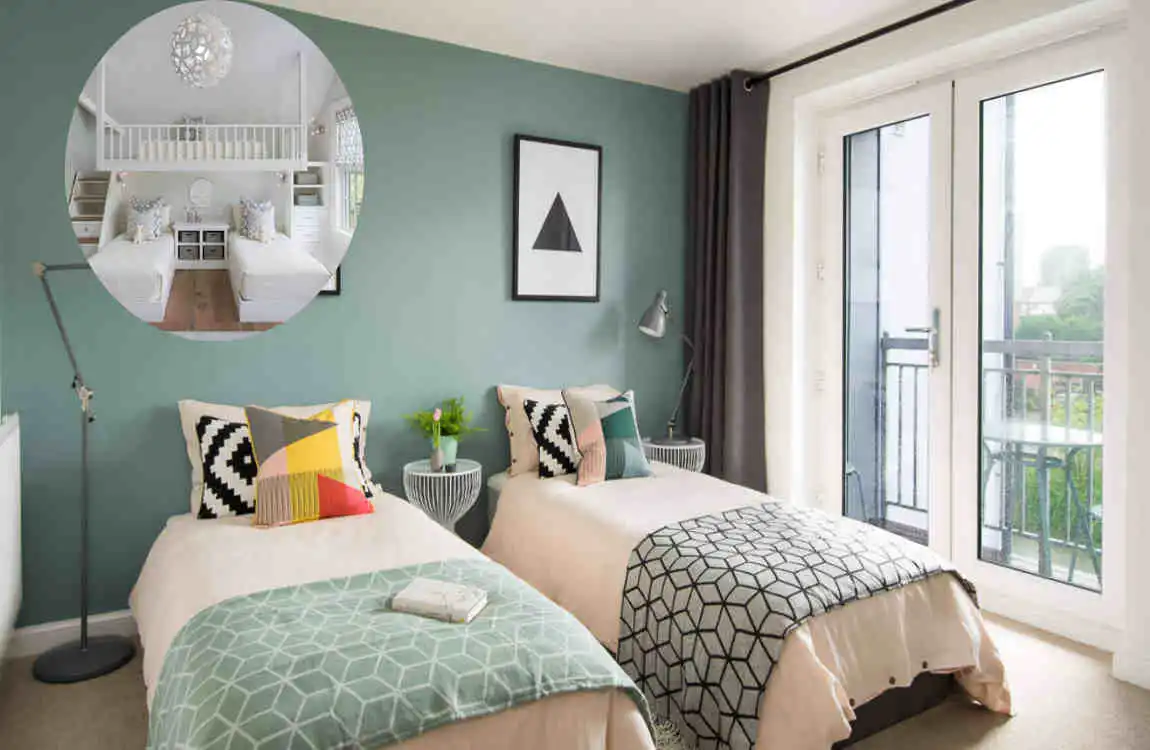
When space is limited, focus on furniture that provides maximum function with minimum footprint.
Choose twin or bunk beds, use vertical shelving, install wall-mounted lights, and consider beds with built-in drawers.
Keep the center of the room open whenever possible. Light-colored walls and bedding can also help reflect light and create a more spacious appearance.
Mirrors are another useful design element because they can visually increase the sense of depth.
Frequently Asked Questions About a Bedroom With Two Beds
Can You Put Two Beds in One Bedroom?
Yes. Two beds can fit in one bedroom if the room has enough space for the beds, furniture, doors, and comfortable walking paths. Room dimensions and bed size are the most important factors.
What Is the Best Layout for a Bedroom With Two Beds?
There is no single best layout. Side-by-side beds work well in wider rooms, while L-shaped layouts can work better in square rooms. Bunk beds are often the most practical choice for very small bedrooms.
What Size Bedroom Is Best for Two Beds?
The ideal room size depends on the size of the beds and the amount of furniture you need. Instead of focusing only on room dimensions, consider the complete layout and required movement space.
How Do You Arrange Two Beds in a Small Bedroom?
Choose compact beds, minimize furniture, use vertical storage, and consider bunk beds. Wall-mounted lighting can also save valuable bedside space.
Should Two Beds Have Matching Bedding?
Matching bedding creates a balanced appearance, but it is not required. Coordinated colors with different patterns can give each occupant some individuality while maintaining a cohesive design.
How Can I Make a Two-Bed Bedroom Look Bigger?
Use light colors, mirrors, minimal furniture, vertical storage, and open walking paths. Keeping clutter off the floor can make an immediate difference.
Are Bunk Beds Better Than Two Separate Beds?
Bunk beds are better when saving floor space is the main priority. Separate beds may provide greater comfort, easier access, and a stronger sense of personal space.
| Design Idea | How It Helps |
|---|---|
| Place Beds Side by Side | Creates a balanced and practical layout for siblings or guests. |
| Use Matching Beds | Gives the room a neat, coordinated appearance. |
| Add a Shared Nightstand | Saves space while providing storage for both beds. |
| Try Bunk Beds | A great choice for small bedrooms and children’s rooms. |
| Choose Storage Beds | Provides extra space for bedding, clothes, or toys. |
| Keep a Clear Walkway | Makes the room easier and safer to move around. |
| Use Wall-Mounted Lights | Saves bedside space and adds useful lighting. |
| Add Individual Storage | Gives each person their own place for personal belongings. |
| Use Light Colors | Makes a small two-bed bedroom feel brighter and more spacious. |
| Add a Rug Between Beds | Creates warmth and visually connects the two sleeping areas. |
