
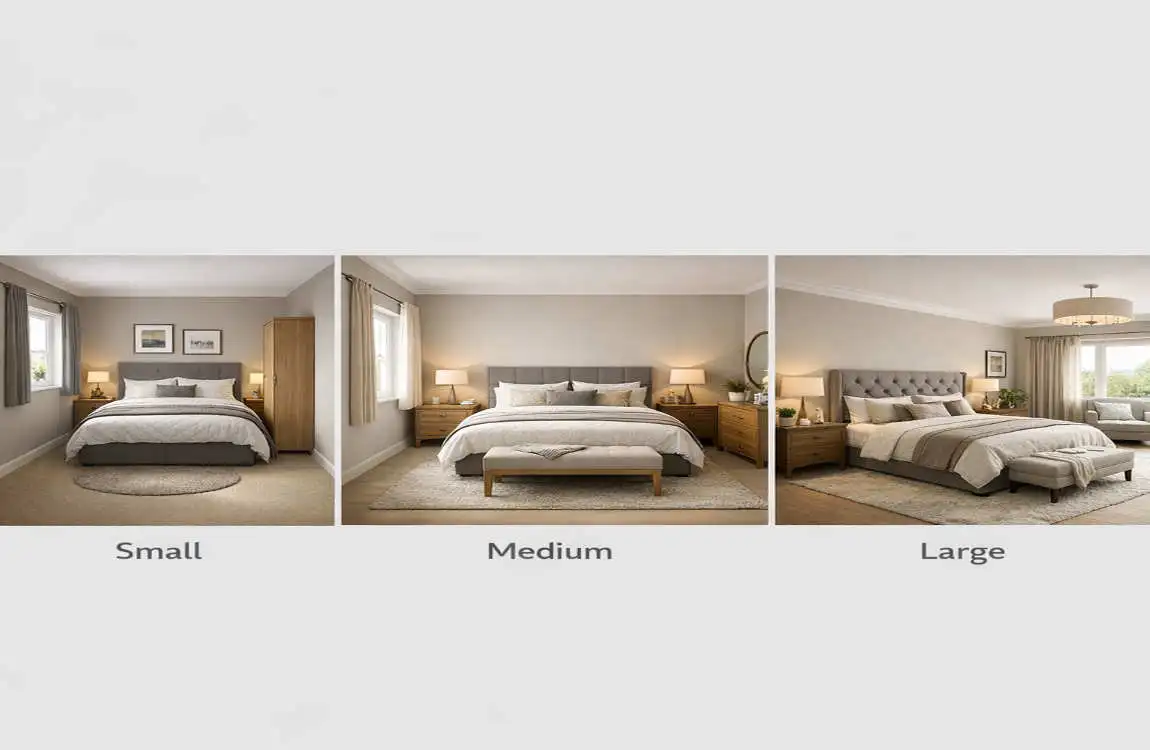
If you are wondering what the average size of a bedroom in the UK is, the short answer is this: there is no single exact size, but many UK bedrooms fall somewhere between 9 and 14 square metres, depending on the type of home.
Some bedrooms are smaller, especially in older homes or compact flats. Others are much larger, especially in newer homes or main bedrooms. So, the real answer depends on whether you are looking at a single bedroom, double bedroom, or main bedroom.
What Is the Average Size of a Bedroom in the UK?
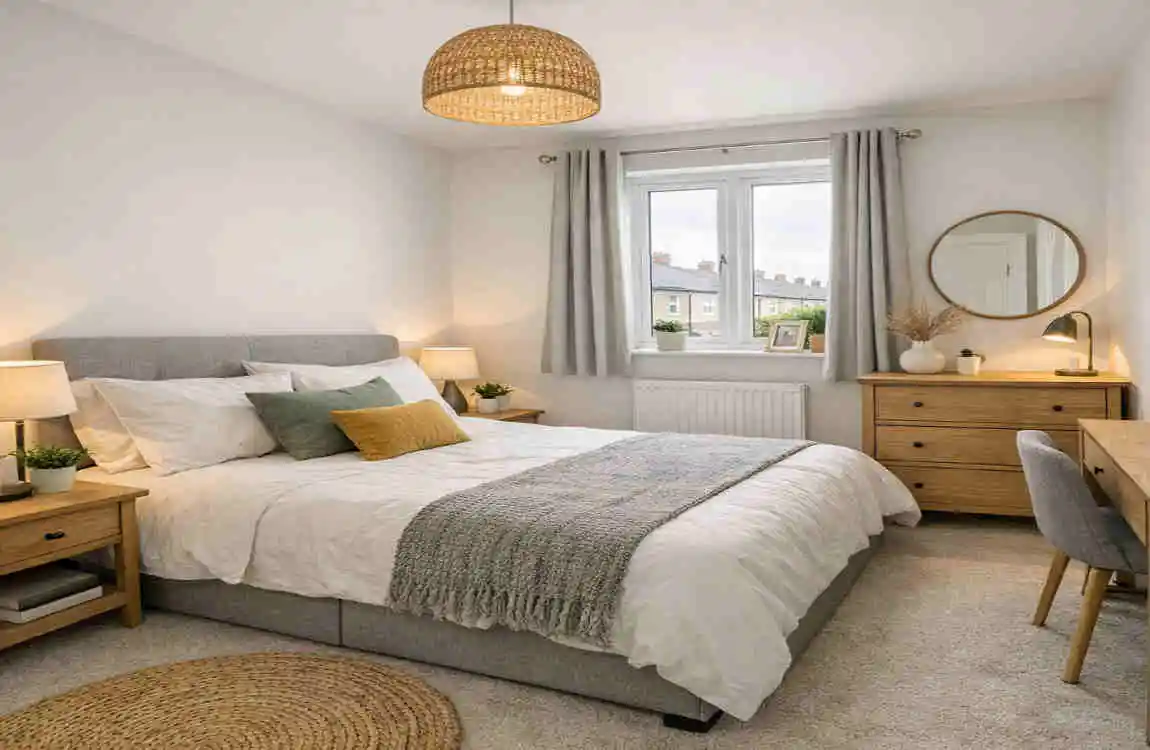
The average bedroom size in the UK usually sits in the medium range. In simple terms, many standard bedrooms are around 3m x 3m to 4m x 3.5m, which gives roughly 9 to 14 m².
Single vs Double vs Main Bedroom
A bedroom‘s size often depends on its purpose.
- Single bedroom: usually smaller, meant for one person
- Double bedroom: a common standard room size in many homes
- Main bedroom: usually the largest bedroom in the house
Why Size Alone Does Not Tell the Whole Story
A room can be the same size on paper but feel very different in real life.
That is because the shape of the room, ceiling height, window placement, storage, and furniture layout all affect how spacious it feels. A well-planned 10 m² bedroom may feel bigger than a poorly arranged 12 m² room.
UK Bedroom Sizes: Small, Medium, and Large
To make bedroom sizes easier to understand, it helps to break them into practical groups.
Bedroom Type Approx. Size Best For
Small 6–9 m² Child/guest room
Medium 9–14 m² Single or double bedroom
Large 14 m²+ Master bedroom
Small Bedroom
A small bedroom is usually around 6-9 m².
This size works best for a child, a guest room, or a single sleeper. It may feel tight with too much furniture, so the key is to keep things simple.
Good choices for small rooms include:
- A single bed
- A slim wardrobe
- Wall shelves
- Under-bed storage
Medium Bedroom
A medium-sized bedroom is typically 9 to 14 m².
This is a very common size in UK homes. It usually fits a double bed, bedside tables, and a wardrobe without feeling too crowded.
This size works well because it gives you enough room to move around while still keeping the layout practical.
Large Bedroom
A large bedroom is usually 14 m² or more.
This type of room can hold a bigger bed, extra storage, a desk, or even a seating area. It gives you more freedom with the layout, but it still needs good planning so it does not feel empty.
What Size Is a Standard Double Bedroom in the UK?
A standard double bedroom in the UK is usually large enough to fit a double bed and some basic furniture without feeling cramped.
Common Dimensions
A practical double bedroom may measure around:
- 3m x 3m
- 3m x 3.5m
- 4m x 3m
That usually gives enough room for a double bed, a wardrobe, and space to walk around.
Bed Size Matters
The bed takes up much of the usable space, so the bed size really matters.
- Double bed: good for most average bedrooms
- King bed: needs more space around it
- Super king bed: best for larger rooms only
If you want bedside tables on both sides, make sure the room is wide enough to move comfortably.
Why Older Homes May Have Smaller Bedrooms
Many older UK houses were built with smaller room sizes than modern homes. That is why some bedrooms feel compact, even if they are still classed as full bedrooms.
In older properties, you may also see:
- Narrow room shapes
- Chimney breasts
- Limited storage space
- Smaller windows
What Is the Minimum Bedroom Size in the UK?
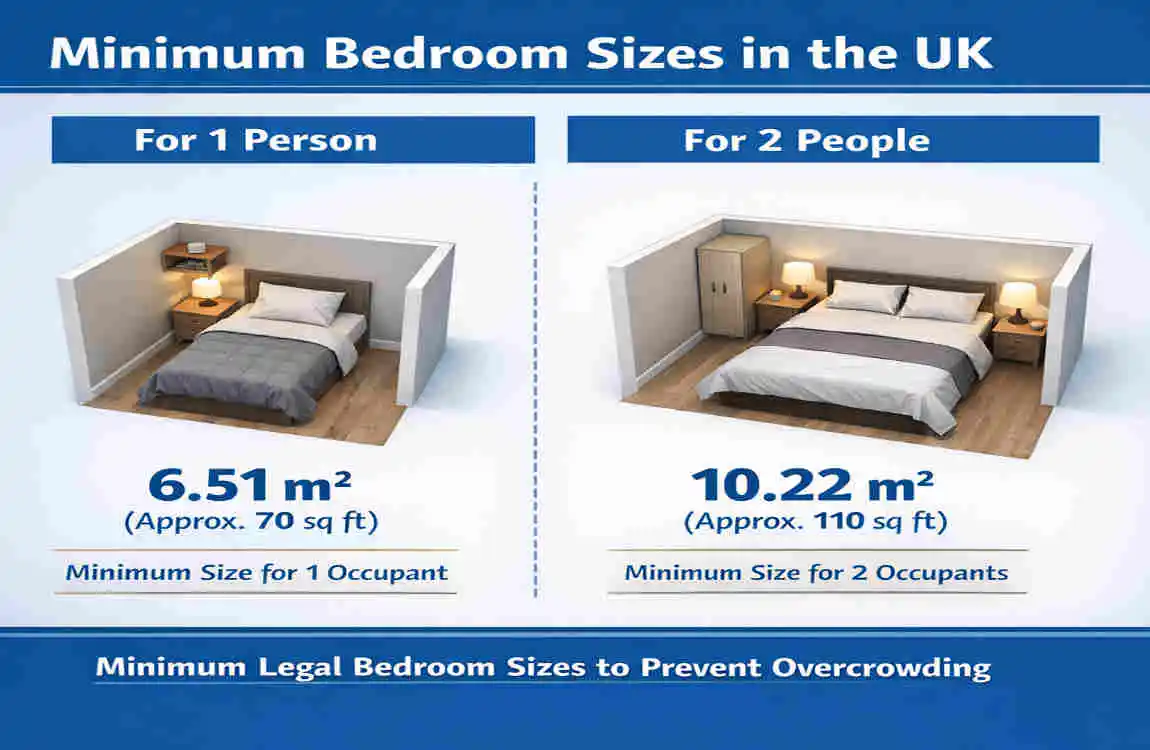
There is not one single rule that applies to every property in every situation.
Planning and Housing Standards
In some cases, the Nationally Described Space Standard is used as a guide for new homes. This is not the same as a rule for every bedroom, but it does help set expectations for space.
What Affects Bedroom Classification?
A room may be judged by more than just its square metres. Other things matter too, such as:
- Ceiling height
- Window size
- Usable floor area
- Room shape
- Access and layout
Why You Should Check Local Requirements
If you are buying, renting, converting, or planning a property, it is wise to check the relevant local planning or housing requirements. Bedroom rules can vary depending on the situation.
How to Measure Your Bedroom Correctly
Measuring your room is easy if you break it into simple steps.
Measure Length and Width
Use a tape measure and measure the usable floor area of the room.
Calculate Square Metres
Multiply the length by the width.
For example:
- 3m x 4m = 12 m²
Account for Unusual Shapes
Not all bedrooms are simple rectangles. Some have:
- Alcoves
- Sloping ceilings
- Chimney breasts
- Built-in wardrobes
These features can reduce the usable space, even if the total floor area looks decent.
Why Advertised Sizes Can Be Different
Estate agent measurements or floor plans may not always clearly show the full usable space. That is why it helps to measure the room yourself before buying furniture.
How to Make a Small UK Bedroom Feel Bigger
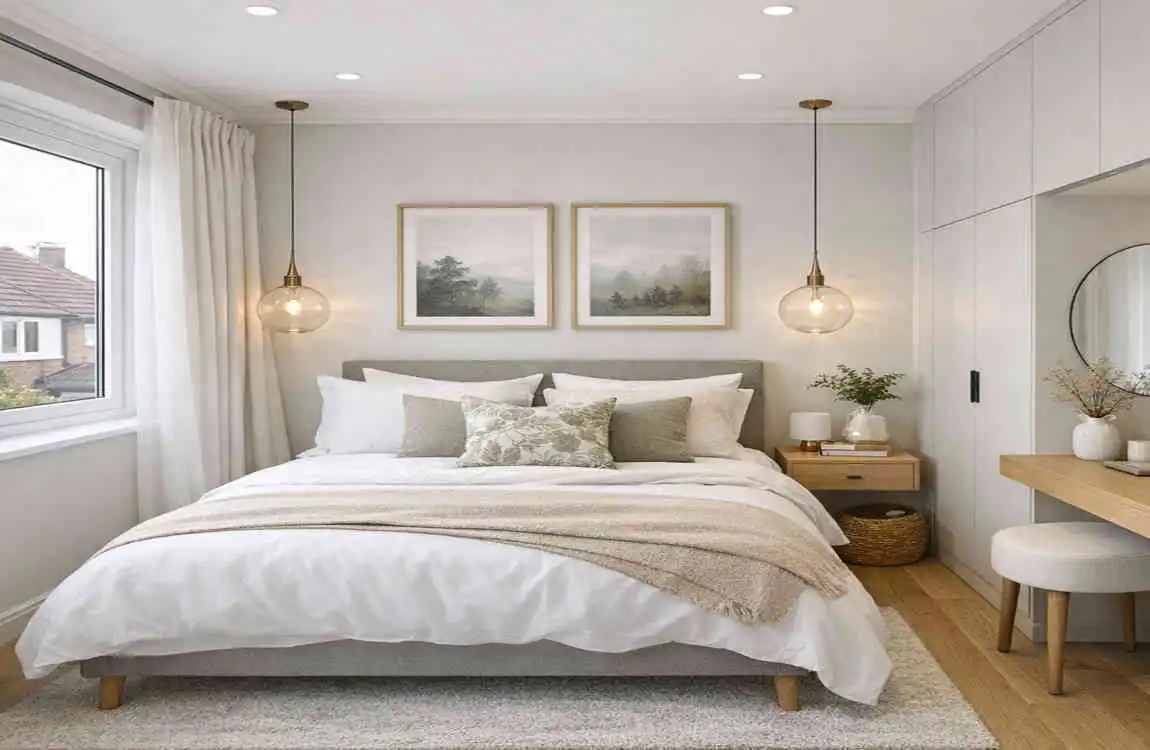
A small room can still feel comfortable if you design it well.
Smart Space-Saving Tips
- Choose furniture that fits the room
- Use vertical storage
- Keep walking paths clear
- Add mirrors to reflect light
- Use light colours on walls and bedding
- Try under-bed storage
- Use fitted wardrobes if possible
What to Avoid
Try not to overload the room.
Too many chairs, bulky wardrobes, or large decorative pieces can make a small bedroom feel cramped very quickly.
Layout Matters More Than You Think
Sometimes, the way furniture is placed matters more than the actual size of the room. A smart layout can make even a modest bedroom feel open and usable.
FAQ: UK Bedroom Size Questions
What is the average size of a bedroom in the UK?
The average bedroom size in the UK is typically 9-14 m², but this varies by home type and layout.
What is a good size for a double bedroom in the UK?
A practical double bedroom is usually around 10– 12 m², or more, depending on furniture and walking space.
Is a 10 m² bedroom small?
Not necessarily. A 10 m² bedroom can work well if the layout is smart and the furniture is not too bulky.
What is the minimum legal bedroom size in the UK?
There is no single universal rule for every bedroom. Requirements can depend on the property type and local standards.
What size is a main bedroom in the UK?
A main bedroom is usually the largest bedroom in the home, often 14 m² or more.
Is a 12 m² bedroom a good size?
Yes, 12 m² is often a very useful size for a bedroom. It can usually fit a double bed and basic furniture comfortably.
How do I calculate my bedroom size in square metres?
Multiply the length by the width. For example, 3m x 4m = 12 m².
Does bedroom size affect house value?
Yes, it can. Larger or better-planned bedrooms may make a home more appealing to buyers.
Can a small bedroom still be considered a bedroom?
Yes, but classification can depend on planning, housing, and property rules.
What is considered a large bedroom in the UK?
A bedroom of 14 m² or more is often seen as large in practical terms.
| Bedroom Size | Approx. Area | Best For | Typical Feel |
|---|---|---|---|
| Small | 6–9 m² | Single bed, child’s room | Compact & cozy |
| Medium | 10–14 m² | Double bed, couple | Comfortable & practical |
| Large | 15+ m² | King bed, couple | Spacious & luxurious |
