
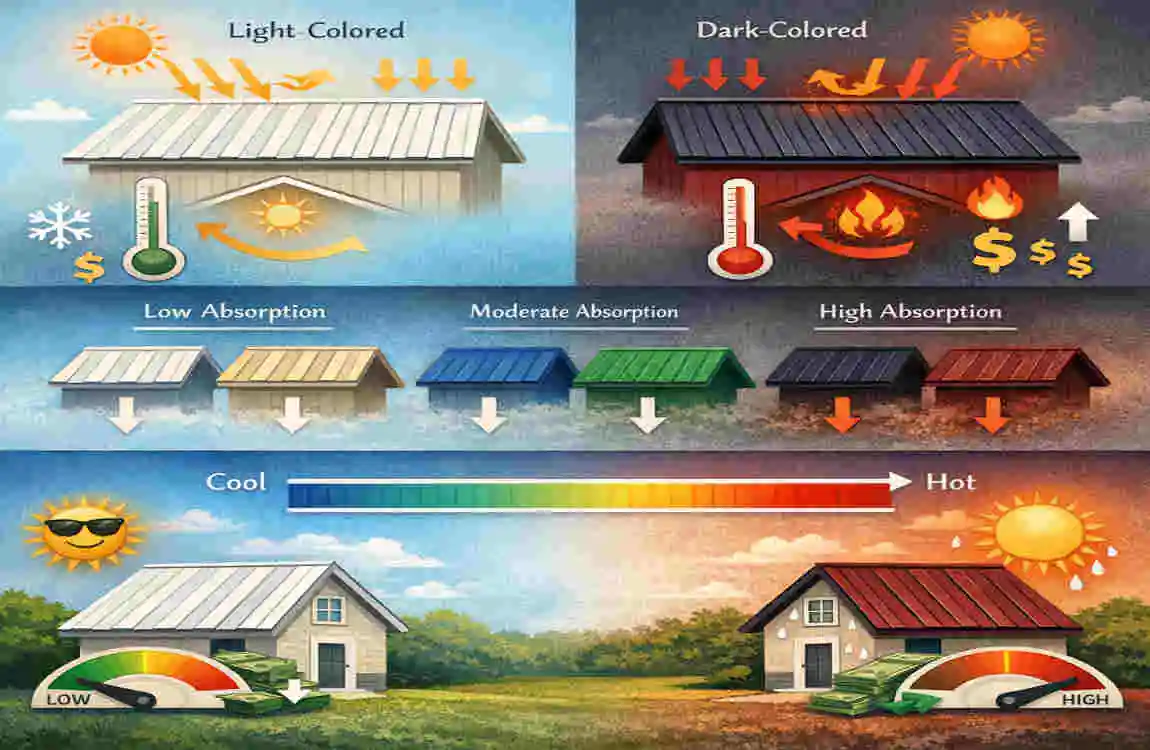
When people choose a roof, they often think about style first. But How Roof Color Affects Energy Efficiency is just as important. The color of your roof can change how much heat your home absorbs, how hard your cooling system works, and how comfortable your indoor spaces feel.
This matters even more if you live in a hot or mixed climate. A roof that reflects more sunlight can help keep your home cooler and may lower electricity bills. A darker roof can help in colder places, where holding in heat may be more useful.
What Does Roof Color Have to Do with Energy Efficiency?
Understanding Solar Heat Absorption
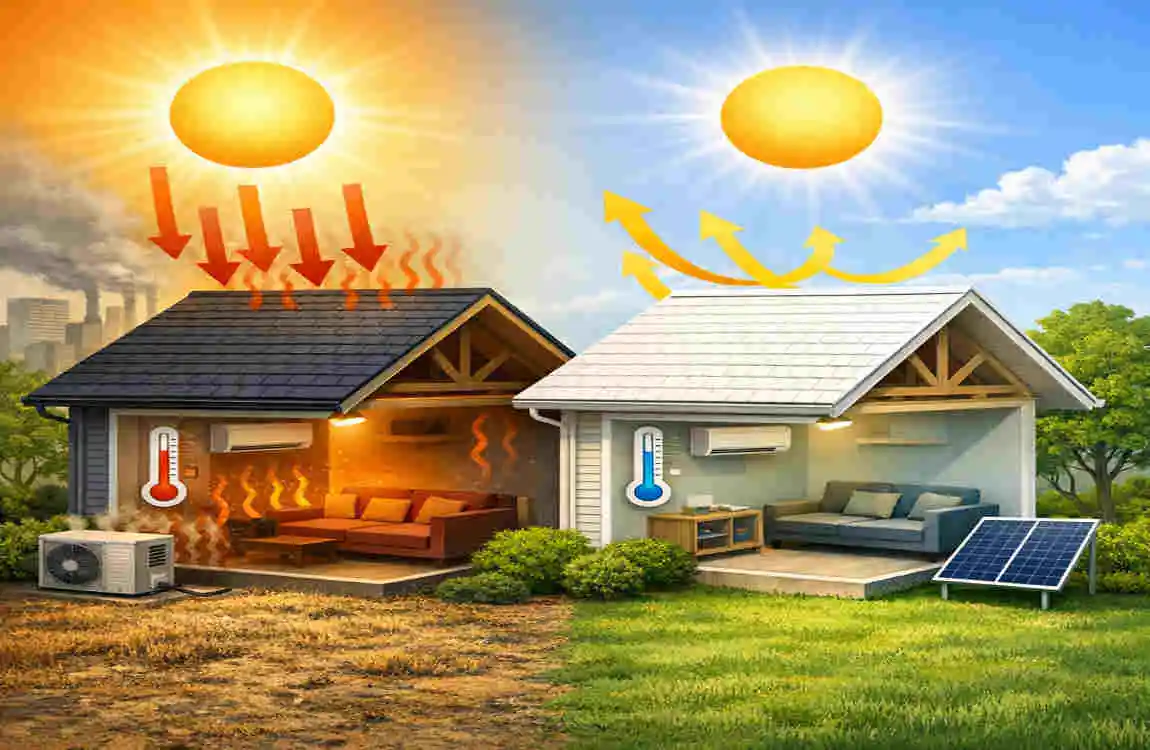
Sunlight carries heat. When sunlight hits your roof, some of that heat is absorbed, and some is reflected. A roof that absorbs more heat becomes hotter, and that heat can move into the attic and living areas below.
That is why roof color matters. Light colors usually reflect more heat. Dark colors usually absorb more heat.
Why Roof Color Matters
The science is simple. Lighter roofs stay cooler, while darker roofs get hotter. This happens because dark surfaces take in more solar energy.
That hotter surface can raise the temperature in your attic and increase the work your air conditioner needs to do. Over time, that can affect both comfort and energy costs.
Relationship Between Roof Temperature and Indoor Comfort
If the roof gets very hot, the attic often gets hot too. Then that heat can slowly spread into the rooms below.
That is why homeowners often notice that roof color affects how warm the house feels, especially in summer. A cooler roof can help the whole home feel more comfortable.
How Roof Color Affects Energy Efficiency
Light-Colored Roofs
Light-colored roofs are often the best choice for warm weather. They reflect more sunlight and reduce heat gain.
That means they can help:
- Lower indoor temperatures
- Reduce cooling expenses
- Ease the load on your HVAC system
- Improve day-to-day comfort
If your home gets a lot of sun, a light roof can make a noticeable difference.
Dark-Colored Roofs
Dark roofs absorb more solar heat. In a cold climate, that can sometimes help with winter warmth.
But in hot areas, the extra heat usually becomes a problem. Your attic may get hotter, and your air conditioner may need to work harder.
Medium Roof Colors
Medium colors, like some browns and grays, offer a middle ground. They do not reflect as much as white, but they also do not absorb as much as black.
These colors can work well in moderate or mixed climates where you want a balance between style and performance.
Best Roof Colors for Different Climates
Hot and Sunny Regions
If your area gets strong sun and long hot seasons, choose a roof color that reflects heat well.
Good options include:
- White
- Light gray
- Beige
- Cool-coated roofing
These colors help keep heat out and can improve cooling efficiency.
Cold Regions
In colder places, darker roof colors may help absorb more warmth from the sun.
Common choices include:
- Dark gray
- Brown
- Black
- Deep green
These colors can help in winter, but they may not be ideal if summers are also hot.
Mixed Climate Areas
If your area has both warm and cool seasons, go for a balanced choice. Neutral colors often work best.
They can deliver reasonable energy performance without forcing you to choose an extreme light or dark shade.
Cool Roof Technology Explained
What Is a Cool Roof?
A cool roof is designed to reflect more sunlight and absorb less heat than a standard roof. It can be made from special materials, coatings, or finishes.
The goal is simple: keep the roof surface cooler and reduce heat transfer into the home.
Solar Reflectance
Solar reflectance is how much sunlight a roof reflects. A roof with high reflectance absorbs less solar energy.
Thermal Emittance
Thermal emittance means how well a roof releases heat after it has absorbed some. A roof with good emittance cools down faster.
Benefits of Cool Roof Systems
Cool roof systems can help with:
- Lower attic temperatures
- Better indoor comfort
- Reduced cooling costs
- Less strain on HVAC systems
ENERGY STAR Roofing Products
Some roofing products are rated for energy performance. These are designed to reflect more heat and support better efficiency.
Roof Materials and Their Energy Performance
Asphalt Shingles
Asphalt shingles are very common, but they usually absorb more heat than reflective roofing options unless they have special coatings.
Metal Roofing
Metal roofing can perform very well, especially when paired with reflective paint or a cool finish. It is often one of the strongest choices for energy efficiency.
Clay Tiles
Clay tiles can help with heat control, especially when installed with airflow underneath. They are often used in warmer regions.
Concrete Tiles
Concrete tiles are durable and can offer decent thermal performance. Their energy efficiency depends a lot on color and design.
Slate Roofing
Slate is long-lasting and heavy. Its energy performance depends more on installation and insulation than color alone.
Synthetic Roofing Materials
Some synthetic roofs are built to improve insulation and reflectivity. These can be a good modern option if chosen carefully.
Benefits of Choosing an Energy-Efficient Roof Color
Choosing the right color can give you several real benefits:
- Lower electricity bills
- Improved indoor comfort
- Less HVAC workload
- Longer roof lifespan
- Better home value
- Reduced carbon footprint
The biggest gain usually comes in hot weather, when cooling costs can rise quickly.
Factors Beyond Roof Color That Affect Energy Efficiency
Roof Insulation
Insulation slows down heat movement. Even the best roof color will not help much if the attic insulation is weak.
Ventilation
Good roof ventilation lets hot air escape from the attic. This helps reduce heat buildup.
Roofing Material Quality
The actual material matters, not just the color. A reflective metal roof may perform better than a dark asphalt roof, even if both are the same color family.
Roof Pitch
The roof’s slope can affect how much sun it receives and how heat moves across it.
Local Climate
Your climate should always guide your choice. What works in a hot desert area may not work in a snowy region.
Shade from Trees
Nearby trees can reduce the amount of direct sunlight hitting the roof. That can help lower heat gain.
Common Myths About Roof Color and Energy Efficiency
Black Roofs Are Always Bad
Not always. In cold climates, dark roofs can help absorb heat and may support winter comfort.
White Roofs Work Everywhere
White roofs are great in hot climates, but they may not be the best fit for every home style or region.
Roof Color Alone Solves Energy Problems
It helps, but it is only one part of the system. Insulation, ventilation, and material choice also matter.
Roof Material Doesn’t Matter
It absolutely does. Two roofs of the same color can perform very differently depending on the materials and coatings.
How to Choose the Right Roof Color
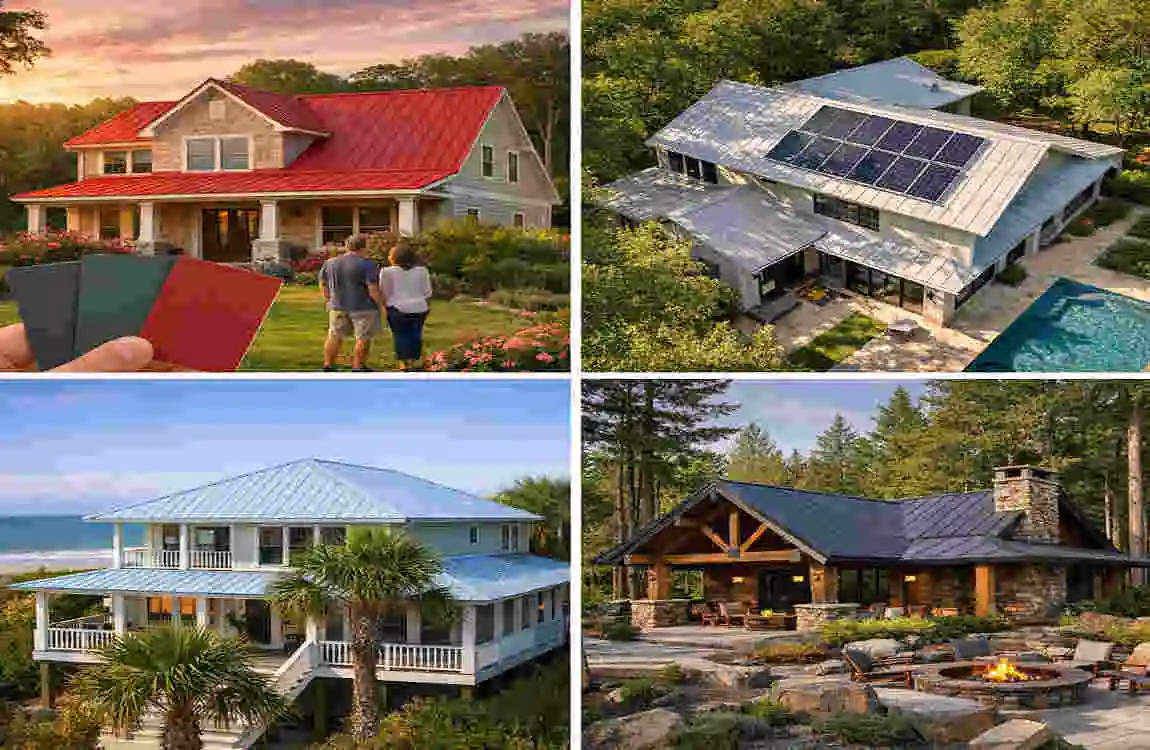
Consider Your Climate
Start with weather. That is the most important factor.
Review Local Building Codes
Some areas have rules about roofing materials or colors, especially in planned neighborhoods.
Match Your Home’s Exterior
Your roof should look good with the rest of your home. Efficiency matters, but appearance still counts.
Think About Long-Term Energy Savings
A roof is a long-term choice. A slightly higher upfront cost may save money over time.
Compare Roofing Materials
Do not look at color alone. Compare how the full roof system performs.
Roof Color Comparison Table
Roof ColorHeat AbsorptionHeat ReflectionBest ClimateCooling Efficiency
White Very Low Excellent Hot Excellent
Light Gray Low Very Good Warm Very Good
Beige Low Very Good Warm Very Good
Brown Medium Moderate Mixed Moderate
Dark Gray High Low Cold Fair
Black Very High Very Low Cold Low
Pros and Cons of Light vs. Dark Roof Colors
Light Roof Colors
Pros
- Lower cooling costs
- Reflect sunlight
- Cooler attic
- Better energy efficiency
Cons
- Dirt may show more easily
- May not suit every style
Dark Roof Colors
Pros
- Attractive appearance
- Can help retain heat in cold weather
- Snow may melt faster
Cons
- Hotter summer temperatures
- Higher cooling costs
- More attic heat buildup
Tips to Improve Roof Energy Efficiency
If you want better performance, do not stop at roof color. Try these steps too:
- Install proper attic insulation
- Improve roof ventilation
- Use reflective roofing materials
- Seal attic air leaks
- Maintain the roof regularly
- Choose ENERGY STAR-rated products
- Consider solar panels if suitable
Frequently Asked Questions
Does roof color really affect energy efficiency?
Yes. Roof color changes how much sunlight is reflected or absorbed, which can affect indoor temperature and cooling costs.
Which roof color keeps a house the coolest?
White is usually the coolest because it reflects the most sunlight.
Is a black roof bad for hot climates?
It is often not the best choice for hot climates because it absorbs more heat.
Are cool roofs worth the investment?
Yes, many homeowners find them worth it because they can improve comfort and lower energy use.
Which roofing material is the most energy efficient?
It depends on the product, but metal roofing with reflective coatings often performs very well.
Can roof color lower electricity bills?
Yes. A reflective roof can help reduce cooling needs and may lower bills in warm weather.
| Aspect | Explanation |
|---|---|
| What Is Roof Color? | Roof color refers to the shade or finish of roofing materials, which affects how much sunlight and heat the roof absorbs or reflects. |
| Light-Colored Roofs | Reflect more sunlight, reduce heat absorption, and help keep homes cooler during hot weather. |
| Dark-Colored Roofs | Absorb more solar heat, which can increase indoor temperatures but may help reduce heating needs in colder climates. |
| Energy Efficiency | Cool roofs can lower air conditioning use, reduce energy bills, and improve overall home energy performance. |
| Best for Hot Climates | White, light gray, beige, and reflective-coated roofs are generally the most energy-efficient. |
