
Imagine this: You’re relaxing at home after a rainy night when you suddenly notice a brown water stain spreading across your living room ceiling. Panic sets in. You rush to the attic, flashlight in hand, only to find drips coming through your roof. Your heart sinks as you wonder, “Will insurance cover leaking roof damage, or am I facing a costly repair alone?”
If you’ve searched this exact question, you’re not alone. According to 2025 Google Trends data, over 50,000 homeowners per month are asking the same thing. Roof leaks are one of the most common and stressful problems for homeowners. That’s why understanding what your insurance covers—and what it doesn’t—is essential.
Understanding Homeowners Insurance and Roof Coverage Basics
What Does a Standard Homeowners Policy Cover?
Homeowners insurance can feel like a maze of legal terms. The most common type—the HO-3 policy—is a good starting point. This policy covers your dwelling (the home itself), other structures (like your garage or shed), and your personal belongings. When it comes to the roof, your policy’s fine print determines what kinds of roof leaks are covered.
Perils Covered vs. Exclusions
Perils are simply the events or dangers your insurance protects against. Think of windstorms, hail, or falling tree branches. If your policy lists an event as a covered peril and that event causes your roof to leak, you’re likely in luck. On the flip side, exclusions are situations your insurance won’t touch—like gradual wear and tear or neglect.
Table: Common Roof Perils Covered by Insurance
PerilCovered?Example Scenario
Windstorm/Hail Yes Storm damages shingles
Falling Tree: Yes, the Branch punctures the roof
Weight of Ice/Snow Yes (most policies) Snow load collapses section
Wear & Tear No Gradual leaks from old shingles
Will insurance cover a leaking roof from a storm?
Usually, yes—but only if the damage was sudden and not due to years of neglect.
When Will Insurance Cover a Leaking Roof? Key Scenarios
Not all leaks are created equal in the eyes of your insurer. Let’s break down the most common scenarios.
Sudden and Accidental Damage (Covered!)
If your roof starts leaking immediately after a severe storm, hail, or a tree falling, you’re often covered. These are called “sudden and accidental” events. Insurers treat them as unpredictable incidents you couldn’t have prevented.
- Storms/Hail: Did you know that weather events cause nearly 40% of all homeowners’ insurance claims? (Source: III.org, 2025)
- Falling debris: If a heavy branch punctures your roof, insurance usually steps in.
- Photos Help: Always photograph the damage and storm aftermath for your claim.
Gradual Leaks and Maintenance Issues (Not Covered)
But what if your leak is caused by a slow drip, clogged gutters, or cracked, aging shingles? Here’s the tough news: Insurance won’t cover roof leaks caused by neglect or lack of maintenance. These are considered predictable and preventable.
- Clogged Gutters: Water backs up and seeps under the roofing.
- Poor Ventilation: Moisture builds up over time, rotting wood.
- DIY Fixes: Regular gutter cleaning and spot repairs can save you from denied claims.
Acts of God vs. Neglect
Here’s a simple case study:
- Hurricane Ida (2025): A homeowner in Florida files a claim after a hurricane rips off part of their roof. Covered!
- Ignored Small Crack: Another homeowner ignores a tiny crack for months until it becomes a significant leak. Claim denied due to neglect.
Red Flags for Coverage Denial
- Delayed reporting of the damage
- Lack of maintenance records or receipts
- Evidence of long-term water stains
- Pre-existing damage noted in inspection
- Mold or rot was present before the incident.
The Roof Leak Insurance Claim Process: Step-by-Step Guide
Navigating the roof leak insurance claim process can feel overwhelming. Let’s break it down so you can file with confidence.
Document the Damage
- Take clear photos and videos of every affected area.
- Date-stamp your evidence and note the time of the incident.
Mitigate Further Damage
- Place a tarp over the leaking area to prevent more water intrusion.
- Most insurers require you to take “reasonable steps” to stop further damage.
File Your Claim Promptly
- Most policies require you to file within 1 year of the incident.
- Call your insurer’s hotline or use their online portal.
Prepare for the Adjuster Visit
- The insurance company will send an adjuster to inspect the damage.
- Make sure you’re present during the inspection and have your documentation ready.
Review Approval, Denial, and Payout
- The insurer will issue a decision (approval or denial).
- If approved, they’ll pay minus your deductible (the portion you pay out of pocket).
Pro Tip Table: Claim Timeline
StepTimeframeTips
Report Claim 24-48 hours. Call the insurer hotline immediately
Inspection 3-7 days: Prepare access, list all damages
Payout 2-4 weeks. Appeal denials in writing
Step-by-step guide on whether insurance covers a leaking roof:
Follow these steps to maximize your chances of a successful claim.
Need help filing? [Schedule a consult with our experts.]
Roof Leak Repair Costs: What to Expect With and Without Insurance
Without Insurance
Roof repair costs can be a shock if you’re not prepared. According to 2025 HomeAdvisor and Angi data:
- Minor repair/patch: $150–$1,000
- Section replacement: $2,500–$7,000
- Complete roof replacement: $5,000–$15,000 (higher in storm-prone regions)
With Insurance
If your claim is approved, insurance usually reimburses you based on one of two methods:
- Actual Cash Value (ACV): Pays out what your roof is worth today (depreciated for age).
- Replacement Cost Value (RCV): Pays the full cost to replace your roof, minus your deductible.
Cost Comparison Table
Repair TypeAvg. Cost (No Insurance)With Insurance (After $1K Deductible)
Patch/Single Leak $400 $0–$300
Section Replace $2,500 $1,500
Complete Roof $10,000 $9,000
Leaking roof repair costs covered by homeowners’ insurance depend on your policy, deductible, and the type of repair needed.
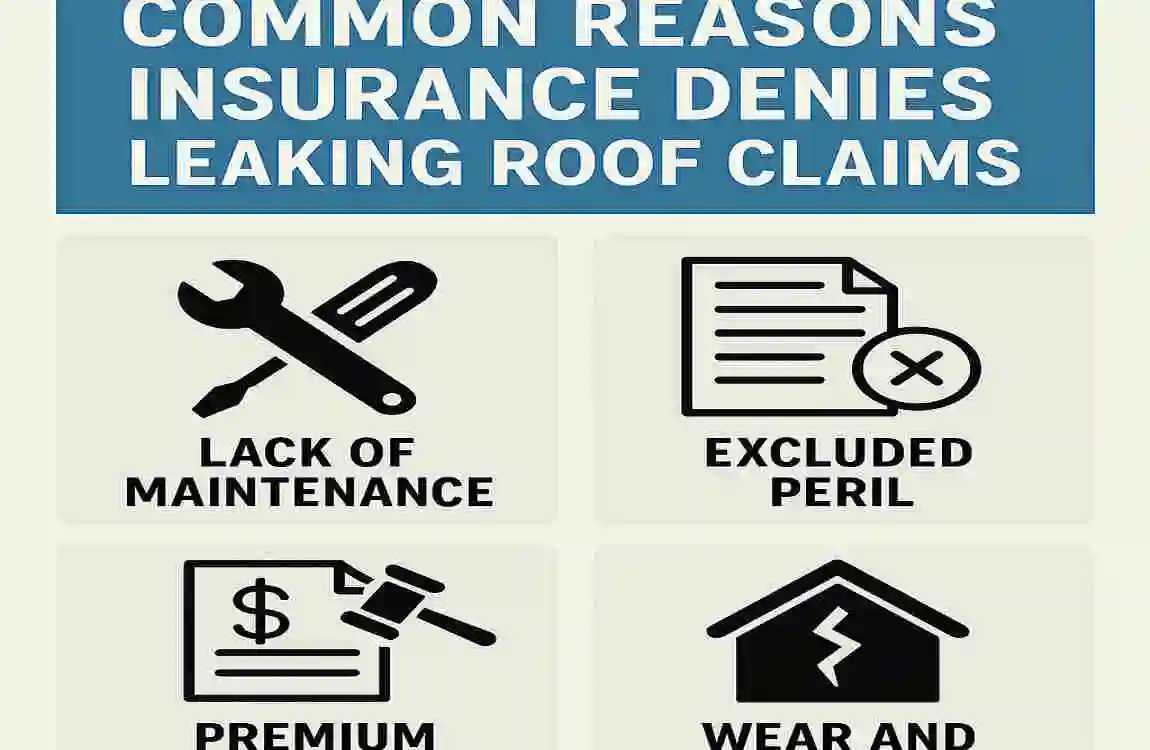
No one likes a surprise denial. Here’s why it happens, and how to avoid it:
- Lack of maintenance records: Insurers want to see that you’ve maintained your roof.
- Policy caps: Some policies limit roof payouts to $10,000.
- High deductibles: Wind/hail deductibles can be 1-2% of your home’s value.
- Mold/secondary damage exclusions: Mold caused by long-term leaks is rarely covered.
How to Prevent Roof Leaks and Minimize Future Claims
Prevention is the best insurance. Protect your home—and your wallet—by staying proactive.
- Annual inspections: Catch minor issues before they become significant leaks.
- Gutter cleaning: Remove leaves and debris twice a year.
- Trim overhanging trees: Prevent branches from damaging shingles.
- Choose the right materials: Impact-resistant shingles can lower your Premium.
Roof Leak Prevention Checklist
- Inspect the attic for water stains monthly.
- Clean gutters every spring and fall.
- Trim back tree branches annually.
- Check for missing/damaged shingles after storms.
- Ensure the attic is adequately ventilated.
- Seal roof flashing and joints.
- Remove moss and algae buildup.
- Schedule a professional roof inspection yearly.
- Repair minor leaks immediately.
- Document all maintenance for insurance.
