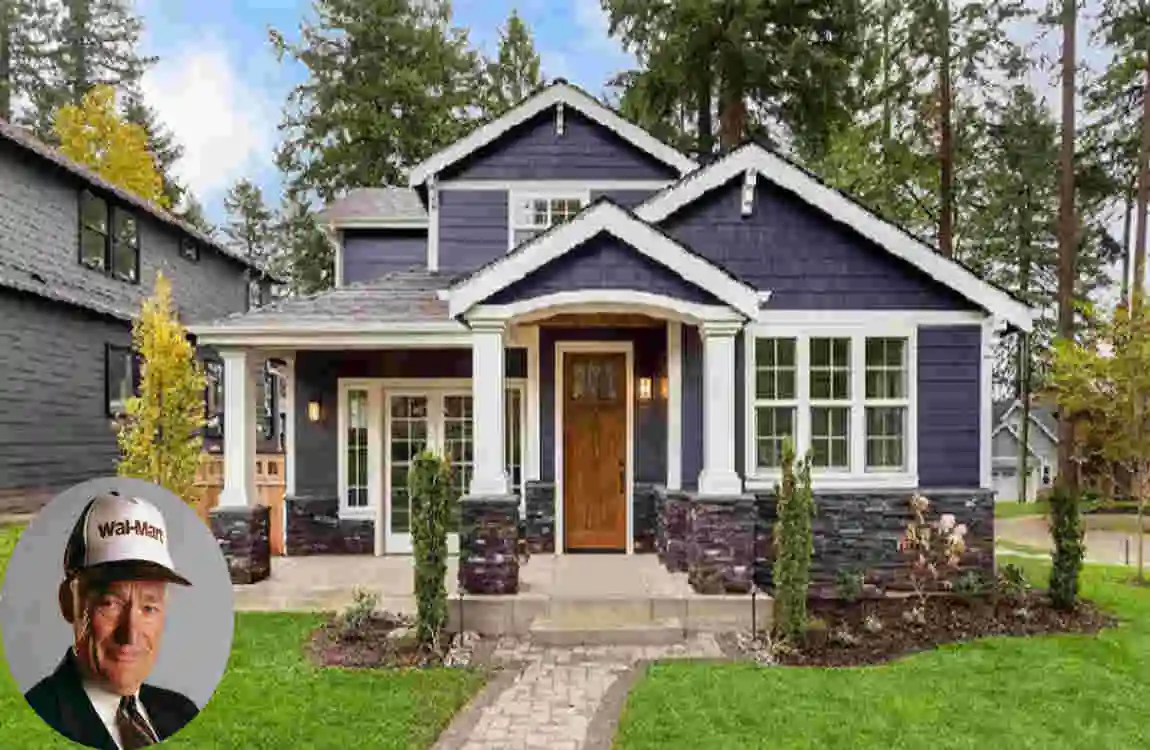
What is the first thing that comes to your mind when you think of a billionaire’s home? Do you picture a sprawling, multi-story mega-mansion with gold-plated toilets, a private bowling alley, and a fleet of luxury sports cars in the driveway?
For most modern billionaires, that image is a reality. But for the man who built the largest retail empire on the planet, life looked incredibly different.
Despite building a $250 billion-plus empire, Sam Walton chose to live in a remarkably modest house. In fact, if you were to drive past it today, you would probably never guess that one of the wealthiest men in American history lived inside. Real estate experts estimate the home is worth under $1 million in today’s market.
In an era of flashy billionaire mansions and over-the-top displays of wealth, Walton’s extreme frugality is almost shocking. But this was not just a quirky personality trait. This exact mindset is what built Walmart’s unbelievable success. It provides timeless lessons for entrepreneurs, small business owners, and anyone trying to scale a company today.
| Category | Details |
|---|---|
| Full Name | Samuel Moore Walton (aka Sam Walton) |
| Date of Birth | March 29, 1918, Kingfisher, Oklahoma |
| Date of Death | April 5, 1992, Little Rock, Arkansas (age 74) |
| Family | Married Helen Robson (1943); 4 children: Sam, John, Alice, Jim Walton |
| Occupation | Founder/Chairman of Walmart (1962) and Sam’s Club |
| Net Worth | $23 billion at death (1992; richest person in U.S. at the time; family wealth now ~$453B in 2025) |
| Residence | Lived in modest ranch-style house at 2112 S.E. J Street, Bentonville, AR from 1957 until death (private family property today; no public access) |
Where is the Sam Walton House? Location and Accessibility
So, where exactly did the king of retail choose to put down his roots? You might expect him to have a penthouse in New York city or a beachfront estate in California. Instead, he stayed true to his country roots.
Deep Roots in Bentonville, Arkansas
The Sam Walton House is located in Bentonville, Arkansas. This small, quiet town in the Ozark Mountains is the undisputed hub of the Walmart universe. The corporate headquarters are still located here today.
The specific street address, roughly located around 1400 SW 15th St, sits in a quiet, unassuming residential neighborhood.
However, you should know that the property is strictly private. No public tours are allowed, and the family asks that visitors respect their privacy. You cannot just walk up and knock on the front door!
Why Did He Choose Bentonville?
You might be asking yourself, “Why Bentonville?”
It all goes back to his family. His wife, Helen, wanted to live in a small town that felt like a real community, but close enough to the outdoors for hunting and fishing. Bentonville fit the bill perfectly.
Today, Bentonville has transformed into a bustling tourist spot and a major economic center. This is largely thanks to the Walton family’s ongoing investments.
The town is now home to the world-renowned Crystal Bridges Museum of American Art, funded by Sam’s daughter, Alice Walton. The contrast between the billionaire-funded museum and the humble Sam Walton House, just a few miles away, is truly fascinating.
Finding the Home on the Map
If you search for the Sam Walton House address and how to visit, you will find it very easy to locate on Google Maps.
Even if you are mapping directions from , or London, England, you can clearly see how close the house is to the original town square.
While you cannot go inside, you can easily find drone views and exterior photos online. Many YouTube creators have driven past the property to give viewers a virtual tour tease. These videos highlight the quiet, heavily wooded lot that shielded the Walmart founder from the public eye.
Inside the Sam Walton House: Room-by-Room Tour
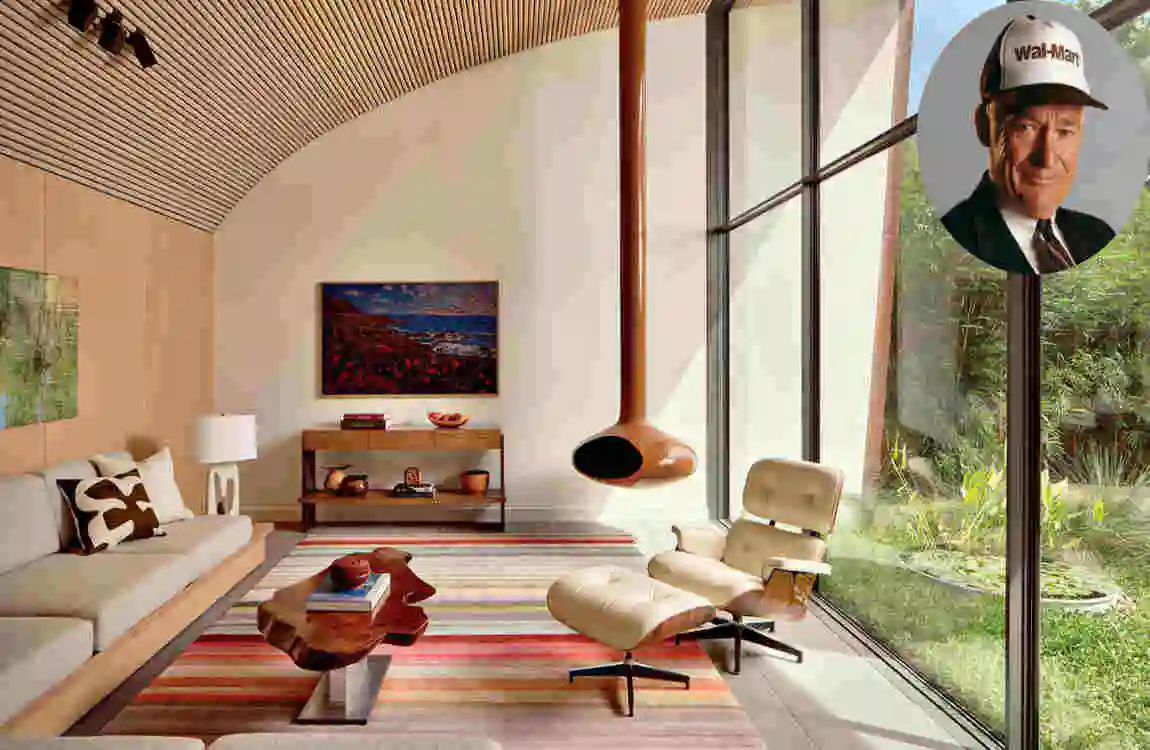
Are you ready to see what the inside of a frugal billionaire’s home looks like? While we cannot physically walk through the front door, we can take a detailed look based on historical accounts, interviews, and rare glimpses into the property.
Let’s dive into this Sam Walton House Tour.
The Unassuming Exterior
The house is a classic single-story ranch. It was built in 1958, four years before the first Walmart even opened.
It spans approximately 6,000 square feet. Now, 6,000 square feet is certainly a large home by average middle-class standards. But for a man worth billions? It is incredibly tiny.
The home features a simple brick facade. There are no massive gates, no towering Greek columns, and no ostentatious displays of wealth. It looks like a standard, comfortable home that you would find in any nice American suburb.
Comfortable, Everyday Living Areas
If you are looking for Sam Walton’s house interior photos and layout details, you will notice a common theme: comfort over luxury.
The living areas were filled with simple, sturdy furniture. Instead of priceless Renaissance paintings, the walls were decorated with family photos and pictures of his beloved hunting dogs.
Interestingly, there was very little Walmart memorabilia scattered around the house. When Sam came home, he wanted to be with his family, not inside a corporate museum.
A Functional, No-Frills Kitchen
The kitchen is perhaps the best reflection of Walton’s “fly-over America” ethos. It was functional and practical.
There were no massive marble islands, no private executive chefs cooking five-course meals, and no million-dollar gourmet upgrades. It was a space designed for family breakfasts and simple dinners. It perfectly mirrored his belief that you do not need to spend excessive money to be happy.
The Bedrooms and the Famous Home Office
The bedrooms were equally modest. But the most important room in the house was Sam’s home office.
This room contained his simple wooden desk. It was at this very desk that he pored over ledger books, planned massive national expansions, and figured out how to undercut his competitors.
He didn’t need a high-tech boardroom to change the world. He just needed a quiet space to think.
The Backyard and the Pilot’s Lounge
As his success grew, he did make a few modest additions to the property. He added a simple swimming pool in the backyard for his children and grandchildren to enjoy.
But the most distinctive feature of the Sam WaltonSam Walton House was the pilot’s lounge.
Sam Walton loved to fly. He frequently piloted his own small plane to visit Walmart stores across the country. He built a small, rustic lounge area on the property where he could relax with his flight instructors and co-pilots after a long day in the air.
Even this lounge was basic, featuring comfortable chairs and a simple fireplace.
A Quick Comparison: Walton vs. Modern Billionaires
To truly understand how humble this home is, let’s look at the numbers.
Feature: The Sam Walton House, Typical Modern Billionaire Home
Square Footage ~6,000 sq ft 20,000 – 50,000+ sq ft
Market Value ~$1 Million $50 Million – $200 Million+
Staffing Minimal (Housekeeping) Large teams (Chefs, Butlers, security)
Architectural Style 1950s Brick Ranch Ultra-Modern or Palatial Estate
Driveway Vehicles 1979 Ford F-150 Pickup Fleet of Ferraris, Bugattis, and SUVs
When you look at that data, the humility of the Sam Walton Bentonville House becomes undeniably clear!
The Frugal Secrets of Sam Walton’s House
Why did a man with virtually unlimited resources choose to live this way? Let’s uncover the frugal secrets hidden within the walls of this famous home.
Rejecting Luxury Upgrades
Perhaps the most amazing fact about the Sam Walton House is that he lived there for over 30 years. As his net worth skyrocketed from thousands to millions to billions, his living situation never changed.
He never felt the need to bulldoze the home and build a mega-mansion. He never installed a gold-plated chandelier. He was completely satisfied with what he had.
He understood that upgrading his lifestyle would not upgrade his happiness.
His Fascinating Daily Habits
Walton’s frugality extended far beyond his real estate choices. It was baked into his everyday life.
If you stood in the driveway of the Sam Walton house in the 1980s, you would not see a limousine. You would see his famous 1979 Ford F-150 pickup truck.
It had dents, scratches, and dog boxes in the back for his hunting trips. When reporters asked him why he drove an old truck, he famously replied, “What am I supposed to haul my dogs around in, a Rolls-Royce?”
He also shopped at his own stores. He bought his clothes off the racks at Walmart, refusing to buy expensive designer suits. He got his haircuts at the local barbershop in town.
A Sharp Contrast with His Heirs
| Category | Details |
|---|---|
| Address | 2112 S.E. J Street (or 14th Street), Bentonville, AR 72712 – near Walmart HQ and Ozark hills |
| Specifications | ~6,000 sq ft (sprawling ranch); 4+ bedrooms; modern kitchen (high-end appliances, granite/wood); central AC; living room with fireplace/hearth; intricate geometric ceilings; outdoor yard/pool extension; pilot’s lounge (Walton flew planes) |
| Architecture Design | Ranch-style (1958 build); designed by E. Fay Jones (Frank Lloyd Wright student); low-slung roof, horizontal emphasis, landscape integration, large glass panels/windows for light; minimalism (“less is more”); influenced by Usonian principles; won 1961 AIA Honor Award |
| Worth/Value | ~$800K-$1.2M (2026 est.); ~$750K in 2010 adjusted; modest despite Walton’s wealth – no luxury overhauls |
| History | 1957-58: Built (Waltons in double-wide during construction; Helen led design with Jones, Sam pushed simplicity) 1962+: Family home during Walmart’s rise (first store nearby) 1970s: Minor modernizations (kitchen, windows) 1992: Walton lived here until death Today: Private Walton family property; media/virtual tours only; cultural icon near Walmart Museum |
It is interesting to note the contrast between Sam’s lifestyle and that of his heirs today.
The Walton family is currently among the wealthiest in the world. Many of his children and grandchildren now live in sprawling mansions and own massive estates across the globe.
However, Sam’s influence definitely still lingers in Bentonville. The family continues to pour billions of dollars into local infrastructure, biking trails, and community centers, honoring his love for the region.
Tying It Back to Business
So, how does this help you? How do Sam Walton’s frugal living tips translate into the corporate world?
It is simple. Frugality saved Walmart billions of dollars.
Because Sam Walton refused to waste money in his personal life, he refused to waste it in his business. He kept corporate overhead incredibly low. His executives flew coach. They shared rental cars. They didn’t have fancy corner offices.
Every single dollar saved in the corporate office was a dollar they could take off the product’s price tag. This extreme cost-cutting enabled Walmart to offer the lowest prices in town, ultimately crushing its competition.
If you are running a startup or a small business today, you must adopt this mindset. Stop worrying about having the fanciest office space or the newest MacBook. Focus on keeping your costs down to offer better value to your customers.
Walton’s Frugal Rules for Entrepreneurs:
- Question every expense: If it doesn’t directly benefit the customer, don’t buy it.
- Lead by example: You cannot expect your employees to save money if the CEO is wasting it.
- Embrace the basics: Functionality will always beat flashy aesthetics.
- Stay close to the front lines: Drive your own “pickup truck” and talk to your actual customers.
Sam Walton House Today: Legacy and Visitor Info
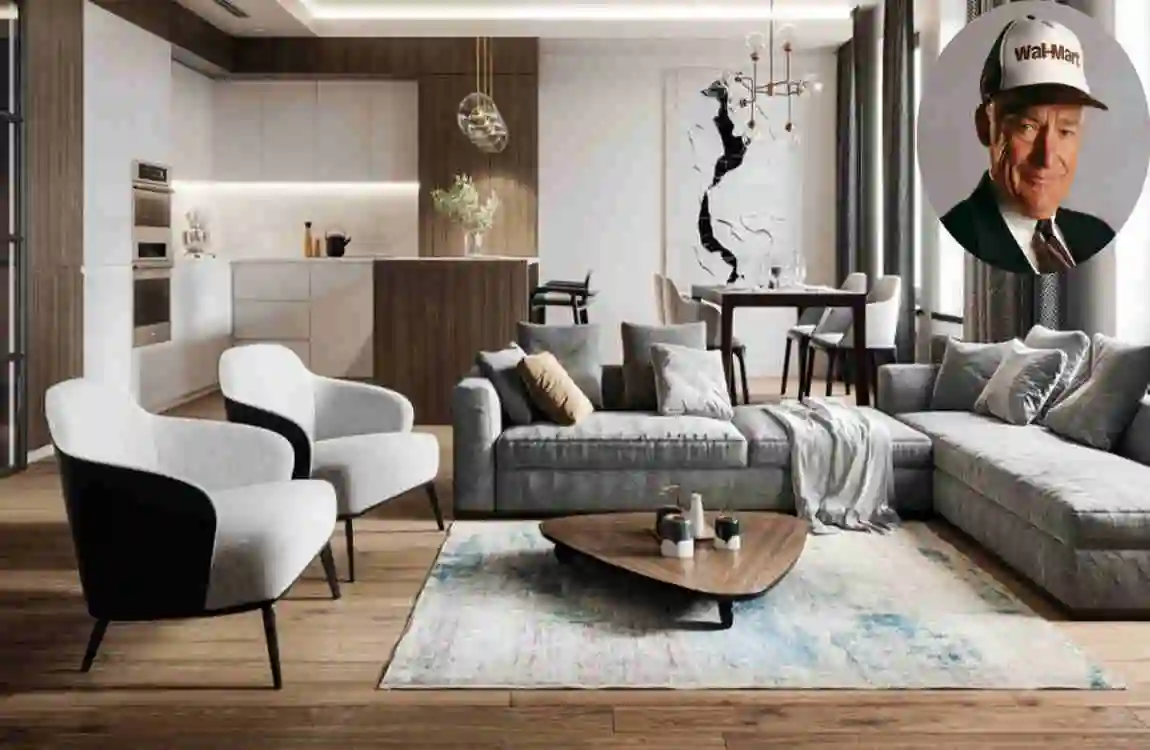
You might be wondering what has happened to the house since Sam passed away in 1992 and his wife, Helen, passed away in 2007.
Current Status and Ownership
Today, the Sam Walton house remains firmly in the hands of the Walton family. It is a private, family-owned property.
Unlike the homes of many famous historical figures, it has not been turned into a public museum. The family prefers to keep it as a quiet, private space. Occasional media peeks and drone flights give the public a glimpse, but the doors remain locked to tourists.
In the 2026 real estate market, local property experts estimate the home’s value to sit comfortably between $800,000 and $1.2 million. While that is a nice chunk of change, it is absolute pocket change for a family worth hundreds of billions.
How to Experience the Legacy
Even though you cannot book a physical tour, you still have options!
You can take a virtual tour via various YouTube documentaries that explore the perimeter of the property and discuss its history.
More importantly, if you visit Bentonville, you can go straight to the Walmart Museum located on the downtown square.
The museum is fantastic. It features an exact, meticulous recreation of Sam Walton’s actual office. You can see his original desk, his old ledgers, and even his famous Ford F-150 pickup truck parked right outside. It is the closest thing you will get to stepping inside his mind.
Lasting Cultural Impact
The house stands today as a powerful cultural symbol.
In Walton’s autobiography, “Sam Walton: Made in America,” he frequently references his simple life at home. The house is a physical monument to the ideas written in that book.
It proves that the greatest business innovations do not happen in flashy penthouses. They happen at simple Business Lessons from the Sam Walton House
We have looked at the bricks, the wood, and the history. Now, let’s talk about the ROI—the return on investment.
What can the modern business leader actually learn from the Sam WaltonSam Walton House? How can staring at a 1950s ranch home make you a better CEO today?
Let’s break down the three biggest lessons you can apply to your company right now.
Humility Scales Businesses
The first lesson is that humility scales.
When a leader lets ego take over, expenses skyrocket. CEOs start demanding private jets, massive bonuses, and luxury corporate retreats. This bloat kills profitability.
Sam Walton’s house proves that keeping your ego in check keeps your business lean. When you cut unnecessary costs, you can weather economic storms. You can survive recessions. You can outlast competitors who are burning through cash to look successful.
Does your business practice what it preaches? Are you spending money on your ego, or on your customers?
Stay Rooted in Your Community
Bentonville is not a major metropolis. It is a quiet town in Arkansas.
Yet, Walton chose to build his global headquarters just down the street from his home. By staying rooted in a humble community, he kept his finger on the pulse of middle America.
He didn’t surround himself with Wall Street bankers. He surrounded himself with everyday people—his actual target demographic.
Today, Bentonville has become an incredible innovation hub. Major tech companies and vendors set up offices there just to be close to Walmart. This proves that you do not need to move to Silicon Valley or New York to build an empire. You need to understand your local market deeply.
Frugality is a Competitive Edge
In the modern world of e-commerce, margins are tighter than ever.
Companies like Amazon win because they are obsessed with supply chain efficiency and cost reduction. They are using the same playbook that Walton invented in his home office decades ago.
Frugality is not about being cheap. It is about being efficient. It is about maximizing the value of every single resource you have. When you lower your internal costs, you lower your prices. When you lower your prices, you win the market.
Take Action Today! Do you want to implement Sam Walton’s timeless rules in your own business? Start by auditing your expenses this week. Cut the fat, empower your team to save, and refocus your budget on customer experience.
FAQs About Sam Walton’s House
Do you still have questions about this fascinating piece of retail history? We have gathered the most common queries from our readers.
Where is the Sam Walton house located?
The home is located in Bentonville, Arkansas, nestled in a quiet, heavily wooded residential neighborhood, just a short drive from Walmart’s corporate headquarters.
Can you tour the Sam Walton House in Bentonville?
No, you cannot. The property is privately owned by the Walton family and is closed to the public. However, you can visit the nearby Walmart Museum in downtown Bentonville to see a perfect recreation of his office and his famous pickup truck.
How much was the Sam Walton House worth?
Despite the family’s immense wealth, the house is remarkably modest. In today’s real estate market, experts estimate the 6,000-square-foot home is worth roughly $800,000 to $1.2 million.
Why was the Sam Walton house so modest?
Sam Walton deeply believed in frugality. He hated wasting money and felt that living a lavish, flashy lifestyle would disconnect him from his everyday customers and his core business values.
Where Does Sam Walton’ Currently Live?
Sam Walton, the founder of Walmart, passed away on April 5, 1992, so he does not currently live anywhere. He resided in his famous modest ranch-style house at 2112 S.E. J Street, Bentonville, Arkansas, until his death – the very Sam Walton house we’ve discussed in your blog outline, symbolizing his lifelong commitment to frugality despite building a retail empire.
Sam Walton’s House Photo