
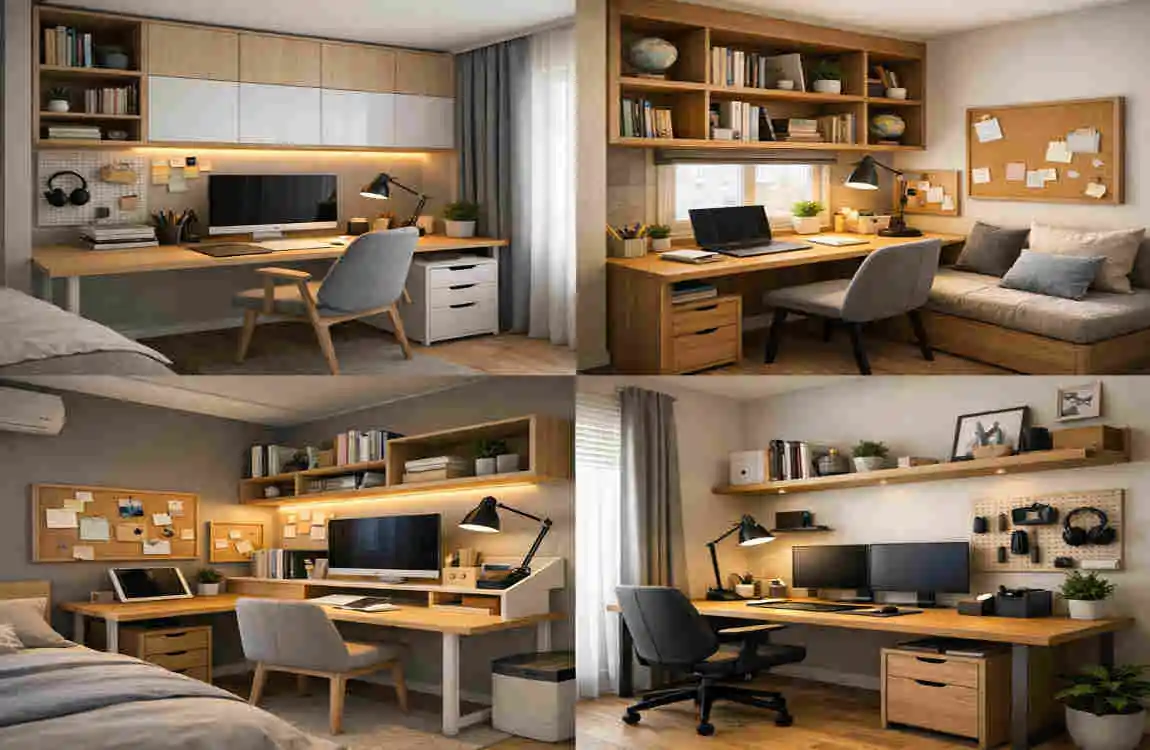
A good bedroom study table helps you study comfortably, stay organized, and focus better. It should fit your room well, support good posture, and give you enough space for books, a laptop, and daily study items.
If you are asking what a good bedroom study table is, the simple answer is this: it is a table that suits your space, your body, and your study habits. A large desk is not always better. A smart desk is better.
The right study table can make your bedroom feel calmer and more useful. It can help you keep schoolwork in one place, reduce clutter, and create a better routine for learning or working.
When choosing one, consider size, height, storage, lighting, material, and placement. These small details make a big difference in comfort and productivity.
Choosing the Right Size and Height for a Bedroom Study Table

Standard Study Table Dimensions
A study table should provide enough workspace without making the bedroom feel crowded.
For most people, a table about 40 to 60 inches wide and 20 to 30 inches deep works well. This gives space for a laptop, notebook, lamp, and a few essentials.
The height is usually around 28 to 30 inches. That is comfortable for most adults and older students. If the table is too high or too low, studying becomes tiring very quickly.
Study Tables for Small Bedrooms
If your bedroom is small, choose a desk that saves floor space.
Good options include:
- Compact desks
- Wall-mounted tables
- Corner study tables
- Folding desks
These designs help you use the room wisely. A small desk near a wall or in a corner can still feel practical if you plan it well.
Study Tables for Larger Bedrooms
A larger bedroom gives you more freedom. You can use a wider desk, an L-shaped table, or even a shared study space for siblings.
This works well if you need extra room for books, dual monitors, or art supplies. Just make sure the desk still feels balanced in the room.
Why Ergonomic Height Matters
A study table should support a natural sitting posture. Your feet should rest flat on the floor, and your elbows should sit at a comfortable angle.
If the table and chair do not match well, your neck, back, and shoulders may feel strained. That is why ergonomics matters so much.
Smart Bedroom Study Table Ideas for Better Organization
Study Table With Drawers
Drawers are very useful if you want a tidy study space. They give you a place for pens, chargers, notebooks, and other small items.
Choose a table with:
- Shallow drawers for stationery
- Deeper drawers for books or files
- A mix of both if possible
This keeps the desktop cleaner and helps you find things faster.
Study Table With Open Shelves
Open shelves are great if you want easy access to books or folders. They also make the desk feel light and simple.
You can use the shelves for study items and a few decorative pieces. That adds personality without making the desk messy.
Floating or Wall-Mounted Study Table
A floating desk is a smart choice for small bedrooms. It attaches to the wall and leaves the floor open, which makes the room look larger.
This style works well if you want a clean, modern look. It is simple, neat, and practical.
Foldable and Convertible Study Tables
Foldable desks are helpful in rooms that serve more than one purpose. You can fold them away when you’re not using them.
Convertible desks are also useful because they can change shape or function. These work well for students who don’t need a full-time workstation.
Built-In Study Table Designs
Built-in desks work well when you want a custom look. They can fit into a wall space, under a window, or beside a wardrobe.
This design keeps the room organized and stylish. It also helps you use unused space smartly.
Study Table Lighting, Chair, and Bedroom Placement
Best Lighting for a Study Table
Good lighting is very important. Without it, your eyes get tired faster and your focus drops.
Use natural light during the day if possible. At night, add a desk lamp with soft, clear light. Try to avoid glare on books, paper, or screens.
Choosing a Comfortable Study Chair
A good chair matters almost as much as the table. It should support your back and let you sit comfortably for a long time.
Look for a chair with:
- Good back support
- The right height
- A comfortable seat
- Enough legroom
Where Should a Study Table Be Placed?
The best place is usually near a window or against a quiet wall. That gives you light without too many distractions.
If possible, avoid placing the desk too close to the bed. It helps create a better mental split between rest and study time.
Computer and Device Setup
If you use a laptop or monitor, place the screen at eye level whenever possible. Keep cables neat and out of the way.
A clean device setup makes the desk easier to use and less stressful to look at.
Materials, Colours, and Design Styles for Bedroom Study Tables
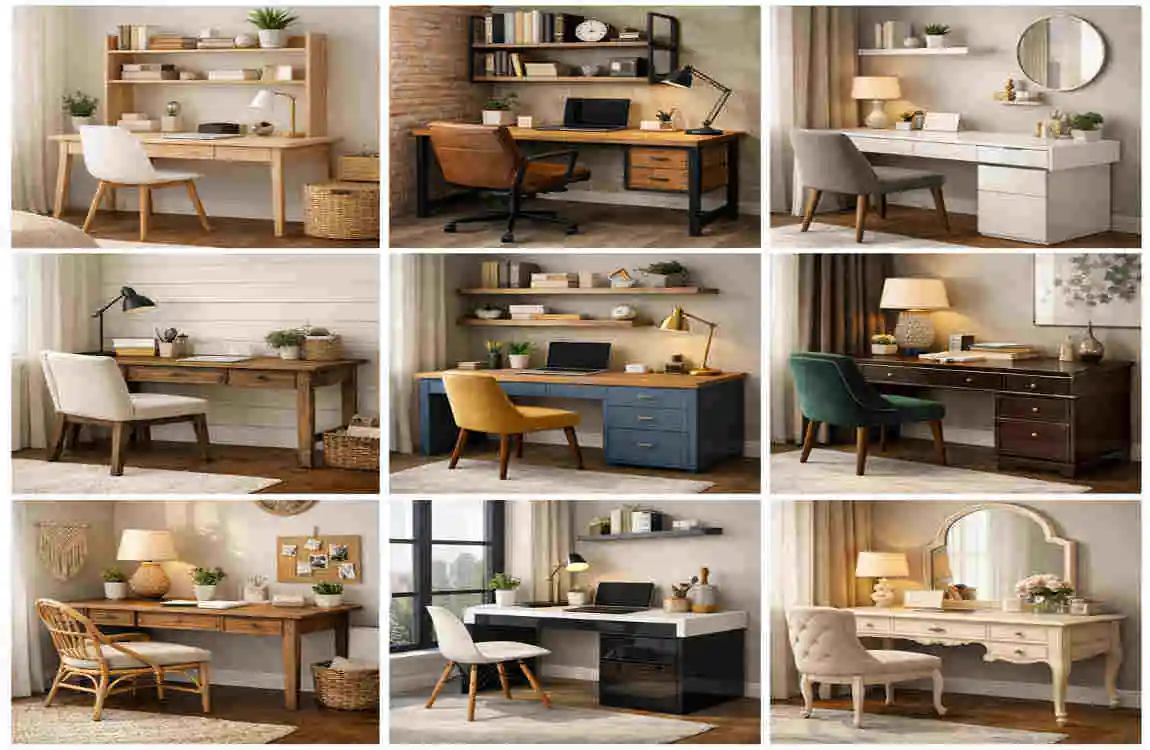
Popular Study Table Materials
Different materials give different looks and levels of durability.
MaterialBest ForMain Benefit
Solid wood Long-lasting use Strong and classic
Engineered wood Budget-friendly setups Affordable and practical
Metal and wood Modern bedrooms Strong and stylish
Glass Contemporary spaces Light and sleek look
Modern Study Table Colors
Neutral colours are usually the safest choice. White, beige, gray, and natural wood tones work well in most bedrooms.
Black can look bold and modern, while softer colours may work better in children’s rooms or bright spaces.
Matching the Table With Bedroom Decor
Your desk should feel part of the room, not separate from it. Try matching it with the bed frame, wardrobe, or wall colour.
A simple bedroom study corner often looks best when the design stays clean and balanced.
Durable and Easy-to-Clean Options
If the desk will be used daily, choose a surface that is easy to wipe clean. Scratch-resistant and moisture-resistant materials are especially helpful for children or busy students.
How to Create a Productive Bedroom Study Area
Keep the Desk Clutter-Free
A messy desk can make it harder to think clearly. Keep only the items you use often on the desk.
Use small organizers or boxes for everything else.
Improve Study Comfort
Comfort supports focus. Make sure the chair, desk height, and lighting all work together.
Keep books, pens, and your device close enough that you don’t keep reaching or twisting.
Reduce Bedroom Distractions
Try to keep entertainment items away from the study zone. If possible, create a clear visual difference between the sleeping area and the study area.
That small separation helps your brain switch into study mode more easily.
Add Smart Features
A few modern features can make study time easier:
- Charging points
- Cable holders
- Small lamp
- Device stand
- Storage trays
These simple additions can make the space more efficient.
How to Choose the Best Bedroom Study Table for Your Needs
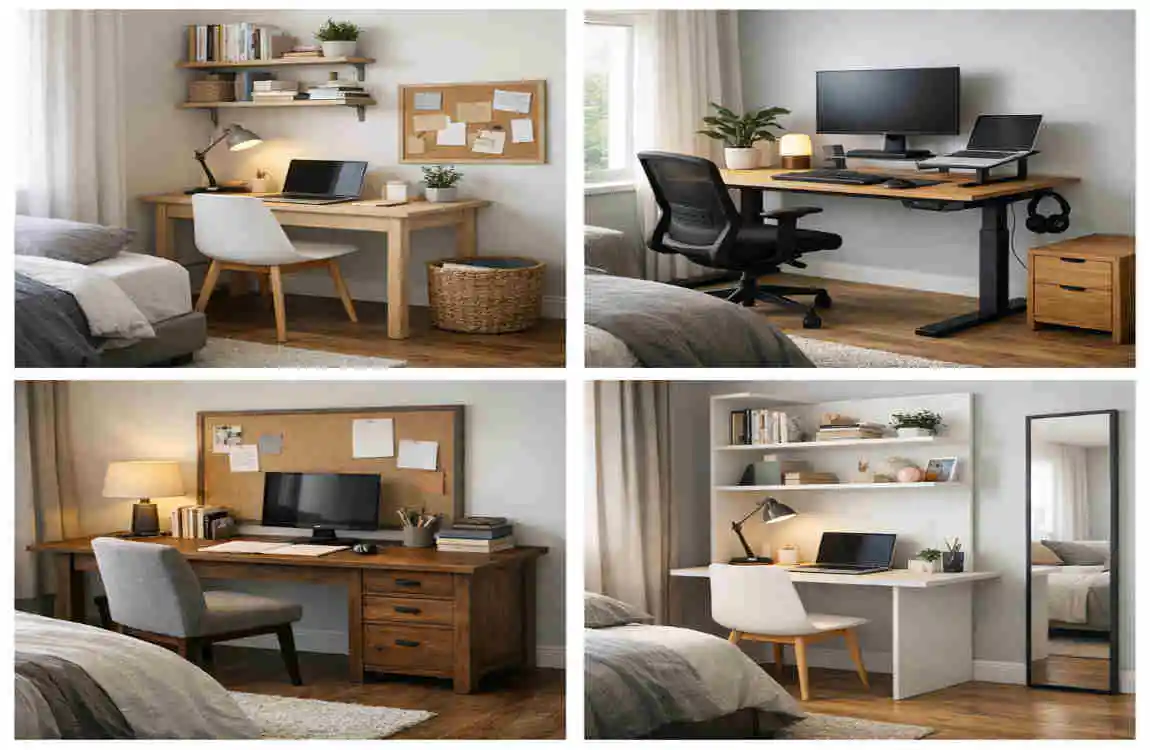
For Children
Children need safe and simple furniture. Rounded edges, easy-to-clean surfaces, and low storage are all helpful.
An adjustable table can also be useful because children grow quickly.
For Teenagers
Teenagers often need more desk space for books, devices, and projects. A modern desk with drawers or shelves can be a great fit.
For Adults and Remote Study
Adults usually need a more serious workstation. A larger tabletop, comfortable chair, and proper screen placement matter.
For Small Bedrooms
If your room is small, choose a floating desk, corner desk, or folding table. Vertical storage can help too.
FAQ: What Is a Good Bedroom Study Table?
What is a good bedroom study table?
A good bedroom study table fits the room, feels comfortable, supports good posture, and gives you enough space to study well.
What size study table is best for a bedroom?
The best size depends on your room, but a compact yet practical desk is usually ideal. It should also leave enough walking space.
What height should a bedroom study table be?
Most study tables are around 28 to 30 inches high, but the best height depends on your chair and your body.
Is a study table near a window a good idea?
Yes, because natural light helps. Just make sure glare and heat do not become a problem.
Which study table is best for a small bedroom?
Floating desks, corner desks, folding tables, and compact wall-mounted designs work best in small rooms.
Should a bedroom study table have drawers?
Drawers help keep the desk tidy and store stationery, books, or papers.
What is the best material for a study table?
Wood, engineered wood, and metal-wood combinations are all common. The best one depends on your budget and style.
How can I make my bedroom study table more comfortable?
Use the right chair, good lighting, proper screen height, and a clutter-free setup.
How do I keep a study table organized?
Use trays, drawers, and storage boxes, and keep only daily-use items on the desktop.
| Study Table Idea | Key Features | Benefits |
|---|---|---|
| Minimalist Study Table | Clean surface, simple drawers | Reduces distractions |
| Wall-Mounted Table | Foldable or fixed design | Saves bedroom space |
| Study Table with Storage | Drawers, shelves, cabinets | Keeps books organized |
| L-Shaped Study Desk | Large corner workspace | Provides more working space |
| Adjustable Study Table | Height-adjustable surface | Supports comfortable posture |
| Smart Study Desk | USB ports, LED lights, cable management | Makes studying more convenient |
| Compact Desk | Small footprint, practical design | Ideal for small bedrooms |
| Wooden Study Table | Durable wood construction | Adds warmth and long-lasting style |
