
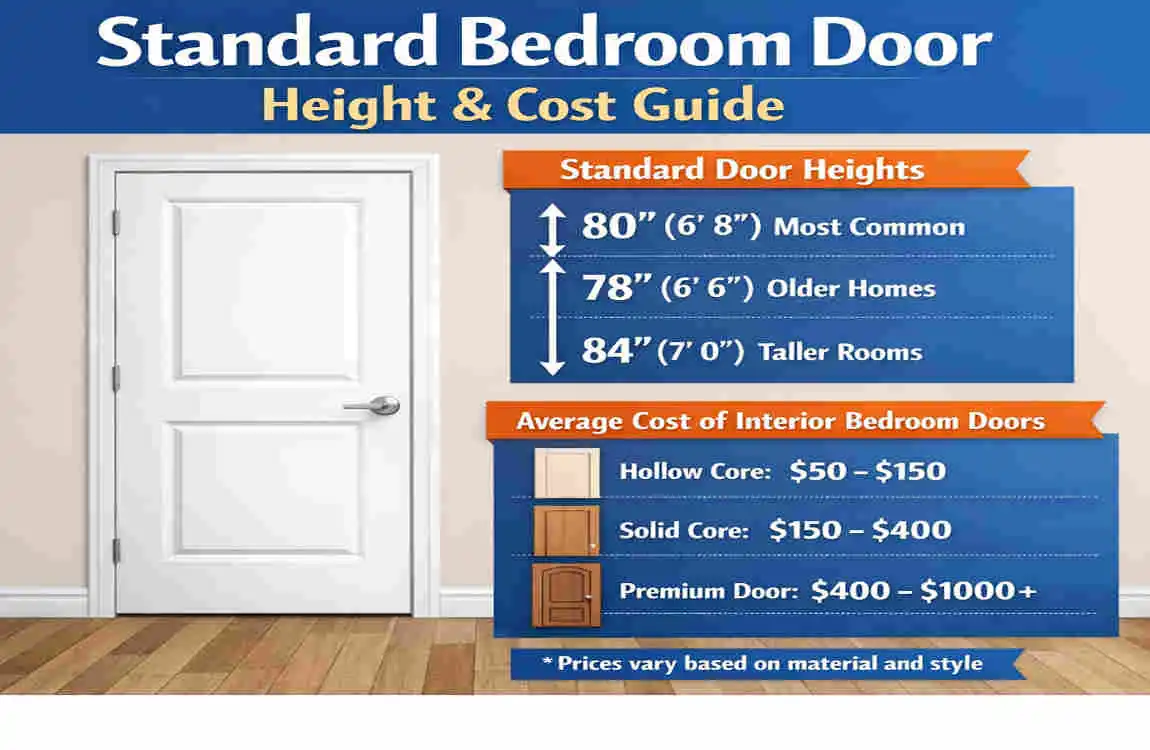
If you are wondering how tall most bedroom doors are and how much they cost, the short answer is that most bedroom doors are 80 inches tall (6 feet 8 inches). That is the most common standard height in many homes, and it has been used for a long time because it works well in everyday interior spaces.
But the full answer is a little more detailed. Bedroom door height can vary depending on the home’s age, the room’s style, and whether you are replacing only the door slab or the entire door unit. Cost also changes based on the material, hardware, labor, and whether the door is standard or custom.
Standard Bedroom Door Height: How Tall Are Most Bedroom Doors?
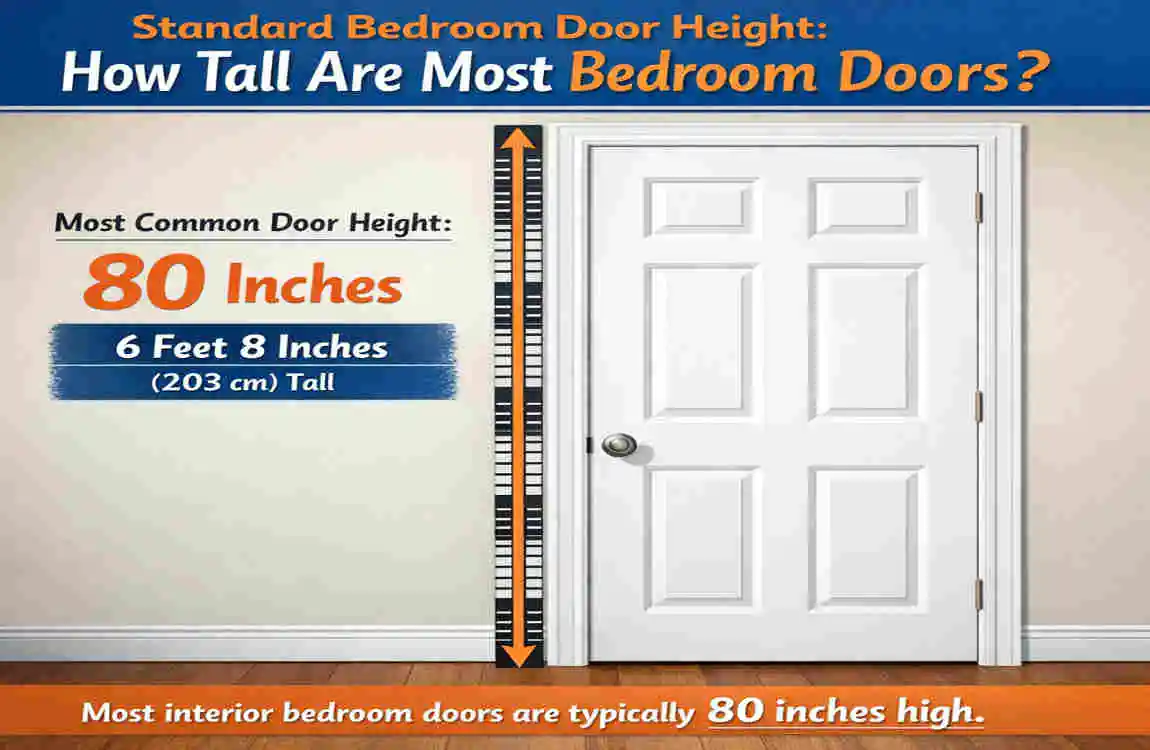
The most common bedroom door height
Most bedroom doors are 80 inches tall. This is the standard height you will see in many homes across the country. It is common because it fits typical interior room layouts and is easy for builders and suppliers to work with.
That height works well in both new homes and many older homes. It is tall enough for comfort and function, but not so tall that it becomes difficult or expensive to install.
Common bedroom door widths
Bedroom doors are usually not just one size. Width matters too.
The most common interior door widths include:
- 28 inches
- 30 inches
- 32 inches
- 36 inches
For bedrooms, 30 inches and 32 inches are very common. A 36-inch door is more often used where accessibility is important.
Door thickness and frame basics
Most interior bedroom doors are around 1 3/8 inches thick. That is the standard thickness for many interior door slabs.
It also helps to understand the difference between these terms:
- Door slab: the actual door itself
- Rough opening: the framed opening in the wall before the door unit is installed
- Finished opening: the visible opening after trim and the door unit are in place
These measurements are not the same, and that is where many homeowners get confused.
Standard, tall, and custom-height doors
Not all bedroom doors are the same height. You may also see:
- Standard-height doors: usually 80 inches
- Tall doors: often 84 inches or more
- Custom doors: made for special openings
Taller doors can create a more modern look, but they often cost more and may require more installation work.
Do bedroom doors have to be a certain height?
Sometimes yes, but it depends on local rules and the type of home. Building codes and accessibility requirements can affect door size in certain situations.
If you are replacing a bedroom door, it is always smart to check local regulations first. That is especially true if you are doing a remodel, adding a new opening, or making accessibility changes.
Quick table: common bedroom door dimensions
Feature Common Measurement
Standard height 80 inches
Common widths 28, 30, 32, 36 inches
Typical thickness 1 3/8 inches
Tall interior door 84 inches or more
Common bedroom use Single interior door
How Much Do Bedroom Doors Cost?
What affects the price
Bedroom door cost can vary a lot. A basic hollow-core slab may be fairly affordable, while a solid wood or custom door can cost much more.
The total cost depends on:
- Door material
- Door height
- Door style
- Hardware
- Frame condition
- Labor
- Painting or finishing
Door slab vs. prehung door
A door slab is just the door itself. A prehung door includes the frame.
A slab door may cost less at first, but it can be harder to install if the frame is not already in good shape. A prehung door usually costs more, but it is often easier for a full replacement.
Cost overview by material
Door Material General Cost Level Main Benefit
Hollow-core Lower Budget-friendly
Solid-core Medium to higher Better privacy and sound control
Wood Higher Classic look
MDF Moderate Smooth and practical
Composite Moderate to higher Durable and flexible use
Glass-panel Higher Decorative style
Cost by style
Different styles also affect price.
- Flush doors are simple and usually more affordable.
- Panel doors often cost a little more.
- Modern minimalist doors may vary depending on finish.
- French-style interior doors often cost more because of the design.
- Sliding or barn-style bedroom doors can also raise costs because of hardware and installation needs.
How height affects cost
A taller bedroom door usually costs more because it uses more material and may need more labor. It may also require custom fitting if the opening is not already sized for it.
That is why standard doors are often the easiest and most budget-friendly choice.
Factors That Affect Bedroom Door Height and Installation Cost
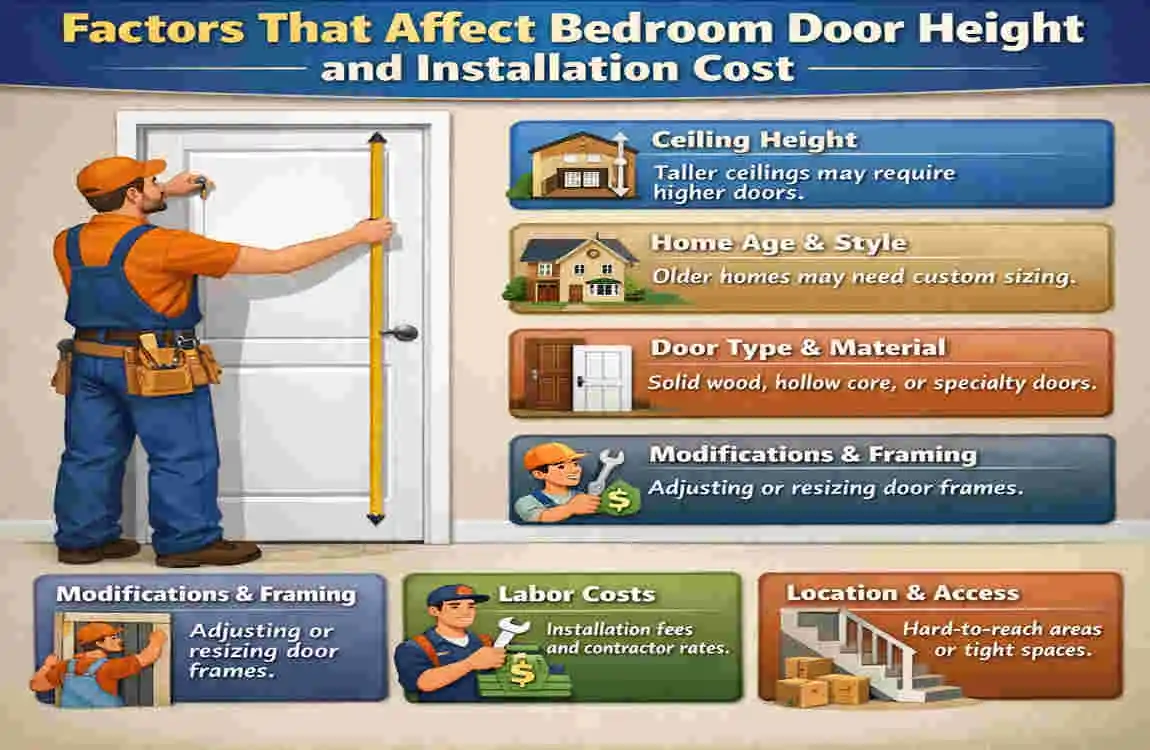
Material and construction
Some materials are more affordable than others. Hollow-core doors are usually cheaper, while solid wood doors cost more.
Construction quality also matters. A stronger, heavier door usually costs more but may last longer.
Custom dimensions
If your opening is not standard, you may need a custom door. That almost always increases cost.
Custom sizes may also require more work on the frame, trim, and wall opening.
Frame condition
If the existing frame is in good shape, replacement may be simple. If the frame is damaged, warped, or uneven, costs go up.
Sometimes the frame can be reused. Other times, you must replace it too.
Labor and location
Labor costs vary by area. Some places cost more for installation.
The more complex the job, the more you may pay. That includes difficult removals, repairs, and finishing work.
Why custom doors cost more
Custom bedroom doors usually cost more because they involve:
- Special sizing
- Unique materials
- Nonstandard frames
- Extra labor
- Extra finishing work
If you want something unusual, expect the price to rise.
Standard vs. Custom Bedroom Door Sizes
When a standard-size door makes the most sense
A standard door is usually the easiest choice. It is faster to buy, easier to install, and usually cheaper.
It also works well if your home already has standard openings.
When custom sizing is needed
Older homes may have unusual openings that do not match current standards. In that case, a custom door may be the best option.
Custom sizes are also useful if you want a taller or more designer-style look.
How to measure a bedroom door
Before buying a replacement, measure carefully:
- Measure the height of the existing door
- Measure the width
- Measure the thickness
- Check the frame size
- Measure the rough opening if needed
- Note the swing direction
- Write everything down before ordering
Common mistakes to avoid
Many homeowners make simple measuring mistakes. Watch out for these:
- Measuring only the slab
- Ignoring the frame
- Forgetting door thickness
- Not checking clearance
- Buying before measuring the opening
A small measuring error can turn into a big installation problem.
Bedroom Door Installation Cost: What Homeowners Should Know
Typical installation expenses
Installation cost depends on the type of job. Replacing just the slab is usually cheaper than installing a full prehung unit with a new frame.
Labor also changes if the wall or frame needs repair.
Slab replacement vs. prehung installation
A slab replacement means the new door goes into an existing frame. This is often a simpler job if the frame still fits well.
A prehung door includes the frame and is often used when the old frame is damaged or when a full replacement is needed.
Extra costs to watch for
You may also pay for:
- Hinges
- Doorknobs or levers
- Privacy locks
- Trim and casing
- Paint or stain
- Door stops
- Disposal of the old door
These small items can add up quickly.
DIY vs. professional installation
If the job is simple and the opening is standard, some homeowners may choose DIY. But if the door is custom, heavy, or part of a frame repair, professional installation is usually the safer choice.
A bad fit can cause sticking, drafts, and poor alignment.
How to Choose the Right Bedroom Door Height and Style
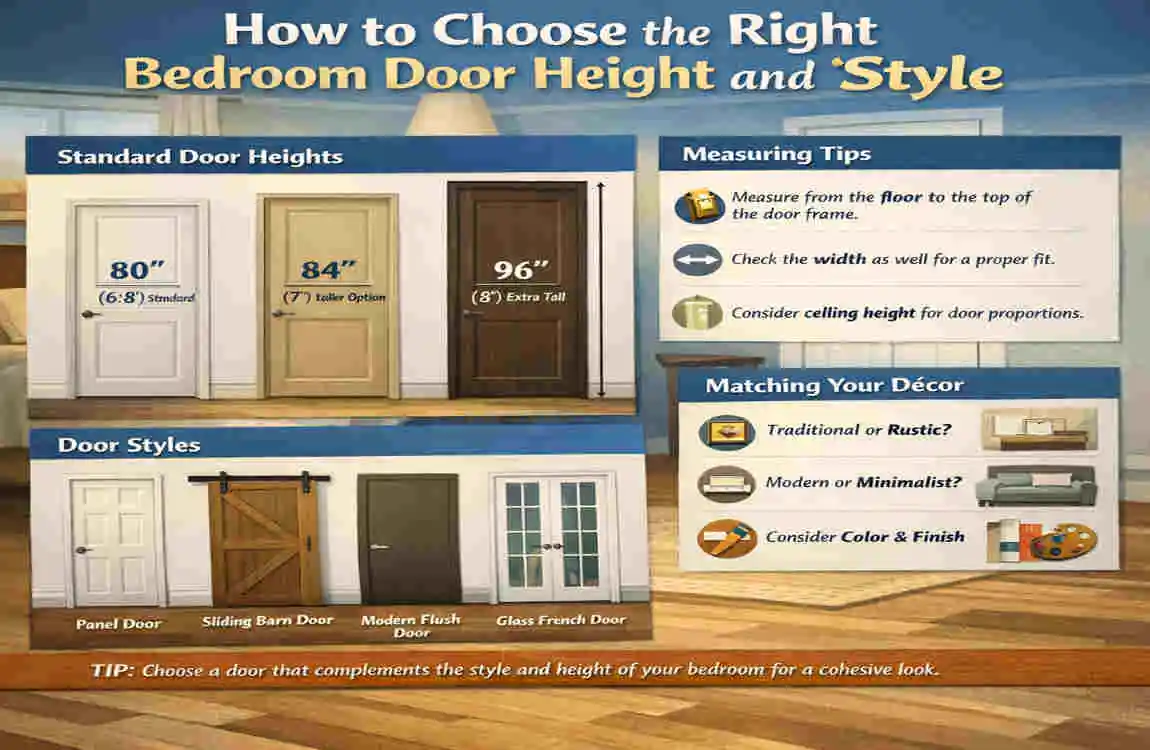
Match the home’s architecture.
Your bedroom door should match the home’s style. A standard 80-inch door often works well in most houses. Taller doors can look better in homes with high ceilings or more modern design.
Think about privacy and sound.
Bedrooms need privacy. A solid-core door usually gives better sound control than a hollow-core door.
If you want a quieter room, that detail matters.
Choose a style that fits your space.
Different homes suit different door looks:
- Hollow-core: best for budget projects
- Solid-core: best for privacy and sound control
- Wood: best for traditional style
- MDF or composite: best for practical modern use
Hardware and finishing costs
Door hardware also affects the final price. Common items include:
- Hinges
- Knobs or levers
- Privacy locks
- Trim
- Paint or stain
- Door stops
Even a simple door can feel more finished when you choose the hardware well.
FAQ About Bedroom Door Height and Cost
How tall are most bedroom doors?
Most bedroom doors are 80 inches tall, which is the standard interior door height in many homes.
How much does a standard bedroom door cost?
The cost depends on material, style, labor, and whether you buy a slab or a prehung door.
Are 80-inch doors standard for bedrooms?
Yes, 80 inches is the most common standard height for bedroom and other interior doors.
Can I install a taller bedroom door?
Yes, but taller doors may require custom framing or opening modifications.
How much does it cost to replace a bedroom door?
It depends on the door type, hardware, labor, and whether the frame also needs work.
Is a solid-core bedroom door worth the extra cost?
Often yes, if you want better privacy, sound reduction, and durability.
Should I buy a slab door or a prehung door?
A slab door works best if the frame is already in good shape. A prehung door is better for a full replacement.
How do I measure a bedroom door for replacement?
Measure the height, width, thickness, frame, and swing direction before buying.
Do older homes have different bedroom door sizes?
Yes, older homes often have nonstandard openings, which may need custom doors.
Can door height affect the total installation cost?
Yes, taller or custom doors often cost more because they use more material and may need extra labor.
| Door Type | Standard Height | Typical Width | Approx. Cost Range* |
|---|---|---|---|
| Standard Bedroom Door | 80 in (6 ft 8 in) | 30–32 in | $100–$300 |
| Solid-Core Door | 80 in | 30–32 in | $150–$400 |
| Hollow-Core Door | 80 in | 30–32 in | $60–$200 |
| Custom-Tall Door | 84–96 in | 30–36 in | $250–$800+ |
| Prehung Bedroom Door | 80 in | 30–32 in | $150–$500 |
| Double Bedroom Doors | 80 in | 60–72 in total | $300–$900+ |
