
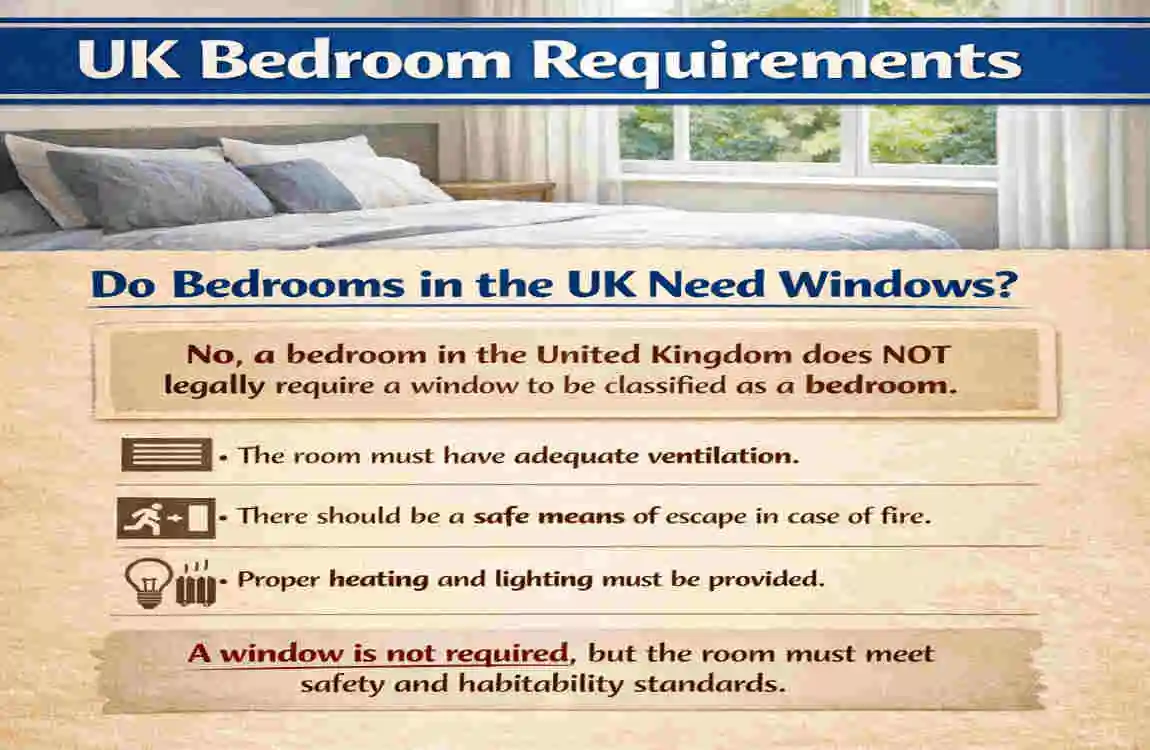
If you are wondering whether a bedroom needs a window in the UK, the short answer is that it doesn’t always. Still, windows matter a lot for natural light, ventilation, and fire safety. In many homes, a bedroom without a window can raise practical, legal, and safety concerns.
The exact rule depends on the property, the room’s use, and where the home is located in the UK. Building regulations, housing standards, and local rules can all affect whether a room can truly be called a bedroom.
Does a Bedroom Require a Window in the UK?
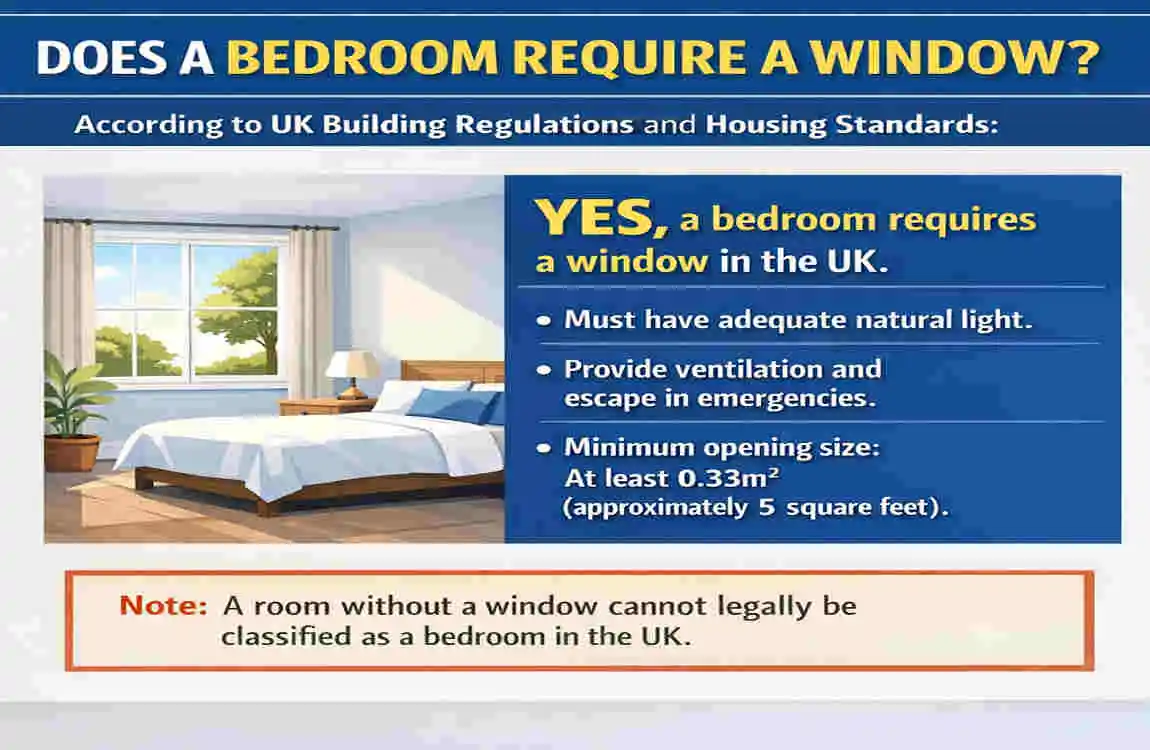
The simple answer
There isn’t a single nationwide rule requiring every bedroom to have a window. But in practice, a bedroom usually needs proper light, airflow, and safe escape options.
So while a room without a window may still be used as a sleeping space in some homes, it may not always meet the standards expected for a legal or proper bedroom.
Why windows matter
A window is not just a design feature. It helps with:
- Natural light
- Fresh air
- Emergency escape
- General comfort
A room that lacks these things can feel less usable and may create issues during a sale, rental, or renovation.
Natural light and comfort
Natural light makes a room easier to live in. It helps you see clearly, keeps the room feeling open, and supports everyday comfort. A bedroom without daylight can feel closed in, especially if it is small.
If you are asking whether a bedroom requires a window in the UK, this is one of the biggest reasons people care about the answer. Even if a room can be used for sleeping, many buyers and tenants expect a real bedroom to have a window.
Different parts of the UK
Rules can vary across:
- England
- Wales
- Scotland
- Northern Ireland
So don’t assume one rule applies everywhere. A room may be acceptable in one place but not in another.
UK Building Regulations for Bedroom Windows
The role of building regulations
UK building regulations focus on safety, ventilation, and usability. They do not always use the word “bedroom” the same way an estate agent might, but they do care whether a room is safe and fit for sleeping.
That means a bedroom window may matter even when the law does not give one simple yes-or-no answer.
Emergency escape windows
One of the most important reasons for a bedroom window is emergency escape. If a fire or other danger happens, a window may provide a second way out.
Escape windows usually need to be:
- Big enough to climb through
- Easy to open
- Positioned at a sensible height
- Free from obstruction
The exact measurements can differ depending on the building and the rules that apply, so it is always wise to check the correct standard for your property.
Ventilation requirements
Bedrooms need fresh air. Without enough ventilation, moisture can build up, and the room may start to feel stuffy or damp.
An open window is often the easiest solution. But in some properties, mechanical ventilation or another approved system may help if a window is not possible.
Building regulations vs planning permission
These are two different things. Planning permission is about how a building or room is used or changed. Building regulations are about how safe and functional it is.
So even if a room was built or altered with permission, that does not always mean it meets every bedroom standard.
Can You Have a Bedroom Without a Window?
Why the answer is complicated
You can sometimes use a room without a window as a sleeping room, but that does not always mean it is accepted as a proper bedroom for every purpose.
This is where many homeowners get confused. A space can be called a bedroom informally, but it may not be ideal or legally suitable in every setting.
Why a windowless room can be a problem
A room without a window can create issues with:
- Daylight
- Air quality
- Fire escape
- Dampness
- Property value
- Rental or sale descriptions
If you advertise a room as a bedroom, people usually expect a window unless the room is clearly designed and approved another way.
Basement bedrooms
Basement bedrooms need extra care. They often have a higher risk of damp, less natural light, and stricter escape requirements.
If you are considering a basement room, check:
- Is there safe escape access?
- Is ventilation adequate?
- Is the room dry and insulated?
- Does it have enough light to feel usable?
A basement bedroom can work well, but only if it is properly designed.
Internal bedrooms
An internal room does not face an outside wall. These rooms often struggle with fresh air and daylight.
They may need:
- Strong ventilation
- Fire-safe escape planning
- Good lighting
- Careful approval for use as sleeping space
In other words, just because a room has four walls and a door doesn’t mean it automatically qualifies as a true bedroom.
What Makes a Bedroom a Legal Bedroom in the UK?
There is no single simple checklist.
This is one of the most important points. The UK does not always use one national rulebook for every bedroom in every situation.
Instead, a room may be judged based on several factors.
Main things that matter
A legal or acceptable bedroom often needs:
- Enough space
- Natural light
- Ventilation
- Heating and insulation
- Fire safety
- Safe access and escape
- Practical usability
If one of these is missing, the room may still be a sleeping space, but it may not fully work as a proper bedroom.
Bedroom size and space
Some homes, especially smaller ones, have space limits that affect how a room can be used. A very tiny room may be hard to count as a bedroom in practice, even if it has a window.
Overcrowding rules and housing standards can also matter, especially in rental properties.
Fire safety and escape routes
Bedrooms should allow people to get out safely if needed. That is why escape windows, safe doors, and protected routes matter so much.
If a room has no window, fire safety becomes even more important.
Quick bedroom checklist
- Does the room have daylight?
- Can fresh air reach the room?
- Is there a safe escape route?
- Is it suitable for sleeping every day?
- Would a buyer or tenant reasonably see it as a bedroom?
Do UK Bedroom Rules Differ by Location?
England and Wales
England and Wales follow building regulations and related guidance that focus on safety, ventilation, and escape. A room’s suitability can depend on its layout and use.
A bedroom in these areas is usually expected to meet common-sense standards for comfort and safety, even if no single sentence says every bedroom must have a window.
Scotland and Northern Ireland
Scotland and Northern Ireland use their own building standards. These are not always identical to the rules in England and Wales.
That means a room approval in one nation should not automatically be assumed to work the same way in another.
Why location matters
If you are buying, renting, or converting a room, the local system matters. Never rely on a rule you heard from another part of the UK.
A room that seems fine in one place may need different ventilation, lighting, or escape arrangements somewhere else.
How to Check If a Windowless Room Can Be Used as a Bedroom
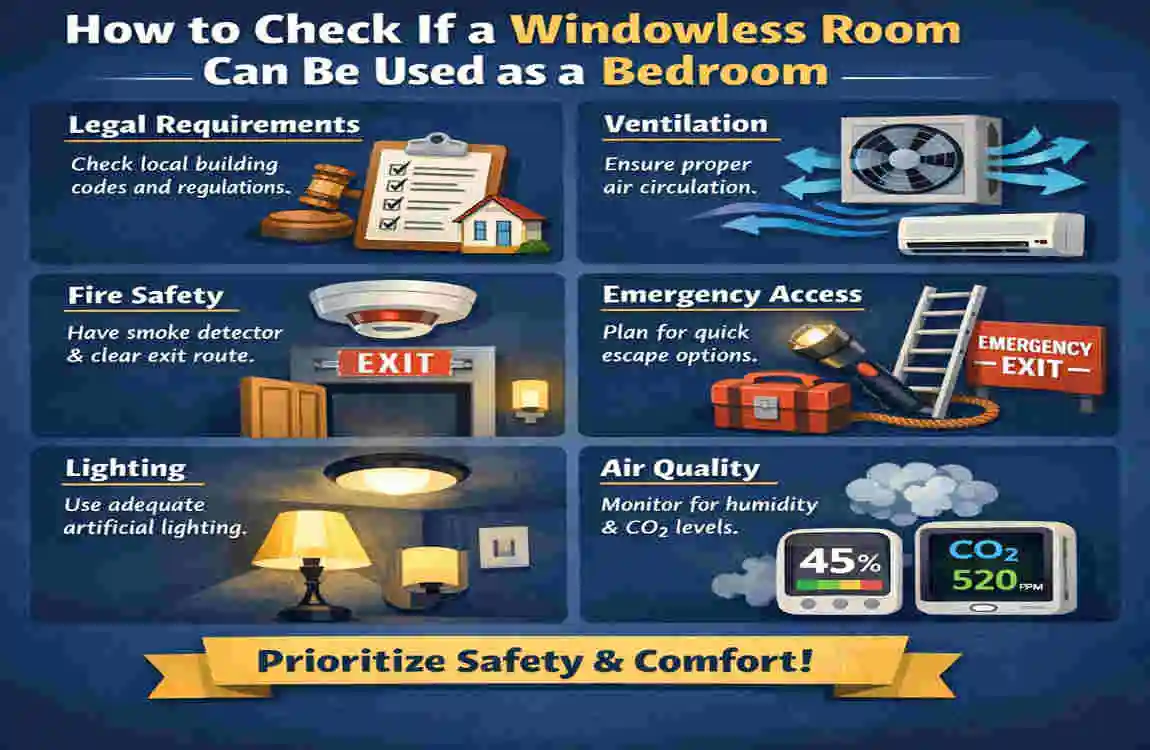
A practical approach
If you are a homeowner, buyer, landlord, or renovator, check the room carefully before calling it a bedroom.
Look at the room from three angles:
- Safety
- Comfort
- Legal use
If the room fails badly in any one of those areas, it may need more work.
What to check
Here are the most useful questions:
- Was the room originally approved as habitable?
- Does it have enough ventilation?
- Is there a safe emergency escape route?
- Does it get any natural light?
- Is it suitable for a person to sleep in every day?
- Would a rental listing or sale description be accurate?
When to ask for help
If the answer is unclear, speak to:
- Local building control
- Housing authorities
- A qualified building professional
- A fire safety specialist if needed
This can help you avoid mistakes, especially before selling or renting the property.
FAQ About Bedroom Windows in the UK
Does a bedroom require a window in the UK?
Not always, but windows are important for natural light, ventilation, and emergency escape. A windowless room may not be suitable as a proper bedroom in all cases.
Can a bedroom have no window in the UK?
Sometimes it can be used as a sleeping space, but that does not always mean it fully meets bedroom expectations or housing standards.
Does a basement bedroom need a window?
A basement bedroom usually needs extra attention to escape, ventilation, damp control, and daylight. A window is often very helpful and sometimes essential for practical safety.
What size should a bedroom window be for fire escape?
The exact size depends on the applicable rules and the type of property. Check the regulations that apply to your home.
Can a skylight count as a bedroom window?
A skylight may help with daylight and sometimes ventilation, but it may not always replace a proper escape window.
Can you legally rent a bedroom without a window?
Rental rules and housing standards may require more than just a sleeping space. A room without a window can create problems if you advertise it as a bedroom.
Who can confirm whether a room is legally a bedroom?
Local building control, housing authorities, or a qualified building professional can help confirm whether the room meets the right standards.
| Requirement | UK Bedroom Rule / Guidance |
|---|---|
| Window | Generally expected for a habitable bedroom to provide natural light and ventilation. |
| Natural Light | Bedrooms should have adequate daylight where required by applicable standards. |
| Ventilation | A suitable opening window or alternative ventilation may be required. |
| Emergency Escape | An appropriately sized window can provide an escape route in many homes. |
| Basement Bedroom | Extra requirements may apply, especially for light, ventilation, and emergency escape. |
| Windowless Room | A room without a window may not meet requirements for use as a conventional bedroom, depending on the circumstances and local rules. |
