
Finding a home in Japan can feel exciting at first, but it can also feel overwhelming very quickly. The rental market works differently from many other countries, and prices can change a lot depending on where you want to live, how close you are to the station, and what kind of building you choose.
If you are asking how much a 2-bedroom apartment costs in Japan, the short answer is this: it depends heavily on the city and neighborhood. A two-bedroom apartment in central Tokyo can cost several times more than a similar place in a smaller city like Fukuoka or Sapporo.
A 2-bedroom apartment in Japan is often listed as 2LDK, 2DK, or sometimes simply as a 2-bedroom layout. The labels may look confusing at first, but the idea is simple: you are looking for a place with two separate rooms, plus a living area, dining area, and sometimes a kitchen.
In 2026, more people are looking for larger homes than before. Remote work has made extra space more valuable. Families also want quieter neighborhoods with better access to schools and parks. Even single professionals now often want a second room for an office, hobby space, or storage.
So, if you want a place that is comfortable, practical, and not too expensive, the key is to understand where your money goes. Once you know what affects rent in Japan, it becomes much easier to compare listings and avoid overpaying.
Average Cost of 2 Bedroom Apartments in Japan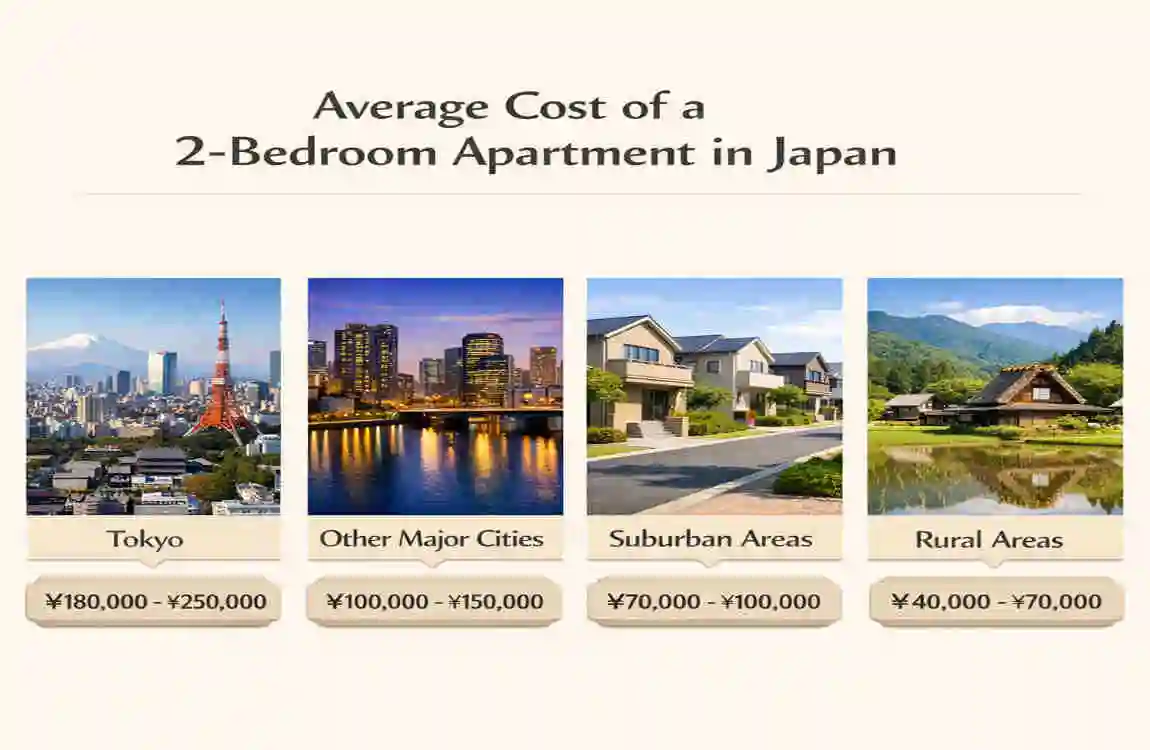
The average price of a 2-bedroom apartment in Japan varies widely, but the main factor is location. Tokyo sits at the top of the price range, while regional cities tend to offer much better value.
A simple way to think about it is this:
- Urban centers usually range from ¥150,000 to ¥350,000+ per month
- Suburban areas often fall between ¥80,000 and ¥150,000 per month
- Rural areas can be as low as ¥50,000 to ¥90,000 per month
These are not fixed prices, of course. A brand-new apartment near a busy train station can cost far more than an older unit in the same city. Still, these ranges give you a useful starting point.
Tokyo vs Other Cities
Tokyo is the most expensive rental market in Japan. If you want a 2-bedroom apartment in a convenient area like Shinjuku, Shibuya, Minato, or Chiyoda, you may pay a premium for both location and building quality.
In many Tokyo wards, a decent 2-bedroom apartment can easily sit in the ¥180,000 to ¥350,000+ range. In very desirable areas, the price can go even higher. If the apartment is newer, larger, or closer to a major station, expect the rent to rise again.
That said, Tokyo does have cheaper pockets. If you move farther from the city center, especially into outer wards or neighboring prefectures, you can often find more reasonable options. The trade-off is usually a longer commute.
Osaka is often seen as the more affordable big-city alternative. It still offers a strong urban lifestyle, great food, and excellent transport, but rent is usually lower than in Tokyo. A 2-bedroom place in Osaka may fall between ¥120,000 and ¥220,000, depending on the area.
Other cities can be even more budget-friendly:
- Fukuoka often offers good value with rent around ¥90,000 to ¥160,000
- Nagoya gives you a balance of city life and moderate rent
- Sapporo can be especially attractive if you want more space for less money
If your priority is getting a bigger home for your budget, these cities are often better choices than Tokyo.
Monthly Price Breakdown
Here is a simple way to view the rental market:
Urban Centers
In major city centers, especially around train hubs and business districts, rent is usually the highest. You are not just paying for the apartment itself. You are also paying for convenience, faster commuting, and better access to shops, restaurants, and offices.
A monthly rent of ¥150,000 to ¥350,000+ is common in many central urban areas. For some families, this is worth it because it saves time and makes daily life easier. For others, it feels too expensive for the space they get.
Suburban Areas
If you move into the suburbs, prices become much more manageable. Many families and long-term residents choose this option because it gives them a better balance between cost and comfort.
In suburban areas, a 2-bedroom apartment may cost around ¥80,000 to ¥150,000 per month. The rooms may be slightly smaller than you expect, but you can often get more space than you would in a central city apartment at the same price.
Rural Areas
Rural Japan can be very affordable, especially if you are not tied to a daily commute into a large city. In some regions, 2-bedroom apartments cost only ¥50,000 to ¥90,000 per month.
This is ideal for people who value quiet, space, and lower living costs. However, you should also think about transport, shopping access, and public services before choosing a rural location.
What Affects Apartment Prices in Japan?
The cost of rent in Japan is influenced by several factors. Some are obvious, while others may surprise you. If you understand these pricing points, you can search more strategically and avoid making costly mistakes.
Location and Transportation Access
Location is the biggest price driver in Japan’s rental market. Apartments near train stations, especially major stations, are usually much more expensive.
This is because train access matters a lot in Japan. Many people rely on public transportation every day, so being close to a station can save time and money in the long run. Landlords know this, and they price accordingly.
A home that is a 3-minute walk from the station may cost much more than a similar apartment that is a 15-minute walk away. Even if the apartment is the same size, convenience raises the price.
If you are trying to save money, look a few stops away from the city center. Sometimes that small move can reduce your rent significantly.
Apartment Size and Layout
A 2-bedroom apartment is not always the same size from one listing to another. Some units are compact, while others are surprisingly spacious.
In Japan, the layout matters a lot. A 2DK might offer two rooms plus dining and kitchen space, but the rooms may be smaller. A 2LDK usually has a larger living area, which often makes it feel more comfortable for families or remote workers.
Larger apartments usually cost more, but a well-designed smaller apartment can still feel practical. If you are flexible, you may find that layout matters more than square footage alone.
Age of Building
Older buildings often come with lower rent. This is one of the easiest ways to save money in Japan.
A building from the 1980s or 1990s may not look as modern as a newly built property, but it can still be clean, solid, and perfectly livable. In fact, many older apartments are much bigger than newer ones.
Newer buildings often include better insulation, modern bathrooms, updated kitchens, and stronger security features. That comfort costs more. If you are trying to keep rent down, older buildings are worth a close look.
Furnished vs Unfurnished Units
Most apartments in Japan are unfurnished. That means you may need to buy your own bed, sofa, table, washing machine, refrigerator, and sometimes even lights or curtains.
Furnished apartments are more convenient, especially for short-term stays, but they often cost more each month. They can also come with stricter contract terms.
If you plan to stay for a while, an unfurnished apartment may actually be the cheaper choice over time. You pay more upfront for furniture, but your monthly rent may be lower.
Proximity to Schools or Business Districts
If the apartment is close to a school, university, or business district, rent often rises. This happens because demand is higher in those areas.
Families often want to live near good schools. Professionals want to stay close to offices or major commercial zones. As a result, landlords can charge more for these convenient locations.
If you are not tied to one specific school or workplace, you can usually save a lot by choosing a neighborhood a little farther away.
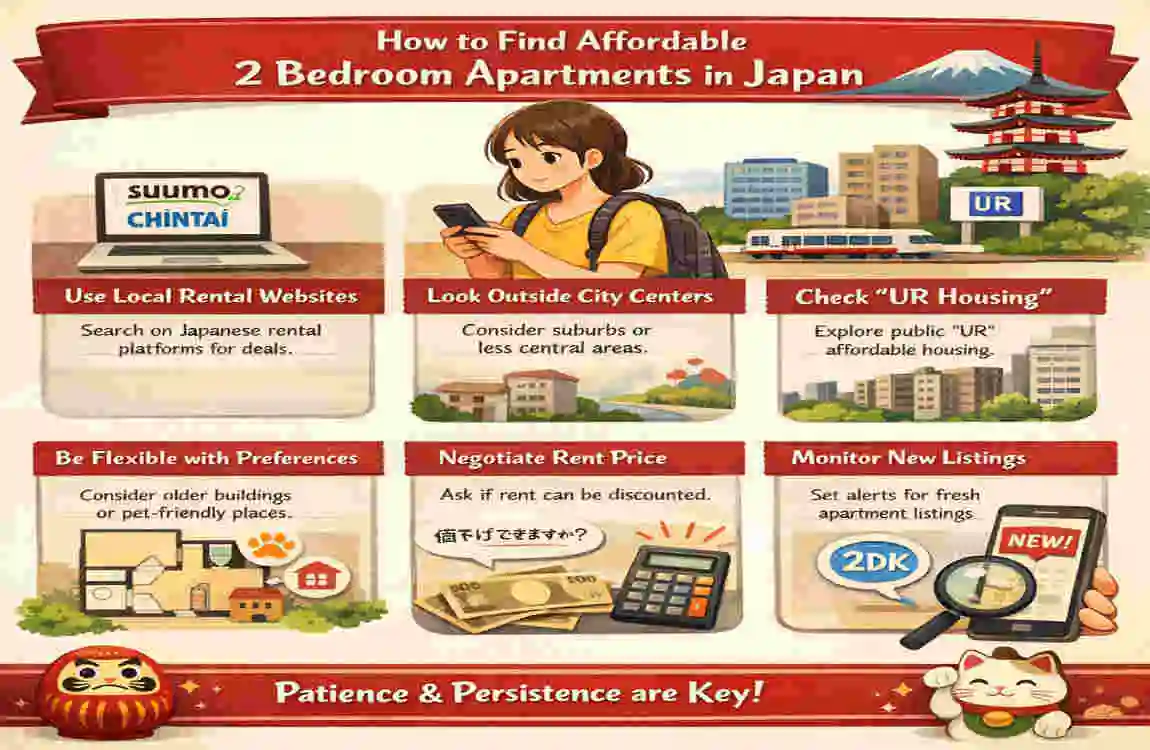
How to Find Affordable 2 Bedroom Apartments in Japan
Now that you understand what affects rent, the next step is finding the right apartment at the right price. This is where a smart search can save you a lot of time and money.
Use Japanese Real Estate Websites
Online property websites are a great place to start. They let you compare prices, filters, layouts, and neighborhood options without leaving home.
Some of the most useful sites include:
- SUUMO
- Homes.co.jp
- GaijinPot Housing
These platforms often let you search by rent range, station access, building age, and apartment type. That makes it easier to spot good deals quickly.
If you do not read Japanese well, GaijinPot Housing can be especially helpful. It is often more foreigner-friendly and easier to navigate.
The best approach is to search several sites at once. One listing may be priced better on one platform than another, and some properties appear in multiple places with different details.
Work with Real Estate Agents
A good real estate agent can make your search much easier. This is especially true if you are new to Japan or not confident in Japanese.
Local agents often know about hidden listings that do not appear online right away. They can also explain the contract, help with communication, and warn you about the true cost of moving in.
For expats, bilingual agents are especially valuable. They can help you understand the rent, the fees, and the rules before you sign anything.
In Japan, agents are part of the normal rental process. Do not think of them as an extra step. Think of them as a guide who can help you avoid expensive surprises.
Consider Chintai Apartments
You will often see the word chintai in Japan. This simply means rental housing.
Chintai apartments are often a better option than other housing types because they may have lower initial costs and more flexible contract terms. If you want a normal long-term rental, Chintai is usually the place to start.
Some chintai apartments are older, but that can be a good thing if your goal is affordability. They may not be flashy, but they can offer solid value.
Look Outside City Centers
This is one of the most effective ways to save money. The closer you get to the city center, the more you pay. The farther out you go, the more likely you are to find better value.
Commuter towns can offer significant savings while still keeping you connected to the city. A slightly longer train ride may reduce your rent by a large amount each month.
This is especially useful if you work remotely, have flexible hours, or do not need to go into the office every day. In that case, paying for a central location may not make financial sense.
Shared or Hybrid Housing Options
If a full 2-bedroom apartment is still too expensive, consider hybrid solutions. These options are not perfect for everyone, but they can help lower your housing costs.
Common alternatives include:
- Monthly mansions for short-term stays
- Share houses with private rooms
- Hybrid rentals with shared facilities and separate sleeping spaces
These setups may not feel as private as a standard apartment, but they can be a practical stepping stone. They are especially useful if you are new to Japan and want time to explore neighborhoods before committing to a long-term lease.
Hidden Costs When Renting in Japan
Rent is only part of the story. In Japan, moving into an apartment often involves several extra fees. These costs can add up fast, so you need to budget for them from the start.
Key Money (Reikin)
Key money, or reikin, is a non-refundable payment made to the landlord. It is one of the most unusual parts of the Japanese rental system for many newcomers.
In simple terms, it is like a thank-you payment to secure the apartment. Not every apartment requires it, but many still do.
The amount can vary, and in some cases it may equal one or two months of rent. If you see a “zero key money” listing, that is usually a very attractive deal.
Security Deposit (Shikikin)
The security deposit, or shikikin, is refundable in theory, but not always returned in full. The landlord may keep part of it for cleaning or repairs after you move out.
The deposit is there to protect the property in case of damage beyond normal wear and tear. It is common in Japan, so you should always ask how much is required and how much might be deducted later.
A large deposit can make the move-in cost feel heavy, especially if you are also paying key money and agent fees.
Agent Fees
Real estate agents usually charge a fee for helping you find and secure the apartment. This is standard practice.
The fee is often around one month’s rent, though it can vary. If you are working with an agent, ask them to explain the total upfront cost clearly. That way, you are not surprised later.
Maintenance Fees
Some apartments include a monthly maintenance or common area fee. This may cover cleaning, building upkeep, hallways, trash areas, or shared facilities.
The fee may seem small at first, but it adds to your total monthly cost. Always check whether maintenance is included in the listed rent or charged separately.
Renewal Fees
In Japan, many leases are renewed after a fixed period, often two years. When this happens, some landlords charge a renewal fee.
This can be frustrating if you are not expecting it. But it is common enough that you should always ask before signing. A low monthly rent can become less attractive if the renewal fees are high.
Tips to Reduce Rent Costs in Japan
If you want to keep your housing budget under control, small decisions can make a big difference. You do not always need a huge compromise to save money. Often, the smartest moves are simple.
Choose Older Buildings
Older apartments are usually cheaper than new builds. They may not have the same modern look, but many are still safe, functional, and well-maintained.
This is one of the easiest ways to reduce rent without leaving your preferred area completely.
Avoid Peak Rental Seasons
The busiest rental season in Japan is usually March to April, when students, workers, and families move around the country.
During this period, prices may feel higher, and competition can be stronger. If you can search in the off-season, you may find better deals and more room to negotiate.
Negotiate Rent with Landlords
Not every landlord will lower the price, but it never hurts to ask through the right agent. If a property has been empty for a while, there may be some flexibility.
A polite request, backed by your willingness to sign quickly, can sometimes help. Even a small discount or waived fee can save you money.
Look for Zero Key Money Deals
A zero-key-money apartment can reduce your move-in costs dramatically. This is one of the best bargains to look for, especially if you are already dealing with a large deposit and agent fee.
These listings are becoming more common as landlords compete for renters. Keep an eye out for them while browsing.
Use Long-Term Lease Discounts
Some landlords are more open to lower rent if they know you plan to stay longer. Long-term stability is attractive because it reduces vacancy risk.
If you are confident about staying in the apartment for a while, mention that early in the conversation. It may help your case.
Best Cities for Affordable 2 Bedroom Apartments
Not every city in Japan offers the same value. Some places give you a better mix of low rent, good transport, and a comfortable lifestyle.
Fukuoka
Fukuoka is one of the best all-around choices for affordable living. It is modern, friendly, and easier on the wallet than Tokyo.
Rent is often more manageable, and the city still gives you great food, good transport, and a relaxed pace of life. If you want a balance between comfort and cost, Fukuoka is a strong option.
Sapporo
Sapporo is a great choice if you want more space for less money. Compared with Tokyo, rent is often much lower, and the city feels more relaxed and open.
It is especially appealing if you enjoy a cooler climate and want a home that feels less cramped.
Osaka
Osaka is a large city with a lively atmosphere, but it is still usually cheaper than Tokyo. That makes it attractive for people who want urban energy without Tokyo-level prices.
The city also offers a strong transport network and plenty of neighborhoods with solid rental value.
Yokohama
Yokohama sits close to Tokyo, which makes it a smart choice for commuters who want a little more affordability. It is still a major city, but rent can be easier to manage than in the capital.
If you want access to Tokyo without paying the highest prices, Yokohama is often worth a closer look.
Comparison Table: Japan 2 Bedroom Rent Estimates
City Average Rent (JPY)Affordability Level
Tokyo ¥180,000–¥350,000 Expensive
Osaka ¥120,000–¥220,000 Moderate
Fukuoka ¥90,000–¥160,000 Affordable
Sapporo ¥80,000–¥150,000 Very Affordable
This table gives you a quick snapshot, but remember that exact pricing depends on the neighborhood, station access, building age, and apartment condition.
A Tokyo apartment near a major station will almost always cost more than one in the suburbs. The same is true for Osaka, Fukuoka, and Sapporo. So always compare the details, not just the city name.
Practical Ways to Budget for a 2 Bedroom Apartment in Japan
It is easy to focus only on the monthly rent, but that can lead to budgeting mistakes. In Japan, your total housing cost includes both the rent and the move-in fees.
A useful rule is to think beyond the monthly number. Ask yourself how much you need upfront, how much you will pay each month, and how often extra fees come up.
Here is a simple way to think about your budget:
- Monthly rent — your main recurring payment
- Move-in costs — deposit, key money, agent fee, and initial expenses
- Ongoing fees — maintenance, utilities, and possible renewal fees
If your monthly budget is limited, it may be better to choose a slightly cheaper apartment and keep some money aside for furniture and unexpected costs. That can make your move far less stressful.
What Foreigners Should Know Before Renting in Japan
If you are new to Japan, the rental process may seem strict at first. In some cases, landlords worry about communication, payment reliability, or move-out procedures.
This does not mean renting is impossible. It just means you need to prepare well.
Many landlords ask for a guarantor, which is a person or company that agrees to cover the rent if you fail to pay. If you do not have a personal guarantor in Japan, a guarantor company can often help.
You may also be asked for extra paperwork, including proof of income, residence status, and identification. This is normal.
The good news is that many landlords are more open to foreigners than before. If you use the right agent and search in the right areas, you can absolutely find a good apartment.
How to Make Your Search Easier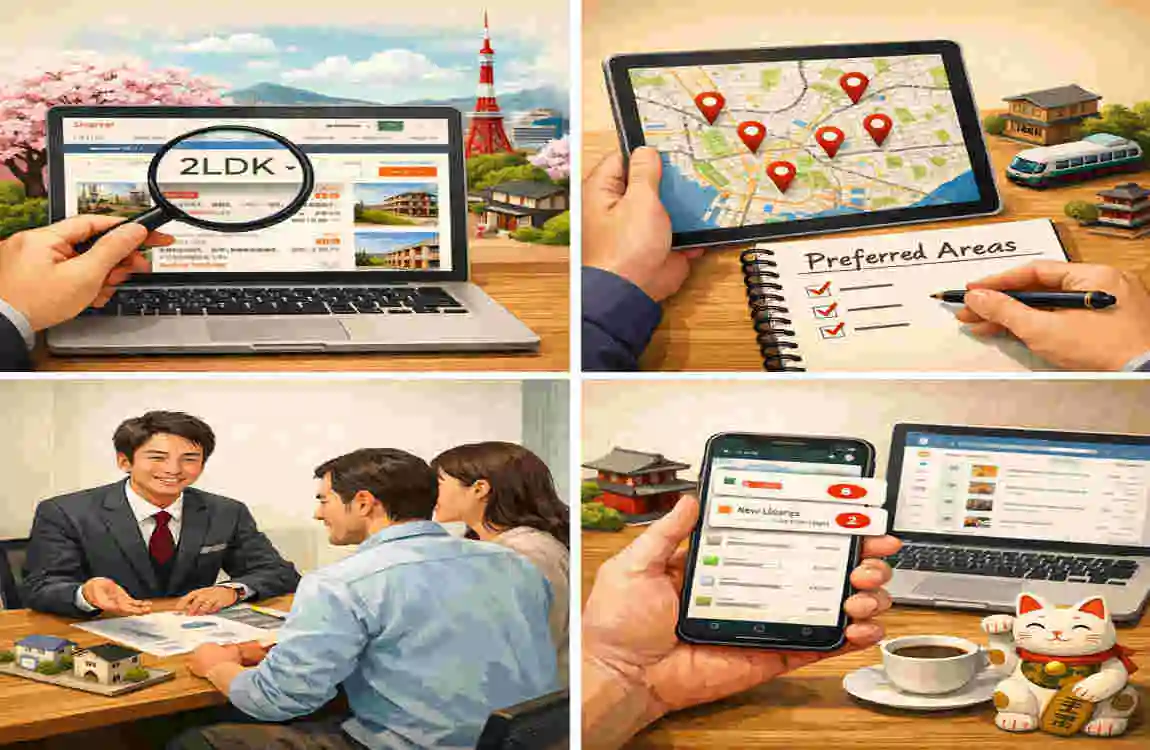
Apartment hunting becomes much easier when you stay organized. A clear search plan can save you time and reduce stress.
Try to compare apartments using the same set of questions:
- How far is it from the nearest station?
- Is the building old or new?
- Are the move-in fees high?
- Is the apartment furnished?
- Are there extra monthly charges?
- Is the neighborhood quiet or busy?
When you compare these points, it becomes easier to see which listing is actually the best value. Sometimes the cheapest rent is not the cheapest total cost. A slightly higher monthly rent may be worth it if the fees are lower and the apartment is in better condition.
FAQ: How Much Does a 2 Bedroom Apartment Cost in Japan?
How much does a 2-bedroom apartment cost in Japan?
A 2-bedroom apartment in Japan usually costs between ¥80,000 and ¥350,000 per month, depending on the city, location, and building type.
Is housing expensive in Japan for foreigners?
Yes, housing can be expensive in cities like Tokyo, but there are still affordable options in suburban and regional cities. The key is to search beyond the most popular areas.
Can foreigners rent apartments in Japan easily?
Yes, but some landlords require a guarantor or a guarantor company. Working with a real estate agent can make the process much easier.
What is the cheapest city in Japan to rent a 2-bedroom apartment?
Cities like Fukuoka, Sapporo, and certain parts of Osaka often offer the best value for 2-bedroom rentals.
What hidden costs should I expect?
You should expect possible key money, security deposits, agent fees, maintenance fees, and sometimes renewal fees.
Is it cheaper to live outside Tokyo?
Yes, in many cases, it is much cheaper. Suburban and regional cities often offer better space for the same budget, and sometimes even lower total costs.
Are furnished apartments common in Japan?
Not usually. Most apartments are unfurnished, so you may need to buy furniture and appliances yourself.
| Step | What to Do | Useful Tips |
|---|---|---|
| Choose the right city | Compare major cities like Tokyo, Osaka, and Kyoto | Tokyo is most expensive; Osaka often offers better affordability |
| Set a clear budget | Decide monthly rent range before searching | Include utilities, deposits, and agency fees |
| Use rental websites | Search listings on Japan-focused housing platforms | Filter by “2LDK” (2-bedroom layout in Japan) |
| Check suburban areas | Look outside city centers for cheaper options | Train access in Japan is fast and reliable |
| Consider share buildings | Some apartments or serviced residences reduce costs | Good for expats and short-term stays |
| Work with real estate agents | Visit local agencies for better deals | Many listings are not online |
| Check move-in costs | Japan often requires key money, deposit, and fees | Total upfront cost can be 3–6 months’ rent |
