
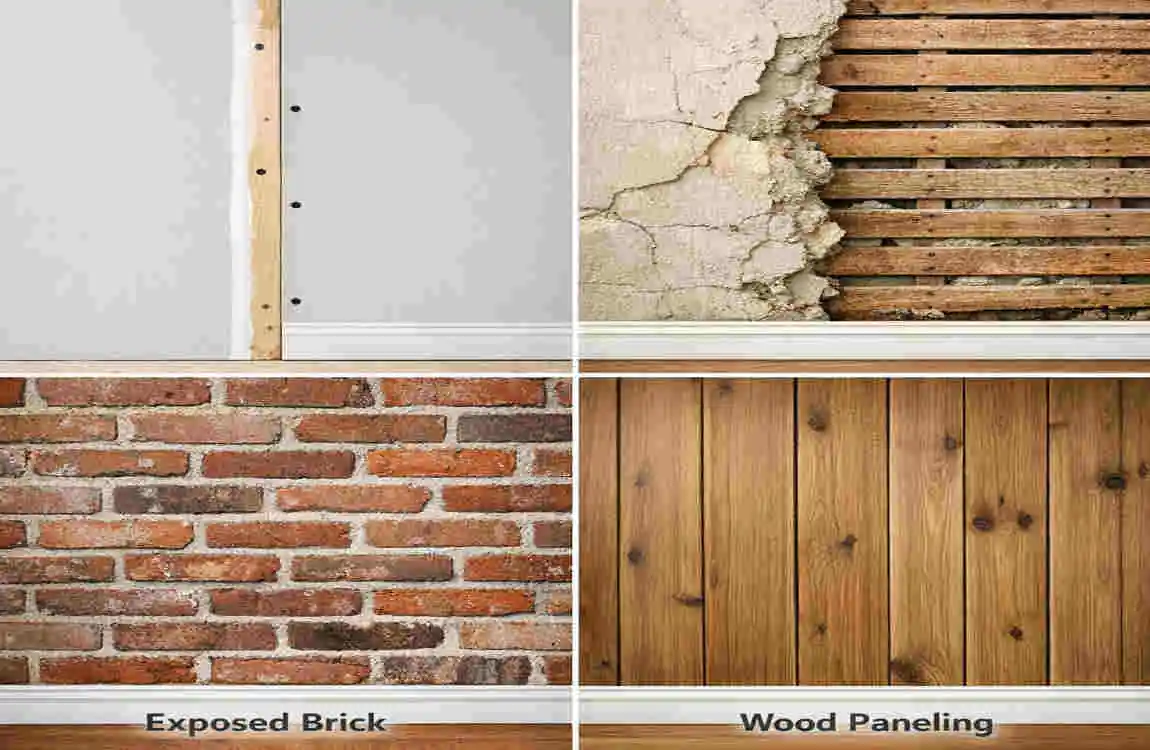
If you are wondering what bedroom walls are made of, the simple answer is that they are usually made of drywall, plaster, wood, brick, or concrete. The exact material depends on the home’s age, style, and construction.
This matters more than many homeowners realize. When you know what your walls are made of, it becomes easier to paint, hang décor, install shelves, drill safely, and handle repairs properly.
Drywall: The Most Common Bedroom Wall Material

What Is Drywall?
Drywall is the most common wall material in modern homes. It is also called gypsum board or plasterboard.
It is made from a gypsum core pressed between paper layers. Builders like it because it is quick to install and creates a smooth surface that is easy to finish.
Why Is Drywall Popular?
Drywall is popular for a few simple reasons:
- Affordable
- Easy to install
- Smooth and clean-looking
- Easy to paint or repair
It also works well in most bedrooms because it gives a neat, plain wall that fits many interior styles.
How to Tell If Your Bedroom Has Drywall
Drywall usually feels smooth and even. If you look closely, you may see taped seams or patched corner joints.
If you tap it, it often sounds lighter and less solid than plaster or brick. Still, do not drill into it unthinkingly. Always check carefully first.
Plaster Walls in Older Bedrooms
What Are Plaster Walls?
Plaster walls were common in older homes before drywall became standard. They are made by applying wet plaster over a base layer, often over wood lath or another support surface.
Once dry, plaster creates a hard, solid wall surface. It feels more rigid than drywall and is often found in older houses.
Advantages of Plaster
Plaster has some strong benefits:
- Very durable
- Good at reducing sound
- Solid, traditional feel
- Often lasts for many decades
Many homeowners also like the character it gives a room. It can make an older bedroom feel more substantial and classic.
How to Identify Plaster
Plaster walls often feel thicker and harder than drywall. They may also have a slightly uneven or textured surface.
If you tap the wall, it can sound more solid. Older homes are much more likely to have plaster, so the house’s age is a strong clue.
Wood, Brick, and Concrete Bedroom Walls
Wood Wall Construction
Some bedroom walls use wood paneling or wood-framed systems with decorative wood finishes. These can give a room a warm, natural look.
Wood walls are often used for style rather than structure. They may appear as accent walls, paneling, or decorative cladding.
Brick Walls
Brick bedroom walls are less common, but they do exist in some homes. You may see exposed brick in loft-style spaces, older buildings, or homes with masonry construction.
Brick is strong and durable, but it can be harder to decorate or drill into. It also tends to feel cooler and heavier than drywall.
Concrete Walls
Concrete bedroom walls are common in basements, apartments, or homes built with stronger structural systems. They are very durable and long-lasting.
The challenge is that concrete is harder to work with. Hanging items or making changes often requires special tools and anchors.
What Is Inside a Bedroom Wall?
Wall Framing
Most framed bedroom walls have a hidden frame made from wood studs or metal studs. These vertical supports hold the wall in place.
The visible wall surface, such as drywall or plaster, is attached to this frame. In many homes, the wall is not solid all the way through.
Insulation
Inside many bedroom walls, you may also find insulation. Common types include:
- Fiberglass
- Mineral wool
- Spray foam
Insulation helps control temperature and can reduce noise between rooms. This is especially useful in bedrooms, where comfort and quiet matter.
Electrical Wiring and Plumbing
Many bedroom walls contain electrical wiring for outlets, switches, and lights. In some cases, plumbing may also run through the wall, though that is less common in bedrooms than in bathrooms or kitchens.
That is why you should always be careful before drilling or cutting into a wall.
Vapor Barriers and Other Layers
Some walls also include extra layers, such as vapor barriers or moisture-control materials. These are more common in certain climates and construction types.
They help protect the home from moisture problems and improve the wall system as a whole.
How to Identify What Your Bedroom Walls Are Made Of
Check the Age and Construction of the Home
The age of your home is one of the easiest clues. Older homes often have plaster, while newer homes usually have drywall.
If your home was built after drywall became standard, there is a good chance your bedroom walls are drywall unless they were later remodeled.
Tap and Examine the Surface
Tapping the wall can give you clues. Drywall usually sounds lighter, while plaster and masonry can sound denser and harder.
Look at the surface too. Drywall often has more uniform seams, while plaster may look thicker or more irregular.
Check Existing Damage or Openings
If there is already a small opening, outlet, or repair area, you may be able to see inside the wall. This can reveal whether the wall has studs, insulation, or masonry behind it.
Even a small inspection point can give you helpful information.
Use a Stud Finder or Inspection Method
A stud finder can help you locate framing inside the wall. That tells you whether the bedroom wall is likely framed with drywall or another surface over studs.
If you are not sure what you are dealing with, it is smarter to ask a professional before making changes.
Choosing the Right Bedroom Wall Material
For Easy Remodeling
If you like to repaint, update décor, or make changes often, drywall is usually the easiest choice. It is simple to patch and works well with most interior projects.
For Durability
If durability is your main concern, plaster, brick, and concrete are stronger in many ways. They can last a very long time, though they are harder to modify.
For Soundproofing
Wall performance depends on more than just the surface. Framing, insulation, and wall thickness all matter.
Heavier materials like plaster, brick, and concrete often block sound better than thin drywall alone. But a well-built drywall wall with insulation can also work well.
For Moisture Resistance
Most bedroom walls do not face much moisture, so standard wall materials are usually fine. In damp areas, special wall products may be needed, but that is more common in bathrooms and basements.
For Style and Interior Design
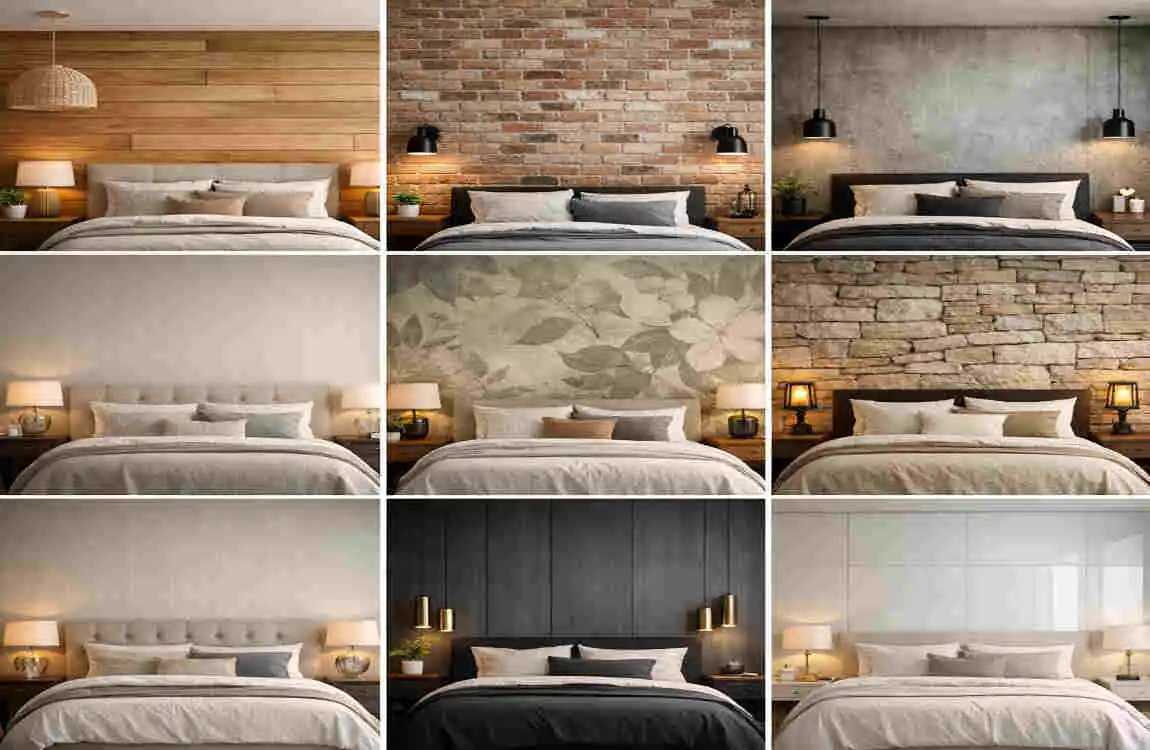
Different wall materials create different looks:
- Painted drywall feels clean and simple
- Plaster feels classic and solid
- Wood paneling feels warm and decorative
- Brick feels rustic or urban
- Concrete feels modern and strong
Your choice depends on both function and style.
Bedroom Wall Materials at a Glance
Material Common in Main Benefit Main Challenge
Drywall Newer homes Easy to install and finish Can dent or crack
Plaster Older homes Strong and solid Harder to repair
Wood Accent walls, decorative interiors Warm and attractive May need maintenance
Brick Masonry homes, lofts Very durable Hard to modify
Concrete Basements, apartments Strong and long-lasting Difficult to drill into
Frequently Asked Questions About Bedroom Walls
What are bedroom walls made of?
Bedroom walls are most often made of drywall, but they can also be made of plaster, wood, brick, or concrete depending on the home.
Are bedroom walls usually drywall?
Yes, in most modern homes, bedroom walls are usually drywall. Older homes may use plaster instead.
How can I tell if my bedroom wall is drywall or plaster?
Drywall is usually smoother and lighter. Plaster feels harder, thicker, and more solid. The home’s age is also a big clue.
Are bedroom walls hollow?
Many framed bedroom walls are not solid all the way through. They often have an interior cavity for studs, insulation, and wiring.
How thick are bedroom walls?
Thickness varies. A basic framed wall with drywall is often around 4 to 6 inches, but brick or concrete walls can be much thicker.
Can I drill into a bedroom wall?
Yes, but carefully. Always check for studs, wiring, and plumbing before drilling.
Which bedroom wall material is best?
That depends on your goals. Drywall is best for easy remodeling, while plaster, brick, and concrete offer more strength and durability.
| Wall Material | Common Use | Key Benefit |
|---|---|---|
| Drywall (Gypsum Board) | Most modern bedrooms | Affordable, smooth, and easy to paint |
| Plaster | Older or traditional homes | Durable with a classic finish |
| Wood Paneling | Rustic and traditional bedrooms | Adds warmth and visual texture |
| Brick | Industrial-style bedrooms | Strong, attractive, and long-lasting |
| Concrete | Modern or minimalist homes | Durable and contemporary |
| Plywood/OSB | Construction and some finished interiors | Strong and practical |
| Insulated Wall Systems | Energy-efficient homes | Helps with temperature and sound control |
