
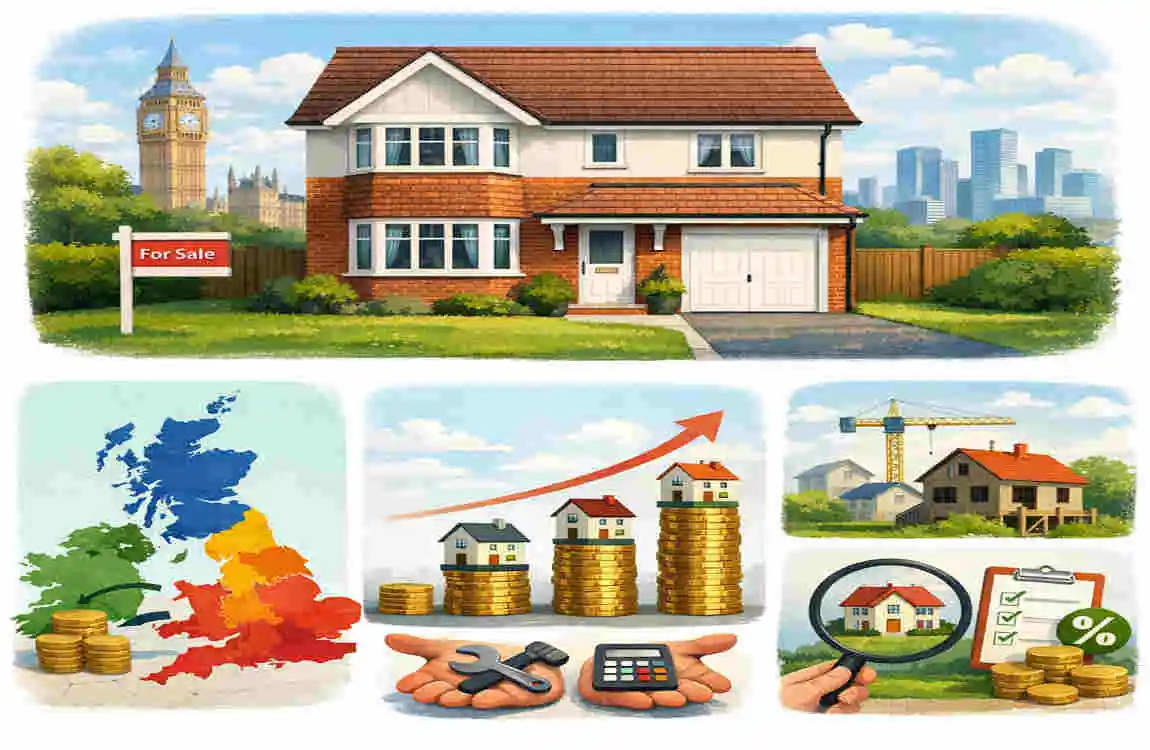
A 3-bedroom house in London will usually cost very differently from one in the North East, Wales, or parts of Scotland. Even within the same region, prices can change from town to town.
You also need to think beyond the asking price. Your full budget should include the deposit, mortgage costs, stamp duty where applicable, legal fees, survey fees, moving costs, insurance, and future maintenance.
Average Cost of a 3-Bedroom House in the UK

There is no single UK-wide price for a 3-bedroom house. The market is too local for that.
Typical Price Factors
Several things can push the price up or down:
- Location and demand
- House size and layout
- Age and condition
- Detached, semi-detached, or terraced style
- Garden, garage, parking, or extensions
- Nearby schools, transport, and shops
- New-build versus older property
A home with the same number of bedrooms can still vary widely in price if it has more space, better parking, or a more desirable postcode.
Regional Price Differences
Here is a simple look at how prices often differ across the UK:
Area General Price Level What Buyers May Find
London Very high Smaller homes and strong location premiums
South East England High Family homes with strong demand
South West England Moderate to high Bigger homes in some towns
East of England Moderate to high Wide variety depending on location
West Midlands Moderate Broad choice of family homes
North West England Moderate Often better space for the money
Yorkshire & Humber Moderate Good range of family properties
North East England Lower on average More affordable options in many areas
Wales Varies widely Big differences between city and rural areas
Scotland Varies widely Strong local differences
Northern Ireland Varies Local market conditions matter a lot
Why Location Matters So Much
Two homes can both have three bedrooms, but one may be worth far more because it is near a train station, a top school, or a busy job center.
Location affects value due to transport, employment, local services, land availability, and neighborhood demand. That is why you should compare homes locally instead of relying on a national average.
What Affects the Price of a 3-Bedroom House?
House Type
The style of the house matters.
- Terraced houses are often the most affordable option
- Semi-detached houses usually cost more than terraces
- Detached houses often command a premium because they offer more privacy, land, and parking
Of course, local demand still matters. In some towns, even a terrace can be expensive if the area is very popular.
Size and Layout
Not all 3-bedroom houses are equal. One may have three compact bedrooms and a small kitchen, while another may include a large family room, an extra bathroom, or a home office.
More usable space usually means a higher price. A smart layout can also add value because buyers often care just as much about flow as they do about the number of bedrooms.
Property Condition
A move-in-ready home usually costs more than one that needs work. That is because buyers often pay extra to avoid repairs.
Older homes may need updates to the kitchen, bathroom, windows, roof, heating, electrics, or insulation. These issues can make a house cheaper upfront, but more expensive overall.
New-Build vs Existing House
A new build can be attractive because it often has modern insulation, efficient heating, and lower immediate maintenance needs.
But new-build homes can also cost more per square foot because of the premium attached to brand-new construction.
An older house may be cheaper to buy, but it may need more repairs and decorating later.
Additional Costs When Buying a 3-Bedroom House
The purchase price is only part of the story.
Deposit
Most buyers need to put down a deposit before getting a mortgage. The amount depends on the lender and the mortgage product.
A bigger deposit often means better borrowing terms, but you should still leave enough savings for the costs that come after the purchase.
Stamp Duty and Property Taxes
Taxes can apply depending on where you are buying, how much the house costs, and your personal situation.
Because tax rules can change, it is always wise to check current guidance before making a purchase.
Solicitor and Conveyancing Fees
You will usually need a solicitor or conveyancer to handle the legal side of the sale. This includes contracts, searches, and the transfer of ownership.
These fees are a normal part of the buying process and should be added to your budget.
Survey and Valuation Costs
A survey can help uncover problems that are not obvious during a viewing.
That might include roof issues, damp, structural concerns, or hidden maintenance work. Spending a little here can help you avoid much higher costs later.
Mortgage Costs
Mortgage-related costs may include:
- Arrangement fees
- Interest charges
- Valuation fees
- Monthly repayments
- Broker fees, if used
These costs can make a big difference to your monthly budget, so compare mortgage offers carefully.
Moving and Initial Home Costs
Do not forget the practical expenses after you buy:
- Removal services
- Insurance
- Furniture
- Appliances
- Repairs
- Decorating
- Utility setup
Many buyers focus only on the house price, but these extra costs can add up quickly.
How to Budget for a 3-Bedroom House in the UK
Calculate Your Maximum Affordable Price
Start with your income, debts, savings, and monthly expenses. Then work out how much you can borrow comfortably without stretching too far.
It is better to buy a slightly cheaper home and stay financially safe than to buy at the very top of your limit.
Allow for Repairs and Maintenance
If the house is older, set aside a separate amount for repairs. Even a well-kept home can need small fixes after you move in.
That buffer gives you peace of mind.
Compare Total Monthly Housing Costs
When budgeting, look at the full monthly picture:
Mortgage + Council Tax + Utilities + Insurance + Maintenance + Other Property Costs
This gives you a far more realistic idea of what the home will cost you each month.
Consider Long-Term Value
Think about resale too. A home near good transport links, schools, and future development may hold its value better over time.
Energy efficiency can also matter because it affects running costs and buyer appeal later.
Buying or Building a 3-Bedroom House: Which Is Better?
Buying an Existing House
Buying a home is usually faster and simpler. You can see the neighborhood, compare asking prices, and move in sooner.
The downside is that older homes may need repairs, updates, or hidden maintenance.
Building a New 3-Bedroom House
Building gives you more control over the design, layout, and energy efficiency. But it is also more complex.
You must budget for:
- Land
- Planning and professional fees
- Site preparation
- Materials
- Labour
- Utilities
- Landscaping
- Building regulations
- Contingency money
So while building can be rewarding, it often needs more planning and patience than buying.
How to Save Money on a 3-Bedroom House Purchase

Look Beyond Expensive Areas
Sometimes a nearby town or suburb offers much better value while still giving you good transport and access to work.
Compare Properties by Cost Per Square Meter
Bedroom count alone can be misleading. Two houses with three bedrooms may offer very different space and value.
Consider Cosmetic Renovation
A house with old paint or dated décor may be easier to improve than one with serious structural problems.
Negotiate Where Appropriate
If a survey finds issues or nearby similar homes are cheaper, you may have room to negotiate.
Think About Energy Efficiency
Efficient windows, insulation, and heating systems can lower your long-term costs.
Avoid Stretching the Budget Too Far
Keep some savings back for emergencies. Using every pound on the purchase can leave you exposed later.
FAQ About 3-Bedroom House Costs in the UK
How much does a 3-bedroom3-bedroom house cost in the UK?
There is no single national price. The cost depends on the region, town, property type, size, condition, and local market demand.
What is the average price of a 3-bedroom house in the UK?
A national average can only be a broad guide. It will not tell you what a specific home in a specific area is worth.
Is a 3-bedroom house cheaper in northern England?
Often, yes. Many northern areas are more affordable than London and much of southern England, but prices still vary by town.
How much deposit do I need for a 3-bedroom house?
That depends on the mortgage product and lender. Common deposit levels exist, but they are not the same for every buyer.
Are 3-bedroom houses expensive in London?
Yes, generally. London prices are much higher than in many other parts of the UK, so buyers often need a larger budget or a smaller home.
Is it cheaper to build or buy a 3-bedroom house?
It depends on land, construction costs, location, and the condition of existing homes. Sometimes buying is cheaper; sometimes building makes more sense.
What extra costs should I budget for when buying a house?
Plan for the deposit, taxes, legal fees, surveys, mortgage costs, moving expenses, insurance, repairs, and maintenance.
Does the condition of a house affect its price?
Yes. Roofs, plumbing, electrics, heating, windows, kitchen, bathroom, and energy efficiency all influence value.
Can a 3-bedroom house be a good investment?
It can be, especially in areas with strong demand, good transport, and steady local growth.
How can I find an affordable 3-bedroom house in the UK?
Compare different areas, look at recent sales, check the property’s condition, and focus on overall affordability rather than just the listing price.
