
Imagine this: You’re relaxing at home, maybe sipping coffee or enjoying a book, when you hear that familiar, persistent buzzing. You look up—there’s a bee inside! It’s not just a fluke. Day after day, you spot more bees sneaking in through windows, doors, or even tiny cracks. You’re left asking yourself: Why do bees keep coming into my house?
You’re definitely not alone. In recent years, homeowners across the country have reported a rise in bee infestations. According to the latest 2025 USDA pollinator data, changing seasons and urban sprawl are driving bees to new places—including our living rooms and kitchens! Whether you live in a buzzing suburb or a quiet rural town, bees seem to find their way indoors more often now than ever before.

Before we jump into solutions, it’s helpful to understand why bees keep coming into your house in the first place. Their reasons are surprisingly logical—think food, shelter, water, and sometimes just pure curiosity.
Let’s break down the most common causes, backed by science and expert insights:
Comparing Common Bee Types and Their Indoor Habits
Bee Type: Why They Enter HomesSeasonality
Honeybees seek nectar and shelter, Spring–Fall
Carpenter Bees Looking for wood nesting spots Spring–Summer
Bumblebees are searching for warmth and food year-round.
Food Sources: Sweet Attractants Luring Bees Indoors
Did you know bees can detect sugar from over 100 meters away? That half-empty soda can or fruit bowl on your counter is a neon sign for hungry bees. They’re especially drawn to:
- Open trash bins
- Sticky spills (juice, honey, soda)
- Pet food bowls, especially near windows or doors
- Bird feeders placed close to your house
Quick Checklist:
- Empty trash daily
- Wipe counters
- Store fruit in the fridge
- Clean up pet food spills
Sometimes, even a tiny crumb can send out an irresistible invitation. Performing a quick food audit can dramatically reduce unwanted bee visits.
Shelter and Nesting Spots: Cracks, Vents, and Hidden Havens
Here’s a big reason why bees enter homes: they’re looking for cozy, protected spaces. Your home’s structure offers the perfect real estate for bee nests—especially for honeybees and carpenter bees.
- Cracks in siding
- Gaps in attic vents or wall voids
- Loose roof tiles or soffits
Some honeybee colonies can store up to 60 pounds of honey in a single year—imagine that inside your walls! Bees also migrate indoors after harsh winters, searching for warmth and safety.
Water Sources: Leaky Pipes and Pools Drawing Thirsty Swarms
Beyond food, bees also need water. Indoor water sources can be a powerful magnet, especially during dry spells.
- Leaky faucets and pipes
- Pet water bowls left out
- AC condensation drips
A quick scan for drips or puddles can help keep your home off the bee radar.
Environmental Factors: Weather, Landscaping, and Proximity to Nests
Weather plays a significant role in bee activity. After storms or sudden cold snaps, bees may seek shelter indoors. If your garden is full of blooming flowers or trees, you’re also more likely to attract bee visitors.
Urban bee populations have jumped nearly 20% in recent years (USDA, 2025), making city homes just as susceptible as rural ones.
Other Triggers: Lights, Scents, and Accidental Entries
Bees don’t always enter on purpose. Sometimes, they’re drawn by:
- Bright porch or indoor lights (they mimic flower signals)
- Strong floral scents (perfume, air fresheners)
- Open doors or windows during peak foraging hours
Are Bees in Your House Dangerous? When to Worry
Understandably, bees in your house clean can be unsettling. But before you panic, let’s look at the facts.
The Good News
- 90% of bee species are non-aggressive, according to the EPA.
- Most bees only sting if threatened or trapped.
When to Be Cautious
- Solitary bees (like carpenter bees) are less likely to swarm or sting.
- Large swarms or hives (over 1,000 bees) can become defensive, especially if disturbed.
Health Risks
- About 1–2% of the population has a severe allergy to bee stings.
- Multiple stings can be dangerous for pets, children, and those with allergies.
Legal and Environmental Notes
- Bees are protected pollinators—vital for our food supply.
- In many places, it’s illegal to kill or destroy bee colonies. Relocation is usually the best route.
When to Call the Pros
- If you spot a hive larger than a basketball, or if bees are swarming in large numbers, it’s time to contact a professional bee removal service.
Bees in the house safety isn’t just about avoiding stings—it’s about respecting these important insects while keeping your family safe.
Bee SituationSting RiskAction Needed
Lone bee indoors, Low Guide outside
Small nest Moderate DIY removal/relocate
Large hive/swarm High Call professionals
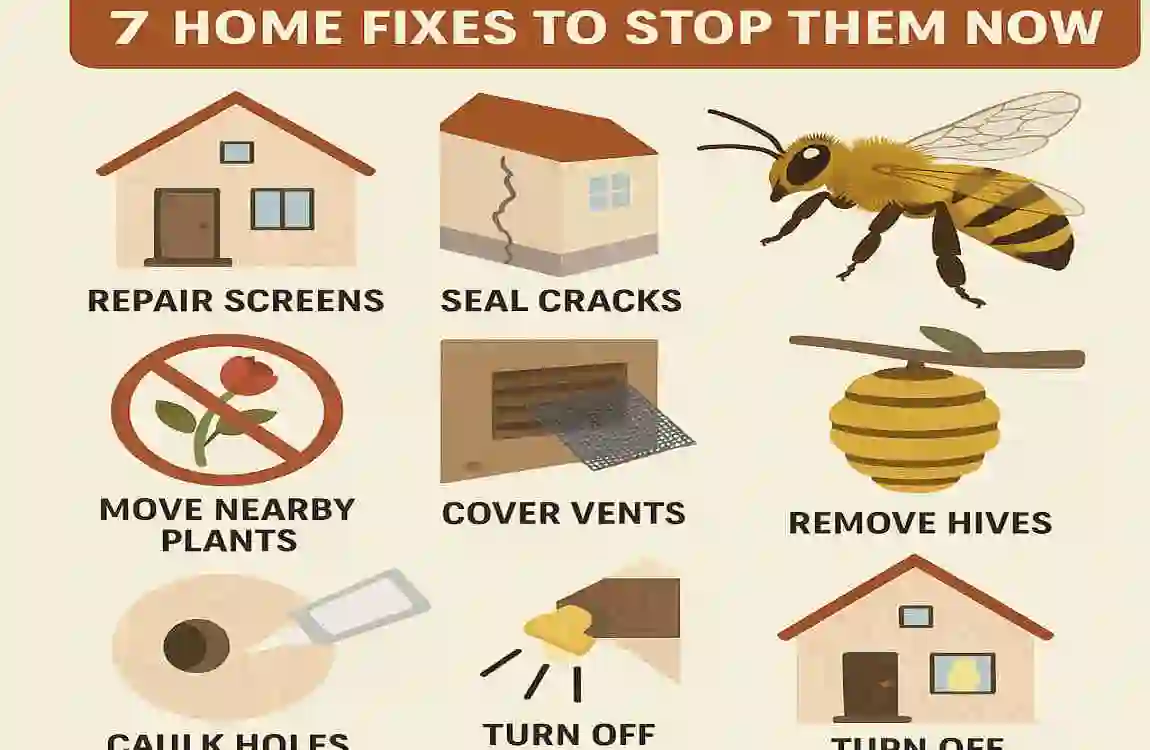
Home Fixes to Stop Bees Entering Your House Now
Ready for action? Here are 7 proven, bee-friendly fixes you can implement right away. Each solution is safe, affordable, and doesn’t require harsh chemicals or an exterminator.
Seal Entry Points – Block the Welcome Mat
Why it works: Most bees sneak in through tiny gaps you might not even notice.
How to do it:
- Inspect your home’s exterior with a flashlight, focusing on windows, doors, vents, and siding.
- Caulk cracks and gaps using silicone or latex sealant.
- Weatherstrip doors and windows to eliminate drafts and open seams.
Pro tip: Pay special attention to attic vents and eaves, where bees love to nest.
Eliminate Food and Water Temptations
Why it works: Remove what attracts bees, and they’ll look elsewhere.
How to do it:
- Clean up spills, crumbs, and sticky spots daily.
- Store food in airtight containers.
- Secure trash with tight-fitting lids.
DIY Repellent:
Mix equal parts white vinegar and water, and wipe down counters and garbage bins. Bees dislike vinegar’s scent!
install Screens and Barriers
Why it works: Physical barriers are one of the most effective ways to keep bees out.
How to do it:
- Install fine-mesh screens (1/16-inch or smaller) over windows, vents, and chimney openings.
- Add door sweeps to block gaps under exterior doors clean.
- Check for and repair any holes in existing screens.
Pro tip: Don’t forget about utility openings—use mesh or steel wool to block small gaps.
Use Bee-Safe Repellents and Deterrents
Why it works: Certain scents are naturally unappealing to bees.
How to do it:
- Fill a spray bottle with water, a few drops of peppermint or eucalyptus oil, and a splash of dish soap.
- Spray along entry points and around frequently used doors/windows.
- Refresh every few days, especially after rain.
Commercial options: Look for bee-friendly deterrent sprays at garden stores.
Trim Landscaping and Remove Nests Safely
Why it works: Overgrown plants and close-proximity nests are bee magnets.
How to do it:
- Prune bushes, flowers, and trees so they don’t touch your clean house.
- Inspect for small nests in sheds, eaves, or garages.
- Use a handheld vacuum with an extended nozzle to gently remove small, inactive nests.
- If you spot an active nest, contact a local beekeeper for relocation.
Pro tip: Never use pesticides—relocation is safer for you and the bees.
Adjust Lighting and Scents Indoors
Why it works: Bees navigate by light and are attracted to certain scents.
How to do it:
- Switch to yellow “bug lights” for outdoor fixtures—they don’t attract bees.
- Close curtains at dusk to reduce indoor light leakage.
- Avoid using floral-scented cleaners or air fresheners near entry points.
Pro tip: Keep porch lights off when not needed, especially during spring and summer.
Long-Term Prevention: Yard Maintenance plan.
Why it works: Ongoing maintenance deters bees from settling near your home.
How to do it:
- Plant bee-repelling herbs (mint, citronella, lemongrass) around entry points.
- Schedule annual home inspections for new gaps or nests.
- Use non-lethal bee traps to monitor and gently relocate bees as needed.
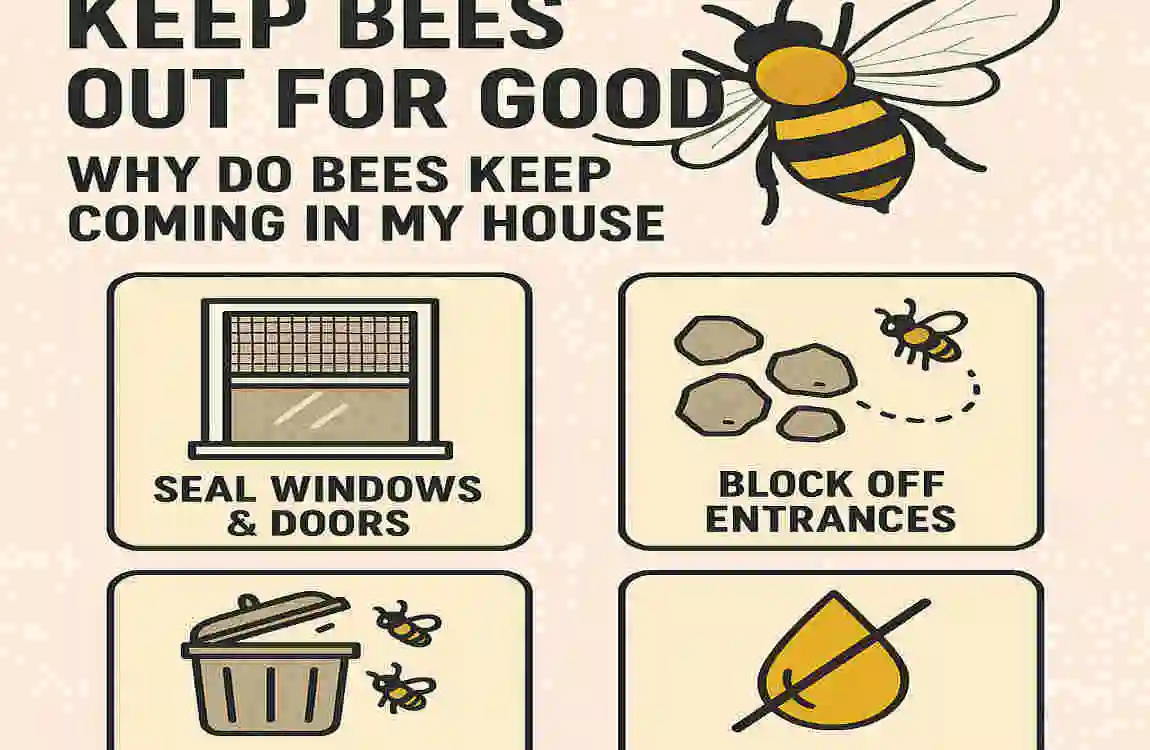
Once you’ve tackled the immediate problem, a little routine maintenance goes a long way.
Here’s a quick monthly home audit you can do:
- Inspect window and door seals for gaps.
- Check attic vents and rooflines for cracks.
- Wipe down surfaces with bee-repelling spray.
- Keep outdoor clean trash bins sealed and away from doors.
- Regularly prune flowering plants close to your home.
- Empty and refill pet water bowls daily.
Eco-Friendly Yard Design Tips:
- Use mulch or gravel instead of heavy flower beds along foundations.
- Plant bee-repelling herbs near entrances.
- Position bird feeders away from windows clean.
Monitor with Non-Lethal Bee Traps:
- Place simple bottle traps near likely entry points.
- Check traps weekly and release any bees safely outdoors.
By staying proactive, you can prevent bees from entering your home permanently and enjoy a buzz-free living space!
