
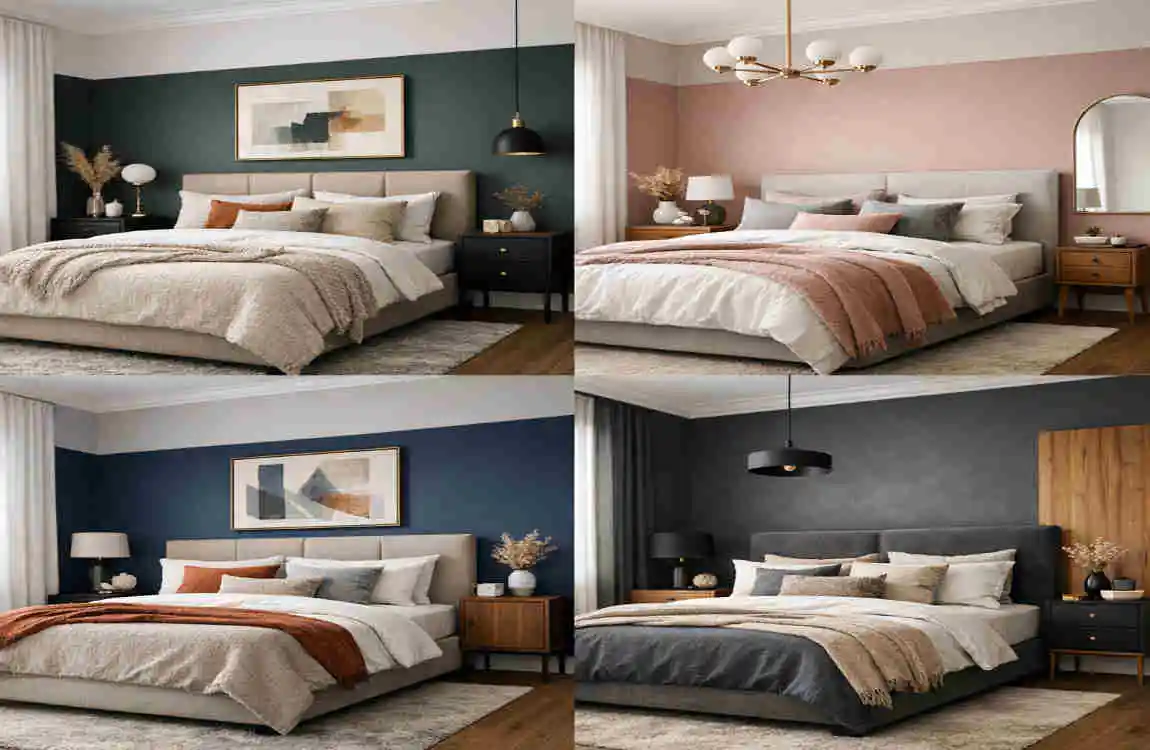
A main bedroom wall color combination does more than make the room look nice. It sets the mood, shapes the atmosphere, and changes how the space feels every day. With the right colors, your bedroom can feel calm, warm, elegant, or fresh without a full renovation.
The best bedroom colors aren’t just about style. They also help you relax, sleep better, and enjoy the room more. That is why it helps to think about light, furniture, room size, and the feeling you want before you paint.
What Makes a Good Master Bedroom Wall Color Combination?
Color shapes the whole mood.
Color is one of the strongest design tools in a bedroom. It can make a room feel peaceful, romantic, rich, airy, or cozy.
In a main bedroom, this matters even more because the room should feel restful. You want a place that helps you slow down at the end of the day.
Relaxing colors work best.
Most people sleep better in rooms that feel calm and balanced. Soft shades often work well because they are easier on the eyes.
That does not mean you have to use only light colors. You can also use deeper shades if they are balanced well with lighter tones and good lighting.
Room size and light matter
A color combination can look very different depending on the room. A small, low-light room may need softer or lighter colors. A large bright room can handle stronger, deeper shades.
Before choosing a paint color, look at:
- Natural light
- Ceiling height
- Room size
- Furniture color
- Flooring tone
These details all affect how the final room will feel.
Let furniture and décor guide your choice.
The walls should work with the bed frame, headboard, curtains, bedding, and flooring. If your furniture is dark, a lighter wall color may create a nice balance. If your furniture is pale, a richer wall tone may add depth.
A good main bedroom wall color combination should support the furniture, not compete with it.
Best Master Bedroom Wall Color Combinations
White and beige
This is one of the most timeless combinations. White and beige give the bedroom a clean, soft, and calm look.
It works especially well if you want a bright, simple room. Beige adds warmth, while white keeps the room fresh.
This combination is a great choice for:
- Minimal bedrooms
- Classic interiors
- Small rooms that need more light
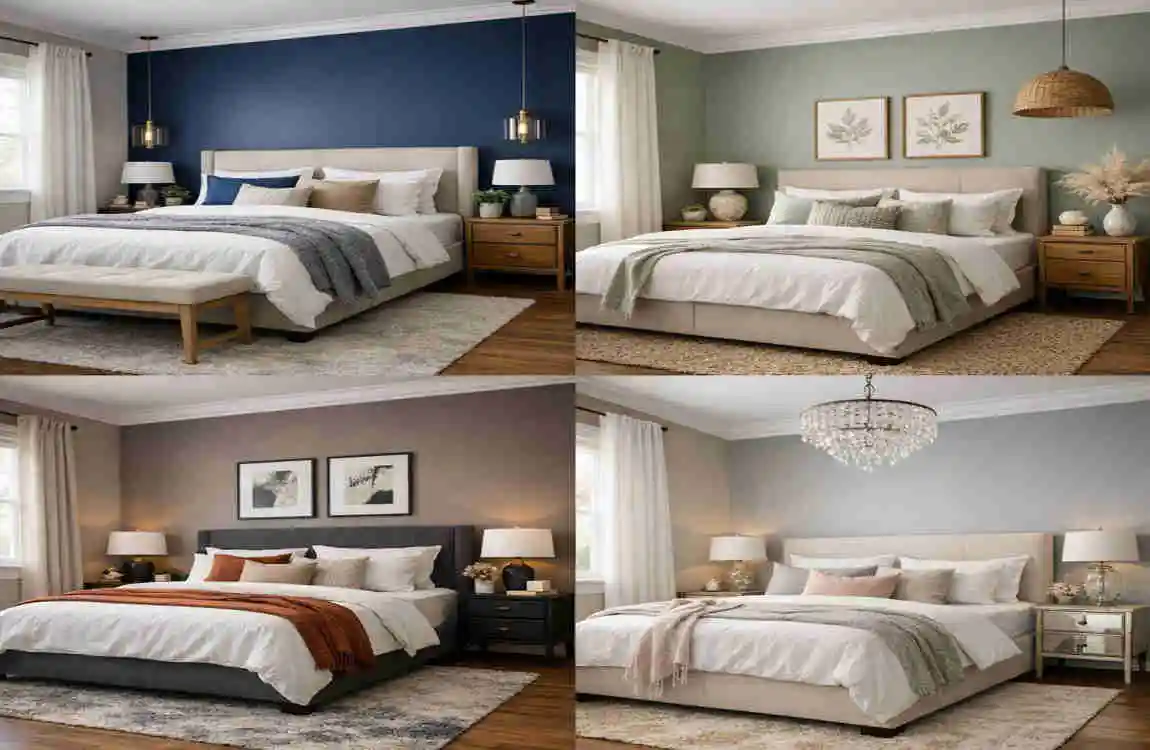
Navy blue and white
Navy blue and white create a more elegant and polished feel. Navy adds depth, while white keeps the room from feeling too dark.
This color pairing works well in master bedrooms that want drama without losing balance. It feels crisp, stylish, and classic.
Sage green and cream
If you want a softer and more natural mood, sage green and cream is a beautiful option. Sage feels peaceful and fresh, while cream adds warmth.
This combination works well in bedrooms where relaxation is the main goal. It is especially nice if you like gentle, nature-inspired interiors.
Grey and soft pink
Grey and soft pink give the room a modern but gentle look. Grey keeps things neutral, while soft pink adds a little warmth and charm.
This combination feels stylish without becoming too loud. It is a nice choice if you want the bedroom to feel calm with a subtle touch of color.
Brown and warm beige
For a cozy bedroom, brown and warm beige is a strong choice. These colors make the room feel grounded, rich, and comfortable.
This pairing works well with wood furniture, textured fabrics, and soft lighting. It can make the room feel inviting and restful.
Terracotta and off-white
Terracotta and off-white bring warmth and earthy character into the bedroom. Terracotta adds personality, while off-white balances it out.
This is a great choice if you want a room that feels warm, natural, and a little more unique.
Teal and light grey
Teal and light grey create a modern, fresh look. Teal adds depth and personality, while grey keeps the room grounded.
This combination works well if you want color but still want the bedroom to feel mature and balanced.
Modern Main Bedroom Color Ideas
Neutral palettes
Modern bedrooms often use neutral colors because they feel clean and flexible. Shades like white, beige, grey, taupe, and soft stone work well together.
These colors create a calm base and make it easy to add texture through bedding, rugs, and art.
Two-tone bedroom walls
Two-tone walls are a simple way to make the room feel more interesting. Use a darker color on one part of the wall and a lighter tone elsewhere.
This can help define the room and add shape. It is also a smart way to add style without making the space feel crowded.
Accent wall ideas
An accent wall is one of the easiest ways to add personality. You can paint the wall behind the bed in a deeper shade or use a softer but richer color to create focus.
A good accent wall can make the bed area feel more complete and can help the room feel designed instead of plain.
Dark colours for sophistication
Dark colors can look beautiful in a main bedroom when used carefully. Deep navy, charcoal, forest green, or chocolate brown can create a rich and elegant atmosphere.
The key is balance. Use lighter bedding, lamps, artwork, or rugs to keep the room from feeling too heavy.
Soft pastels for peace
If you want the room to feel peaceful and airy, soft pastels are a good option. Pale blue, blush, lavender, and gentle green can all bring a light, calming mood.
These shades work best in rooms with enough natural light. They can make the space feel gentle and restful.
Minimalist modern combinations
For a clean modern look, keep the palette simple. Pick one main wall color, one support color, and one accent tone.
This helps the room feel neat and well planned. It also makes decorating easier because the whole space stays visually connected.
How to Choose Colors for Different Bedroom Sizes
Small master bedrooms
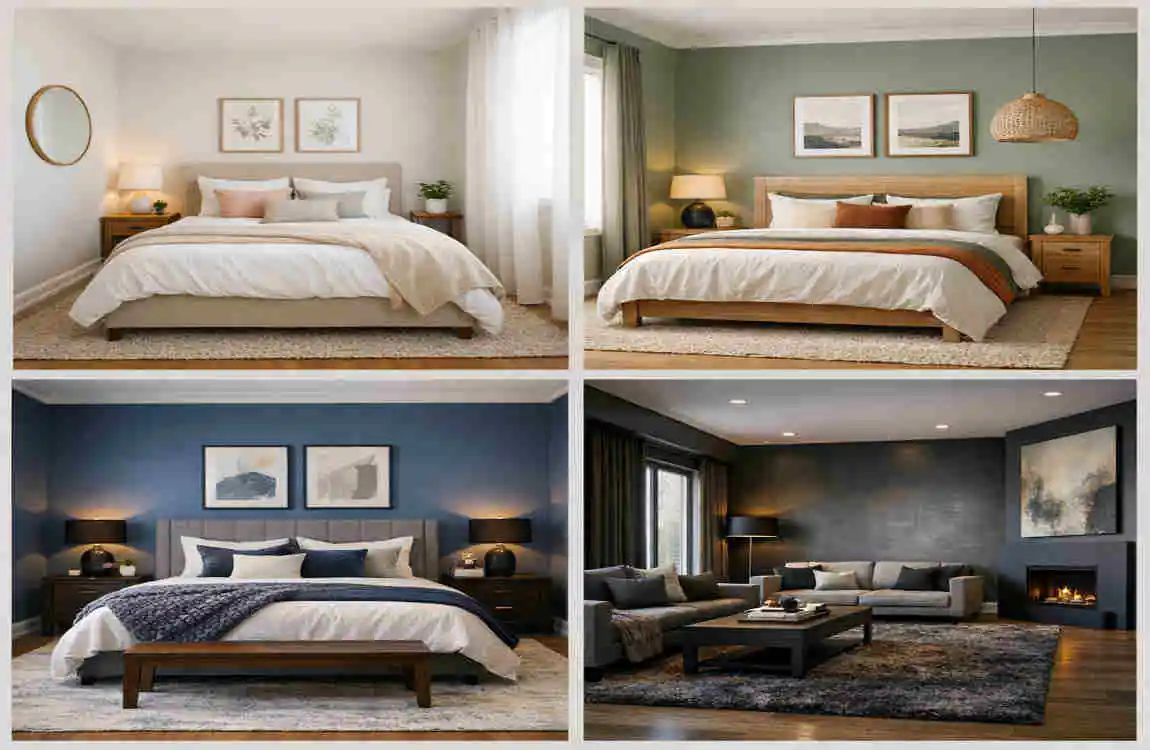
In a small bedroom, lighter colors usually work best because they help the room feel more open. White, cream, pale grey, and soft beige can all make the space feel bigger.
You can still add personality with bedding, artwork, or a single accent wall. That way, the room stays bright but not boring.
Large master bedrooms
Large bedrooms can handle deeper colors and stronger contrast. If the room feels too empty, richer wall colors can make it feel more intimate.
Try combinations like navy and white, teal and grey, or brown and beige. These can help a big room feel cozier and more balanced.
Low-light rooms
Rooms with less natural light need colors that do not feel too heavy. Warm neutrals, soft cream, pale sage, and gentle grey often work well.
Avoid very dark shades unless you are sure the room has enough artificial light to support them. Otherwise, the space may feel closed in.
Bright, sun-filled bedrooms
If your room gets a lot of sunlight, you have more freedom. You can use richer or cooler shades because the light will help balance them.
This is a good setting for colors like navy, teal, terracotta, or deeper green. The sunlight keeps them from feeling too heavy.
Using accent walls to change proportions
Accent walls can help shape the room visually. A darker wall behind the bed can create a focal point. A lighter wall can make a narrow room feel wider.
This is a smart trick when you want to improve the look of the space without changing the layout.
How to Match Wall Colors With Bedroom Décor
Match the bed frame and headboard.
Your bed is usually the main feature in the room, so the wall color should support it. A dark wooden bed frame looks lovely against light walls. A pale upholstered headboard can stand out beautifully against deeper tones.
When the wall and bed work together, the room feels more complete.
Coordinate curtains and bedding.
Curtains and bedding should connect with the wall color, not fight it. That does not mean everything must match exactly. It just means the tones should feel related.
For example:
- Soft beige walls pair well with cream or taupe bedding
- Grey walls work nicely with white, blush, or navy accents
- Green walls look good with linen, ivory, or warm wood tones
Choose flooring that supports the palette.
Flooring also matters a lot. Wood floors often work well with many wall colors because they add warmth and balance. Grey flooring can create a cooler, more modern look.
If the floor is dark, lighter walls can help lift the room. If the floor is pale, a richer wall color can add depth.
Lighting changes the color.
Lighting can make the same paint look very different. Warm bulbs can make cool colors feel softer. Cool lights can make warm colors look less golden.
That is why you should always test paint samples in the actual room before making a final choice.
Add artwork and accessories carefully.
Artwork, lamps, and decorative pieces should support the room’s color story. Too many competing colors can make the bedroom feel busy.
Instead, pick a few shades and repeat them in small ways across the room. That creates harmony.
Common Mistakes When Choosing Bedroom Wall Colors
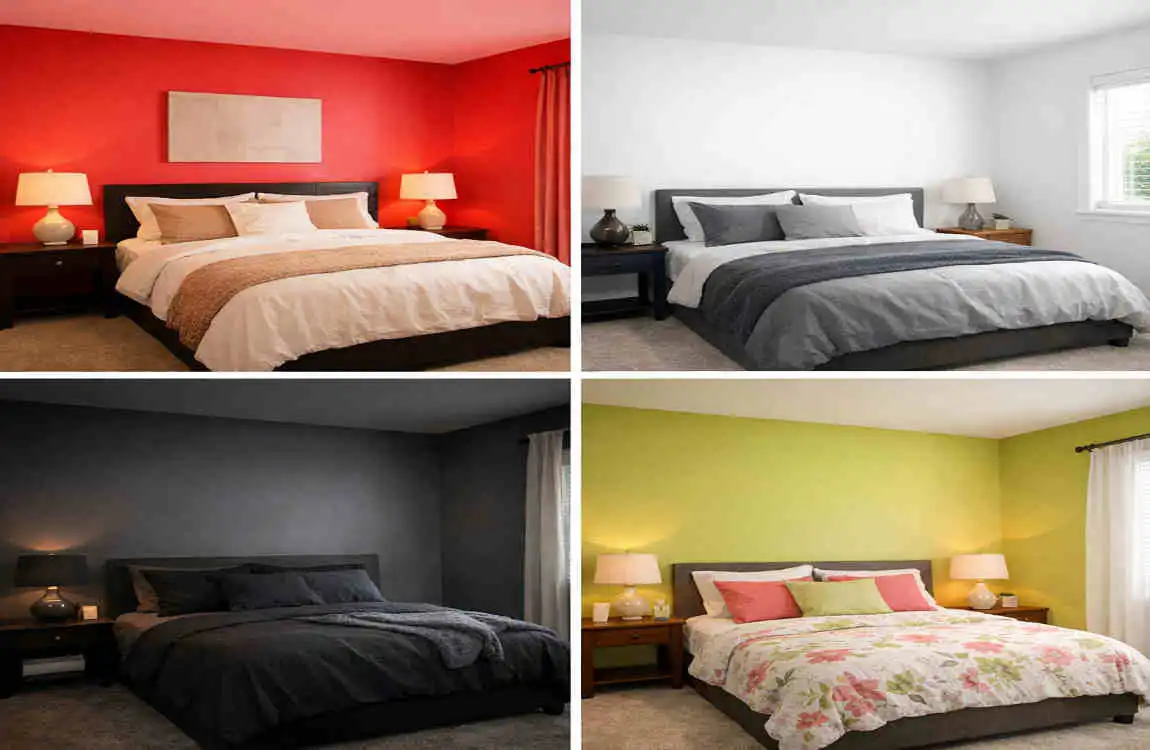
Using too many bold colors
A bedroom should feel restful, not chaotic. If you use too many bold colors together, the room may feel busy and harder to relax in.
One strong color is often enough. Let the rest of the space stay calm.
Ignoring natural and artificial light
This is one of the biggest mistakes people make. A color that looks perfect in the store may look very different in your bedroom.
Always check how the color looks in the morning, afternoon, and evening.
Skipping paint samples
Never choose a wall color only from a tiny paint card. Samples matter because they show you how the actual shade behaves in your room.
Paint a larger section of the wall and live with it for a few days before deciding.
Mismatching furniture and wall tones
If the wall color clashes with your furniture, the room can feel unbalanced. A cool grey wall may look odd with very warm furniture if the tones do not connect well.
Think about the whole room before you paint.
Making the room too dark or too cold
Dark rooms can feel dramatic, but too much darkness can make the space feel heavy. On the other hand, some cool shades can feel too sharp if they are not balanced with warm textures.
A good bedroom should feel comfortable, not extreme.
Following trends without personal style
Trendy colors can be exciting, but they do not always fit your home or your taste. Choose a combination that you will still enjoy in a few years.
A stylish bedroom should also feel personal.
FAQ: Master Bedroom Wall Color Combination
What is the best main bedroom wall color combination?
The best main bedroom wall color combination depends on the mood you want. Popular choices include white and beige, navy and white, sage and cream, and grey with soft pink.
Which two colors are best for a main bedroom?
Some of the best two-color combinations are white and beige, navy and white, and sage green and cream because they feel balanced and calm.
What color makes a main bedroom look luxurious?
Deep shades like navy, charcoal, emerald, and rich brown can make a bedroom look luxurious when paired with soft lighting and elegant décor.
Which wall should be an accent wall in a bedroom?
Usually, the wall behind the bed works best as an accent wall because it naturally draws attention and frames the main piece of furniture.
Are dark colors good for a main bedroom?
Yes, dark colors can work very well if the room has enough light and the rest of the design keeps things balanced. They can make the room feel rich and cozy.
What colors make a small bedroom look bigger?
Light colors like white, cream, soft grey, pale beige, and light sage can help a small bedroom feel larger and more open.
How do I choose a wall color that matches my bedroom furniture?
Start with your furniture’s tone. If your furniture is dark, choose lighter walls. If your furniture is light, a richer wall color may add depth. Always test samples in the room first.
| Wall Colour Combination | Best For | Style & Look |
|---|---|---|
| Beige + Warm White | Cozy bedrooms | Soft & elegant |
| Navy Blue + White | Modern bedrooms | Bold & sophisticated |
| Sage Green + Cream | Relaxing spaces | Natural & peaceful |
| Blush Pink + Taupe | Stylish bedrooms | Warm & romantic |
| Charcoal Gray + White | Contemporary rooms | Sleek & dramatic |
| Terracotta + Beige | Earthy interiors | Warm & inviting |
| Olive Green + Off-White | Nature-inspired rooms | Calm & timeless |
| Lavender + Light Gray | Elegant bedrooms | Soft & refined |
