
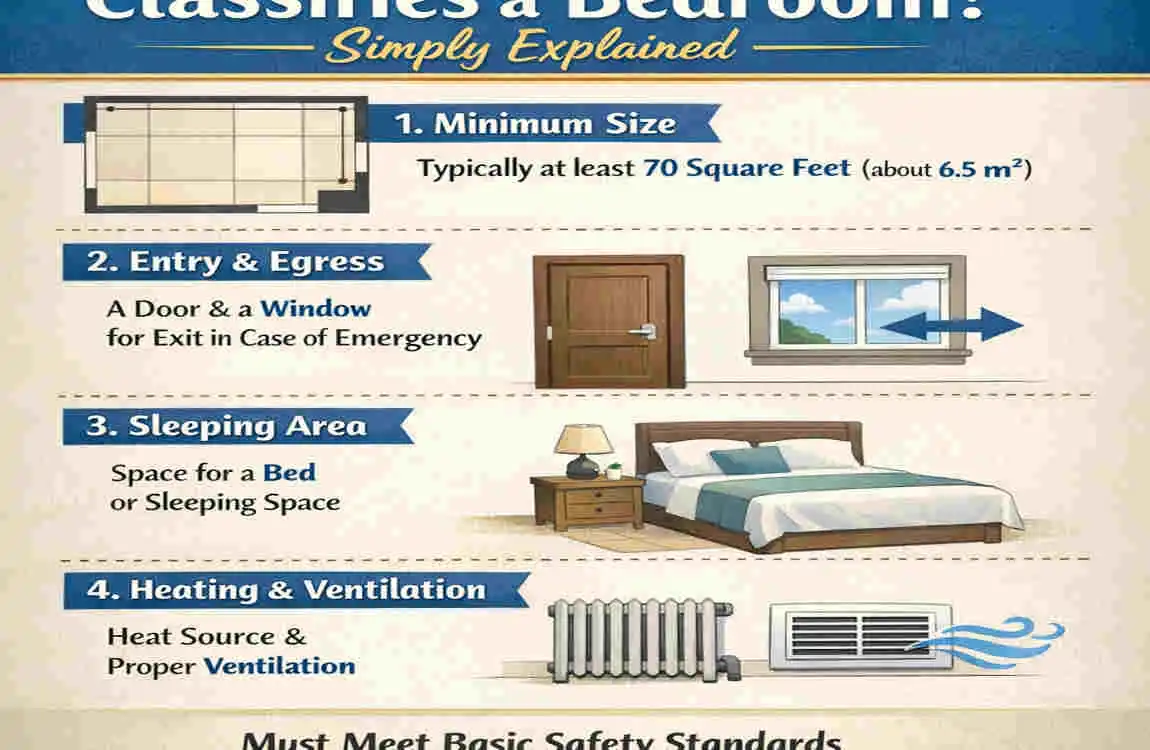
If you have ever asked what classifies a bedroom, you are not alone. It sounds like a simple question, but the answer has a few important parts. A bedroom is usually more than just a room with a bed in it.
In general, a bedroom is a space made for sleeping, privacy, and personal use. That said, the exact rules may vary depending on your local building, housing, and property codes. This is why a room may be called a bedroom in one place but not in another.
What Classifies a Bedroom?
A Dedicated Space for Sleeping
The main purpose of a bedroom is simple: it should be a space for sleeping. A room that serves only as a living area, storage room, or office usually does not qualify unless it meets the right requirements and is designed for sleeping use.
A true bedroom should feel like a separate, usable personal space. It does not need to be large or fancy, but it should support rest and privacy.
Minimum Room Size
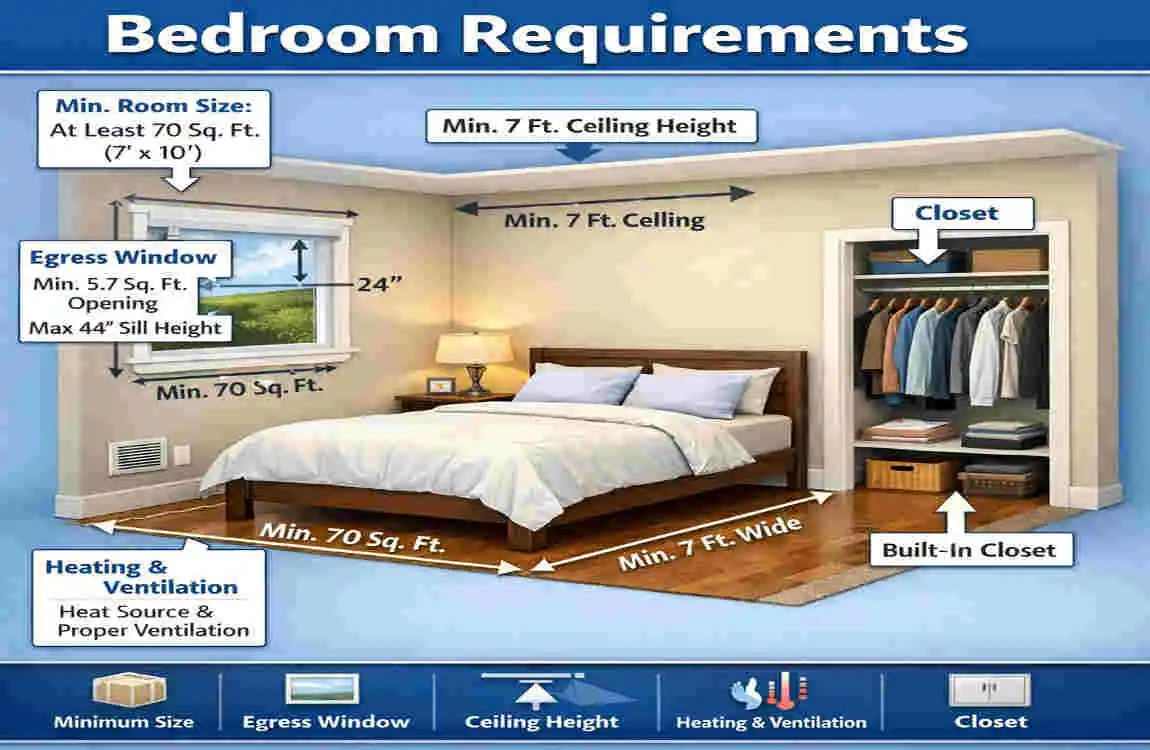
Room size matters because a bedroom needs enough space to function as a bedroom. There is no single universal size that applies everywhere. Local rules can differ from city to city and country to country.
That is why you should never assume a room qualifies just because it looks big enough. Always check the local standard before labeling a space as a bedroom.
Ceiling Height
Ceiling height is another common factor. Some places require that habitable rooms, including bedrooms, have a minimum height.
This is especially important in attic bedrooms or sloped-ceiling spaces. A room may feel cozy, but if the ceiling is too low in too much of the area, it may not qualify as a legal bedroom.
Privacy and Separation
Bedrooms are usually separated from common living areas. That separation helps create privacy, quiet, and comfort.
Walls, doors, and room layout all matter here. A room that is fully open to a kitchen or living room usually does not feel like a proper bedroom, even if a bed is inside.
Essential Features Commonly Found in a Bedroom
A Door and Entry
A bedroom normally has a clear entry point and a door. The door helps with privacy, safety, and separation from the rest of the home.
The exact legal requirement for a door can vary, but in most cases, a bedroom should be an enclosed room rather than an open sleeping area.
Windows and Natural Light
Most bedrooms have a window. Windows help with natural light, airflow, and comfort. In many places, they also serve an important safety role.
Some building rules require a bedroom to have an emergency escape and rescue opening, often through a window of the right size and placement. This is one reason a room without a window may not qualify as a bedroom in some areas.
Ventilation
Good airflow matters in every bedroom. A room should not feel trapped, stale, or overly damp.
Ventilation can come from openable windows, vents, or mechanical systems. Good airflow helps improve comfort and indoor air quality.
Heating and Cooling
A bedroom should stay comfortable enough for sleeping. In many places, habitable rooms need some form of heating or cooling.
That does not always mean the room needs its own separate unit. It simply means the space should be able to maintain a livable temperature.
Electrical Access
Most bedrooms need electrical outlets and lighting. People often use lamps, ceiling lights, fans, chargers, and alarm clocks in a bedroom, so access to electricity is important.
The exact number and placement of outlets may vary by code, but a bedroom should support normal daily use without extension cords everywhere.
Bedroom vs. Other Types of Rooms
Bedroom vs. Living Room
A living room is made for relaxing, socializing, and entertainment. A bedroom is made for sleeping and privacy.
Simply placing a bed inside a living room does not automatically make it a legal bedroom. The room still needs to meet the right requirements.
Bedroom vs. Home Office
A home office is designed for work, not sleep. It may have a desk, storage, and office equipment, but that alone does not make it a bedroom.
If a room is used as both an office and a sleeping space, local rules may still decide whether it can legally be called a bedroom.
Bedroom vs. Guest Room
A guest room can often function as a bedroom if it meets the proper standards. The label matters less than the room’s actual features and compliance.
A guest room with a door, window, ventilation, and enough space may qualify just fine.
Bedroom vs. Bonus Room
A bonus room is usually a flexible extra room. It may become a playroom, office, media room, or hobby space.
But a bonus room should not automatically be advertised as a bedroom. It may need upgrades or code compliance first.
Bedroom vs. Studio Space
Studio apartments often combine sleeping and living areas into a single open layout. That can work for daily living, but it is not the same as a traditional enclosed bedroom.
Privacy and local rules are the key differences here.
What Makes a Bedroom Comfortable and Functional?
Appropriate Bedroom Size and Layout
A bedroom should have enough space for the bed and for you to move around safely. If the room feels too tight, it may be hard to use it well.
Try to keep pathways open and avoid overcrowding the space with too much furniture.
Storage
Many bedrooms include closets, wardrobes, dressers, or built-in storage. These features make the room easier to use, but closet rules can vary by location.
A room may still be considered a bedroom even if it has no closet in some places. Still, storage makes the room much more practical.
Lighting
Bedrooms work best with both natural and artificial light. A mix of ceiling lights, bedside lamps, and soft lighting can make the room more useful and relaxing.
Good lighting also helps a room feel larger and more welcoming.
Sound and Privacy
A bedroom should feel calm. Thick walls, a solid door, curtains, and smart room placement can help reduce noise.
If possible, place bedrooms away from noisy areas like the kitchen, laundry room, or main hallway.
Safety
Safety is a big part of bedroom classification. Smoke alarms are important, and carbon monoxide protection may also be required depending on the home setup.
Safe electrical work, clear exits, and easy movement around the room all matter too.
How Bedroom Requirements Can Vary
Local Building Codes
There is no single worldwide definition of a legal bedroom. That is why the answer to what qualifies as a bedroom can vary depending on where you live.
Some places focus on room size, while others focus more on windows, ventilation, ceiling height, or safety features. Always check local requirements before making assumptions.
Building Permits and Renovations
If you want to convert a basement, attic, garage, or other space into a bedroom, you may need permits. That is especially true if you are changing structure, wiring, ventilation, or windows.
It is always smarter to check first than to fix problems later.
Basement Bedrooms
A basement room may be used as a bedroom if it meets the right standards. Common issues include ceiling height, moisture, ventilation, windows, and emergency escape.
Basements often need extra attention because they sit below ground and may have a different set of rules.
Attic Bedrooms
Attic bedrooms can look charming, but they are not automatically legal bedrooms. Low ceilings, poor access, inadequate ventilation, or missing escape openings can pose problems.
If you are planning an attic conversion, safety and code compliance should come first.
Garage and Converted Spaces
A garage can be converted into a bedroom, but it takes more than drywall and a bed. You may need insulation, better ventilation, windows, proper wiring, and a permit.
A finished look is not enough on its own. The room must also meet the rules.
How to Tell If a Room Qualifies as a Bedroom
Here is a simple checklist you can use:
- Intended sleeping use
- Enough room size
- Proper ceiling height
- Door and privacy
- Window or emergency escape requirement
- Ventilation
- Heating or cooling
- Electrical safety
- Smoke and carbon monoxide protection
- Local code compliance
Also remember that real estate listings and legal classifications are not always the same. A seller may call a room a bedroom for marketing, but that does not mean it meets the legal definition.
If you are unsure, check with your local building department or a qualified professional.
Bedroom Design Tips for Modern Homes
Choose the Right Furniture
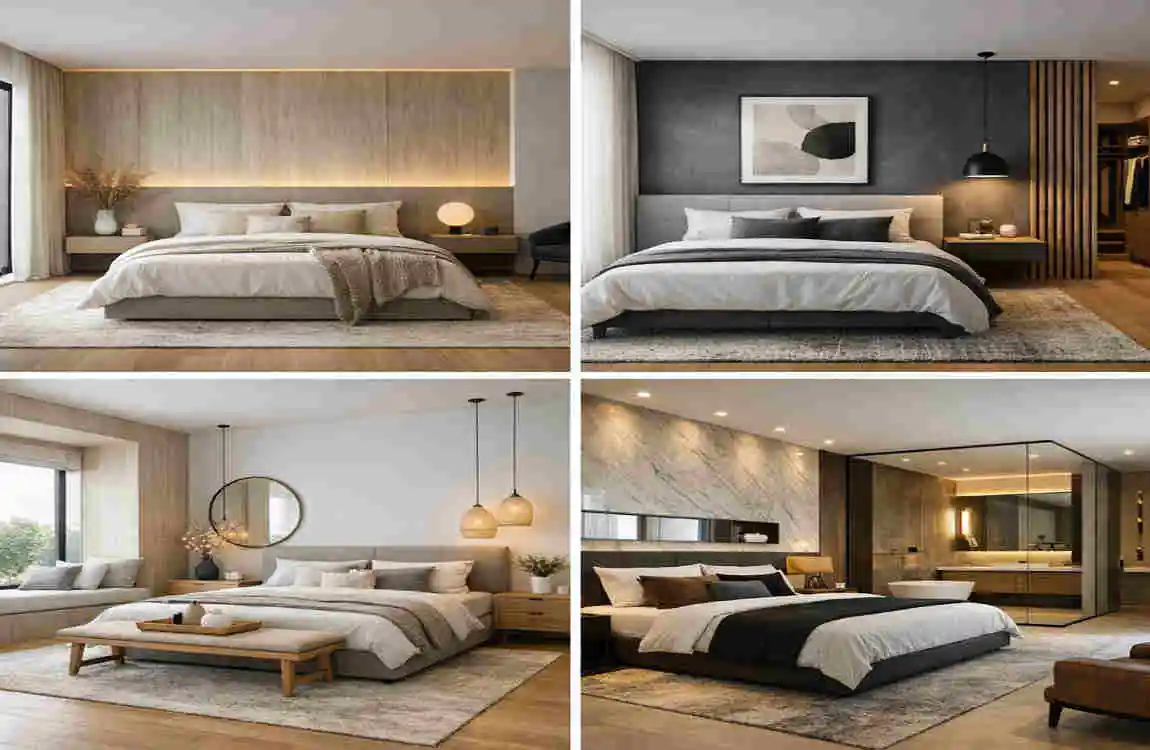
Pick furniture that fits the room well. A bed that is too large can make the room feel cramped, while smaller pieces can help the space feel open.
Nightstands, dressers, and storage should support the room without blocking movement.
Use Space Efficiently
In smaller bedrooms, vertical storage and under-bed storage can help a lot. Multipurpose furniture can also save space.
The goal is to keep the room useful without making it feel crowded.
Improve Natural Light
Natural light can make a bedroom feel bigger and brighter. Light-colored curtains, mirrors, and soft wall colors can help.
A bright room often feels more open and peaceful.
Create a Relaxing Environment
Bedrooms should support rest. Soft colors, simple decor, comfortable bedding, and gentle lighting all help create a calm mood.
You do not need much decoration. Sometimes less really is more.
Prioritize Safety and Accessibility
Keep paths clear and exits easy to reach. Make sure lights and outlets are installed properly.
If anyone in the home has mobility needs, design the room with easy access in mind.
Frequently Asked Questions About What Classifies a Bedroom
What classifies a bedroom?
A bedroom is usually a designated sleeping space that meets local requirements for size, ceiling height, privacy, ventilation, windows, and safety.
Does a bedroom have to have a closet?
Not always. Closet rules vary by location, and some places do not require a closet for a room to be considered a bedroom.
Can a room without a window be called a bedroom?
Often, no. Many rules require a bedroom to have an emergency escape and rescue opening, usually through a window.
What is the minimum size for a bedroom?
There is no universal number. Minimum size depends on local building codes and housing rules.
Can a basement room be considered a bedroom?
Yes, if it meets the proper local requirements for safety, ventilation, ceiling height, and escape access.
Does a bedroom need a door?
In most cases, yes, because a bedroom should be private and separated from common areas.
Can a living room be converted into a bedroom?
It may be possible, but simply adding a bed does not automatically make it a legal bedroom.
Can an attic be used as a bedroom?
Yes, but only if it meets the required standards for access, height, ventilation, light, and safety.
| Bedroom Basic | Simple Explanation |
|---|---|
| Sleeping Area | A bedroom is mainly designed for sleeping and resting. |
| Bed | A bed or designated sleeping space is usually the main feature. |
| Privacy | Bedrooms normally provide privacy with walls, a door, or another clear separation. |
| Ventilation | A window, ventilation system, or other opening helps provide fresh air. |
| Storage | Closets, wardrobes, or other storage areas are common bedroom features. |
| Room Size | Minimum bedroom size requirements can vary depending on local building codes. |
| Purpose | A room is generally classified as a bedroom when it is designed and legally approved for sleeping. |
