
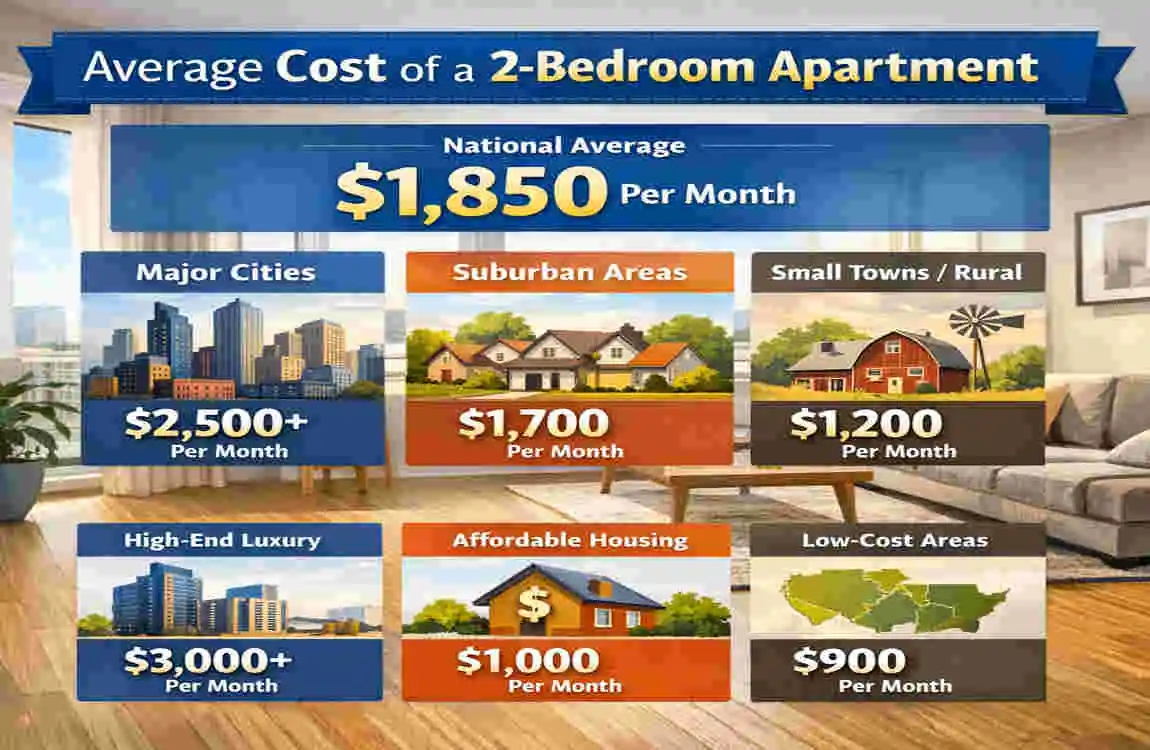
If you are asking how much a 2-bedroom apartment would cost, the honest answer is: it depends.
The price can vary widely based on location, size, building quality, amenities, and local demand. A two-bedroom apartment in a busy city center will usually cost much more than one in a smaller town or farther from downtown.
You also need to look at the difference between renting and buying. Renting usually means a lower upfront cost, while buying requires more upfront cost but may build equity over time.
Average Cost of a 2-Bedroom Apartment
Typical Rental Costs
Rental prices for a two-bedroom apartment can vary widely.
In more affordable markets, rent may feel manageable for many households. In mid-range markets, prices are higher but still within reach for some renters. In expensive cities, a two-bedroom apartment can be a major monthly expense.
Neighborhood matters too. A downtown apartment near transit, shops, and jobs will usually cost more than one in a quieter area farther out.
You should also remember the extra monthly costs:
- utilities
- parking
- maintenance fees
- renters insurance
These can change the true cost more than many people expect.
Typical Purchase Costs
Buying a two-bedroom apartment usually costs far more upfront than renting.
Prices vary by urban, suburban, and smaller markets. Even within the same city, one neighborhood may be much more expensive than another depending on demand, views, building age, and amenities.
When comparing properties, price per square foot is very useful. It helps you see whether one apartment offers better value than another, even if the asking prices differ.
Rental vs. Buying Cost Comparison
Cost Factor Renting Buying
Monthly housing payment Rent Mortgage
Upfront cost Deposit and fees Down payment and closing costs
Maintenance Usually limited Often owner’s responsibility
Long-term ownership No equity Builds equity
Flexibility Higher Lower
Factors That Affect the Cost of a 2-Bedroom Apartment

Location and Neighborhood
Location is one of the biggest price factors.
A two-bedroom apartment near downtown, schools, workplaces, or public transportation usually costs more. The same apartment in a suburban or rural area may be much cheaper.
Ask yourself what matters most:
- short commute
- nearby shopping
- good schools
- walkability
- entertainment access
The more convenient the location, the higher the price often becomes.
Apartment Size and Layout
Not all two-bedroom apartments feel the same.
Some are compact and efficient. Others are larger with more open space. Square footage has a big effect on price.
Extras like a second bathroom, balcony, storage space, or open-plan living can also raise the value.
Building Age and Condition
A newer apartment often costs more because it may have modern finishes, better insulation, and fewer repair needs.
Older apartments can be cheaper, but only if they have not been heavily renovated. Updated kitchens, fresh flooring, better windows, and newer appliances can push the price higher.
Amenities and Building Features
Amenities can make a big difference in cost.
Common features include:
- parking
- elevators
- fitness centers
- swimming pools
- security
- laundry facilities
- outdoor spaces
- concierge services
These features add comfort and convenience, but they also increase both rent and purchase prices.
Additional Costs to Budget for a 2-Bedroom Apartment
Monthly Housing Expenses
The advertised price is only part of the story.
You may also need to pay for:
- rent or mortgage
- utilities
- internet
- parking
- HOA or maintenance fees
- insurance
- property taxes, if you own
Upfront Costs
Before moving in, you may face several start-up costs.
For renters, that may include:
- security deposit
- application fees
- moving costs
For buyers, the list is larger:
- down payment
- closing costs
- moving expenses
- initial furniture and appliances
Hidden or Unexpected Expenses
Some costs are easy to forget.
These may include:
- repairs
- rising utility bills
- pet fees
- amenity fees
- insurance increases
- special building assessments
That is why it is smart to look at the full cost, not just the list price.
How to Find an Affordable 2-Bedroom Apartment
Compare Different Neighborhoods
Do not stop at one area.
Look at a few nearby neighborhoods and compare prices. Moving slightly farther from the city center can sometimes save a lot of money.
Compare Apartment Features
Choose what you really need, not just what looks nice.
A smaller or older apartment can sometimes offer better value than a newer place with extras you may not use.
Check the Total Monthly Cost
The cheapest apartment listing is not always the cheapest overall.
Add up:
housing payment + utilities + insurance + parking + maintenance + other recurring fees
That gives you a more realistic number.
Consider Long-Term Affordability
Think beyond this month’s payment.
Ask whether the apartment fits your income, savings, debt, and plans. A place may look affordable at first, but it can become stressful if it stretches your budget too far.
Renting or Buying: Which 2-Bedroom Apartment Option Is Better?

When Renting May Make More Sense
Renting is often better if you want flexibility.
It may suit you if:
- you may move soon
- you want a lower upfront cost
- you do not want to handle major repairs
- you prefer short-term commitment
The tradeoff is that you build no equity, and your rent may rise over time.
When Buying May Make More Sense
Buying can make sense if you plan to stay long term.
It may help you:
- build equity
- gain ownership
- customize the space
- possibly benefit from appreciation
But buying also comes with mortgage payments, taxes, insurance, maintenance, and closing costs.
Questions to Ask Before Making a Decision
Before you decide, ask yourself:
- How long will I stay?
- Can I afford the monthly cost?
- Do I have enough money upfront?
- What are local rental and property prices like?
- Can I handle maintenance and fees?
- Would renting give me more flexibility?
Tips for Estimating the Cost Before You Move
Create a Realistic Apartment Budget
Start with your income and essential expenses.
Then set a housing budget that leaves room for savings and emergencies. A safe budget helps you avoid financial stress later.
Research Local Prices
Look at several apartments with similar size and features.
This gives you a better picture of what is normal in that area and helps you avoid overpaying.
Calculate the Full Cost
Use this simple formula:
Housing payment + utilities + insurance + parking + maintenance + other recurring fees = estimated monthly housing cost
That total is what really matters.
Negotiate When Possible
Sometimes renters can negotiate lease terms, fees, or small discounts.
Buyers may also negotiate price or ask for concessions depending on the market.
Frequently Asked Questions About 2-Bedroom Apartment Costs
How much would a 2-bedroom apartment cost?
It depends on location, size, condition, amenities, and whether you rent or buy. There is no single price that fits every market.
Is a 2-bedroom apartment expensive to rent?
It can be, depending on the city and neighborhood. In some places it is affordable, while in others it can take a large part of monthly income.
What is the average size of a 2-bedroom apartment?
Sizes vary a lot by market and building style. Some are compact, while others are much larger with more living space.
Is it cheaper to rent or buy a 2-bedroom apartment?
There is no universal answer. Renting usually costs less upfront, while buying may make more sense for long-term ownership.
What additional costs come with a 2-bedroom apartment?
You may need to pay for utilities, insurance, parking, deposits, taxes, maintenance fees, and other recurring costs.
How can I make a 2-bedroom apartment more affordable?
Compare neighborhoods, choose essential features, calculate the full monthly cost, and negotiate when possible.
What should I consider before buying a 2-bedroom apartment?
Think about mortgage costs, down payment, closing costs, property taxes, maintenance, building fees, and your long-term plans.
| Apartment Type | Average Size | Estimated Average Cost |
|---|---|---|
| 2-Bedroom Apartment | 800–1,200 sq. ft. | $150,000–$350,000+ |
| Budget/Older Apartment | 800–1,000 sq. ft. | $100,000–$200,000 |
| Mid-Range Apartment | 900–1,100 sq. ft. | $200,000–$300,000 |
| Luxury Apartment | 1,000–1,300+ sq. ft. | $300,000–$500,000+ |
