
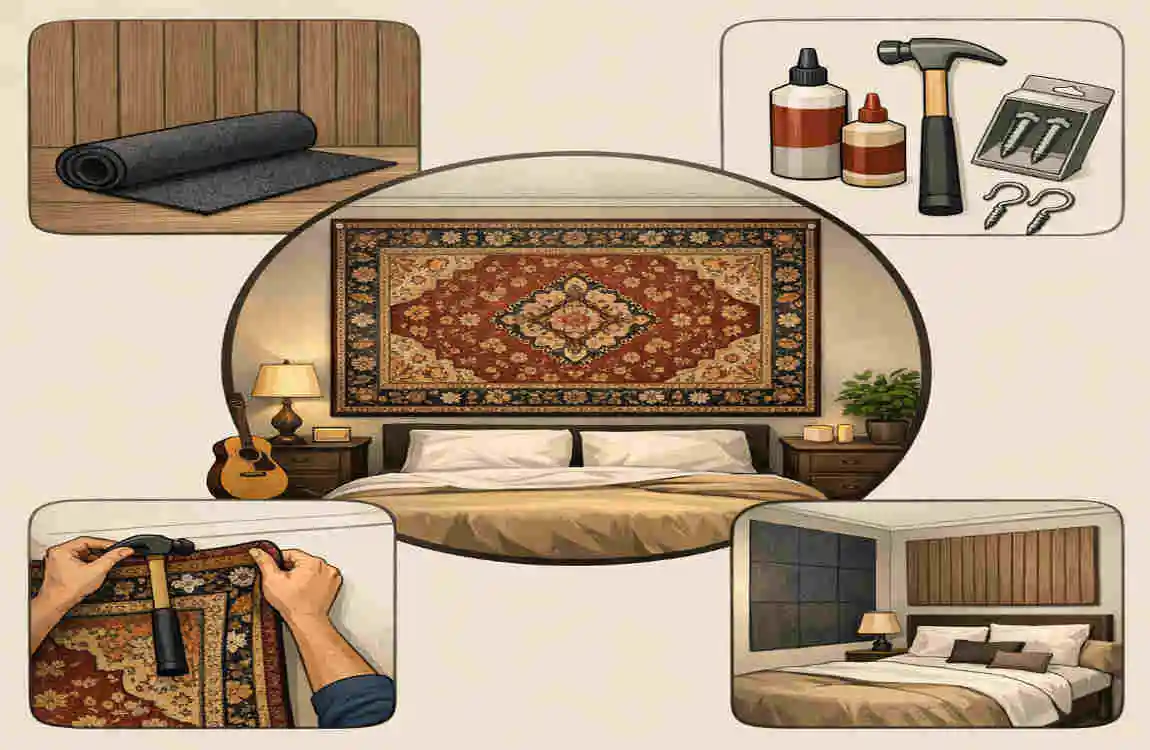
A rug can help absorb sound and reduce echo, but it cannot fully block noise the way real soundproofing methods can. That said, it can still make a bedroom feel noticeably quieter, especially if the room has hard walls, bare floors, or lots of echo.
Will Hanging a Rug Soundproof My Bedroom?

A hanging rug can soften sound inside a bedroom, but it does not truly soundproof the room.
That is because rugs are made to absorb sound waves, not block them completely. They help reduce reflections off hard surfaces, which can make the room feel calmer and less echoey. But outside noise from neighbors, traffic, or loud music can still travel through walls, doors, windows, and floors.
What Does Soundproofing Actually Mean?
Soundproofing means stopping sound from moving from one space to another.
That usually requires more than soft materials. It often involves:
- Heavier walls
- Better insulation
- Sealed gaps
- Solid doors
- Double-pane windows
- Special drywall systems
A rug alone cannot do all of that. It can improve comfort, but it is not a full sound barrier.
Sound Absorption vs. Soundproofing
FeatureSound AbsorptionSoundproofing
Main purpose Reduces echoes Blocks sound transmission
Common materials Rugs, curtains, acoustic panels Insulation, drywall systems, mass-loaded materials
Helps room acoustics Yes Yes
Completely blocks noise No Much more effective
Cost Usually lower Usually higher
How Hanging a Rug Can Reduce Bedroom Noise
A rug has thick fibers that can trap and soften sound waves. Instead of bouncing off a bare wall, the sound gets absorbed more gently.
That is why hanging a rug can help a bedroom feel quieter, even if it does not stop all outside noise.
Rugs Can Reduce Echo
Bedrooms with hard surfaces often sound sharp or empty. Sound bounces off walls, floors, and ceilings, creating echoes.
A wall-mounted rug helps soften those reflections. This can make speech, music, and even everyday movement sound less harsh.
Rugs Can Absorb Some Mid- and High-Frequency Sounds
A rug works best on sounds like:
- Speech
- Television noise
- Light music
- General room reflections
It works less well on low-frequency sounds, such as bass or deep vibrations. Those sounds are harder to control because they move through structures more easily.
Where Should You Hang a Rug for the Best Results?
If you want the rug to help as much as possible, placement matters.
Hang a Rug on a Shared Wall
If one wall faces a noisy neighbor or another active room, that is a smart place to start. The rug can help reduce reflections from that wall.
Covering a larger section works better than hanging a tiny piece.
Hang a Rug Behind the Bed
This is a popular choice because the wall behind the bed is often large and bare. A thick rug here can improve both the look and the sound of the room.
It is a good choice if you want decorative value and light acoustic help at the same time.
Use Rugs Near Doors
Bedroom doors can let sound travel through small gaps. Hanging a rug near the door may help a little, but it is usually not the strongest fix.
For door noise, sealing gaps with weatherstripping or a door sweep usually helps more.
Consider the Ceiling
A rug on the ceiling is usually not practical or safe. It can be heavy, awkward, and difficult to secure properly.
If you need ceiling treatment, use products designed for that purpose instead.
What Type of Rug Is Best for Sound Reduction in the Bedroom?
Not all rugs work equally well. The best ones are thick, dense, and heavy.
Thick, Dense Rugs
Thicker rugs absorb more sound than thin decorative ones. Density matters because tighter fibers can trap more sound energy.
Wool Rugs
Wool rugs are often a strong choice because they are naturally dense and durable. They also tend to hold up well over time.
Large Area Rugs
Bigger coverage usually means better results. A large rug gives sound more surface to hit and absorb.
Layered Rugs and Rug Pads
Adding a rug pad or layering rugs can improve the softening effect. This is especially useful on floors.
Just remember: even with layers, a rug still does not become true soundproofing.
How to Hang a Rug on a Bedroom Wall
Hanging a rug properly matters. If it is loose or poorly supported, it may not look good and could become unsafe.
Materials You May Need
- Rug or textile
- Strong hanging system
- Wall anchors
- Measuring tape
- Level
- Mounting hardware
- Optional acoustic backing
Safety Tips
Keep these points in mind:
- Make sure the hardware can support the rug’s weight.
- Do not hang it over heaters or hot surfaces.
- Avoid damaging wiring or plumbing inside the wall.
- Secure heavy rugs carefully so they do not fall.
If the rug is large or heavy, it is better to use a stronger mounting system instead of a simple hook.
Does Hanging a Rug Work Better Than Putting It on the Floor?
Both can help, but in different ways.
Rug PlacementMain BenefitNoise Reduction Potential
Floor Reduces reflections and footstep noise Moderate
Shared wall Absorbs reflected sound Moderate
Behind bed Softens wall reflections Low to moderate
Near door Limited benefit Low
Ceiling Difficult and potentially unsafe Depends on treatment
A floor rug is usually better for reducing footsteps and softening overall room sound. A wall rug is better for reducing echo from a large bare wall.
For the best effect, use both if possible.
What a Hanging Rug Cannot Do
This part is important because expectations matter.
A rug cannot fully block:
- Loud neighbors
- Traffic noise
- Construction noise
- Bass-heavy music
- Major wall vibrations
It Won’t Completely Block Outside Noise
Sound can pass through walls, windows, and doors. A rug may help a little, but it cannot stop sound that is already moving through the structure.
It Won’t Stop Heavy Bass or Vibrations
Low sounds travel differently than speech or echo. That is why bass is harder to reduce with soft materials.
It Won’t Fix Major Structural Sound Leaks
If sound is coming through gaps around windows or doors, sealing those gaps may help more than adding another rug.
Other Affordable Ways to Make Your Bedroom Quieter
If you want better results, combine the rug with a few other simple changes.
Add Heavy Curtains
Thick curtains can help absorb reflections near windows. They also make the room feel softer and more private.
Use a Thick Area Rug
A floor rug helps reduce footstep noise and reflected sound. A rug pad can make it even better.
Seal Gaps Around the Door
Sound often slips through tiny gaps. A door sweep and good weatherstripping can make a real difference.
Add Acoustic Panels
Acoustic panels are made to control sound inside a room. They are more targeted than a regular rug.
Rearrange Bedroom Furniture
Large furniture pieces can help break up sound reflections. A wardrobe or bookcase near a shared wall can sometimes help soften the room.
Rug vs. Other Bedroom Soundproofing Methods
Method Cost Helps Echo Helps Block Noise Best For
Hanging rug Low–medium Yes Limited Wall reflections
Area rug Low–medium Yes Limited Floors and footsteps
Heavy curtains Low–medium Yes Limited Windows
Acoustic panels Medium Yes Limited Room acoustics
Door sealing Low Limited Yes Door gaps
Wall insulation Higher Yes Yes Structural noise
Additional drywall Higher Yes Yes Serious soundproofing
How Much Noise Reduction Can You Expect From a Rug?
It depends on the room and the rug.
A thick rug on a bare wall may make the room sound softer and less echoey. But the actual result depends on:
- Rug thickness
- Rug size
- Wall construction
- Sound frequency
- Distance from the noise source
- Furniture in the room
- Gaps around doors and windows
You may not notice a huge drop in outside noise, but you may notice the room feels more comfortable and less harsh.
Step-by-Step Bedroom Noise Reduction Plan
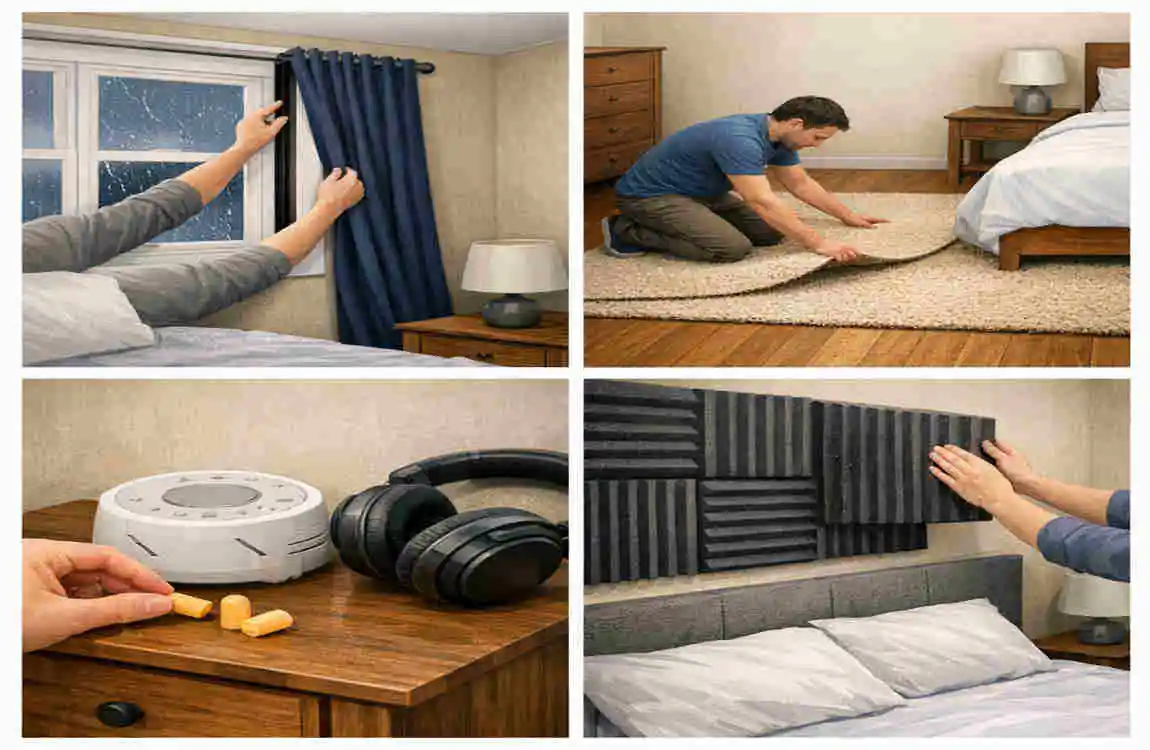
If you want a practical approach, start simple.
Identify the Main Noise Source
Ask yourself where the sound is coming from:
- Neighboring room
- Street traffic
- Footsteps
- Door noise
- Echo inside the room
Find the Weakest Surface
Usually this is a shared wall, window, or door.
Add Soft Materials
Use rugs, curtains, bedding, and upholstered furniture to soften sound.
Seal Air Gaps
Close gaps around doors, windows, and wall openings.
Test the Results
Try the room for a few days, then see what improved and what still needs work.
Common Mistakes When Using Rugs for Soundproofing
Assuming Any Rug Will Work
Thin rugs do very little for sound control.
Covering Only a Tiny Section of the Wall
Small coverage means small results.
Ignoring Doors and Windows
These are often bigger noise leaks than the wall itself.
Expecting Rugs to Stop Bass
They are not built for that job.
Installing a Heavy Rug Without Proper Support
A wall rug must be mounted safely.
Is Hanging a Rug Worth It for Bedroom Soundproofing?
Yes, if your goal is to reduce echo and soften the room.
It is a smart choice when:
- The bedroom feels echoey
- You live in a rental
- You want a low-cost fix
- You need a decorative solution too
It is not enough when:
- Noise is very loud
- You hear heavy bass
- You need serious privacy
- Sound comes through the structure itself
Frequently Asked Questions
Will hanging a rug completely soundproof my bedroom?
No. It can absorb some sound and reduce echo, but it will not completely soundproof the room.
Does putting a rug on the wall reduce noise?
Yes, it can reduce reflected sound and make the room feel quieter.
What is the best rug for sound absorption?
A thick, dense, heavy rug usually works best.
Should I hang a rug on a shared wall?
Yes, that can help with reflections, especially in echoey rooms.
Can a rug reduce noise from neighbors?
A little, but not enough to block major noise on its own.
Is a rug better than acoustic panels?
Not always. Rugs are more decorative and affordable, while acoustic panels are made specifically for sound control.
Can a rug reduce bedroom echo?
Yes, that is one of its best uses.
How can I make my bedroom quieter without construction?
Use a rug, heavy curtains, door sealing, upholstered furniture, and acoustic panels together.
| Question | Short Answer |
|---|---|
| Will a hanging rug soundproof a bedroom? | No. A rug can reduce echo and absorb some sound, but it cannot fully soundproof a room. |
| What sounds can it help with? | It can soften voices, echoes, and other airborne noise inside the room. |
| Where should you hang it? | Hang a thick rug on a large wall or the wall shared with a noisy room for better sound absorption. |
| What type of rug works best? | Thick, dense, woven, or wool rugs generally absorb more sound than thin rugs. |
| Does it block outside noise? | Only slightly. A rug mainly absorbs sound rather than blocking it. |
| Can it improve bedroom acoustics? | Yes. It can make the room feel quieter, warmer, and less echoey. |
| What works better for soundproofing? | For stronger results, combine the rug with acoustic panels, heavy curtains, door seals, and wall insulation. |
| Is it worth trying? | Yes, if you want an easy and affordable way to reduce echoes and soften bedroom noise. |
