
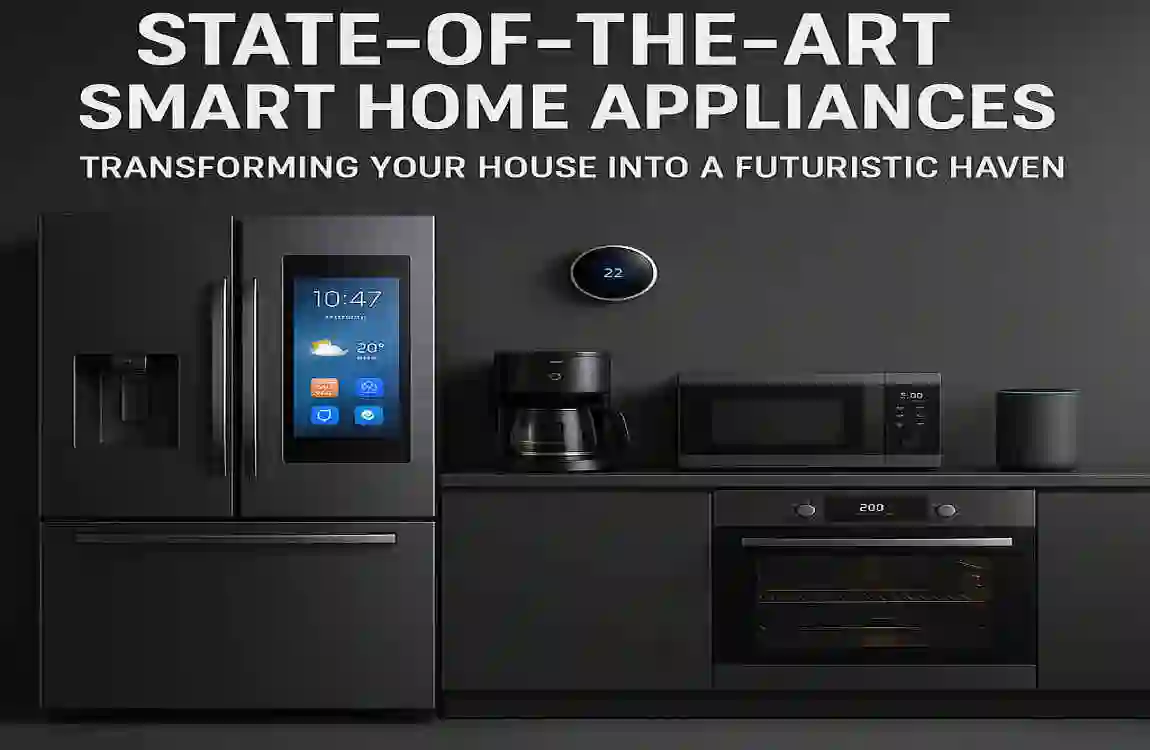
Picture this: It’s a crisp Monday morning in 2026. As the sun starts to rise, your bedroom lights gently brighten in sync with your natural sleep cycle—no annoying alarms needed. Downstairs, the aroma of fresh coffee fills the air because your smart kitchen appliances have already brewed your favourite blend the moment you said, “Good morning.” Your home thermostat has quietly adjusted the temperature, keeping every room perfectly cosy. Meanwhile, your fridge has ordered groceries for the week, and your energy use is optimised to save you money—all thanks to a seamless blend of AI and IoT.
That’s not science fiction. This is the state of the art in smart home and appliance technology today. With advances in artificial intelligence, connected devices, and intuitive automation, our homes are becoming more responsive, efficient, and personalised than ever before. From AI-powered home devices that learn your routines, to kitchen gadgets that slash food waste, these innovations are turning houses into dynamic, futuristic havens.
What Defines State-of-the-Art in Smart Home and Appliances
The Core Technologies Powering the Revolution
When we talk about the smart home and state-of-the-art appliances, we’re not just describing gadgets with Wi-Fi. Today’s flagship devices blend artificial intelligence (AI), Internet of Things (IoT), and cutting-edge connectivity to deliver brilliant, proactive experiences. Here’s what sets them apart:
- AI Edge Processing: Appliances process data locally, making lightning-fast decisions without sending sensitive information to the cloud. This boosts privacy and enables real-time actions—from recognising what’s in your fridge to detecting unusual patterns in your dishwasher‘s cycle.
- Matter and Thread Protocols: Remember the headaches of incompatible devices? That’s history. The new Matter and Thread standards guarantee that your AI-powered home devices from different brands seamlessly “talk” to each other, creating a truly unified home ecosystem.
- Predictive Maintenance: Modern appliances use sensors and AI to predict faults or wear before they become issues, saving you money and stress.
How Today’s Smart Appliances Outshine Yesterday’s
Older “smart” devices typically offered basic connectivity—for example, turning a light on or off through your phone. In contrast, state-of-the-art smart home appliances leverage:
- Real-Time Sensors: Technologies like mmWave and HI-NANO sense occupancy, air quality, and even gestures—enabling appliances to adapt to your presence and needs automatically.
- Voice and Multi-Hub Integration: Whether you use Alexa, Apple Home, or platforms like ConnectLife, today’s devices integrate with multiple ecosystems, letting you control everything naturally.
- Energy Optimisation with AI: Appliances now track utility rates and usage patterns, automatically shifting heavy tasks to off-peak times, and balancing loads for maximum efficiency.
Markers of a Truly State-of-the-Art Smart Home
Here’s a quick list of what to look for when choosing the best smart appliances.
- Self-learning AI that adapts to your habits.
- Seamless interoperability across brands and platforms (Matter/Thread).
- Advanced sensors for safety, health, and convenience.
- Predictive maintenance and energy-saving capabilities.
- User-friendly apps with voice and touch controls.
Top Smart Kitchen Appliances: The Heart of Modern Living
Breakthrough Kitchen Gadgets from CES 2026 and Beyond
The kitchen has always been the heart of the home. Now, with smart kitchen appliances, it’s the brain too. Let’s dive into the most impressive innovations transforming how we cook, clean, and connect in 2026.
ApplianceKey FeaturesBrandsPrice RangeEnergy Savings
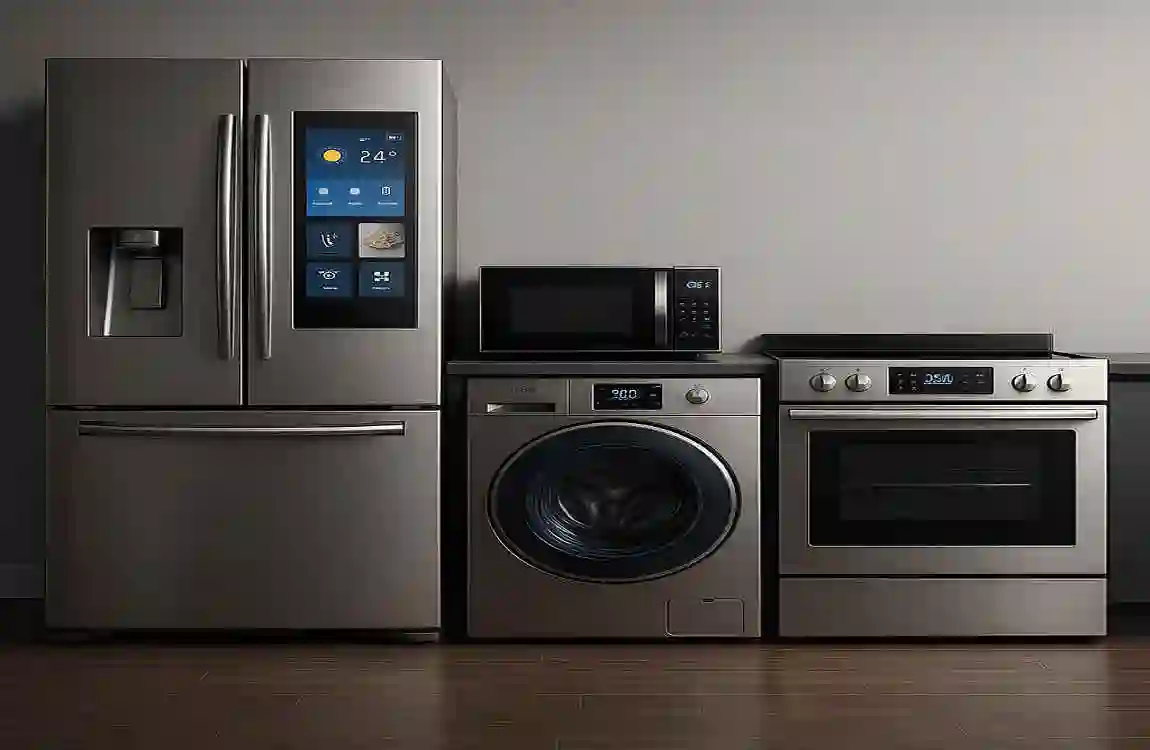
Smart Fridges (e.g., Hisense PUREFLAT), AI inventory cams, recipe suggestions, hub display, Hisense, Samsung, LG $2000-$4000 20-30%
Washer-Dryers (e.g., X-zone Master), Modular drums, fabric-specific AI care, Hisense $1500+ 15% water reduction
Induction Cooktops Invisible surfaces, precision heating, Infinity, LG $1000-$2500 40% faster cooking
Ovens Voice preheat, food monitoring, Multiple $800-$2000 Predictive alerts
Why Modern Kitchen Appliances Stand Out
- Fresher Food, Less Waste: AI-powered fridges track expiration dates, suggest recipes, and automatically reorder essentials. This cuts food waste by as much as 25%, saving you money and helping the planet.
- Effortless Maintenance: Predictive diagnostics notify you before a problem arises, allowing you to schedule maintenance or software updates with a tap.
- More innovative Cooking: Induction cooktops and ovens use sensors to monitor temperature and doneness, sending alerts to your phone or voice assistant. Imagine never burning dinner again!
Real-Life Scenarios: The Kitchen
Picture prepping dinner with a fridge that displays healthy recipes based on what you already have on hand. The oven preheats when you say, “Start pizza night,” and the cooktop automatically adjusts heat for perfect results. Afterwards, your washer-dryer customises its cycle to protect delicate fabrics and save water.
Smart Living Room & Comfort Devices: Entertainment Meets Effortless Living
The Living Room as a Smart Ecosystem
Your living room isn’t just for watching TV anymore. With state-of-the-art smart home appliances, this space adapts to your needs—whether you’re hosting friends, enjoying a family movie night, or winding down after a long day.
- Immersive Displays: Hisense’s latest large-screen TVs feature adaptive brightness, voice assistants, and deep integration with home ecosystems. They sense when you enter and adjust content or power down when you leave, saving energy.
- Next-Gen Climate Control: The Aqara W200 thermostat uses Apple’s Adaptive Temperature and humidity sensors to keep your space comfortable all year, adjusting in real time as the weather or your schedule changes.
- Air Masters: Devices like smart humidifiers and air purifiers use AI to maintain perfect air quality, learning your preferences and adapting to seasonal changes.
- Robot Vacuums: Roborock Seros and similar models map your entire home, recognise obstacles, and clean on command—integrating with your schedule and other devices through Matter.
Seamless Hubs and “Full-Scenario” Control
- Unified Control Centres: Modern homes use a single dashboard—often on your TV, phone, or dedicated hub—to control lighting, entertainment, climate, and more.
- Presence Sensing: Devices activate only when needed, conserving energy and extending appliance life.
- Voice & App Integration: Whether you’re using a remote, your voice, or a mobile app, you’re always in command.
List: Living Room Smart Device Must-Haves
- Adaptive TV/display
- Smart thermostat
- Air purifier/humidifier
- Robot vacuum
- Matter-compatible hub
Security & Whole-Home Ecosystems: Safety Meets Intelligence
The New Era of Home security
With state-of-the-art smart home appliances, security isn’t just about locks and cameras. It’s about intelligent, proactive protection for your entire household.
- Smart Locks (Aqara U400): Unlock doors with your fingerprint, phone, or even voice. Grant digital keys to guests, and revoke them instantly if needed.
- Hidden Sensors: Discrete window and motion sensors blend into your décor while providing continuous, AI-driven monitoring.
- Unified Platforms: All your security devices—cameras, locks, sensors—connect via platforms like Matter, allowing for instant alerts and coordinated responses.
Whole-Home Ecosystem Benefits
- Predictive security: AI analyses routines and detects unusual behaviour, alerting you to potential threats before they escalate.
- Cohesive IoT Communication: Appliances talk to each other, so if your smoke detector senses a problem, your HVAC system can shut down, or lights can flash to guide you to safety.
- Longevity and Diagnostics: Built-in monitoring ensures devices stay healthy, notifying you when batteries run low or parts need attention.
Setup Flowchart
- Install a Matter-compatible hub.
- Connect security devices (locks, sensors, cameras)
- Integrate with your chosen smart home platform (Apple, Alexa, Google)
- Customise automation rules (e.g., lock doors at night, notify on entry)
Pro tip: Regularly update device firmware to patch vulnerabilities and keep your home secure.
Benefits & ROI: Why Invest in State-of-the-Art Smart Home Appliances?
Investing in the smart home and state-of-the-art isn’t just about cool features—it’s about real, measurable benefits:
- Energy Savings: Smart appliances cut energy usage by 20-40%, reducing utility bills and environmental impact.
- Time Saved: Automated routines (such as laundry cycles or coffee brewing) free up hours each week.
- Health Improvements: Air purifiers and humidity controls enhance air quality, while smart ovens and fridges promote healthier eating.
ROI Examples
- Fridge Cams: Reduce grocery waste by up to 25%, translating into hundreds of dollars saved annually.
- AI Energy Modes: Align heavy appliance use with off-peak tariffs, lowering costs.
- Predictive Maintenance: Prevent costly breakdowns and extend the lifespan of your appliances.
List: Fast ROI Strategies
- Use smart plugs to monitor phantom loads.
- Set up automated cleaning and maintenance alerts.
- Enrol in utility rebates for energy-efficient devices.
The Bottom Line
While the initial investment may feel steep, most homeowners see a full return within 2-3 years—especially as devices become more affordable and energy efficient. Plus, you gain a futuristic, intuitive living experience that’s hard to put a price tag on.
Setup Guide & Challenges: Getting Started with Smart Home & Appliances State of the Art
Step-by-Step: Building Your Smart Home Haven
- Choose Matter-Compatible Hubs: This ensures all your devices, regardless of brand, work together seamlessly.
- Prioritise Wi-Fi 6E/Thread: For the fastest, most reliable connectivity, invest in the latest networking tech.
- App Integrations: Test out major platforms (Apple Home, Alexa, Google Home) to see which best fits your lifestyle.
- Voice Command Testing: Program routines and test voice controls for smooth operation.
- Security First: Regularly update firmware, use guest modes for visitors, and set up multi-factor authentication.
Overcoming Common Pitfalls
- Interoperability Issues: Not all devices play nice together. Stick to Matter and Thread standards for best results.
- Privacy Concerns: Modern appliances use edge AI to process sensitive data locally, thereby minimising reliance on the cloud.
- Retrofitting Tips: You don’t have to gut your home—many devices are plug-and-play, and adapters are available for older systems.
Table: Common Challenges and Solutions
ChallengeSolution
Device compatibility: Choose Matter/Thread-certified appliances
Privacy worries: Use edge-processing devices; limit cloud sync
Connectivity dead zones Upgrade to Wi-Fi 6E mesh networks
Complex setup. Start small, expand as comfort grows.
Future Trends in Smart Homes: What’s Next Beyond
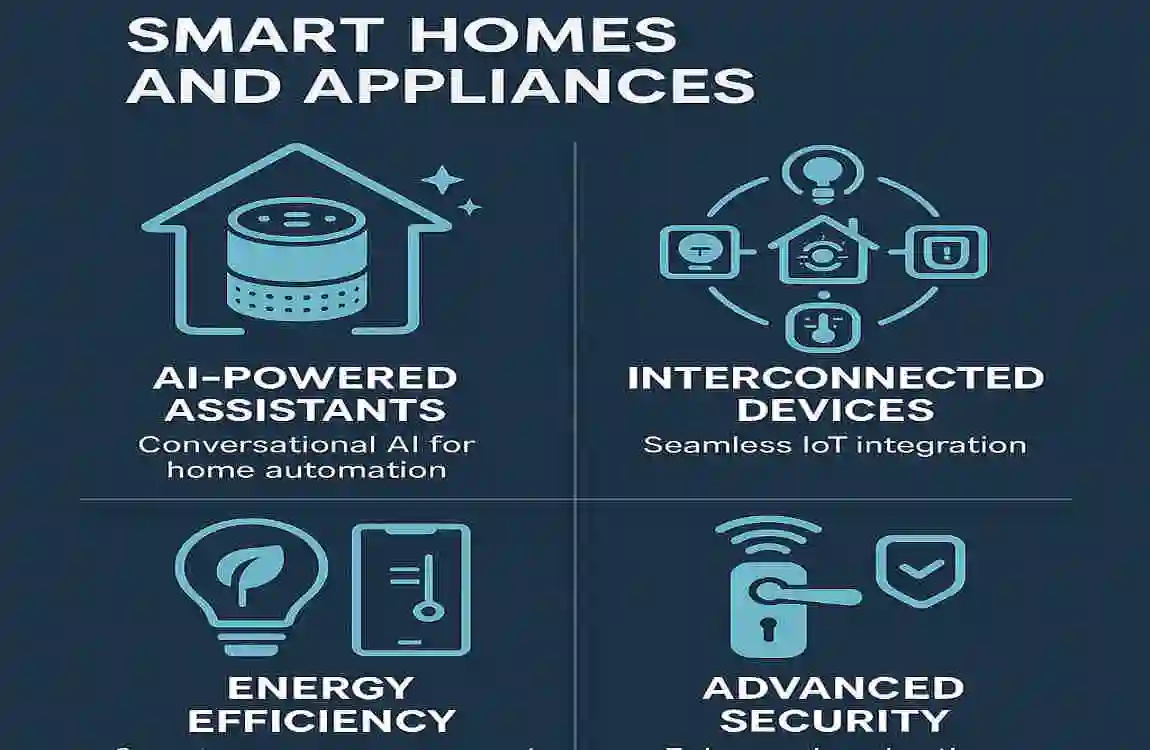
Looking ahead, the smart home and appliances state of the art is only getting smarter:
- NPUs Everywhere: Neural Processing Units (NPUs) will be standard, powering real-time personalisation and automation across everything from your toaster to your vacuum.
- Generative AI for Personalisation: Appliances will anticipate needs, generate shopping lists, and even suggest mood-based lighting or entertainment.
- Zero-Waste Cycles: Expect dishwashers and laundry machines that recycle water, minimise waste, and operate in harmony with your home’s energy grid.
