
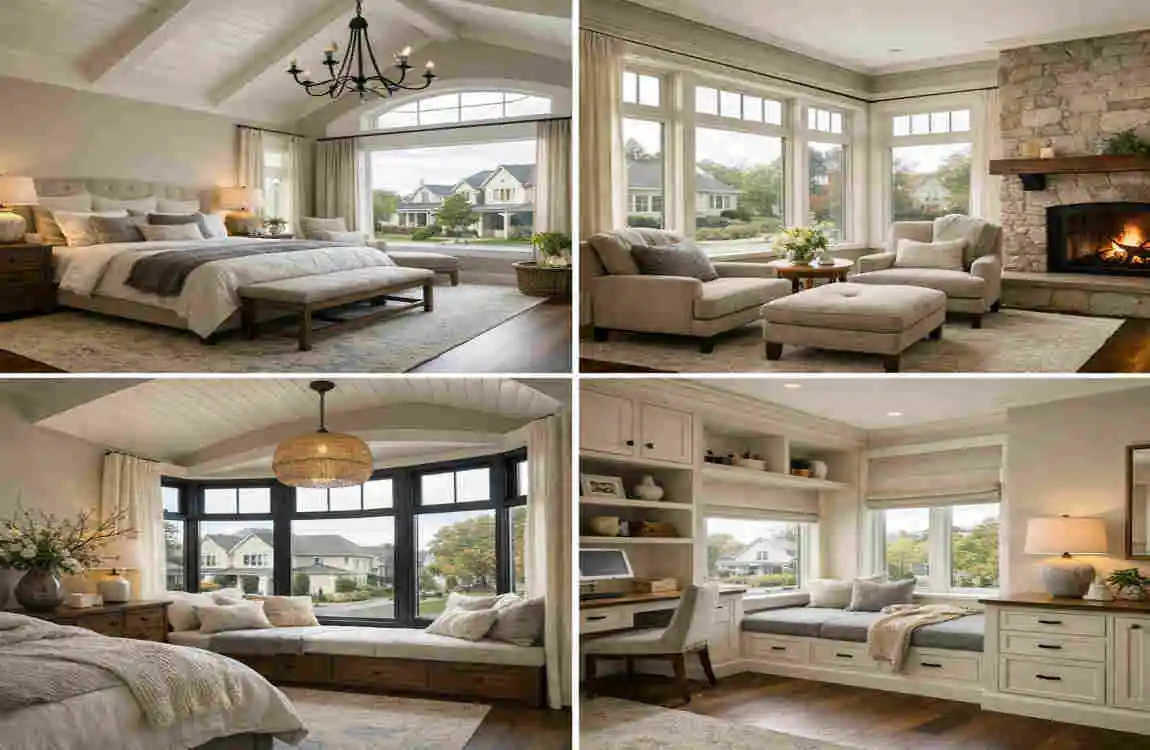
A main bedroom at the front of the house can be a very smart layout choice. For many homeowners, it offers convenience, better natural light, and a comfortable sense of separation from the rest of the home. For others, it raises questions about privacy, street noise, and security.
The truth is, this layout can work very well when it is planned carefully. You need to think about window placement, insulation, furniture layout, lighting, and privacy solutions from the start. That way, the bedroom feels calm and private instead of exposed.
Why Choose a Main Bedroom at the Front of the House?

Better Natural Light
One of the biggest advantages of a front-facing bedroom is natural light. Front windows often bring in sunlight earlier in the day or during the afternoon, depending on the direction your home faces.
This can make the room feel brighter, more cheerful, and more open. If you enjoy waking up to soft daylight rather than a dark room, this layout can work well for you. Just remember that light should feel pleasant, not harsh, so window treatments matter too.
Convenient Home Layout
A front main bedroom can make the floor plan feel more efficient. In some homes, it places the primary suite closer to the entrance, making the bedroom easier to reach.
It can also separate the master space from children’s bedrooms or busy family areas. That separation often creates a quieter and more private sleep space. If you value a peaceful retreat, this layout can be a strong choice.
Beautiful Exterior Views
Sometimes the front of the house offers the best view. You may look out onto a quiet street, a front garden, or mature landscaping. That can add a lovely feeling to the room.
The key is to design the windows so you can enjoy the view without feeling too exposed. A well-placed window can give you the benefit of both beauty and privacy.
Easier Access
For some homeowners, a front bedroom feels more convenient. It may offer shorter walking paths, easier access from the entrance, or less need to pass through the whole house.
This can be especially helpful for people who want fewer stairs, more direct access, or a layout that feels simple and practical every day.
Main Bedroom at the Front of the House: Privacy Tips
Use the Right Window Treatments
Privacy is usually the first concern people have with a front-facing bedroom. The easiest fix is good window coverings. Curtains, blinds, shades, and layered treatments all help control visibility.
Layered window coverings are often the best choice because they give you flexibility. You can let light in during the day and still close everything at night for privacy. That balance makes the room much more comfortable.
Add Exterior Landscaping
Landscaping can help create a natural barrier between your bedroom and the street. Hedges, shrubs, trees, and privacy screens can soften the view into the room while improving the exterior’s appearance.
This approach works well because it adds beauty and privacy simultaneously. It also helps the front of the home feel more finished and welcoming.
Choose the Right Window Placement
If you are designing or remodeling, window placement matters a lot. High windows, frosted glass, or carefully positioned openings can let in daylight without giving a clear view inside.
Large windows can still work in a front bedroom, but they need a thoughtful layout. If they are placed too low or too wide without privacy planning, the room can feel too open to the outside.
Consider Street Noise
A front bedroom may be closer to traffic, visitors, and outdoor activity. That does not always mean it will be noisy, but it is something to think about.
You can reduce sound with insulated windows, thick curtains, solid doors, rugs, and other soft materials. These small choices can make a big difference in how calm the room feels at night.
Best Design Ideas for a Front-Facing Main Bedroom

Create a Calm Color Scheme
Color plays a big role in how a bedroom feels. For a front-facing main bedroom, soft neutrals, warm earth tones, and gentle muted colors usually work best.
These shades help the room feel quiet and restful. They also let daylight look softer and more inviting. If you want the bedroom to feel like a retreat, avoid overly bright or busy color combinations.
Choose Comfortable Bedroom Furniture
Furniture should support the layout, not crowd it. Your bed, nightstands, dresser, bench, and seating should all fit the space without blocking windows or making movement difficult.
A good bedroom feels easy to walk through. When the furniture leaves clear space around the bed and toward the closet or bathroom, the whole room feels calmer and more useful.
Add Layered Lighting
Good lighting should work at different times of day. A front bedroom often benefits from ambient, task, and accent lighting.
You might use ceiling lights for general brightness, bedside lamps for reading, and wall sconces or dimmers for mood. Layered lighting gives you control, which is important in a room used for both rest and daily routines.
Use Textiles for Comfort
Textiles make a bedroom feel warm and inviting. Rugs, curtains, bedding, cushions, and upholstered furniture all help soften the room.
They also help with sound. Soft surfaces absorb noise better than hard surfaces, which is useful in a front-facing room near the street.
How to Arrange a Main Bedroom at the Front of the House
Best Bed Placement
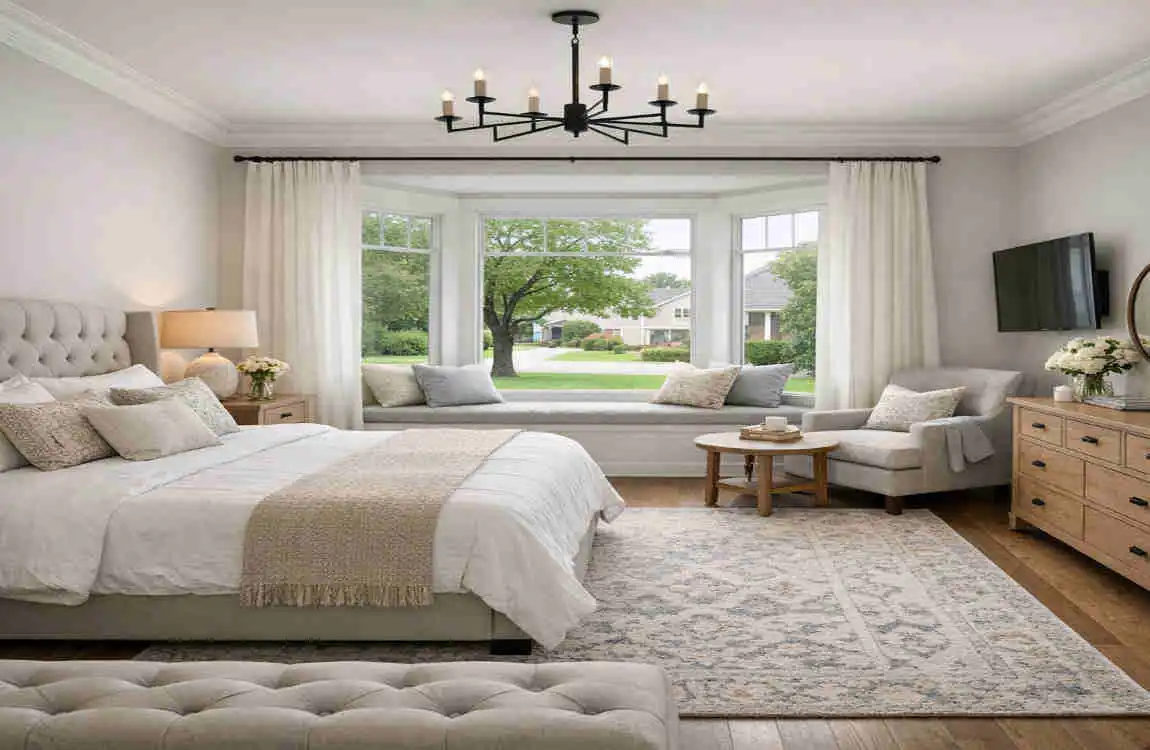
Bed placement should support privacy and comfort. In many cases, it is best to place the bed against a solid interior wall rather than directly in front of a window.
This gives the room a stronger focal point and usually makes it feel more secure. It also keeps the sleeping area away from direct street views, which helps the room feel more restful.
Create a Functional Walkway
A bedroom should be easy to move through. Try to keep clear walking paths between the door, closet, bathroom, and bed.
If the room feels crowded, it becomes harder to relax. Good circulation helps the bedroom feel larger and more organized, even if the room is not very big.
Plan Closet and Bathroom Access
If your main suite includes a walk-in closet or an ensuite bathroom, arrange these spaces to support privacy—many homeowners prefer to position the closet or bath behind or beside the sleeping area.
That setup helps separate the sleeping zone from daily activity. It also makes the room feel more complete and private.
Make the Most of a Small Front Bedroom
A smaller front bedroom can still feel great if you use the space well. Choose multifunctional furniture, mirrors, light colors, and vertical storage.
Keep décor simple and avoid oversized pieces. When the room stays visually open, it feels much more comfortable and less cramped.
Common Problems and How to Solve Them
Noise From Traffic or Neighbors
Traffic noise is one of the most common issues in a front bedroom. The solution usually starts with better windows, but you can do more than that.
Use acoustic curtains, rugs, insulation, and well-fitted window frames to reduce sound. Even soft furniture and fabric wall treatments can help the room feel quieter.
Lack of Privacy
If the room feels too visible from outside, combine several solutions. Window treatments, landscaping, and good window placement all work better together than alone.
You can also use frosted glass or privacy film in certain areas. That lets you keep the daylight without giving away too much visibility.
Too Much Sunlight
Bright light can be nice in the morning, but too much sun can make the room hot or uncomfortable. Blackout curtains, solar shades, and energy-efficient window coverings can help control this.
This is especially helpful if your bedroom faces strong afternoon sun. It keeps the room cooler and easier to sleep in.
Security Concerns
Because the room faces the front of the house, some homeowners worry about security. That is a fair concern, but it can be managed well.
Use strong locks, secure windows, exterior lighting, and carefully planned landscaping. You want the room to feel open and pleasant from inside but still protected from the outside.
Temperature Changes
Front-facing rooms can sometimes get warmer or cooler than other parts of the house, depending on orientation and exposure. That can affect comfort a lot.
Good insulation, quality glazing, curtains, and proper HVAC planning all help regulate the temperature. If the room stays comfortable, it becomes much easier to enjoy.
Frequently Asked Questions About a Main Bedroom at the Front of the House
Is it good to have a main bedroom at the front of the house?
Yes, it can be a very good idea. A main bedroom at the front of the house can offer natural light, convenience, and attractive views. The main things to plan for are privacy and noise.
How can I make the main bedroom at the front more private?
Use layered curtains or blinds, landscaping, privacy glass, window film, and smart window placement. When combined, these make the room feel much more private.
Is a front-facing bedroom noisy?
It can be, especially if the home is near a busy road. But good windows, thick curtains, rugs, and sound-reducing construction can help a lot.
Where should the bed go in a front bedroom?
The bed usually works best on a solid wall where it does not block windows or walking paths. That often makes the room feel more private and balanced.
How do I make a front bedroom feel larger?
Use light colors, mirrors, vertical storage, and appropriately sized furniture. Keep the room simple and avoid too many large pieces.
Should a main bedroom face the street?
It can, as long as privacy, comfort, and security are handled well. The right layout and design choices can make it work beautifully.
| Design Tip | Why It Works |
|---|---|
| Use Privacy-Focused Windows | Keeps the bedroom bright while reducing outside visibility. |
| Add Layered Curtains | Provides privacy, light control, and a cozy feel. |
| Choose Quiet Colors | Soft neutrals and warm tones create a relaxing atmosphere. |
| Plan Furniture Carefully | Keeps the room comfortable and maintains easy movement. |
| Use Soundproofing | Helps reduce noise from the street or front entry. |
| Create a Focal Wall | Adds style with wallpaper, artwork, or an accent color. |
| Add Soft Lighting | Layered lighting makes the bedroom warm and inviting. |
| Keep the Entry Private | Use a hallway, door placement, or screen to separate the bedroom from public areas. |
