
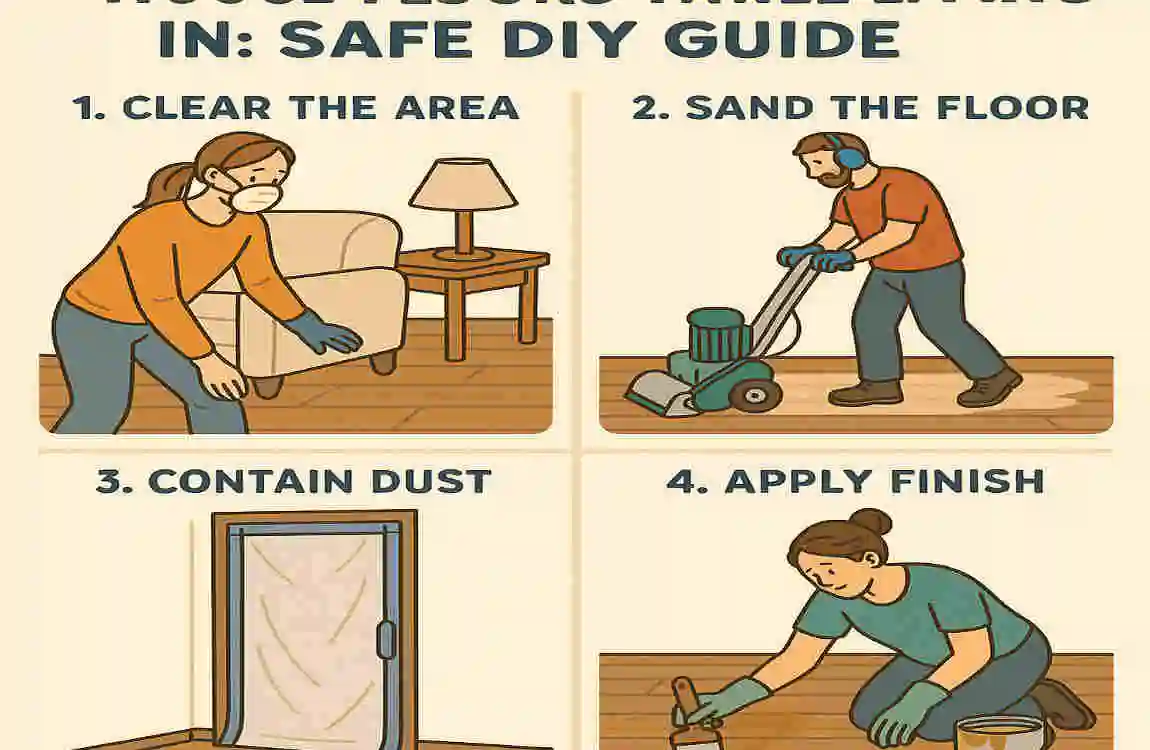
Refinishing your hardwood floors can transform your home’s appearance, but the idea of doing it while still living in the house might feel overwhelming. Dust, fumes, and the disruption to everyday life are valid concerns. However, with the right plan, tools, and safety measures, refinishing floors while living in a house is not only feasible but can also save you thousands of dollars compared to hiring professionals.

Refinishing hardwood floors is an inevitable task for most homeowners. Over time, foot traffic, furniture, pets, and daily wear can leave even the most durable floors scratched, dull, and lifeless. But why do this while staying in your home? Let’s break down the benefits.
Key Benefits of Refinishing Floors Without Moving Out
BenefitDetailsSavings/Impact
Cost DIY: $2-4/sq. ft. vs. pro $5-10/sq. ft. Up to $5,000 for 1,000 square feet
Convenience Stay in your home; tackle room by room. Maintain daily life with planning.
Value increases home resale value by 2-5%. ROI in as little as 1-2 years.
Customization You’re in control of finishes and style—personalized results.
Why It’s Worth It
If you’ve been putting off refinishing because of the hassle of moving out, you’re not alone. Most homeowners worry about dust, fumes, and disruption. Thankfully, advancements in dustless sanding systems and low-VOC (volatile organic compound) finishes have made it possible to tackle this project while staying home.
With proper preparation—like working on one room at a time and sealing off other spaces—you can refinish floors while living in the house safely and conveniently. Plus, the money saved by going the DIY route can be used for other home improvements!
Is It Safe to Refinish Hardwood Floors While Living in the House?
One of the biggest concerns homeowners have is whether living at home during floor refinishing is safe. While the process involves dust, fumes, and noise, modern tools and techniques significantly reduce these risks.
Addressing Common Myths About Refinishing Floors
MythFact
Refinishing creates unbearable dust. Dustless systems capture 99% of particles using advanced vacuums.
Fumes are harmful to kids and pets. Water-based finishes have VOC levels under EPA guidelines (<50 g/L).
You can’t refinish without moving out. Room-by-room refinishing is manageable with proper sealing and planning.
Safety Guidelines to Consider
- Dust Control: Advanced dustless sanding systems, such as Festool or Bona, help capture almost all particulates, keeping the air clean.
- Fume Mitigation: Opt for water-based polyurethane finishes that emit minimal odors compared to oil-based options. Ventilate the area for at least 72 hours after applying the finish.
- Noise: If sanding noise is a concern, plan the work during times when family members aren’t home or provide noise-canceling headphones for sensitive individuals.
Preparation: Assessing and Planning Your Floor Refinishing Project
Proper preparation is the key to a successful refinishing project. Before you begin, assess your floors, gather your tools, and plan your timeline.
Step-by-Step Checklist for Preparation
- Inspect Your Floors:
- Check for deep scratches, stains, or water damage.
- Use a moisture meter to ensure the level is below 12%.
- Prioritize Rooms:
- Start with the least-used room (e.g., guest bedroom).
- Create a Timeline:
- Allocate 3-5 days per room, including sanding, staining, and drying.
- Set a Budget:
- Expect to spend $500-$1,500 on tools and materials.
Essential Tools and Materials
CategoryEssentialsBudget OptionPro Tip
Sanding Orbital sander, HEPA vac system. Rent for ~$300—Festool system for 99% dust capture.
Finishing Lambswool applicator, poly roller. ~$50. Choose water-based polyurethane.
Safety Respirator, plastic sheeting. ~$100. Seal vents and doors thoroughly.
Taking time to prepare ensures a smoother process and minimizes disruptions to your daily life.
Essential Safety Measures for Refinishing Floors While Living in a House
Safety should always come first when refinishing floors, especially if you’re living in the house during the process.
Core Safety Protocols
- Dust Control:
- Seal off the work area with 6-mil plastic sheets and use HEPA vacuum systems to keep dust contained.
- Fume Management:
- Always use low-VOC or water-based finishes, and thoroughly ventilate the space. Open windows, use fans, and invest in an air purifier.
- Protecting Family Members:
- Relocate children, pets, and elderly family members while sanding or finishing. These groups are more sensitive to dust and fumes.
Family Protection plan
- Perform daily wet-mop cleanups to eliminate dust buildup.
- Monitor air quality using a CO detector or an air quality app.
- Keep the area well-ventilated for at least 72 hours post-finishing.
Step-by-Step Guide: How to Refinish Hardwood Floors While Living in a Home
This is the heart of the project. Below is a detailed, step-by-step guide to refinishing floors while living in a house.
Room Setup and Initial Prep
- Clear the room of all furniture.
- Seal adjacent areas with plastic sheeting to prevent dust spread.
- Repair any floor damage, such as loose boards or cracks.
Sanding Without Dust Chaos
- Start with coarse-grit sandpaper (36-40) to remove the old finish.
- Move to medium grit (60-80) to smooth the surface.
- Finish with fine grit (100-120) to prepare the floor for staining.
- Vacuum thoroughly to remove all dust, then use a tack cloth for fine particles.
- Apply stain evenly using a lambswool applicator or soft cloth.
- Finish with 2-3 coats of water-based polyurethane, allowing 24 hours to dry between coats.
Cure and Reassemble
- Allow the final coat to cure for at least 72 hours before moving furniture back into the room.
- Gradually reintroduce heavy furniture to avoid indentations.
Common Mistakes Table
Mistake: How to Fix It
Skipping fine sanding. Always finish with 100-120 grit sandpaper for a smooth surface.
Uneven stain application. Work in small sections and wipe off excess immediately.
Rushing the drying process. Wait the full recommended time between coats for durability.
Best Tools and Products for Dustless Floor Refinishing
Investing in the right tools and products can make a world of difference. Here are some top recommendations:
Top Tools and Products
- Sanding Systems: Bona Dustless Kit, Mirka Deros.
- Finishes: Bona Traffic HD (low VOC), Minwax Water-Based Polyurethane.
- Accessories: Festool CT Vacuum, 6-mil plastic sheeting for sealing.
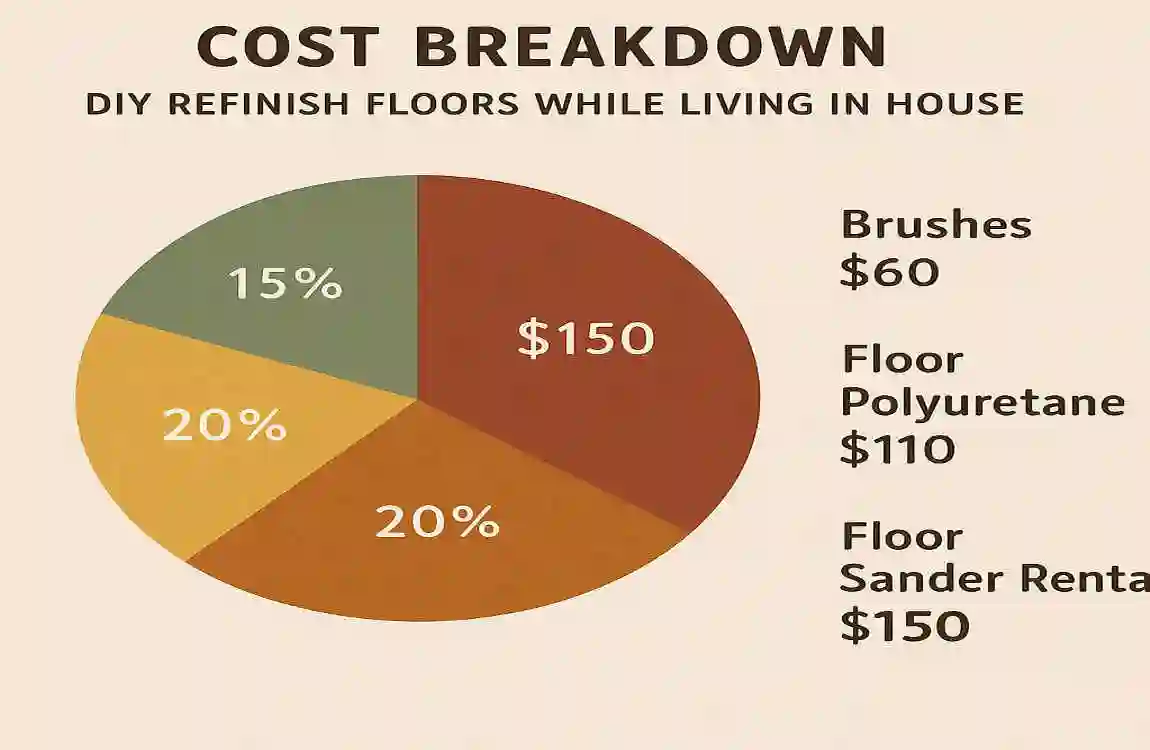
Here’s a breakdown of the costs to help you plan your budget:
ItemDIY CostPro CostSavings
Tools Rental $400 N/A $400
Materials $800 $1,500 $700
Total $1,200 $4,000 $2,800
Maintenance Tips to Extend Your Refinished Floors
To keep your newly refinished floors looking their best:
- Sweep regularly to prevent dirt and grit from scratching the surface.
- Avoid using steam mops; stick to damp mopping with a microfiber pad.
- Recoat every 3-5 years to maintain the finish.
