

When the summer heat becomes unbearable, many homeowners look for creative ways to cool their homes. One common question is: “Does spraying your roof with water cool your house?” The idea sounds cost-effective and straightforward, but does it really work?
How Does Spraying Your Roof With Water Work?
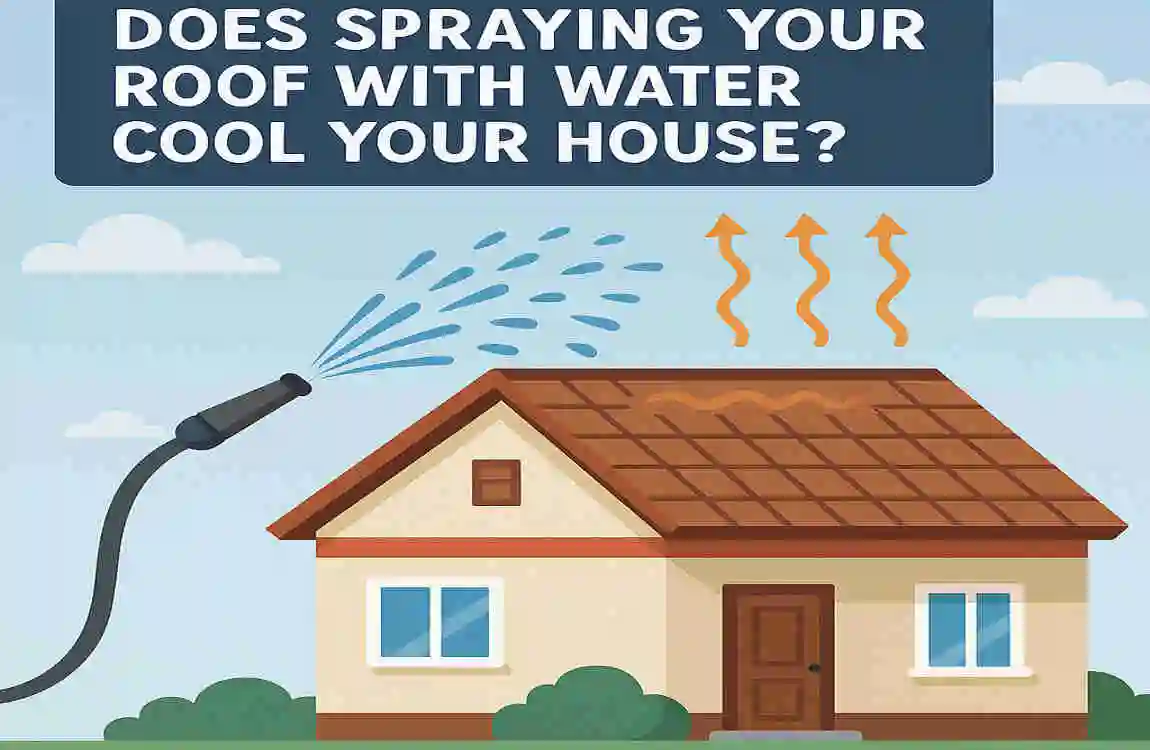
To understand whether this method is effective, let’s first look at the science behind it. The cooling process relies on evaporative cooling, a natural phenomenon where water absorbs heat as it evaporates. Here’s how it works:
- When you spray water onto a hot surface, such as your roof, the water droplets absorb heat from the surface as they evaporate.
- This heat transfer cools the roof, reducing its temperature by as much as 10°F in certain conditions.
- A cooler roof means less heat is transferred into your home, potentially lowering indoor temperatures.
However, the effectiveness of this method depends on several key factors, such as climate, roof material, and humidity levels. Let’s break these down in detail.
The Science Behind Evaporative Cooling
What Is Evaporative Cooling?
Evaporative cooling occurs when water turns into vapor, a process that absorbs heat from its surroundings. This is why sweating cools your body and why desert climates often rely on evaporative coolers. On a hot roof, this principle can work similarly to reduce heat.
For example:
- A roof exposed to direct sunlight can reach temperatures of 150°F or higher.
- When water is sprayed onto the roof, it absorbs heat as it evaporates, reducing the roof‘s temperature.
Key Factors That Impact Effectiveness
Not all conditions are ideal for this cooling method. Several variables can determine how effective spraying your roof with water will be:
- Humidity Levels: Evaporative cooling works best in dry climates where the air has low humidity. In humid areas, the air is already saturated with moisture, slowing down evaporation and reducing the cooling effect.
- Roof Material: Certain materials, like asphalt shingles, retain more heat and benefit more from water cooling compared to materials like metal, which cool down faster on their own.
- Wind Speed: A light breeze can speed up evaporation, enhancing the cooling effect.
- Time of Day: Spraying during peak sunlight hours (11 AM to 4 PM) maximizes the cooling potential, as the roof absorbs the most heat during this time.
Real-World Results
Studies and anecdotal evidence suggest that in dry climates, spraying water on your roof can reduce indoor temperatures by 2-5°F. However, in humid areas, the effect is negligible and may even add unwanted moisture to your home.
Does Spraying Your Roof Actually Cool Your House?
The short answer is: Yes, but only under ideal conditions. Let’s explore the details.
How Effective Is It?
Spraying your roof can provide modest cooling, with the following results:
- In dry climates, it can lower roof temperatures by 5-10°F, resulting in a 2-5°F drop indoors.
- In humid climates, the cooling effect is minimal or nonexistent, as moisture in the air prevents effective evaporation.
Climate Comparison
Here’s a simplified comparison of how spraying your roof performs in different climates:
Climate TypeCooling EffectLimitations
Dry (e.g., Arizona) High (5-10°F drop) Water waste, frequent spraying
Humid (e.g., Florida) Low/none Added humidity, mold risk
Frequently Asked Questions
Does spraying your roof with water cool your house?
Yes, it cools your house by reducing heat transfer via evaporative cooling, but the results are temporary and depend on factors like climate and roof material.
Pros and Cons of Spraying Your Roof
Before you grab your garden hose, it’s essential to weigh the benefits and drawbacks of this method.
Pros
- Affordable: Spraying your roof requires no special equipment—just a garden hose. It’s a budget-friendly alternative to running your air conditioner constantly.
- Quick Results: You can experience a noticeable temperature drop in a matter of minutes.
- Roof Protection: Reduces extreme heat exposure, which can prevent shingle degradation and prolong the life of your roof.
Cons
- Water Waste: In dry regions, frequent spraying can use up significant amounts of water, which is not environmentally sustainable.
- Temporary Cooling: The effect only lasts 30-60 minutes, requiring repeated spraying.
- Potential Damage: Excess moisture can lead to mold, leaks, and algae growth, especially in humid climates.
Proven Tips for Smarter Cooling
If you’re determined to try spraying your roof, here are some expert tips to maximize its effectiveness:
Use the Right Technique
- Mist, Don’t Drench: Use a garden hose with a sprinkler attachment to create a fine mist. This speeds up evaporation without over-saturating the roof.
- Automate the Process: Consider installing an automated misting system to ensure even coverage.
Spray at the Right Time
- Spray your roof during peak sunlight hours (11 AM to 4 PM) for maximum cooling.
- Limit sessions to 20-30 minutes to conserve water.
Prioritize Safety
If you’re spraying manually, ensure you use a stable ladder and avoid slippery surfaces. Always prioritize Safety when working on or near your roof.
Better Long-Term Cooling Solutions
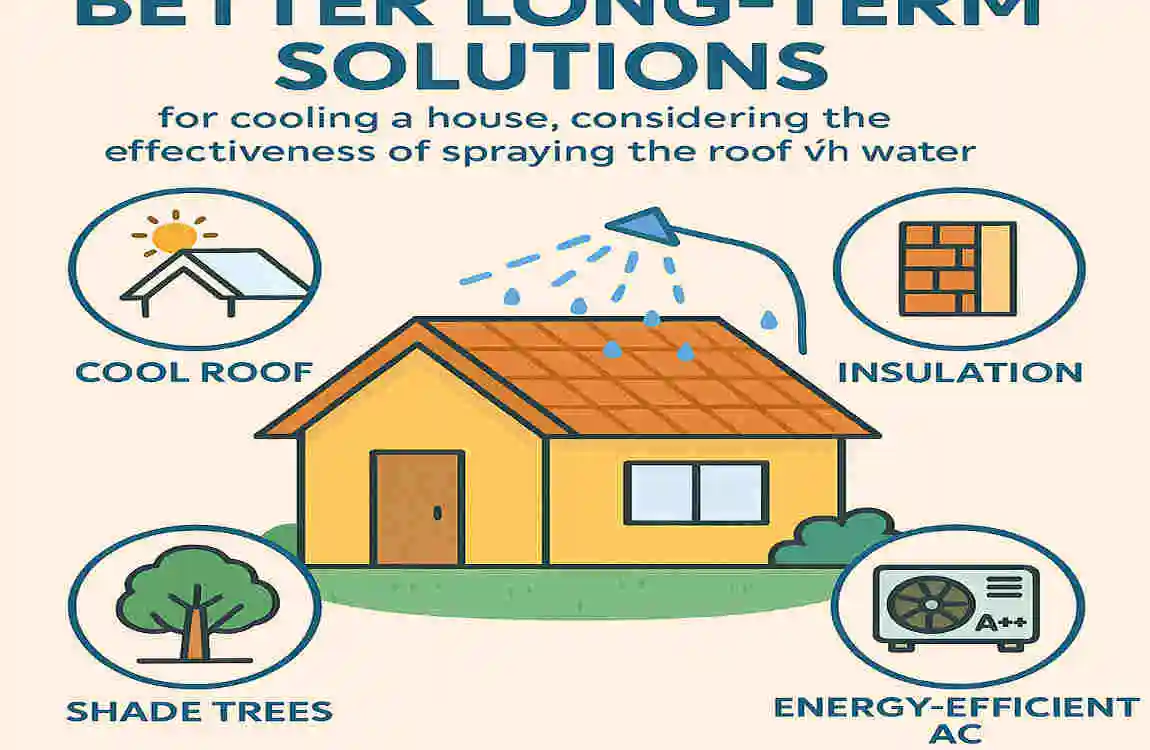
While spraying your roof can provide temporary relief, it’s not a sustainable long-term solution. Here are some alternatives that offer better cooling and energy savings:
Reflective Roof Coatings
Specialized paints and coatings can reflect up to 80% of sunlight, reducing roof temperatures by 20-30°F.
Improve Attic Insulation
Proper insulation prevents heat from entering your home, keeping it cooler during the summer and warmer in the winter.
Solar Panels
Solar panels create a gap between your roof and the air, acting as a natural insulator. They also generate electricity, reducing overall energy costs.
Method Cost Annual Savings Longevity
Roof Spraying Low $50-100 Seasonal
Cool Coatings Medium $200+ 5-10 years
Insulation High $300+ 20+ years
