
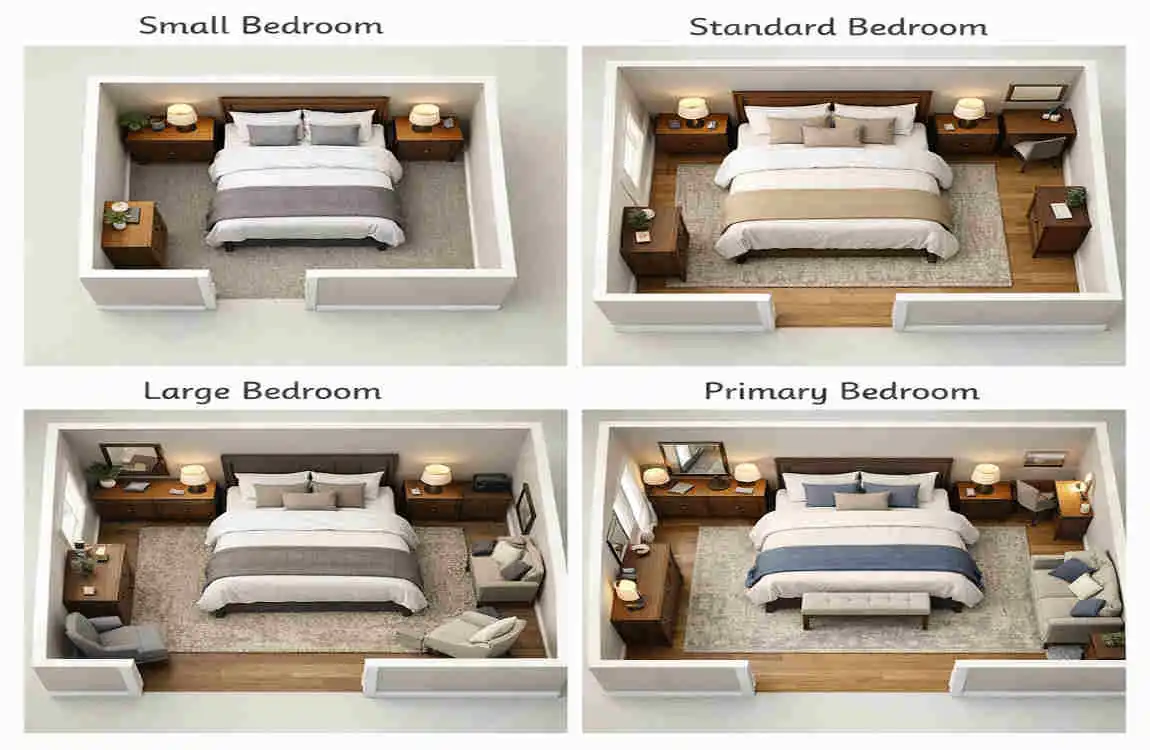
A bedroom should feel calm, useful, and easy to move around in. That is why bedroom size matters so much. It affects how well your bed fits, where your furniture goes, how much storage you have, and how comfortable the room feels day to day.
If you are asking what the standard size for a bedroom is, the simple answer is that many standard bedrooms fall between 10 × 10 ft and 12 × 12 ft, depending on the home and its design. But there is no single perfect size for every house.
What Is the Standard Size for a Bedroom?
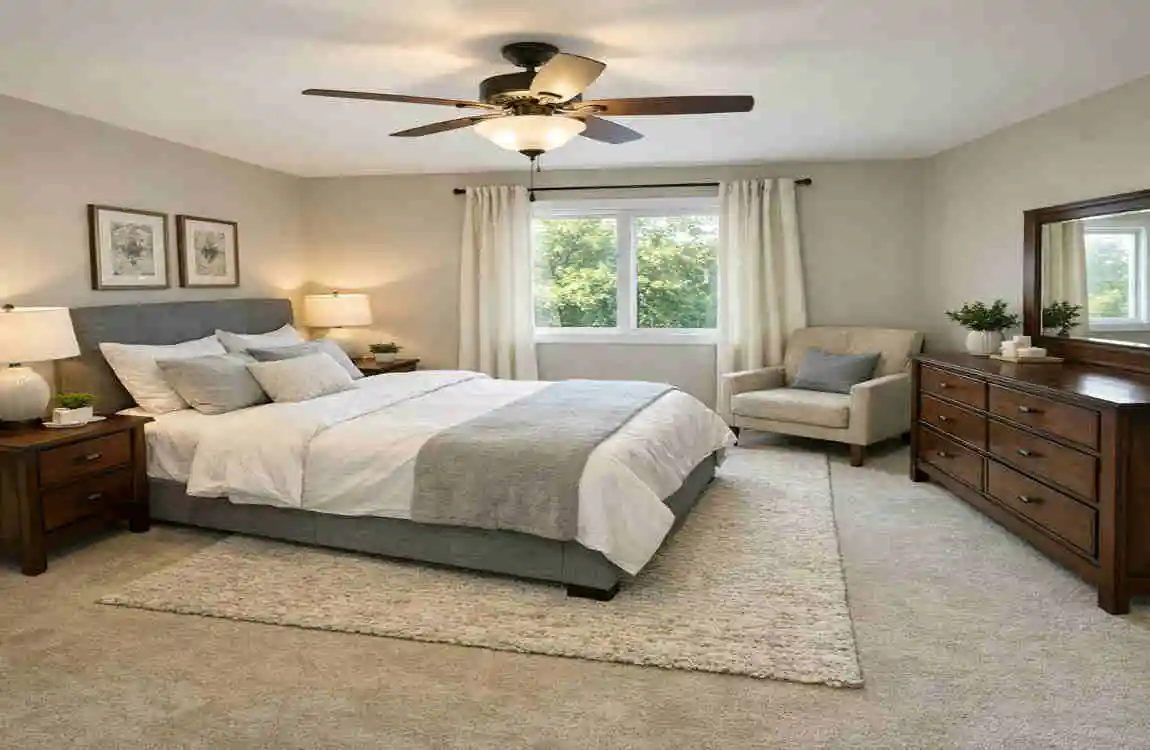
A standard bedroom is often about 10 × 10 feet, which gives you around 100 square feet of space. That is usually enough for a bed, a small dresser, and some walking room.
Some bedrooms are smaller, while others are much larger. A room’s feel depends not only on its square footage, but also on the bed size, furniture layout, ceiling height, window placement, and storage.
Bedroom TypeCommon DimensionsApprox. Area
Small Bedroom 8 × 10 ft 80 sq. ft.
Standard Bedroom 10 × 10 ft 100 sq. ft.
Comfortable Bedroom 10 × 12 ft 120 sq. ft.
Large Bedroom 12 × 14 ft 168 sq. ft.
Main Bedroom 12 × 16 ft or larger 192+ sq. ft.
A room may look bigger on paper than it feels in real life. For example, a closet, a wide door swing, or large windows can reduce usable wall space. So when you plan a bedroom, think about usable floor area, not just total measurements.
What Is a Good Bedroom Size for Different Needs?
There is no one-size-fits-all answer. The right bedroom size depends on who will use it and what the room needs to hold.
Small Bedroom
A small bedroom works well for one person, a child, or a guest room. It usually fits a twin bed, a nightstand, and one small piece of storage.
This kind of room can still feel comfortable if the layout is simple.
Standard Bedroom
A standard bedroom is a solid choice for a single adult or a couple who do not need much extra furniture. It usually fits a full bed or queen bed with basic storage.
This size is common because it balances comfort and space well.
Large Bedroom
A large bedroom gives you more freedom. You can use a bigger bed, a dresser, seating, or extra storage without crowding the room.
This is helpful if you want the bedroom to feel more like a private retreat.
Main Bedroom
A main bedroom is usually the largest bedroom in the home. It may hold a king bed, nightstands, a dresser, a chair, or even a small sitting area.
It often feels more comfortable because it has more room for movement and furniture.
Bedroom Size by Occupancy
Here is a simple way to think about it:
- Single-person bedroom: small to standard
- Child’s bedroom: small or standard
- Guest bedroom: standard
- Shared bedroom: standard to large
- Primary/main bedroom: large or very large
Your lifestyle matters too. If you like extra storage or a reading chair, you will likely need more space.
Standard Bedroom Sizes for Common Bed Types
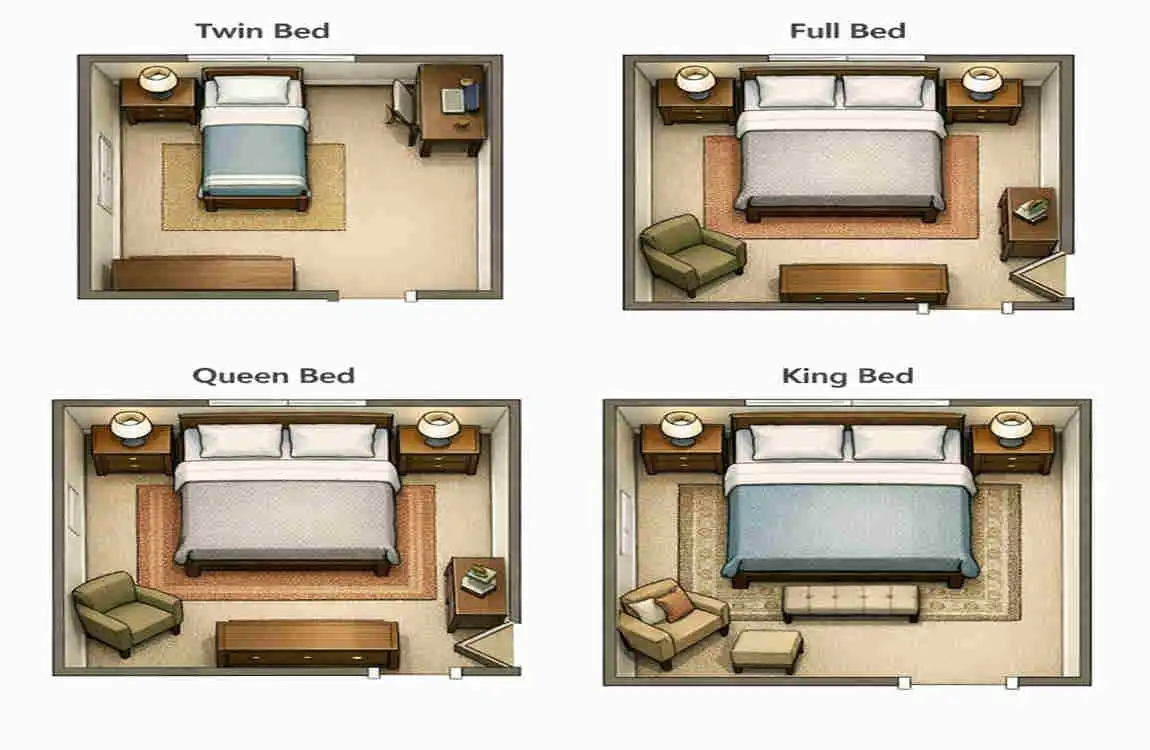
The bed is usually the biggest piece in the room, so it should guide your layout.
Twin Bed
A twin bed is a smart choice for small rooms. It leaves more space for walking, storage, or study furniture.
It works well in children’s rooms and guest rooms.
Full or Double Bed
A full bed takes up more space than a twin, but it can still fit in a modest bedroom. It is a good choice if you want more sleeping space without needing a large room.
Queen Bed
A queen bed is one of the most common choices for standard bedrooms. It gives a good balance of sleeping comfort and room size.
If you are using a queen bed, you should leave enough space to walk on both sides, if possible.
King Bed
A king bed needs a larger bedroom to feel comfortable. In a small room, it can make the space feel tight and difficult to arrange.
If you want a king bed, a larger bedroom is usually the better choice.
Simple Bed Clearance Tip
Try to leave enough space around the bed so you can move easily, open drawers, and make the bed without trouble. A room may technically fit a bed, but that does not always mean it feels comfortable.
Minimum Bedroom Size and Space Planning
A minimum bedroom size is not the same as a comfortable bedroom size. The minimum may only allow the basics, while a comfortable room gives you room to breathe.
Local building rules can differ so the legal minimum may vary by area. Still, a room that barely fits a bed can feel very cramped in everyday use.
What Needs Clearance?
When planning a bedroom, think about these areas:
- Bed
- Door swing
- Windows
- Wardrobe
- Dresser
- Walking paths
If any of these block each other, the room may feel too tight.
Ways to Make a Small Bedroom Work Better
You can often improve a small room with smart choices. Use vertical storage, under-bed storage, and furniture with a smaller footprint.
A few practical ideas include:
- Use a bed with storage underneath
- Choose a slim dresser instead of a bulky one
- Keep the layout simple
- Avoid too many extra furniture pieces
Small bedrooms can still feel pleasant if they are organized well.
How to Plan Furniture in a Standard Bedroom
Start With the Bed
The bed should usually be the main focus of the room. Once you place it, the rest of the furniture becomes easier to arrange.
Try to position it so there is enough space on each side, especially if two people will use the room.
Check Doors and Windows First
Before placing furniture, look at where the door opens and where the windows are. You do not want a dresser blocking natural light or a chair stopping the door from opening properly.
This simple step can save a lot of trouble later.
Leave Walking Paths
A good bedroom should be easy to move through. You should be able to walk from the door to the bed, closet, or dresser without squeezing past furniture.
Keep Furniture Practical
Nightstands, wardrobes, and dressers are useful, but only if they fit the room well. In smaller bedrooms, built-in storage or compact furniture can work better than large pieces.
Simple Layout Tips
- Measure the room before buying furniture
- Draw a basic floor plan
- Check the size of each furniture item
- Keep the main paths clear
- Focus on the bed, storage, and lighting first
How to Make a Small or Large Bedroom Work Better
Making a Small Bedroom Feel Bigger
A small bedroom can still feel comfortable if you make the right choices. Light colors, simple furniture, and mirrors can help the room look more open.
Use furniture that fits the room instead of forcing oversized pieces into it. A neat and uncluttered room usually feels larger than a crowded one.
Making a Large Bedroom Feel Comfortable
A large bedroom can feel empty if it is not planned well. You can fix that by creating separate zones, such as a sleeping area and a small seating area.
A rug can also help define the space and make it feel warmer. Do not place all furniture against the walls if it makes the room feel too open.
In the end, good bedroom design is about usable space, not just square footage.
How to Choose the Right Bedroom Size for Your Home
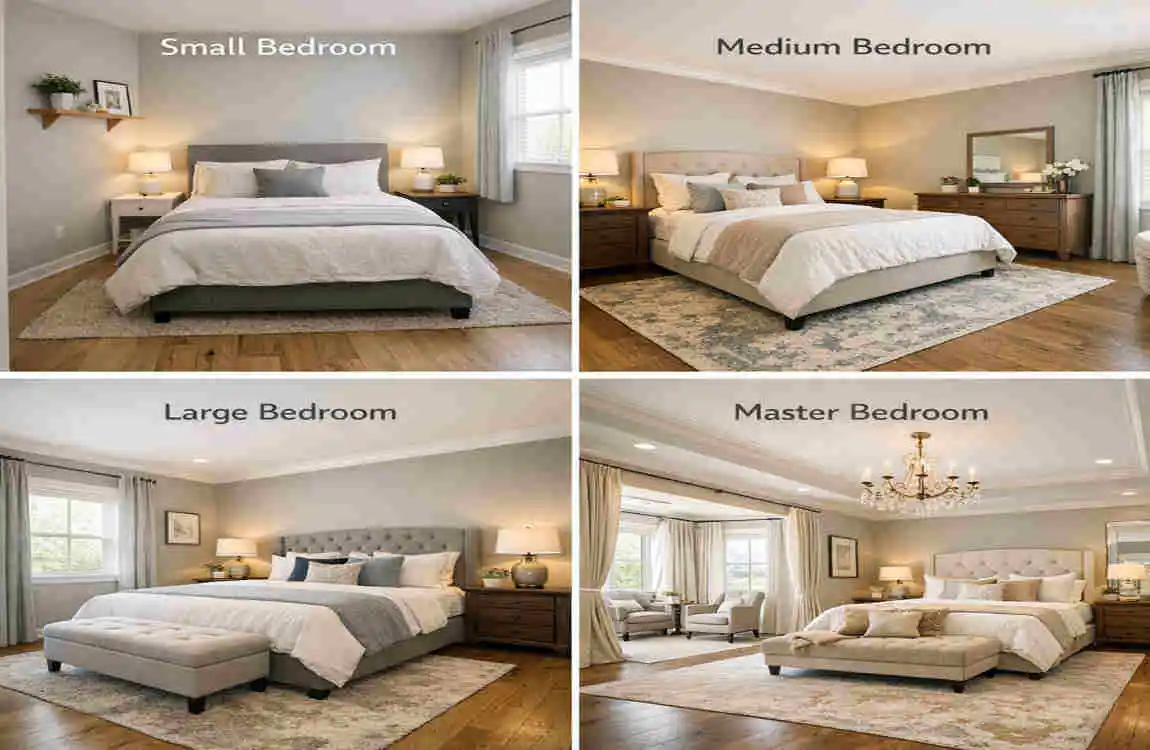
Choosing the right size means thinking about how the room will actually be used.
Ask yourself these questions:
- Who will use the room?
- What size bed do you need?
- How much storage do you want?
- Will the room need a desk or chair?
- Do you want extra walking space?
Also think about the size of the whole home. A bedroom should fit the overall layout of the house. If the room is too large, it may take space away from more important areas. If it is too small, it may feel hard to use.
FAQ: What Is the Standard Size for a Bedroom?
What is the standard size for a bedroom?
A common bedroom is typically 10 × 10 ft to 12 × 12 ft, though sizes can vary.
Is a 10 × 10 bedroom big enough?
Yes, for many people it is. It can fit a bed and basic furniture, but it may feel tight with larger items.
What is the ideal size for a main bedroom?
A main bedroom is usually larger, often 12 × 16 ft or more, so it can hold bigger furniture and still feel open.
What is the minimum size for a bedroom?
The minimum depends on local building rules. A legal minimum is not always the same as a comfortable room size.
Is a 12 × 12 bedroom a good size?
Yes. It is often a very practical size because it can fit a bed, storage, and walking space more comfortably.
What is a good bedroom size for two people?
A bedroom for two people should allow enough room for the bed, storage, and easy movement around the furniture.
How much space should be around a bed?
You should leave practical clearance so you can walk around the bed and open drawers or doors easily.
Can a small bedroom be comfortable?
Yes. With the right furniture, storage, lighting, and layout, a small bedroom can feel very pleasant.
| Bedroom Type | Typical Size | Approx. Area | Best For |
|---|---|---|---|
| Small Bedroom | 9 × 10 ft | 90 sq. ft. | One person or guest room |
| Standard Bedroom | 10 × 12 ft | 120 sq. ft. | Comfortable everyday bedroom |
| Medium Bedroom | 12 × 12 ft | 144 sq. ft. | Couples or larger furniture |
| Master Bedroom | 12 × 14 ft | 168 sq. ft. | Spacious primary bedroom |
| Large Master Bedroom | 14 × 16 ft | 224 sq. ft. | Luxury layouts and extra seating |
| Kids’ Bedroom | 10 × 10 ft | 100 sq. ft. | Bed, wardrobe, and study area |
| Guest Bedroom | 10 × 12 ft | 120 sq. ft. | Comfortable short-term stays |
