
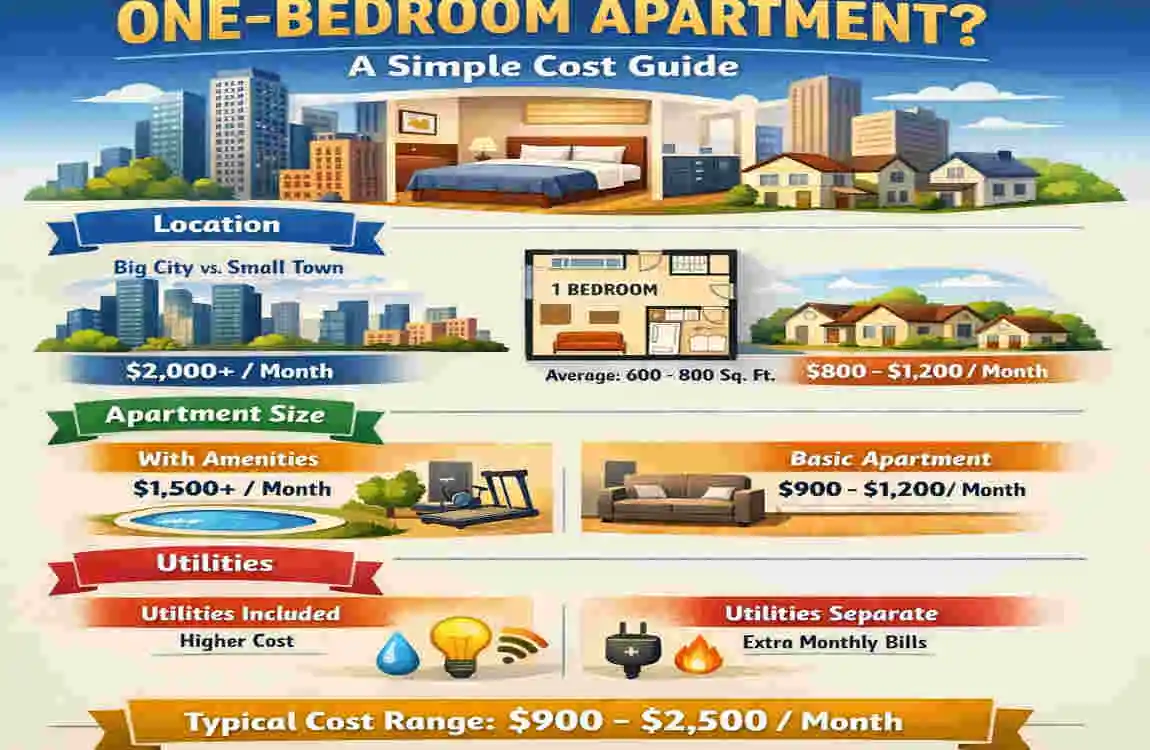
A one-bedroom apartment is a popular choice for singles, couples, students, and first-time renters. It offers more privacy than a studio and usually feels easier to manage than a larger home. If you are trying to figure out how much a one-bedroom apartment costs, the short answer is: it depends a lot on where you live and what the apartment includes.
Rent is only part of the story. You also need to consider utilities, deposits, parking, internet, renters insurance, and other monthly costs. That is why two apartments with the same rent can still cost very different amounts overall.
What Is the Average Cost of a One-Bedroom Apartment?
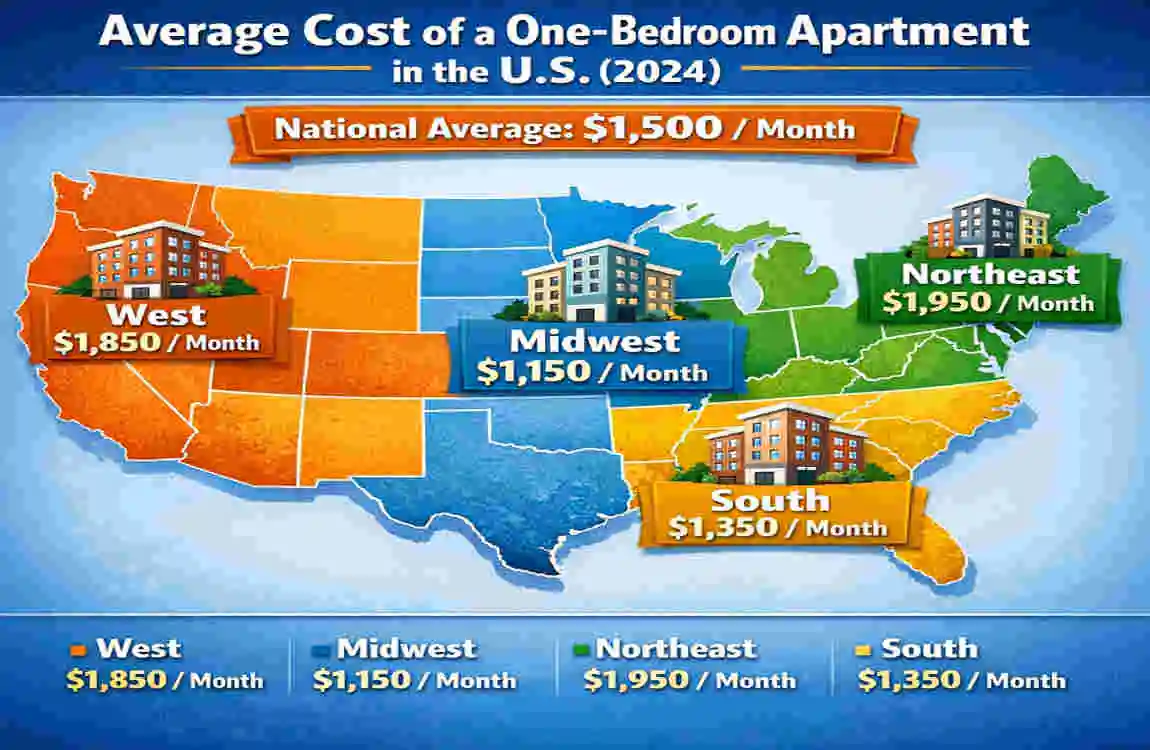
Typical One-Bedroom Apartment Rent
There is no single price for a one-bedroom apartment because rental markets change from place to place. In a lower-cost area, a one-bedroom may be fairly affordable. In a busy city or trendy neighborhood, the same size apartment can cost much more.
That is why broad averages are only a starting point. A national average may not mean much if you are renting in a major city, a small town, or a fast-growing suburb.
Rent vs. Buying a One-Bedroom Apartment
Some people compare renting a one-bedroom apartment with buying a condo or small apartment. Renting usually means a monthly rent payment and fewer upfront costs.
Buying is different. You may need:
- A down payment
- Closing costs
- Property taxes
- Homeowners insurance
- Ongoing maintenance costs
So while ownership can build equity over time, renting is often simpler and cheaper to start with.
Why Apartment Prices Vary So Much
Apartment prices change for many reasons. The biggest ones are usually:
- Location
- Apartment size and layout
- Building age and condition
- Amenities
- Local job growth and demand
- How many apartments are available
Cost FactorLower-Cost MarketMid-Range MarketHigh-Cost Market
Monthly Rent More affordable Moderate Higher
Utilities Usually lower Moderate Varies
Parking Often affordable Moderate Can be expensive
Deposit Lower Moderate Higher
Amenities Basic Standard Premium
What Factors Affect the Cost of a One-Bedroom Apartment?
Location
Location is usually the biggest factor. Apartments in city centers often cost more because they are close to jobs, transit, shopping, and entertainment.
Suburbs may cost less, while small towns and rural areas are often even more affordable. But a cheaper apartment farther away may cost more in commuting time and transportation.
Apartment Size and Layout
Not every one-bedroom apartment has the same amount of space. Some are compact, while others have larger living rooms, extra storage, or even a balcony.
A larger one-bedroom in the same area usually costs more. Open layouts, better views, and extra storage can also increase rent.
Building Age and Condition
Newer buildings often have modern finishes, energy-efficient systems, and better amenities. That usually means higher rent.
Older apartments may cost less but also have fewer features or require more upkeep. Renovated older units often sit in the middle because they offer a mix of charm and updates.
Amenities and Features
Amenities can make a big difference in price. Common features include:
- Parking
- Fitness centers
- Swimming pools
- Laundry rooms
- Elevators
- Security systems
- Outdoor spaces
- Pet-friendly facilities
The more convenience a building offers, the more you may pay.
Furnished vs. Unfurnished Apartments
A furnished apartment usually costs more because the landlord provides the furniture and sometimes basic household items. This can be helpful if you are moving temporarily or do not want to buy everything yourself.
An unfurnished apartment is usually better for long-term renters who already own furniture and want lower monthly costs.
What Extra Costs Come With a One-Bedroom Apartment?
Rent is important, but it is not the only bill you will pay. To understand the real cost, you need to look at the full monthly picture.
Utilities
Most renters pay some or all of the following:
- Electricity
- Water
- Gas
- Heating and cooling
- Trash collection
Some apartments include a few utilities in the rent, but many do not. Always ask before signing.
Internet and Phone Services
Internet is another common monthly cost. Some apartment communities include it in the rent, but many do not.
If you work from home or stream a lot, internet quality matters just as much as price.
Parking Costs
Parking can be free, cheap, or surprisingly expensive depending on the area. Garage parking in a city can add a meaningful amount to your monthly budget.
If you have a car, always ask about parking before you rent.
Security Deposit and Application Fees
Most apartments require a security deposit before move-in. This is usually money the landlord holds in case of damage or unpaid bills.
You may also see:
- Application fees
- Administrative fees
- Move-in fees
Ask for a full fee breakdown so there are no surprises.
Renter’s Insurance
Renter’s insurance is usually affordable and often recommended. It can help cover personal belongings and some unexpected issues.
Even though it is a smaller expense, it should still be part of your budget.
How to Budget for a One-Bedroom Apartment
Calculate Your Total Monthly Housing Cost
Do not stop at the rent number. Add up all the regular costs to know what the apartment really costs.
A simple monthly budget may include:
- Rent
- Utilities
- Internet
- Parking
- Renter’s insurance
- Building fees
- Transportation if needed
Follow an Affordable Rent Budget
A common budgeting rule is to keep rent at a comfortable share of your monthly income. But your real life matters too.
If you have student loans, credit card payments, groceries, travel, or family expenses, you may need to spend less on rent to stay comfortable.
Example Monthly Apartment Budget
Expense Estimated Monthly Cost
Rent $1,200
Electricity $80
Water $40
Internet $60
Renter’s Insurance $20
Parking $75
Estimated Total $1,475
These are only sample numbers. Your real costs will depend on your city and apartment.
How Much Should You Save Before Moving?
Before you move in, try to save for:
- Security deposit
- First month’s rent
- Application or admin fees
- Moving costs
- Basic furniture
- Utility setup fees
- Emergency savings
Having a cushion makes the move much less stressful.
How to Find an Affordable One-Bedroom Apartment
Compare Multiple Neighborhoods
Do not focus only on the most popular area. Nearby neighborhoods may offer better value and lower rent.
Just remember to factor in commute costs, gas, transit, and time.
Search for Included Utilities
A slightly higher rent can still be a better deal if it includes water, gas, or internet. Always compare the total cost, not just the rent.
Consider Older or Smaller Apartments
Smaller units and older buildings may be cheaper. They can be a smart choice if the apartment is clean, safe, and well-maintained.
Before choosing, inspect the condition, appliances, plumbing, heating, and windows.
Look for Move-In Specials
Some landlords offer promotions like:
- Reduced first-month rent
- Waived application fees
- Free parking for a limited time
These deals can help, but make sure you know the regular rent after the promotion ends.
Consider Roommates Carefully
If saving money is the priority, a two-bedroom shared with a roommate may cost less per person than a one-bedroom on your own.
That said, you will need to think about privacy, shared responsibilities, and lease terms.
Negotiate When Appropriate
Sometimes you can negotiate, especially if the market is slower or the apartment has been empty for a while.
Possible points to discuss include:
- Lease length
- Move-in date
- Parking
- Certain fees
Be polite and realistic. Negotiation works best when the market allows it.
Is a One-Bedroom Apartment Worth the Cost?
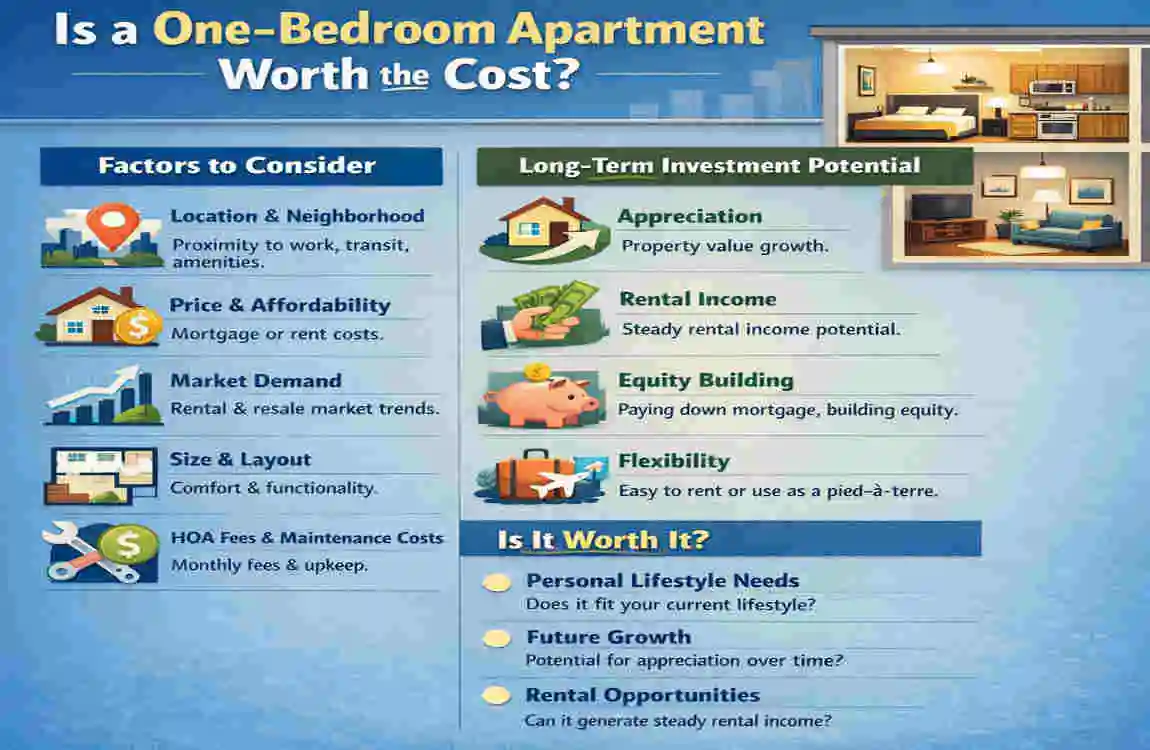
Benefits of a One-Bedroom Apartment
A one-bedroom apartment usually gives you:
- More privacy than a studio
- A separate sleeping area
- Easier furnishing and cleaning
- A nice balance between space and cost
For many renters, that mix feels just right.
Potential Drawbacks
There can also be downsides:
- Higher rent than a studio
- Limited storage
- Extra utility and parking costs
- High prices in popular neighborhoods
So while a one-bedroom is comfortable, it is not always the cheapest option.
One-Bedroom vs. Studio
A studio is often smaller and cheaper, but a one-bedroom gives you a separate bedroom and more privacy.
If you work from home, host guests, or want a clear split between living and sleeping space, a one-bedroom may be worth the extra cost.
One-Bedroom vs. Two-Bedroom
A two-bedroom costs more, but it may make sense if you need a home office, a roommate, or extra storage.
If the price gap is small, the extra room may be worth it. If the gap is large, a one-bedroom may be the smarter choice.
When a One-Bedroom Makes Sense
A one-bedroom apartment is often a good fit for:
- First-time renters
- Singles
- Couples
- People who want less maintenance
- Renters who care more about location than size
Frequently Asked Questions About One-Bedroom Apartment Costs
How much is a one-bedroom apartment on average?
It depends heavily on location, apartment size, building quality, and local demand. A city apartment can cost far more than one in a small town, so check your local market for the best answer.
Is a one-bedroom apartment cheaper than a two-bedroom?
Usually yes, but the difference depends on the market and the building.
Is a studio cheaper than a one-bedroom apartment?
Often yes, but not always. Some luxury studios can cost as much as older one-bedroom units.
What bills do you pay besides apartment rent?
You may need to pay utilities, internet, renter’s insurance, parking, trash fees, and pet fees.
How much income do I need for a one-bedroom apartment?
There is no one rule for everyone. It is better to compare your income with your total housing costs, not just rent.
Does apartment location affect rent?
Yes. Neighborhood demand, transit access, jobs, safety, and local supply all affect price.
How can I make a one-bedroom apartment more affordable?
Compare neighborhoods, look for included utilities, search for specials, and consider smaller or older units.
What should I check before renting a one-bedroom apartment?
Check the lease, total fees, utilities, appliances, heating and cooling, windows, parking, noise, and neighborhood conditions.
| Cost Factor | Typical Cost Range | Notes |
|---|---|---|
| Monthly Rent | $800–$2,500+ | Varies greatly by city and neighborhood |
| Utilities | $100–$250/month | Electricity, water, gas, and internet |
| Security Deposit | 1–2 months’ rent | Usually required before moving in |
| Renter’s Insurance | $10–$30/month | Protects personal belongings |
| Parking | $50–$300/month | Depends on the building and location |
| Furnishing | $1,000–$4,000+ | Depends on furniture quality and needs |
| Estimated Move-In Cost | $2,000–$7,000+ | Rent, deposit, utilities, and basic furnishings |
