
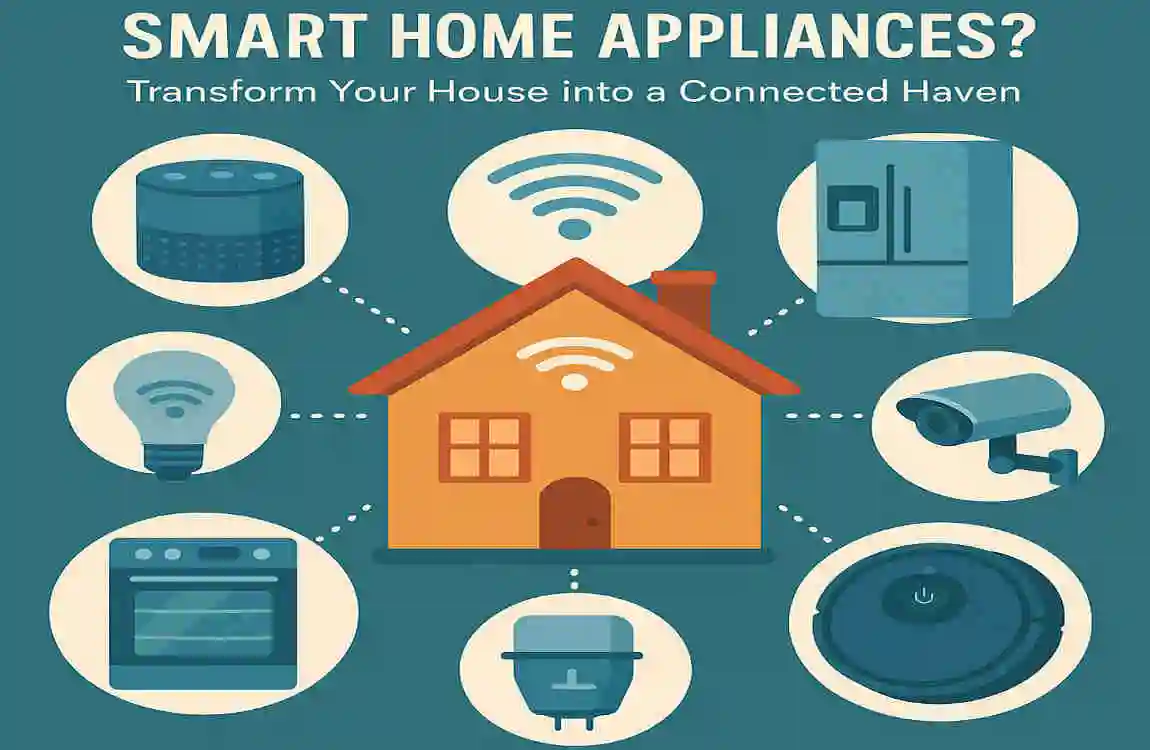
Picture this: You wake up to the gentle aroma of freshly brewed coffee, your favorite playlist softly playing, and the thermostat already set to your ideal morning temperature—all without lifting a finger. This isn’t a scene from a futuristic movie; it’s the reality of living with smart home appliances.
So, what are smart home appliances? In simple terms, these are internet-connected devices—think refrigerators, thermostats, vacuums, and more—that you can control remotely, automate, and even let share data to make your life easier. Thanks to the Internet of Things (IoT), these gadgets talk to each other and to you, transforming your house into a truly connected haven.
Understanding Smart Home Appliances
Smart home appliances are everyday household devices—like fridges, ovens, washing machines, and lights—that connect to the internet using Wi-Fi, Zigbee, or similar protocols. This connectivity lets you control them remotely via smartphone apps, voice assistants (like Alexa or Google Assistant), or even automatically through preset routines.
But what sets them apart from traditional appliances? It’s all about connectivity and intelligence. While a regular oven just bakes, a smart oven can preheat itself before you get home, suggest recipes based on what’s in your fridge, and even send you a notification when your meal is ready.
Key Technologies: Apps, AI, and Sensors
Most smart appliances come with dedicated apps that let you monitor and control them from anywhere. Many also use artificial intelligence (AI) and sensors to learn your habits, predict maintenance needs, and optimize their performance. For example, an intelligent washing machine might detect the size of your laundry load and automatically adjust water usage.
Smart vs. Traditional Appliances
Let’s make it crystal clear:
- Traditional appliances: Standalone, manual operation, no remote access.
- Smart appliances: Connected, remotely controllable, often automated, and capable of sharing data for better performance.
This difference is what turns a regular house into a connected haven.
Types of Smart Home Appliances
Smart home appliances come in all shapes and sizes, each designed to make a specific part of your life easier. Let’s break them down by category for a clearer picture.
Overview Table: Categories, Examples, and Features
CategoryExamplesKey Features
Kitchen Smart fridges, ovens, coffee makers, Inventory tracking, recipe suggestions, and remote preheat
Laundry Washers, dryers, cycle notifications, energy optimization
Cleaning Robot vacuums, obstacle avoidance, and scheduling
Climate Thermostats Learning algorithms, and geofencing
Security/Other Locks, lights, TVs, Voice integration (Alexa/Google), remote monitoring
Kitchen: The Heart of the Smart Home
Smart refrigerators can track what’s inside, suggest recipes, and even order groceries when you’re running low. Smart ovens let you preheat or adjust settings from your phone, while connected coffee makers brew your morning cup on schedule or by voice command.
Laundry: Smarter Washing and Drying
Smart washers and dryers notify you when cycles are done, let you start or pause loads remotely, and optimize energy use based on your habits. Some even diagnose issues and suggest fixes before you notice a problem.
Cleaning: Effortless Tidiness
Robot vacuums are a game-changer. They map your home, avoid obstacles, and clean on a schedule you set. Some models even empty themselves and return to their charging stations automatically.
Climate Control: Comfort on Demand
Smart thermostats like Google Nest or Ecobee learn your preferences, automatically adjust temperatures, and use geofencing to save energy when you’re away. You can control them from anywhere, ensuring your stunning home is always comfortable.
Security and Other Devices: Peace of Mind
Smart locks let you grant access to guests remotely, while bright lights can be scheduled or controlled by voice. Smart TVs integrate with your ecosystem, letting you stream content, control other devices, and even monitor security cameras.
Benefits of Smart Home Appliances
Let’s dive into the real-world advantages of upgrading to smart home appliances. Here’s why millions are making the switch.
Top Benefits at a Glance
- Convenience: Control devices from your phone or with your voice, whether you’re at home or away.
- Energy Savings: Automate routines to reduce energy use—smart thermostats alone can cut heating and cooling costs by up to 20%.
- Security: Get instant alerts if something’s wrong, integrate with cameras and sensors, and monitor your home remotely.
Convenience: Life Made Easier
Imagine never having to wonder if you left the oven on. With smart appliances, you can check and control everything from your phone. Forgot to lock the door? Just tap an app. Want to dim the lights for movie night? Ask your voice assistant.
Energy Savings: Good for Your Wallet and the Planet
Smart appliances optimize their operation to use less energy. For example, a smart thermostat learns your schedule and adjusts heating or cooling accordingly, while smart washers run during off-peak hours to save on electricity.
Security: Always in the Know
Smart security devices send real-time alerts if they detect unusual activity. You can see who’s at your door, check security camera feeds, and even let in trusted visitors—all from your phone.
Cost Efficiency: Prevent Problems Before They Start
Many smart appliances monitor their own health and alert you to potential issues. This predictive maintenance can save you from costly repairs and extend the life of your devices.
Comparison Table: Smart vs. Non-Smart Appliances
FeatureSmart ApplianceTraditional Appliance
Remote Control Yes (app/voice) No
Automation Yes No
Energy Optimization Yes Limited
Predictive Maintenance Yes No
Integration Yes (ecosystem) No
How to Set Up Smart Home Appliances: A Step-by-Step Guide
Ready to make your home smarter? Here’s a simple guide to get you started.
Choose a Smart Hub
Pick a central hub like Amazon Echo, Google Nest Hub, or Apple HomePod. This device will help you control all your smart appliances from one place.
Ensure Wi-Fi Compatibility
Make sure your home Wi-Fi is strong and compatible with your chosen devices. Some appliances use Zigbee or Z-Wave, so check for compatibility with your hub.
Download Apps and Pair Devices
Install the manufacturer’s app on your smartphone. Follow the instructions to connect each device to your Wi-Fi and hub. Most apps guide you through the process step by step.
Troubleshooting Common Issues
- Connectivity Problems: Restart your router and devices, or move them closer to the hub.
- App Glitches: Update apps and firmware regularly.
- Compatibility Issues: Use universal protocols like Matter for better interoperability.
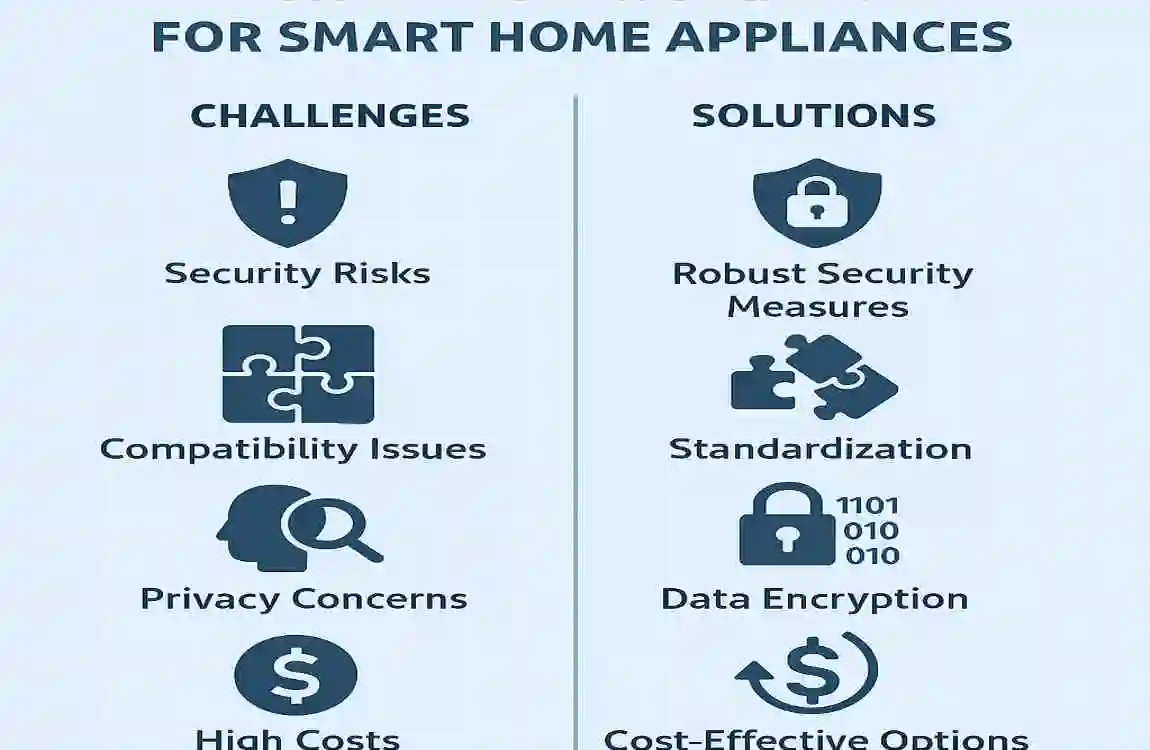
While smart home appliances offer many benefits, there are a few hurdles to consider.
Upfront Costs
Smart appliances can be pricey, ranging from $100 for a smart plug to over $1,000 for high-end refrigerators. To manage costs, start small—try a smart plug or light bulb before investing in bigger items.
