
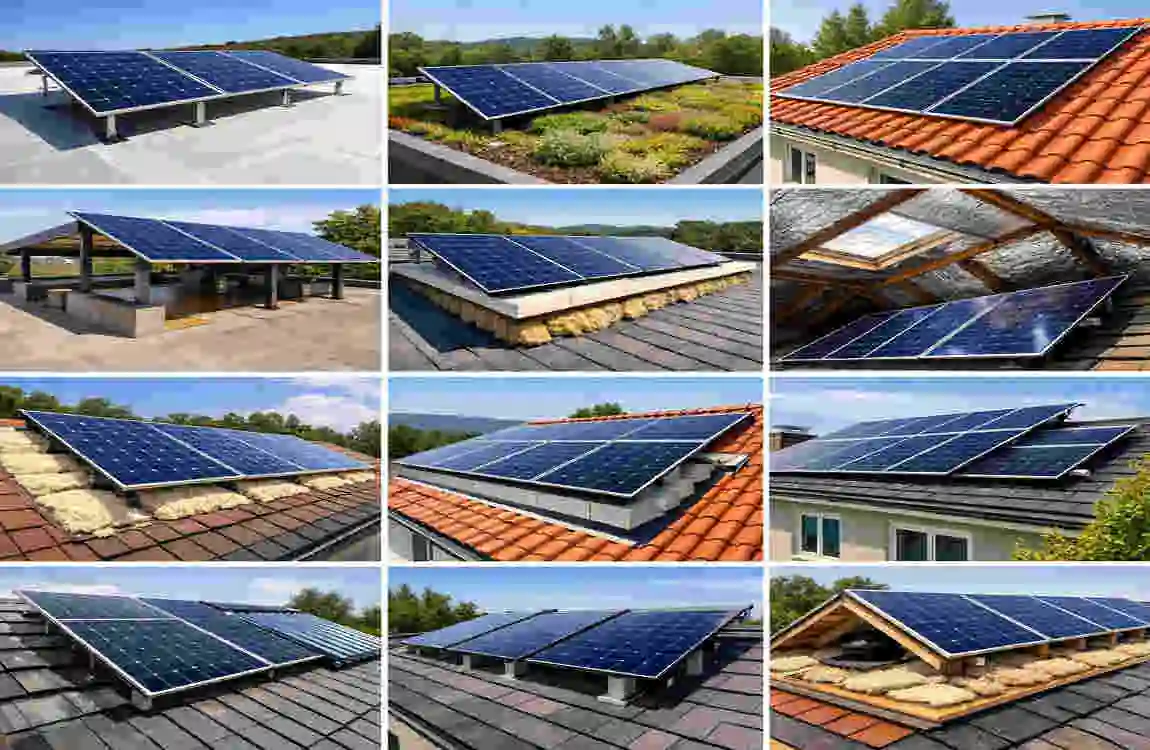
Energy costs keep rising, and in 2026, more homeowners than ever are turning to solar power to control monthly bills and reduce dependence on the grid. That shift makes sense. Solar panels can produce clean electricity for years. Still, many people overlook one important factor that affects how well a solar system performs: roof heat.
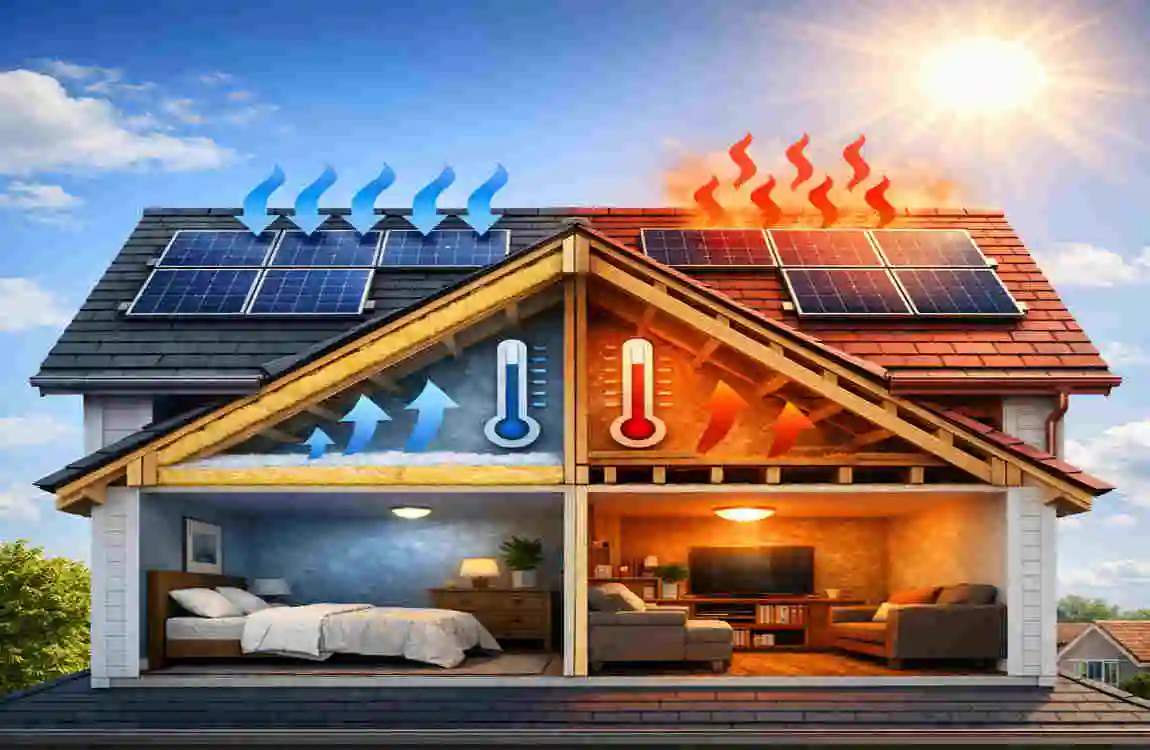
When a roof absorbs too much heat, that heat builds up around the solar array and inside the home. The result is a double problem. First, solar panels can run hotter than they should, and hotter panels usually produce less power. Second, the house underneath becomes warmer, so your air conditioner has to work harder and longer. That means higher cooling costs, even if you already have solar installed.
This is where rooftop solar panel insulation becomes a smart upgrade. Good insulation helps reduce heat transfer through the roof, creates a more stable temperature around the panels, and can cut indoor heat gain by 30% to 50% in the right setup. In many cases, it can also improve solar panel efficiency by around 10% to 15% by helping the system stay closer to its ideal operating temperature.
The best part is that you do not always need a full roof replacement to get results. Some options are simple and affordable, like radiant barrier foil or fiberglass batts. Others are more advanced, such as cool roof membranes, vented mounts, or PIR sandwich panels. Whether you want a DIY-friendly fix or a long-term Premium solution, there is an option that fits your roof type, climate, and budget.
Why Solar Panel Rooftop Insulation Matters
Heat Impact on Panels
Solar panels need sunlight, but that does not mean they love excessive heat. In fact, most panels work best at around 25°C. Once temperatures rise beyond that point, performance starts to drop. A common industry rule is that panels can lose about 0.5% of their efficiency for every degree above 25°C.
That may not sound like much at first. But on a hot rooftop in summer, panel temperatures can rise far above the surrounding air temperature. Over time, that heat reduces daily energy output and adds stress to the panel materials, wiring, and mounting system.
This is why rooftop thermal insulation matters so much. It helps control how much heat builds up under and around the solar array. It also supports passive cooling, especially when paired with proper airflow gaps or reflective roofing materials.
Better temperature control does more than protect performance. It can also help extend the useful life of your solar setup by 5 to 10 years, especially in regions with long, intense summers.
Energy Savings Data
The value of rooftop solar panel insulation extends beyond the panels themselves. It also improves the comfort and energy efficiency of the entire house.
When insulation reduces heat transfer through the roof, the attic and upper rooms stay cooler. That means your cooling system runs less often. In many homes, this can reduce air-conditioning use by roughly 20% to 38%, depending on climate, roof design, and existing insulation levels.
That creates a strong two-part benefit:
- Your solar panels can generate electricity more efficiently
- Your home can use less electricity for cooling
This combination is what makes energy-efficient solar roofs so attractive. You are not just adding power generation. You are building a roof system that works smarter from both sides.
Solar Panel Rooftop Insulation Ideas at a Glance
Before we dive into the details, here is a quick look at the best insulation options for solar-ready roofs. Some focus on reflecting heat, some on slowing heat transfer, and others on improving airflow or combining multiple benefits in one system.
IdeaKey BenefitCost Range
Radiant Barrier Foils Reflects up to 97% radiant heat Low
Spray Foam Insulation Seals air leaks completely , Medium-High
Fiberglass Batt Insulation is affordable: and easy to install. Low
Cellulose Blown-In Eco-friendly for attic spaces Low-Medium
Rigid Foam Boards: High insulation in a thin layer. Medium
Cool Roof Membranes Reflect sunlight and cool the roof surface. Medium-High
Vented Panel Mounts improve airflow under panels , Low-Medium
PIR/PUR Sandwich Panels Built-in insulation for modern roof systems High
Aerogel Blankets Ultra-thin, very high performance , Very High
Green Roof Overlays , Natural cooling and sustainable design , High
Each of these ideas can support a better solar roof. Still, the right one depends on your climate, roof structure, budget, and whether your panels are already installed.
Solar Panel Rooftop Insulation Ideas
Radiant Barrier Foils
Radiant barrier foil is one of the simplest and most budget-friendly ways to improve a solar roof. This material is usually made from aluminum foil laminated onto a backing sheet. It works by reflecting radiant heat instead of absorbing it.
Installed under the roof deck, in the attic, or beneath solar-adjacent roof areas, it can block up to 97% of infrared radiation. That makes it especially useful in very hot climates, including long summer seasons in places like , Karachi, or Multan.
The main advantage is cost. Radiant barrier products can start at around $0.10 per square foot, making them appealing to homeowners who want better performance without a major renovation. They are also relatively easy to retrofit, especially in accessible attic spaces.
This method pairs well with solar panels because you get a dual benefit. The solar array shades part of the roof, and the foil reflects additional heat away from the building envelope. Together, they help reduce attic temperatures and lower cooling demand.
A basic installation usually follows these steps:
- Inspect the attic or roof underside for moisture or air leaks
- Staple or fasten the radiant barrier to rafters or roof decking
- Leave an air gap so the foil can reflect heat properly
- Check that ventilation pathways remain open
The return on investment can be attractive. In hot regions, homeowners often see 10% to 20% cooling savings when radiant barrier foil is part of a broader insulation strategy.
The main downside is that it is less effective in humid conditions when installed incorrectly, and it does not seal air leaks as well as foam insulation does. Still, as a low-cost roof heat barrier, it is hard to ignore.
Spray Foam Insulation
Spray foam insulation is a more advanced solution. Still, it is one of the best performers when you want strong thermal resistance and airtight sealing in one product.
This insulation is sprayed onto the roof deck or underside of the roof structure, where it expands and fills cracks, gaps, and cavities. You can choose open-cell or closed-cell polyurethane foam. Still, closed-cell foam usually offers better moisture resistance and a higher insulating value. Its typical R-value is around 6 to 7 per inch, which is excellent for roof applications.
For solar panel rooftop insulation, spray foam works well because it reduces conductive heat transfer and blocks unwanted air movement. That means less hot air entering the attic and fewer weak points in the building envelope.
Many homeowners notice a major difference in upper-floor comfort after installation. Because the roof area becomes more airtight, indoor temperatures stay more stable throughout the day. In well-designed systems, this can help improve overall solar-related energy savings and boost effective roof efficiency by around 15%.
Spray foam is especially useful when the roof has many penetrations, joints, or hard-to-seal areas around solar wiring and mounting points. It also adds some structural rigidity in certain applications.
However, this is usually not a DIY project. Even coverage matters, and poor installation can trap moisture or block ventilation where airflow is still needed. For that reason, it is best to hire trained professionals.
Typical installed costs range from $1 to $3 per square foot, sometimes more, depending on thickness and local labor rates. It costs more than fiberglass or cellulose, but the energy performance is often stronger and more durable over time.
If your goal is to create a highly efficient, tightly sealed roof beneath your solar array, spray foam is one of the most reliable options available.
Fiberglass Batt Insulation
Fiberglass batt insulation is one of the most familiar insulation products on the market, and it remains a practical choice for many homeowners. It comes in pre-cut rolls or panels that fit between rafters, joists, or wall studs.
Its typical R-value is about 3.1 per inch, which is lower than spray foam but still effective when installed correctly. For homes with accessible attic spaces, fiberglass batts offer a straightforward way to improve attic insulation under solar panels without spending too much.
This option is popular because it is affordable, widely available, and relatively easy to install. In homes around Lahore and other warm urban areas, it can be a good mid-level upgrade when paired with panel standoffs or proper roof ventilation.
The key to good results is the quality of the installation. Fiberglass only performs well when it fills the cavity without being compressed. Gaps, sagging, or poor fitting around rafters can reduce performance fast. A vapor barrier is also helpful in the right climate to manage moisture and protect the insulation layer.
When combined with a ventilated solar mounting system, fiberglass batt insulation can reduce roof-related heat gain by around 20%. That may not sound dramatic, but it can make a real difference in cooling bills and indoor comfort.
Another advantage is flexibility. You can add more layers in stages if your budget is tight. That makes it a good option for homeowners who want to improve their roof over time instead of all at once.
The downside is that fiberglass does not air-seal the roof, and it can lose effectiveness if it gets wet. If your attic has leaks, dust, or airflow issues, you may need to address other issues first.
Still, for a low-cost and proven method, fiberglass batt insulation remains a dependable choice.
Cellulose Blown-In
Cellulose blown-in insulation is a smart option if you want something affordable, eco-friendly, and easy to use in irregular attic spaces. It is usually made from recycled paper products treated with fire-retardant chemicals.
With an R-value of about 3.5 per inch, cellulose performs a little better than fiberglass in many attic applications. Its biggest advantage is coverage. Because it is blown in as loose fill, it settles around wiring, framing, and awkward spaces more easily than batt insulation.
That matters for rooftop solar panel insulation because the areas around solar hardware often include uneven sections, penetrations, and tight corners. Cellulose can fill those gaps more completely, creating a more continuous layer of thermal protection.
It also offers bonus benefits. Cellulose helps with sound dampening, and many homeowners like the sustainability angle because it uses recycled material. If you are trying to create a greener home overall, it fits well with that goal.
This insulation is especially useful in attics beneath solar arrays, where the main challenge is reducing heat that comes down into living spaces. Once installed at the correct depth, it can reduce roof heat transfer and improve overall cooling efficiency during the hottest months.
Cellulose does need proper installation depth and protection from moisture. If water enters the attic, the material can compact and lose some insulating ability. That is why roof condition matters before installation.
For homeowners seeking a budget-friendly, environmentally responsible upgrade, cellulose-blown-in insulation offers a strong balance of cost, coverage, and comfort.
Rigid Foam Boards
Rigid foam boards are a great choice when you need high insulation performance in a thin layer. These boards are commonly made from polystyrene, extruded polystyrene, or polyisocyanurate (polyiso). They are attached directly to roof sheathing or placed in layered roof assemblies.
They typically provide around R-5 per inch, and polyiso can go even higher under the right conditions. That makes them useful for low-pitch roofs, compact roof structures, or projects with limited space.
One of the biggest strengths of rigid foam is durability. A well-installed system can last 25 years or more, which aligns with the lifespan of many solar panel systems. Because the boards are firm and stable, they also work well under roofing membranes and around planned solar penetrations.
For a solar roof, rigid foam boards can reduce heat flow into the house while keeping the roof assembly cleaner and more controlled than loose-fill insulation. They are often used in re-roofing projects where homeowners want to build a stronger thermal layer before reinstalling roofing materials and solar mounts.
Installation needs attention to detail. Boards must be cut carefully around fasteners, edges, and panel support points. Joints should be sealed properly, or you can lose some of the thermal advantage through air leaks.
Cost is usually moderate, but long-term value is strong because of the material’s lifespan and stable performance. Rigid foam boards are an excellent fit for homeowners who want energy-efficient solar roofs with a clean, long-lasting insulation layer.
Cool Roof Membranes
Cool roof membranes are among the most effective ways to reduce roof surface temperatures before heat ever enters the building. These membranes, often made of white TPO or PVC, are designed to reflect a large percentage of sunlight and release absorbed heat quickly.
Some products can reflect around 80% of sunlight, lowering roof temperatures by as much as 50°F in strong sun. That makes them especially powerful for flat or low-slope roofs with solar panel systems.
When paired with solar panels, cool roof membranes create a strong performance combination. The roof reflects solar heat, while the panels generate electricity from sunlight. This can improve PV output by roughly 5% to 10% in hot conditions because the environment around the panels stays cooler.
Cool roof membranes are usually installed before panel installation, making them best suited for new construction, roof replacement, or major retrofit projects. Once the membrane is in place, solar racking can be added on top using compatible mounting methods.
Another benefit is roofing protection. These membranes resist UV damage and can help the roof last longer when properly maintained. On commercial buildings and modern homes, they are a common part of high-performance roof design.
The main drawback is cost. This is not the cheapest insulation strategy, and installation usually requires the services of roofing professionals. But if your roof is already due for replacement, adding a cool membrane can be one of the smartest upgrades you make.
For homes in hot climates, this option supports both rooftop thermal insulation and improved solar output.
Vented Panel Mounts
Not every insulation improvement comes from adding more material. Sometimes, the best solution is better airflow. That is exactly what vented panel mounts provide.
These systems raise solar panels about 4 to 6 inches above the roof surface, creating a larger air gap beneath the array. That gap allows hot air to move out and cooler air to move in naturally. In some designs, added vent spacing of around 3 to 6 cm helps limit panel temperature rise to roughly 10°C.
This matters because trapped heat under solar panels is one of the biggest hidden performance issues on rooftops. Even a well-insulated roof can still cause solar modules to run hotter if there is little ventilation below them.
Vented mounts are appealing because they do not require extra insulation material. Instead, they improve passive cooling through smarter racking design. That can make them a low-material, practical upgrade for both new systems and some retrofits.
This option works best when paired with another thermal strategy, such as fiberglass, spray foam, or a reflective roof membrane. Think of vented mounts as a performance booster rather than a full replacement for insulation.
Homeowners like them because installation is usually simpler than opening up the roof structure. If you are already buying a new solar array, choosing the right racking system can be an easy win.
The main limitation is that airflow alone cannot prevent heat from entering the house. It mainly protects the panels and reduces heat buildup at the roof surface. But when combined with other methods, vented mounts can make a noticeable difference in solar efficiency and summer roof temperature.
PIR/PUR Sandwich Panels
PIR and PUR sandwich panels are Premium solutions designed for high-performance roofs. These panels combine an insulated foam core with metal outer layers, creating a strong, weather-resistant roofing product with built-in thermal protection.
They are common in industrial and commercial buildings. Still, they are becoming increasingly relevant for modern residential projects, especially on flat roofs or in architectural designs that integrate solar from the start.
At around R-6.8 per inch in some configurations, these panels deliver excellent insulation. They also create a clean, seamless roof surface, making solar installation easier when planned correctly. Some systems use hidden fasteners or secret-fix designs that improve appearance and reduce thermal bridging.
The biggest advantage is integration. Instead of layering separate roofing, insulation, and mounting solutions, sandwich panels create an all-in-one roof base that is ready for solar compatibility. That can save time in larger projects and improve long-term performance consistency.
They are also very durable. Metal-faced insulated panels handle weather well, resist deformation, and perform reliably over time when installed by experienced professionals.
The tradeoff is price. This is typically a high-cost solution, and it makes the most sense when you are building new, replacing a major roof section, or designing a Premium solar roof from scratch.
If you want a clean, engineered, industrial-grade approach to rooftop solar panel insulation, PIR/PUR sandwich panels are among the strongest options on the market.
Aerogel Blankets
Aerogel blankets are a high-tech insulation material known for delivering remarkable thermal resistance in very little space. Often associated with aerospace and advanced industrial use, aerogel has now entered Premium building applications.
A thin 10 mm aerogel blanket can offer roughly R-10 performance, which is extremely impressive for such a slim product. That makes it useful in roof areas where every centimeter matters and traditional insulation products are too bulky.
For solar roofs, aerogel blankets shine in tight spaces around mounting systems, retrofit zones, and specialty roof assemblies. They can be placed in areas where you need strong insulation without changing the overall roof profile too much.
Another major benefit is flexibility. Unlike rigid boards, aerogel blankets can bend and fit around complex details. That makes them easier to use around solar penetrations or unusual roof designs.
The downside is obvious: cost. Aerogel is one of the most expensive insulation options available. But in situations where roof space is limited, or energy performance needs to be extremely high, it can justify the investment.
In Premium projects, homeowners may use aerogel only in targeted sections rather than across the entire roof. That helps control costs while still solving tough thermal weak points.
If you want maximum performance in minimal thickness, aerogel blankets are in a class of their own.
Green Roof Overlays
Green roof overlays combine living vegetation with layered roofing materials to create a natural insulation and cooling system. They are one of the most visually appealing and environmentally friendly options on this list.
A typical green roof may use low-maintenance plants like sedum, along with drainage layers, root barriers, and growing medium. Together, these layers can add roughly R-5 to R-10, depending on the design, while also cooling the roof naturally through shading and evaporation.
This is where green roofs become especially interesting for solar. Plants help keep the roof surface cooler, which can support better conditions for nearby solar panels. In urban environments, this can also reduce the heat island effect, improving the local microclimate around the building.
For homeowners in dense cities like Lahore, a green roof can turn a hot roof into a more livable, sustainable surface. It also adds aesthetic value and can improve rainwater handling.
That said, green roof systems are not simple DIY projects. They require structural review, waterproofing, drainage planning, and ongoing maintenance. The roof must be strong enough to handle the extra load.
So while green roof overlays are not the easiest solution, they can be one of the most rewarding for homeowners who want long-term sustainability, roof cooling, and a truly modern eco-home design.
Comparison Table: Which Option Is Best?
Here is a side-by-side view to help you compare the top choices more easily.
Insulation Type R-Value / Inch install Ease Annual Savings Est.Best For
Radiant Barrier Foil N/A (reflective) High $200-$400 Hot roofs and attics
Spray Foam 6-7 Low $500+ Air leaks and full roof sealing
Fiberglass Batt 3.1 Medium $150-$350 Budget attic upgrades
Cellulose Blown-In 3.5 Medium $200-$400 Irregular attic spaces
Rigid Foam Boards 5+ Medium $300-$500 Low-pitch roofs
Cool Roof Membranes Reflective system, Low $400-$700, Flat roofs in hot climates
Vented Panel Mounts Air-gap based High $100-$300 Solar airflow improvement
PIR/PUR Sandwich Panels 6.8 Low $500-$900 New builds and Premium roofs
Aerogel Blankets Very high for thickness Low $300-$600 Tight spaces and high-end retrofits
Green Roof Overlays 5-10 total system, Low $250-$600 Urban eco-homes
The best value option for many homes is often a combination, not a single product. For example, a cool membrane plus vented mounts can work very well on flat roofs. On sloped roofs, fiberglass or cellulose paired with radiant barrier foil can deliver strong results at a lower cost.
Implementation Tips for Homeowners
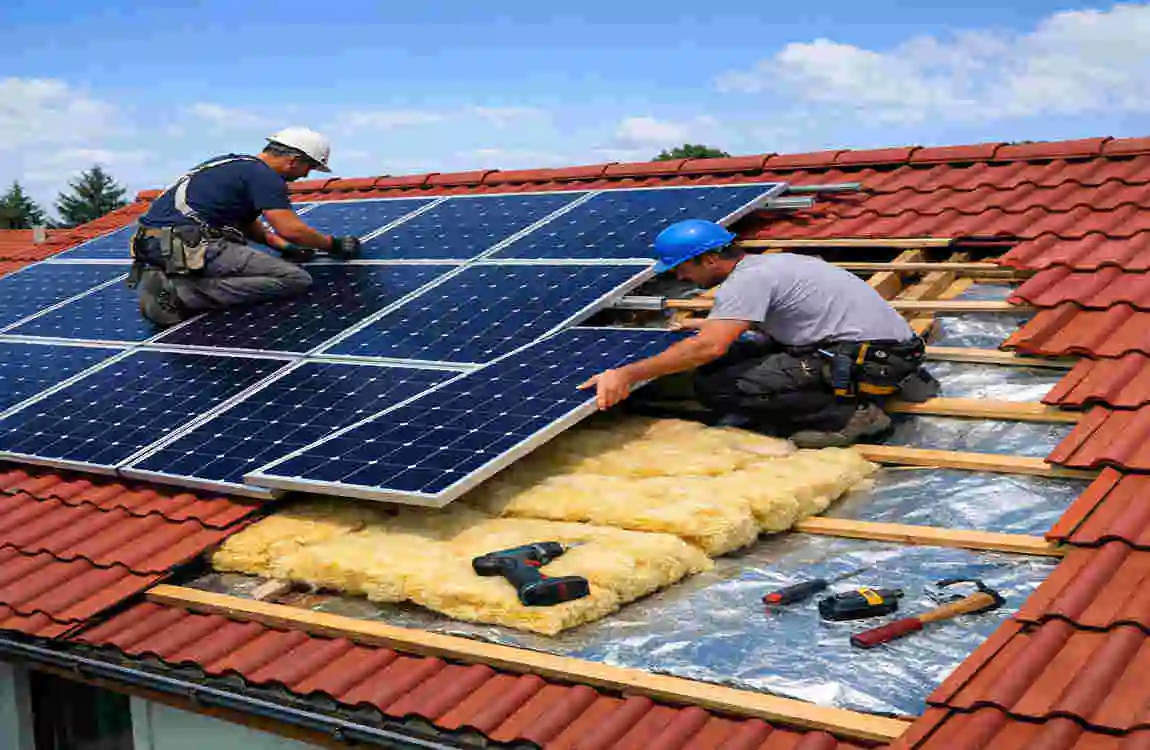
Choosing the right insulation is easier when you follow a simple plan. Before you spend money, look at the roof as a complete system, not just a place to add material.
Start With These Steps
- Check the roof condition first. Fix leaks, weak decking, cracked tiles, or damaged membranes before adding insulation.
- Assess your roof type. Flat roofs, pitched roofs, attic-based roofs, and metal roofs all behave differently in heat.
- Work out your insulation target. In many warm regions, aiming for around R-30 or the locally recommended level is a practical starting point.
- Plan airflow with the solar design. Leave room for vented panel mounts or standoff spacing to allow the panels to cool naturally.
- Decide what DIY-friendly is. Radiant barriers, fiberglass batts, and some attic upgrades are manageable for skilled homeowners. Spray foam, membranes, and green roofs usually need professionals.
- Review permits and solar rules. Local building codes, fire setbacks, and net metering rules may affect the project.
- Look for incentives. In Pakistan and other growing solar markets, check current government programs, financing offers, and net metering benefits before starting.
A smart approach is to combine one thermal insulation layer with one cooling or reflective strategy. That way, you reduce heat transfer into the home and also protect the solar panels from overheating.
If you already have panels installed, do not assume you missed your chance. Many attic-based and reflective upgrades can still be added later without removing the entire system.
Cost vs. Savings Analysis
In most homes, rooftop solar panel insulation costs between $2 and $10 per square foot installed, depending on the material and complexity. Simpler attic insulation is on the lower end, while Premium membranes, sandwich panels, and green roofs cost much more.
The good news is that the savings can add up quickly. A strong insulation upgrade can reduce total cooling and energy waste enough to cut annual electricity costs by around 25% in some homes. When you also include better solar panel output, the payback becomes even more attractive.
A common payback window is 3 to 7 years.
Simple ROI Snapshot
Year 1: Upfront investment, immediate comfort improvement
Year 2-3: Lower cooling costs start recovering a good portion of the project cost
Year 4-5: Many mid-range systems reach breakeven
Year 6-7: Long-term savings become the main financial benefit
Beyond Year 7: Ongoing bill reduction plus improved roof and panel performance
The exact return depends on climate, electricity prices, roof design, insulation thickness, and whether you install one method or combine several. But for hot regions with heavy AC use, the numbers often work in your favor.
FAQs
Does solar panel rooftop insulation increase efficiency?
Yes. In many cases, it does. By reducing roof heat and helping panels stay closer to ideal operating temperatures, insulation and airflow strategies can improve effective solar performance by around 10% to 38%, depending on the system design and climate.
What is the best insulation under solar panels?
There is no one-size-fits-all answer. Spray foam is excellent for airtight sealing. Radiant barrier foil is affordable for hot climates. Fiberglass and cellulose are good budget options for attic spaces. The best choice depends on your roof structure and whether your panels are already installed.
Can I install rooftop thermal insulation myself?
Some methods are DIY-friendly, especially radiant barrier foil and fiberglass batts in accessible attic areas. But spray foam, cool roof membranes, sandwich panels, and green roof systems are better left to trained professionals.
Do solar panels themselves insulate the roof?
They help a little by shading part of the roof, but they are not a substitute for real insulation. Without a proper insulation layer or ventilation gap, heat can still build up under the array and transfer into the house.
Which option is best for hot climates like Lahore?
For very hot climates, a combination often works best: radiant barrier foil, attic insulation, and vented panel mounts for pitched roofs, or cool roof membranes plus raised solar racking for flat roofs.
