

But first, let’s start with the basics: what exactly is a block house? A block house is a residential structure built using concrete, cinder, or autoclaved aerated concrete (AAC) blocks. These sturdy building materials have gained popularity among modern homeowners for their durability, versatility, and energy efficiency.
So, why are block houses becoming the go-to choice for many? Well, they offer a unique combination of strength, cost-effectiveness, and design flexibility. Whether you’re dreaming of a sleek, modern abode or a cosy, rustic retreat, a block house can be tailored to suit your Style and needs.
Understanding Block House Fundamentals
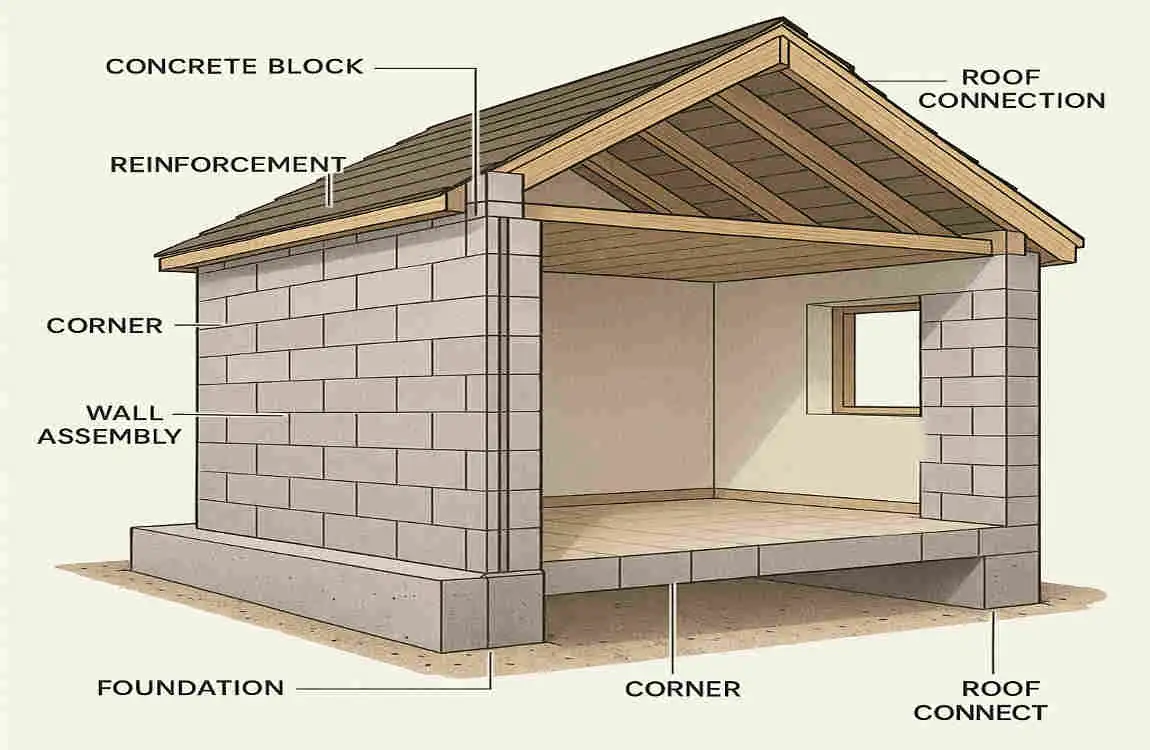
What is a Block House?
A block house is a residential structure constructed using solid blocks made from materials like concrete, cinder, or AAC. These blocks serve as the primary building material for the walls, providing a strong and durable foundation for your home.
The core features of a block house include:
- Strength and Durability: Block houses are known for their ability to withstand the test of time and various weather conditions.
- Energy Efficiency: The thermal mass of the blocks helps regulate indoor temperatures, reducing the need for excessive heating or cooling.
- Fire Resistance: Concrete and other block materials are highly resistant to fire, offering an added layer of safety for your home.
When it comes to the types of blocks used, you have several options:
- Concrete Blocks: These are the most common type of block used in residential construction. They come in various sizes and strengths to suit different building needs.
- Cinder Blocks: Made from coal cinders, these blocks are lighter than concrete blocks but still offer good strength and durability.
- AAC Blocks: Autoclaved aerated concrete blocks are lightweight, easy to work with, and provide excellent insulation properties.
One of the key advantages of block houses is their sustainability. The materials used in block construction are often locally sourced, reducing the carbon footprint associated with transportation. Additionally, the energy efficiency of block homes can lead to significant long-term savings on utility bills.
Why Choose a Block House?
Now that you understand the basics of block houses, let’s explore the reasons why they might be the perfect choice for your dream home.
Durability and Longevity
One of the most compelling reasons to choose a block house is its exceptional durability. These homes are built to last, with the potential to withstand decades of use without significant wear and tear. The solid nature of the blocks provides a strong foundation that can resist damage from weather, pests, and other external factors.
Cost-Effectiveness
While the initial cost of building a block house may be higher than some other construction methods, the long-term savings can be significant. The durability of block homes means less need for repairs and maintenance over time. Additionally, the energy efficiency of these homes can lead to lower utility bills, offsetting the initial investment.
Versatility in Design and Style
Contrary to what some may think, block houses offer a wide range of design possibilities. The blocks can be used to create various architectural styles, from modern and minimalist to traditional and rustic. The versatility of the material allows for creative layouts and the incorporation of unique features like curved walls or built-in shelving.
Whether you’re looking for a home that’s low-maintenance, energy-efficient, or simply built to last, a block house could be the perfect solution for you.
Essential Pre-Design Considerations
Determining Your Needs and Lifestyle
You may also read (why is art and architecture essential for home civilization).
Before diving into the design process, it’s crucial to take a step back and assess your needs and lifestyle. This will help you create a block house that genuinely suits your family and lifestyle.
Consider factors like:
- Family Size: How many bedrooms and bathrooms will you need? Are you planning for future expansion?
- Lifestyle: Do you work from home and need a dedicated office space? Do you enjoy entertaining and need a spacious kitchen and living area?
- Future Plans: Are you planning to start a family or have ageing parents move in? Consider how your needs may change over time.
By taking the time to reflect on these aspects, you’ll be better equipped to design a block house that meets your current and future requirements.
Budgeting for Your Block House
Budgeting is a critical step in the design process for any home, and block houses are no exception. To ensure you stay within your financial means, it’s essential to consider the key cost factors:
- Materials: The type of blocks you choose will impact the overall cost of your home. Concrete blocks are generally more affordable than AAC blocks, for example.
- Labour: Hiring experienced professionals who specialise in block house construction may cost more upfront, but can save you money in the long run by avoiding costly mistakes.
- Design Complexity: More intricate designs with unique features like curved walls or custom-built elements will increase the overall cost of your project.
To stay within budget, consider the following tips:
- Prioritise Your Needs: Focus on the essential features that are most important to you, and be willing to compromise on less critical elements.
- Shop Around: Compare prices from different suppliers and contractors to ensure you’re getting the best value for your money.
- Plan for Contingencies: Set aside a portion of your budget for unexpected expenses that may arise during the construction process.
By carefully planning your budget and making informed decisions, you can create your dream block house without breaking the bank.
Location and Site Analysis
The location and site of your blockhouse will play a significant role in the design process. Factors like soil type, elevation, and climate can all influence the choices you make when planning your home.
Soil and Elevation
The stability and composition of the soil on your site will determine the type of foundation you’ll need for your block house. If you’re building on a slope or uneven terrain, you may need to invest in additional site preparation and grading to create a level base for your home.
Climate Considerations
The climate in your area will also impact your design decisions. In colder regions, you’ll want to prioritise insulation and energy efficiency to keep your home warm and comfortable. In warmer climates, you may focus more on ventilation and shading to maintain a calm indoor environment.
Regional Building Codes and Block Suitability
Before finalising your design, be sure to research the building codes and regulations in your area. Some regions may have specific requirements or restrictions related to block house construction, such as seismic considerations or wind load requirements.
Additionally, consider the suitability of different block types for your local climate. For example, AAC blocks may be more appropriate in humid environments due to their moisture resistance, while concrete blocks may be better suited for areas prone to high winds.
By taking the time to analyse your site and understand the local regulations, you can design a block house that not only meets your needs but also complies with all necessary codes and standards.
Key Design Tips for Your Ideal Block House
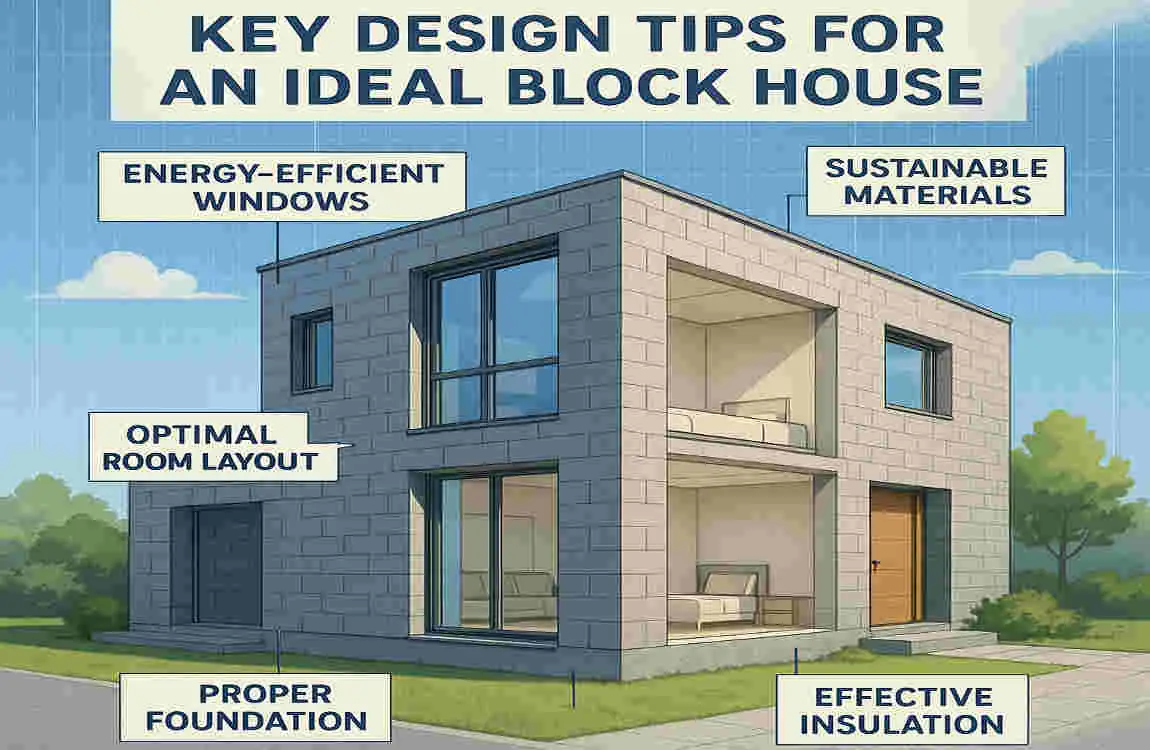
Prioritise Energy Efficiency
One of the most significant advantages of block houses is their inherent energy efficiency. By leveraging the thermal mass of the blocks and incorporating innovative design strategies, you can create a home that’s comfortable year-round while minimising your environmental impact.
Block Houses and Insulation
The solid nature of block walls provides excellent thermal mass, which means they can absorb and release heat slowly. This helps regulate indoor temperatures, keeping your home cooler in the summer and warmer in the winter. To maximise this effect, consider adding insulation to your block walls, either internally or externally, to further reduce heat transfer.
Window Placement for Natural Light and Ventilation
Strategically placing windows can have a significant impact on your block house’s energy efficiency. South-facing windows (in the northern hemisphere) can capture passive solar heat during the winter, while well-placed windows on all sides of the house can promote cross-ventilation during the warmer months.
Consider using high-performance windows with low-emissivity coatings and insulated frames to minimise heat loss and gain. You can also incorporate features like overhangs or awnings to provide shade and reduce solar heat gain during the summer.
Using Thermal Mass to Regulate Temperature
In addition to the thermal mass provided by the block walls, you can incorporate other materials with high thermal mass into your design. For example, using concrete or tile flooring can help absorb and release heat, further stabilising indoor temperatures.
To maximise the benefits of thermal mass, consider using a radiant heating system that warms the floors and walls directly. This can be more energy-efficient than traditional forced-air heating systems and can provide a more comfortable and consistent indoor environment.
By prioritising energy efficiency in your block house design, you can create a home that’s not only good for the planet but also more affordable to maintain over time.
Emphasise Structural Integrity
When designing your block house, it’s essential to prioritise structural integrity to ensure the safety and longevity of your home. Here are some key considerations:
Selecting the Right Blocks for Your Environment
The type of blocks you choose will depend on factors like your local climate, soil conditions, and building codes. For example, in areas prone to high winds or seismic activity, you may want to opt for denser, more robust blocks like concrete or AAC.
Consider consulting with a structural engineer or experienced block house builder to determine the best block type for your specific location and needs.
Reinforcements and Waterproofing Tips
While blockhouses are inherently strong, adding reinforcements can further enhance their structural integrity. This may include using steel rebar or mesh within the block walls, particularly in areas like corners, openings, and load-bearing walls.
Waterproofing is another crucial aspect of maintaining the structural integrity of your blockhouse. Consider applying a waterproof membrane or coating to the exterior of your block walls to prevent moisture penetration. You can also incorporate features like proper drainage systems and flashing around windows and doors to keep water out.
By selecting the right blocks and incorporating appropriate reinforcements and waterproofing measures, you can create a block house that’s built to last and withstand the elements.
Optimise Floor Plan Layout
The layout of your blockhouse will play a significant role in its overall functionality and livability. Here are some key considerations when optimising your floor plan:
Standard Layouts for Block Houses
Block houses can accommodate a wide range of floor plan layouts, from traditional to modern and everything in between. Some standard layouts include:
- Single-Story: A single-story block house can provide easy accessibility and a more open feel, with all living spaces on one level.
- Two-Story: A two-story design can maximise your living space on a smaller footprint, with bedrooms and private areas on the upper level and public spaces on the ground floor.
- Split-Level: A split-level design can work well on sloped sites, with different levels for different functions and a more interesting architectural profile.
You may also read (how is roman home architecture relevant today).
Open-Plan vs. Compartmentalised Design
When designing your block house, you’ll need to decide whether you prefer an open-plan layout or a more compartmentalised design. Open-plan living spaces can create a sense of flow and connectivity, making them ideal for entertaining and family life. However, they may also require more careful consideration of noise and privacy.
On the other hand, a compartmentalised design with separate rooms for different functions can provide more privacy and quiet spaces. This may be preferable for families with young children or for those who work from home and need a dedicated office space.
Zoning Social and Private Spaces for Comfort
Regardless of whether you choose an open-plan or compartmentalised layout, it’s essential to consider how you’ll zone your block house to create comfortable and functional living spaces. Think about how you’ll separate social areas like the kitchen, dining, and living rooms from more private spaces like bedrooms and bathrooms.
You can use architectural features like half-walls, built-in shelving, or changes in ceiling height to subtly divide spaces without completely closing them off. This can help create a sense of flow and connectivity while still providing some separation and privacy.
By carefully considering your floor plan layout and zoning, you can create a block house that’s not only beautiful but also highly functional and comfortable for your family’s needs.
Maximise Space With Smart Design
One of the advantages of block house construction is the flexibility it offers in terms of space planning. With some innovative design strategies, you can maximise the usable space in your home and create a more efficient and comfortable living environment.
Innovative Storage Solutions
Storage is always a key consideration in any home design, and block houses are no exception. By incorporating innovative storage solutions into your design, you can keep your living spaces clutter-free and maximise the functionality of your home.
Consider using built-in cabinetry and shelving to make the most of every inch of space. You can also incorporate features like under-stair storage, recessed shelving in block walls, or even hidden storage compartments to keep your belongings organised and out of sight.
Mezzanines, Lofts, and Multi-Purpose Rooms
Another way to maximise space in your block house is by incorporating mezzanines, lofts, or multi-purpose rooms into your design. These features can add valuable living space without increasing the overall footprint of your home.
A mezzanine or loft can provide a cosy sleeping area, a home office, or even a play space for children. By using a double-height ceiling in one area of your block house, you can create a sense of openness and light while also adding functional space.
Multi-purpose rooms can also help you make the most of your square footage. Consider designing rooms that can serve multiple functions, such as a guest room that doubles as a home office or a dining room that can be converted into a play area for kids.
By incorporating these innovative design strategies, you can create a block house that feels spacious and functional, regardless of your lot size or budget.
Utilise Natural Light and Ventilation
Natural light and ventilation are essential elements of any comfortable and healthy home, and block houses are no exception. By strategically incorporating these features into your design, you can create a living space that feels bright, airy, and connected to the outdoors.
Window Placement Strategies
The placement of windows in your blockhouse will have a significant impact on the amount of natural light and ventilation you can achieve. Consider the orientation of your home and the path of the sun throughout the day when planning your window layout.
South-facing windows (in the northern hemisphere) can provide the most consistent natural light throughout the day. In contrast, east-facing windows can capture the morning sun and west-facing windows can provide warm afternoon light. North-facing windows can offer soft, diffused light but may not provide as much warmth or brightness.
In addition to considering the orientation of your windows, think about their size and placement within each room. Larger windows can provide more natural light, but may also impact privacy and energy efficiency. Consider using a combination of window sizes and styles to create a balanced and functional design.
Skylights and Clerestory Windows
In addition to traditional windows, you can also incorporate skylights and clerestory windows into your block house design to maximise natural light. Skylights can be particularly effective in rooms with high ceilings or in areas where traditional windows may not be possible.
Clerestory windows, which are placed high up on the walls, can also bring in natural light while maintaining privacy at eye level. These windows can be particularly effective in rooms with double-height ceilings or in areas where you want to create a sense of openness and connection to the outdoors.
Cross-Ventilation Ideas
In addition to natural light, proper ventilation is crucial for maintaining a comfortable and healthy indoor environment. By incorporating cross-ventilation into your block house design, you can promote airflow and reduce the need for mechanical cooling systems.
Consider placing windows on opposite sides of your home to allow for a breeze to flow through. You can also incorporate features like operable skylights or vented clerestory windows to promote air circulation and reduce heat buildup.
By strategically utilising natural light and ventilation in your block house design, you can create a living space that feels bright, airy, and connected to the outdoors, while also promoting energy efficiency and comfort.
Incorporate Sustainable Features
Sustainability is an increasingly important consideration in modern home design, and block houses offer a unique opportunity to incorporate eco-friendly features into your living space. By choosing sustainable materials and incorporating energy-efficient systems, you can create a block house that’s not only beautiful but also good for the planet.
Rainwater Harvesting and Solar-Ready Roofing
One way to make your block house more sustainable is by incorporating rainwater harvesting systems into your design. By collecting and storing rainwater, you can reduce your reliance on municipal water supplies and use the collected water for irrigation, toilet flushing, or other non-potable uses.
Another sustainable feature to consider is solar-ready roofing. By designing your block house with a south-facing roof (in the northern hemisphere) and incorporating the necessary structural and electrical components, you can easily add solar panels in the future to generate clean, renewable energy for your home.
Eco-Friendly Materials and Finishes
In addition to incorporating sustainable systems, you can also choose eco-friendly materials and finishes for your block house. Look for building materials that are locally sourced, recycled, or made from renewable resources to minimise your environmental impact.
For example, you might choose to use AAC blocks, which are made from natural raw materials and have a lower carbon footprint than traditional concrete blocks. You can also opt for eco-friendly finishes like low-VOC paints, natural wood flooring, or recycled glass countertops to further reduce your home’s environmental impact.
By incorporating these sustainable features into your block house design, you can create a living space that’s not only beautiful and functional but also helps protect the planet for future generations.
Choosing Materials and Finishes
Selecting the Best Block Types
When designing your block house, one of the most important decisions you’ll make is choosing the correct type of blocks for your construction. Each block type has its own unique properties and benefits, so it’s essential to understand the pros and cons of each option before making your final selection.
You may also read (how to enhance circulation in home architecture).
