

Wondering if it is cheaper to buy land and build a house in the UK in 2026? With average property prices in England hitting £290,000 (ONS, 2025), it’s no surprise more people are asking if self-building could save them money. The dream of designing your own home is more appealing than ever, but is it really a cheaper route in today’s market?
Let’s put things in perspective. The average self-build cost in the UK is around £1,500 per square metre—sometimes less, sometimes much more, depending on your location and choices. Compare that to buying a ready-built home, and the answer isn’t as simple as you might hope.
Before diving into the numbers, it’s essential to understand the two very different journeys: building your own home versus buying one that’s already there.
What Does Self-Build Involve?
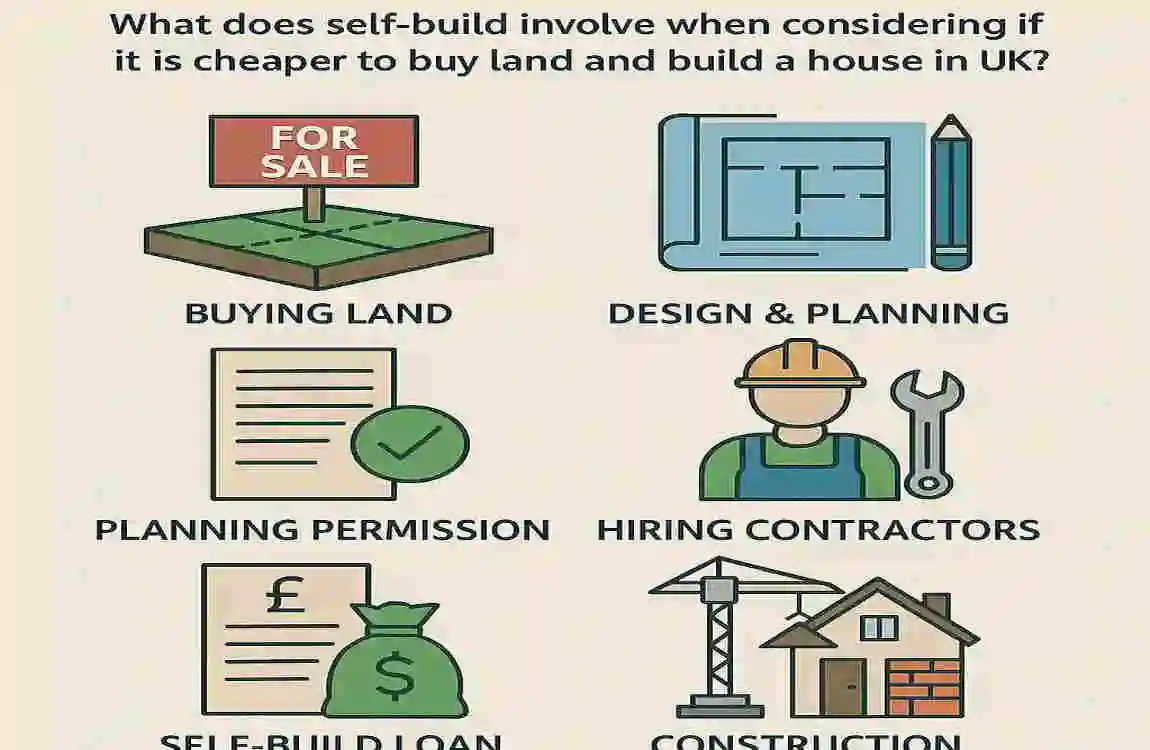
Self-building means taking a hands-on approach to creating your new home from the ground up. Here’s what the process typically looks like:
- Buying a Plot: You first need to buy a piece of land. This can be a serviced plot (with utilities in place) or raw land (which may require extra work).
- Getting Planning Permission: You’ll need approval from your local authority before any building starts.
- Design and Planning: You might work with an architect, use a kit home supplier, or choose a modular home approach.
- Construction: This could mean hiring a builder, managing the project yourself, or even going DIY for parts of the build.
There are three main self-build options:
- Complete Custom Build: Every detail is up to you.
- Kit Homes: Pre-designed components assembled on-site.
- Modular Homes: Factory-built sections quickly installed on your plot.
Each path comes with its own set of challenges and costs.
Average Costs of Buying a Ready-Built House
Most UK homebuyers still choose to buy existing homes. According to Zoopla Q1 2026, the average house price is:
- £290,000 in England
- £190,000 in Scotland
But the sticker price isn’t the whole story. There are hidden costs to factor in:
- Stamp Duty: Up to 12% of the purchase price
- Surveys and Legal Fees: £1,000 or more
- Moving Costs: Can easily top £5,000
Table: Regional Buying Costs (2026 Averages)
RegionAvg House Price Stamp Duty (est.)Total Hidden Costs
South East £380,000 £25,000 £35,000
North West £220,000 £5,000 £15,000
Scotland £190,000 £0 (threshold) £10,000
Source: Zoopla, ONS, 2026
So, the real cost to buy can be much higher than just the listing price.
Step-by-Step Costs of Buying Land and Building in the UK
Let’s break down every significant expense involved in buying land to build a UK in 2026. We’ll use current averages, factoring in 4% post-2025 inflation.
Land Acquisition Costs
Land is the biggest variable in the self-build equation. Prices swing wildly depending on where you look:
- Countryside plots (1/4 acre): £250,000 on average
- Urban plots: £500,000 or more
Location matters: Plots in the South East regularly cost twice as much as those in the North or Wales.
List: Key Factors Affecting Land Price
- Proximity to cities
- Access to transport
- Plot size and orientation
- Existing permissions or restrictions
Planning Permission and Fees
You can’t build without permission. Here’s what to expect:
- Full planning permission: £600–£2,000 per home, depending on local council fees
- Outline permission: Cheaper, but less certain
- Appeals: If rejected, appeals can cost £500 or more
You’ll also need to pay for surveys, ecological reports, and sometimes public consultations.
Design and Professional Fees
Professional help is essential for most self-builds:
- Architect fees: Usually 8–15% of the total build cost. For a £300,000 house, that’s £24,000–£45,000
- Structural engineers, surveyors, consultants: £10,000 or more
Tip: Some kit or modular home providers offer in-house design, which can reduce these costs.
Construction Costs Breakdown
This is where the bulk of your budget goes. According to NaCSBA (2026), construction costs run £1,500–£2,500 per square metre for a typical family home.
Example:
A 150 sqm (about 1,600 sq ft) house:
- Low end: £225,000
- Mid range: £300,000
- High end: £375,000+
Materials and labour: Materials make up about 60% of the price, with labour at 40%.
Table: Average Construction Costs (2026)
Cost CategoryLow-End (£)Mid-Range (£)High-End (£)
Foundations 15,000 20,000 30,000
Shell/Frame 80,000 120,000 180,000
Fit-Out 60,000 100,000 150,000
Total Build 200,000 300,000 450,000
Image Suggestion: Pie chart showing “self-build costs UK breakdown 2026” (Alt text: self-build costs UK breakdown 2026).
Total Cost Comparison: Self-Build vs. Buying
So, is it cheaper to buy land and build a house in the UK? Let’s compare real-world scenarios using 2026 numbers.
Scenario 1 – Budget 3-Bed in North England
- Buying:
- House price: £220,000
- Hidden costs: £15,000
- Total: £235,000
- Building:
- Plot: £100,000
- Build: £250,000
- Fees: £30,000
- Total: £380,000
Result: In this region, buying is significantly cheaper.
Scenario 2 – Rural South West Custom Home
- Buying:
- House price: £400,000
- Hidden costs: £30,000
- Total: £430,000
- Building:
- Plot: £200,000
- Build: £300,000
- Fees: £40,000
- Total: £540,000
Result: Again, building is more expensive, primarily due to high land prices.
When Self-Build Wins
- Cheap plots (<£100,000)
- Using modular or kit homes (£1,200/sqm)
- DIY project management and labour (potential 20% savings)
Table: Full Comparison
ExpenseSelf-Build TotalBuy FinishedSavings?
Land/House Base £250,000 £290,000 No
Build/Fees/Finance £300,000 £20,000 No
Grand Total £550,000 £310,000 Buy cheaper by 45%
Source: Build It magazine, 2026
Summary: Self-build rarely undercuts buying by more than 10%—unless you find a bargain plot or save massively on construction.
Hidden Costs and Risks of Self-Building in the UK
Let’s balance the dream with some hard truths. Building your own home in the UK involves risks and extra expenses that often catch people by surprise.
Financing Challenges
- Self-build mortgages work differently. Instead of getting all your money up front, you receive it in stages as you hit construction milestones.
- Interest rates are usually higher (5–7% vs. 4% for standard mortgages).
- Bridging loans may be needed if you buy land before selling your current home, which can add £5,000+ in interest.
Time Delays and Overruns
- The average self-build takes 12–18 months from start to finish.
- According to NHBC, 90% of self-builds go over budget, often due to:
- Bad weather
- Supply chain problems (especially post-2025)
- Unexpected groundworks
Regulatory Hurdles
- Building regulations, warranties, and quality inspections are all mandatory.
- A 10-year structural warranty (e.g., Build-Zone) costs £2,000+.
List: Top Risks of Self-Build
- Overspending: 20% overruns are common
- Stress: Project management is a full-time job
- Cashflow: Payments needed before mortgage funds are released
- Legal and planning delays
Pros and Cons – Is Self-Build Worth It?
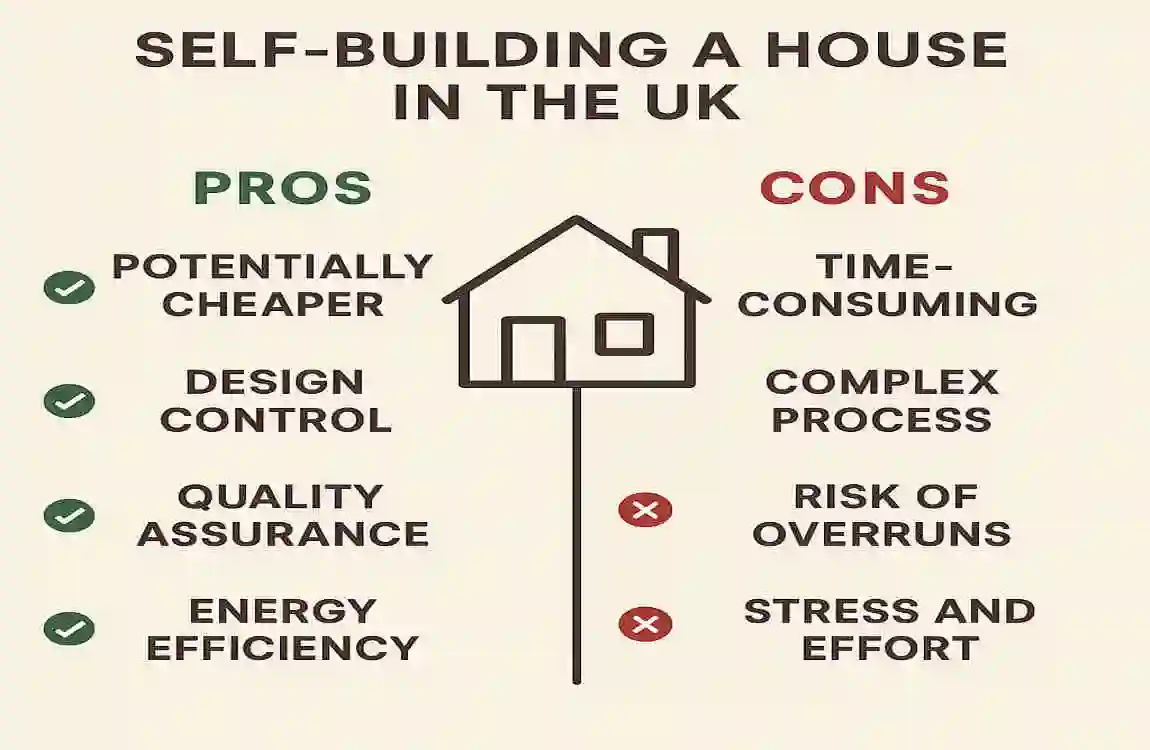
Every big decision has upsides and drawbacks. Let’s weigh them up.
Pros
- Customisation: Design your perfect home, inside and out
- Potential equity: Many self-builders see a value add of £100,000 or more if they manage costs well
- Energy efficiency: Modern builds can slash energy bills by £500 a year or more
- Satisfaction: The pride of creating a one-of-a-kind home
Cons
- Upfront capital: You need more cash at the start—no small deposits here
- Complexity: Planning, managing, and building take time and know-how
- Uncertainty: Delays and overspends are frequent
- Resale risk: Not every custom home finds a buyer easily)
Real UK Case Studies and Success Tips
Case 1: Yorkshire Kit Home
Sarah and Tom built a 3-bed kit home in Yorkshire. They found a plot for £70,000, used a modular system, and did some of the work themselves. Their total spend? £280,000—about 15% less than a similar new-build in the area.
Case 2: London Plot Flop
Jake bought a small plot in outer London for £350,000, expecting to build for £250,000. Delays, planning issues, and material costs meant the final bill was 30% over budget.
Top Tips for Self-Build Success
- Use the NaCSBA Self-Build Cost Calculator to plan
- Buy in cheaper regions (North, Wales, Scotland)
- Consider modular or kit homes for predictable costs
- Work with experienced professionals who know local rules
