

Whether you’re a new homeowner or you’ve lived in your home for years, knowing the basics of these systems can save you time, money, and stress.
Your home’s electrical and plumbing systems are the backbone of your daily life. Electricity powers your appliances, lights, and electronic devices, while plumbing provides clean water and removes waste. Together, these systems ensure your home is functional, comfortable, and safe to live in.
But, many homeowners overlook the importance of understanding these systems. Learning about “what is a house’s electrical plumbing” doesn’t mean you need to become an expert, but having a basic knowledge of how these systems operate can help you identify problems early, take preventive measures, and know when to call a professional.
What Is a House’s Electrical Plumbing?
Understanding the Term
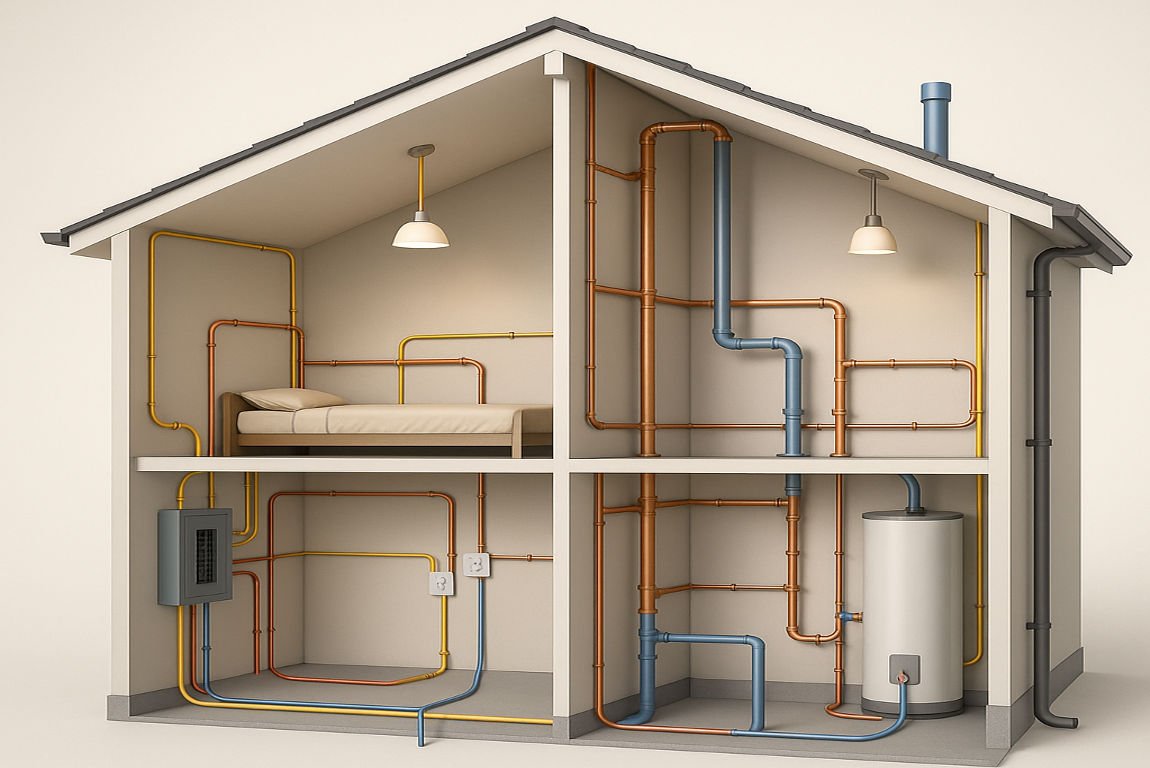
The term “house electrical plumbing” refers to the combined infrastructure of your home’s electrical wiring and plumbing systems. While these two systems may seem unrelated, they both play a crucial role in your home’s functionality and safety.
Your electrical system is responsible for distributing power throughout your home. It includes wiring, outlets, switches, circuit breakers, and all the electrical appliances you use daily. On the other hand, your plumbing system manages water flow—bringing clean water into your home and removing wastewater.
The Connection Between Electrical and Plumbing Systems
Although they are separate systems, there are points where electricity and plumbing intersect. For example:
- Electric water heaters use power to heat water.
- Garbage disposals combine plumbing and electrical components to function.
- Sump pumps rely on electricity to prevent water damage in basements.
Understanding these interactions is crucial for preventing hazards such as electrical shocks or water damage, as improper installation or maintenance can lead to hazardous situations.
Why Homeowners Should Care
When both systems operate efficiently, your home functions smoothly. However, issues in one system can sometimes affect the other. For instance, a plumbing leak near electrical wiring can pose a serious safety risk. By understanding the basics of these systems, you can better maintain your home, avoid costly repairs, and ensure the safety of your family.
Understanding Your Home’s Electrical System
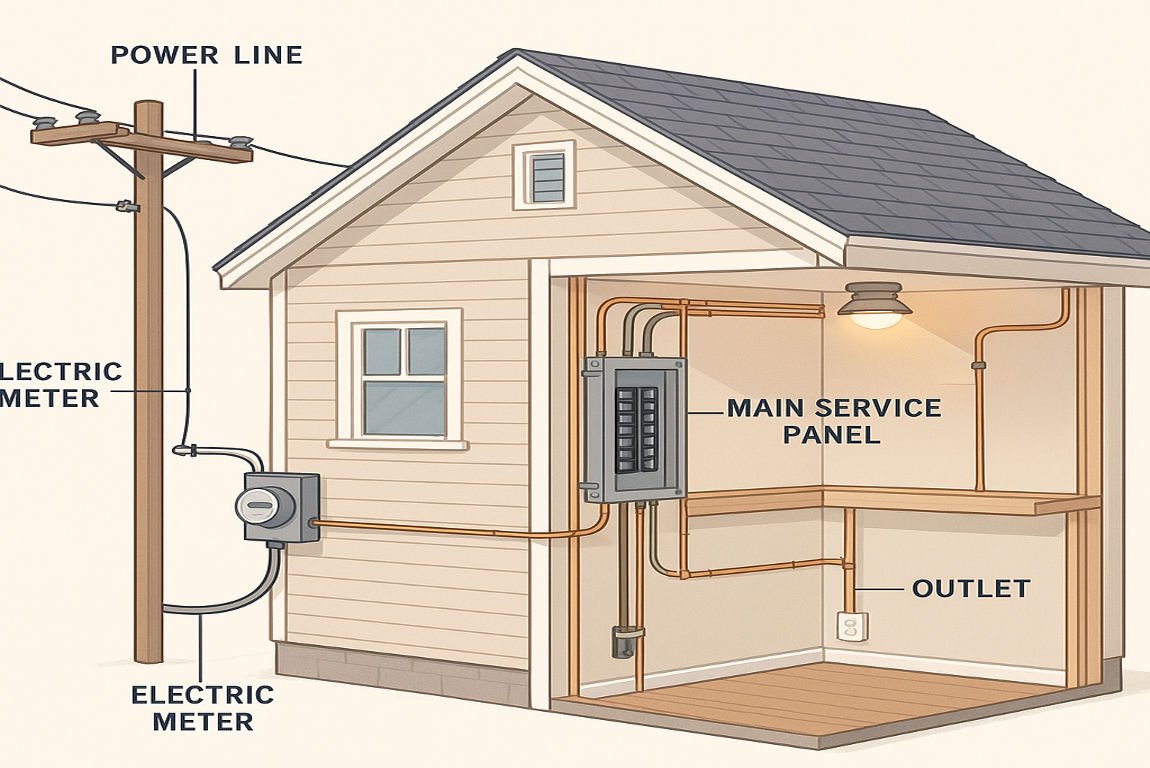
Your home’s electrical system powers everything from your kitchen appliances to your home office. Let’s explore the main components, common issues, and tips for staying safe.
Overview of Home Electrical Systems
Electricity enters your home through a utility connection, typically from a power line or underground cable. It passes through a meter that tracks your usage and then flows into the main breaker panel (also called a service panel).
From the breaker panel, electricity is distributed through circuits, which power different parts of your home. Each circuit is protected by a circuit breaker or fuse to prevent overloading.
You may also read (discovering your homes).
Key Components of Your Electrical System:
- Service Panel: The central hub for distributing electricity.
- Wiring: The network of cables that carries electricity to outlets, switches, and fixtures.
- Outlets and Switches: Points where you can access electricity for appliances and lights.
Key Electrical Components Explained
Circuit Breakers and Fuses
Circuit breakers protect your home by shutting off power when a circuit is overloaded. Fuses serve a similar purpose but are less common in modern homes.
Wiring Types
Most homes use copper wiring, which is durable and conducts electricity efficiently. Some older homes may have aluminum wiring, which requires special care due to fire risks.
Grounding and Bonding
Grounding provides a safe path for electricity to flow in the event of a fault, thereby reducing the risk of electrical shocks. Bonding ensures that all metal components in your home are at the same electrical potential, further enhancing safety.
Common Electrical Issues Homeowners Should Know
- Tripped Breakers: Often caused by overloaded circuits or short circuits.
- Flickering Lights: This may indicate loose connections or voltage fluctuations.
- Dead Outlets: This could result from a tripped breaker, loose wiring, or a damaged outlet.
How to Prevent Overloaded Circuits
- Avoid plugging too many devices into one outlet.
- Use power strips with surge protection.
- Distribute high-energy appliances across multiple circuits.
Electrical Safety Tips
- Schedule regular inspections by a licensed electrician.
- Avoid tampering with your electrical panel or wiring.
- Look out for warning signs like burning smells, buzzing sounds, or sparking outlets.
Understanding Your Home’s Plumbing System
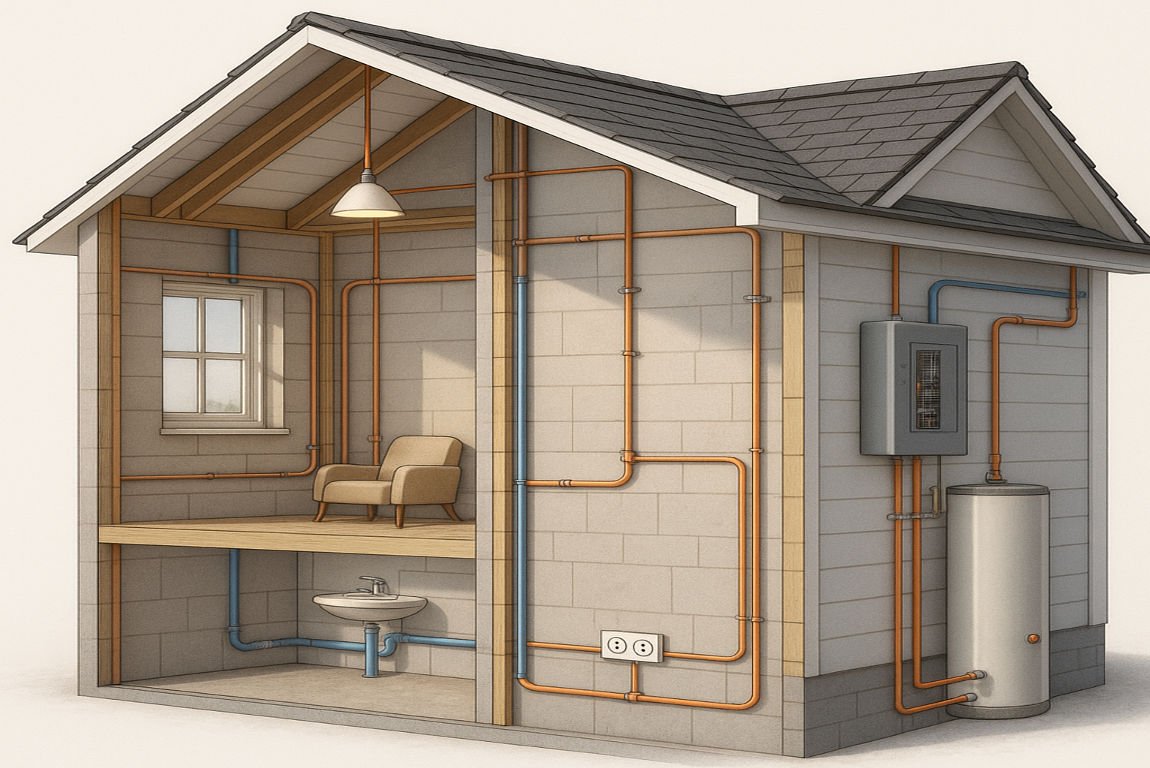
Your plumbing system is responsible for efficiently supplying water and removing waste. Here’s a closer look at how it works and what to watch for.
A. Overview of Home Plumbing Systems
Your home’s plumbing system consists of two main parts:
- Water Supply System: Delivers clean water from the main water line to faucets, showers, and appliances.
- Drain-Waste-Vent (DWV) System: Removes wastewater and vents sewer gases safely outside.
Water travels through a network of pipes, valves, and fixtures, while gravity helps the DWV system carry waste away.
Key Plumbing Components
Pipes
Pipes can be made from various materials, including PVC, copper, or PEX, each with its own advantages. For example, PVC is lightweight and affordable, while copper is durable and long-lasting.
Valves and Fixtures
Valves control water flow, while fixtures like faucets, toilets, and showers provide access to water.
You may also read (what is the best roof house).
Drain-Waste-Vent System
This system removes wastewater and prevents sewer gases from entering your home by venting them outside.
Common Plumbing Issues
- Leaky Faucets: Often caused by worn-out washers or seals.
- Clogged Drains: Typically due to hair, grease, or foreign objects.
- Low Water Pressure: This could result from pipe blockages or leaks.
- Burst Pipes: Often caused by freezing temperatures or aging pipes.
Plumbing Maintenance Tips
- Inspect pipes and fixtures regularly for leaks or corrosion.
- Use drain strainers to prevent clogs.
- Flush your water heater annually to remove sediment buildup.
How Electrical and Plumbing Systems Interact in Your Home
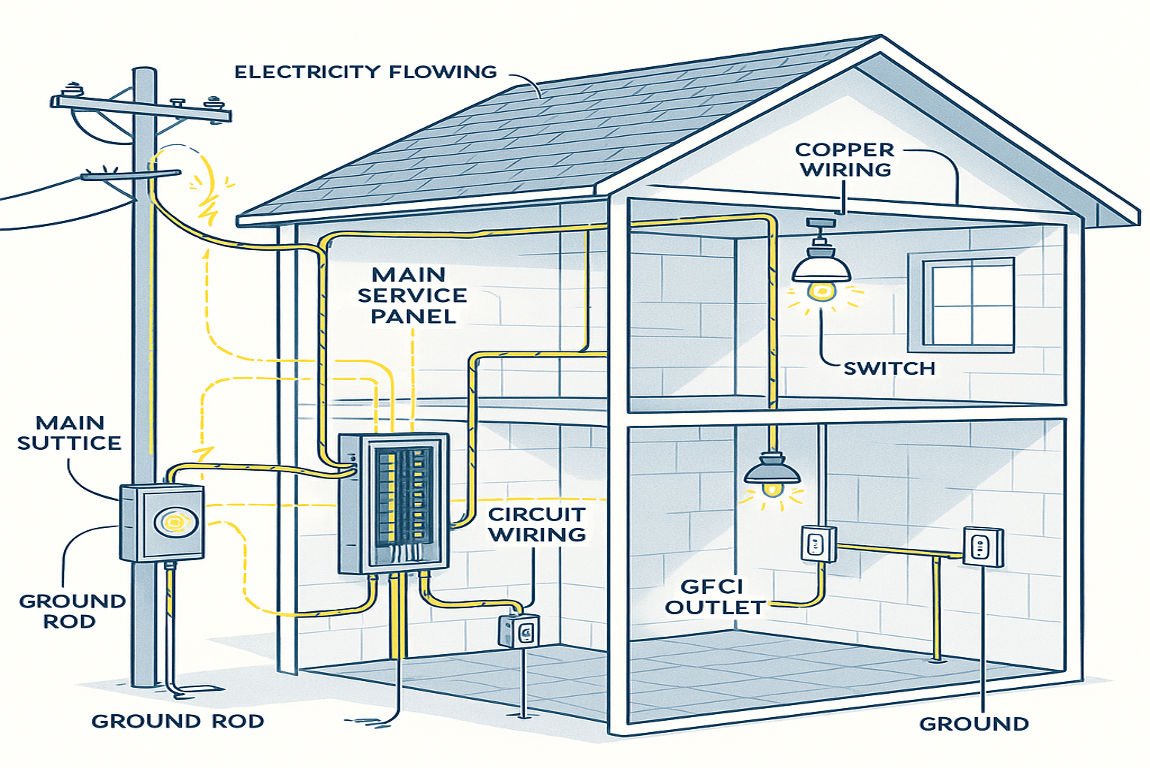
There are several points where electricity and plumbing intersect, such as:
- Water Heaters: Use electricity or gas to heat water for your home.
- Garbage Disposals: Require both plumbing and electrical connections.
- Sump Pumps: Protect your basement from flooding by pumping water out, powered by electricity.
Proper installation is crucial to prevent hazards like electric shocks or water damage. Always hire licensed professionals for these tasks.
Why Understanding Both Systems Matters for Homeowners
Knowing how your electrical and plumbing systems work allows you to:
- Spot potential issues early and avoid costly repairs.
- Perform basic maintenance to keep your home running smoothly.
- Communicate effectively with professionals when repairs are needed.
You may also read (master house plumber pricing what you need to know).
