
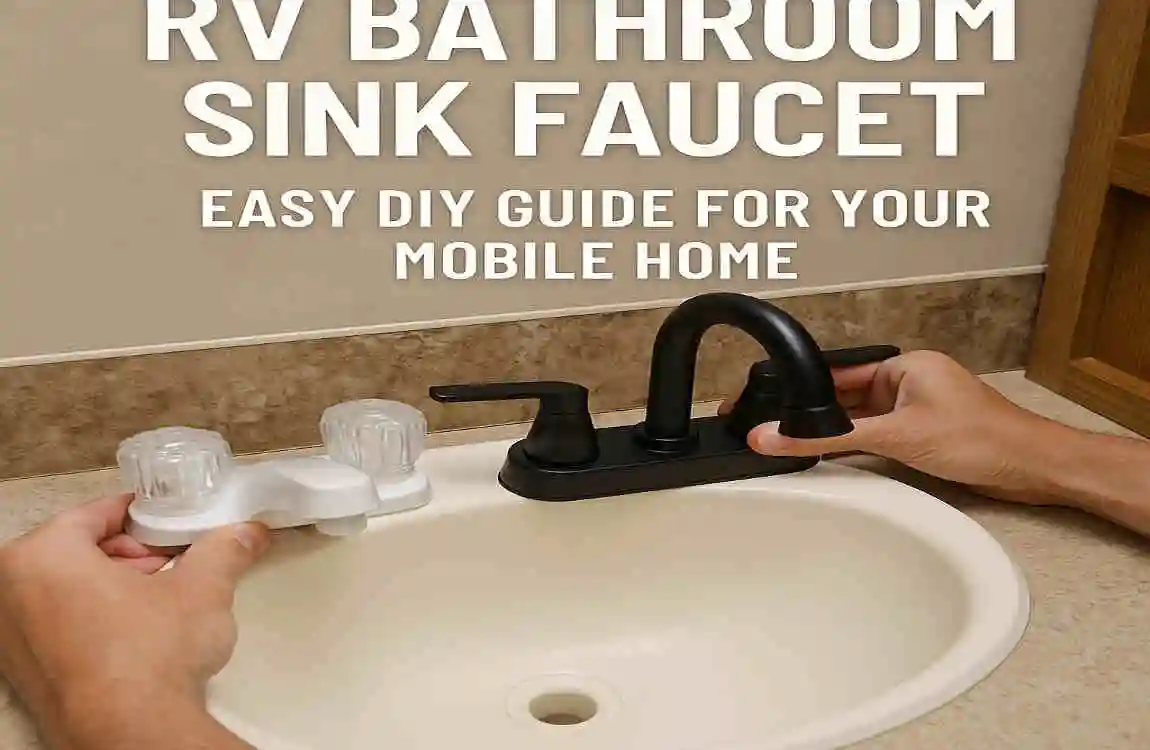
Picture this: You’re on the open road, pulling into your favorite campsite after a long drive. You head to the RV bathroom to freshen up, only to find water dripping everywhere from that stubborn sink faucet. Drip, drip, drip—it’s not just annoying; it’s turning your relaxing getaway into a soggy mess. If you’re like most RVers, you’ve dealt with this at some point. RV faucets take a beating from constant road vibrations, hard water from different campsites, and the compact setup of mobile homes. They wear out faster than your house faucet ever would.
Why Your RV Bathroom Sink Faucet Needs Replacing

RV life is all about adventure, but it comes with unique challenges for your bathroom fixtures. Those vibrations from bumpy roads, plus water quality that varies from site to site, make faucets fail more quickly than in a stationary home. Spotting the problem early keeps minor issues from becoming big headaches—like water damage under your sink or wasted water in your freshwater tank.
Common Symptoms of a Failing RV Faucet
You don’t need to be a plumber to know when it’s time for a change. Here are the top signs:
- Leaks around the base or handles: Water seeps out, pooling on the counter or dripping below. This is often due to worn seals or loose fittings—super common in RV sink faucet-leaking scenarios.
- Low water pressure: The flow trickles instead of spraying. Blame clogged aerators or internal corrosion from mineral buildup.
- Corrosion or rust: Hard water leaves stains, and plastic parts crack from constant use. In RVs, this wears out quickly due to travel wear.
- Wobbly or noisy operation: Handles feel loose, or it rattles when on. Vibration from driving loosens everything over time.
- Strange odors or discoloration: Bacteria buildup in old lines signals it’s past due.
If you’re nodding along, you’re not alone. Industry reports show that about 80% of RVers deal with faucet issues each year.
RV Faucets vs. Home Faucets: Key Differences
RV faucets aren’t built like the ones in your home kitchen. They’re smaller, lighter, and designed for compact spaces and lower water pressure. Here’s a quick comparison:
FeatureRV FaucetHome Faucet
Size 1.5-2 inch base, low-arc, larger bases, high-arc
Materials: Plastic, chrome-plated Stainless steel, brass
Pressure Low (12V pump systems) High (municipal lines)
Durability: Vibration-resistant but short lifespan. Heavy-duty, longer-lasting
Cost $40-150 $100-500+
These differences mean home fixes won’t cut it. RV models handle the mobile lifestyle better.
Cost Breakdown: DIY vs. Professional
Going DIY pays off big. Check this out:
OptionParts CostLabor CostTotalTime
DIY $50-150 $0 $50-150 1-2 hrs
Save cash and time while gaining skills for your next RV sink faucet DIY project. What’s holding you back?
Tools and Materials: What You’ll Need to Replace the RV Bathroom Sink Faucet
Gathering the right gear makes replacing an RV bathroom sink faucet a breeze—no need for a complete toolbox; just essentials for those snug RV cabinets. We’ll break it down into tools, materials, and faucet picks. Pro tip: Shop ahead so you’re not scrambling at a remote campsite.
Essential Tools
Here’s your must-have list, numbered for easy following:
- Adjustable wrench set: Grips various nut sizes under the sink. Get one with a narrow jaw for tight spots.
- Basin wrench: The RV hero! Its pivoting head reaches into cramped areas where regular wrenches fail.
- Plumber’s putty or Teflon tape: Seals connections to prevent leaks.
- Bucket and old towels: Catches drips and soaks up spills—safety first.
- Flashlight and gloves: Illuminate dark under-sink areas; gloves keep hands clean.
- Screwdriver set: For any escutcheon plates or handles.
These tools total under $50 if you don’t have them. Keep a checklist handy—snap a photo on your phone for quick reference.
Recommended Replacement Faucets
Pick a faucet that fits your RV’s vibe. Here’s a table of the top best RV faucets 2026, focusing on durability, water savings, and ease:
Faucet ModelPriceKey FeaturesBest For
Dometic 38515 $60 Single-handle, low-arc spout Compact RVs, daily use
Furrion Low-Pressure $45 Pull-out sprayer, chrome finish, Full-time RVers, cleaning
Moen Extend $120 Touchless sensor, extendable Luxury mobile homes, ease
Before buying, measure your sink hole—most are 1.5-2 inches. Look for lead-free models to keep water safe. Safety gear like gloves protects your hands from sharp edges.
Imagine finishing this upgrade with a faucet that looks new and flows perfectly. You’ve got the list—head to your local RV store or order online. Ready for prep?
Preparation Steps Before Replacing Your RV Sink Faucet
Jumping in without prep is like driving off without checking tires—risky. These steps ensure a smooth RV bathroom faucet replacement. Take 15-20 minutes here to avoid floods or stripped bolts.
First, shut off the water supply. Find your RV’s main pump switch or bathroom valves—usually under the sink or in a cabinet. Open the faucet to drain residual water and release pressure.
Next, clear the sink area. Remove soap dispensers, lotions, or drains if they block access. Lay down towels to protect the counter.
Test-fit your new faucet. Drop it into the hole loosely. Does it sit flush? Adjust if needed.
Here’s a quick checklist:
- Water off and drained?
- Area cleared and covered?
- Tools laid out nearby?
- New faucet measured and ready?
Double-check under the sink with your flashlight. Spot any corrosion? Note it for cleaning later. Safety first—wear gloves to avoid slips.
With prep done, you’re set for success. Now, the hands-on part awaits. Let’s remove that old clunker.
Step-by-Step Guide: How to Replace an RV Bathroom Sink Faucet
This is the heart of your DIY journey to replace the RV sink faucet. We’ll break it into clear steps with details for beginners. Work slowly in your RV’s tight space—patience wins. Total time: 1-2 hours. Grab your tools and let’s go!
Remove the Old Faucet
Start by accessing under the sink. Position your bucket to catch drips.
Disconnect the supply lines. Use the adjustable wrench to loosen the hot (red) and cold (blue) hoses from the faucet tailpieces. Turn counterclockwise. Water may trickle— that’s normal. Wipe lines clean with a towel.
Next, unscrew the mounting nut. This is where the basin wrench shines. Hook its jaws onto the plastic nut holding the faucet base. Twist counterclockwise while steadying the faucet from above. It might be tight from years of buildup—apply steady pressure, no hammering.
Lift out the old faucet. Wiggle it free from the sink deck. Scrape off old putty or caulk with a plastic scraper to avoid scratches. Clean the area with soapy water and dry thoroughly. Inspect for damage—cracked sinks need extra care.
Toss the old unit. Congrats—you’ve conquered removal!
Prepare the Sink Deck
A clean base ensures a leak-free seal.
Apply plumber’s putty. Roll a 1/4-inch rope around the new faucet’s base rim. Press it into the sink hole like dough—it squishes to fill gaps.
Insert the new faucet base. Push down firmly until it sits flush. Wipe away excess putty squeezed out from below.
This step takes 5 minutes but prevents 90% of leaks—test stability by gently rocking it.
install the New Faucet
Secure it tight.
Attach the tailpiece and nut. From below, slide the tailpiece (vertical pipe) through the base. Hand-tighten the mounting nut, then use the basin wrench for 1/4 more turn. Don’t overdo it—plastic cracks easily.
Connect water lines. Match hot to hot, cold to cold. Wrap threads with Teflon tape (clockwise) for a snug seal. Tighten with a wrench—snug, not superhero tight.
Hook up any sprayer hoses if your model has one. Stand back—does it look straight?
Test and Troubleshoot
Turn on the water pump slowly. Watch for leaks at every joint. Run hot and cold for 2 minutes.
If issues pop up, here’s your troubleshooting table:
IssueLikely CauseQuick Fix
Dripping, loose connections, tighten fittings gently
Low-pressure clogged aerator. Unscrew, clean, or replace
Vibration noise, unstable mount, add stabilizer clip
No hot water. Swapped lines. Switched hot/cold hoses
Leaking base, Poor putty seal. Remove, reapply putty
Fix as you go. Most resolve in minutes.
Final Touches and Maintenance
Caulk the edges. Run a thin bead of RV-safe silicone around the base for waterproofing. Smooth with a wet finger.
Ongoing tips: Clean aerators monthly. Winterize by draining lines. Check quarterly for wear.
Your faucet gleams! Step back and admire—you’ve nailed the steps for replacing the RV bathroom faucet.
Common Mistakes to Avoid When Replacing an RV Bathroom Sink Faucet
Even pros slip up, but you can sidestep these pitfalls in your “How-to Replace an RV Bathroom Sink Faucet project. Learn from others’ oops moments.
- Forgetting to depressurize lines: Water sprays everywhere. Always drain first.
- Picking the wrong-size faucet: Measure twice—RV holes range from 1 to 3 inches.
- Over-tightening nuts: Cracks plastic sinks or strips threads. Snug is enough.
- Skipping plumber’s putty: Leads to leaks. Don’t rely solely on factory seals.
- Ignoring under-sink access: Move cabinets if needed; a mirror helps see.
- Not testing thoroughly: Run water hot/cold multiple times before packing up.
- Using household tools: a basin wrench is non-negotiable for RVs.
Best Faucets and Upgrades for RV Bathroom

Upgrading? Best RV faucets 2026 focus on water efficiency, lead-free builds, and innovative features for mobile life. Here’s a pros/cons table:
Faucet ModelProsConsPrice
Dometic 38515 Compact, easy install, affordable Basic design $60
Furrion Sprayer, durable chrome Slightly pricier hoses $45
Moen Extend Touchless, retractable Needs steady power $120
