

Imagine stepping into your basement and taking a deep breath of fresh, clean air instead of that musty, damp smell that hits you like a wall. If you’re like many homeowners, your basement might feel more like a forgotten storage space than a livable area, thanks to poor air quality. But here’s the good news: learning how to improve basement air quality doesn’t have to be complicated. With some innovative strategies, you can transform it into a healthier spot for your family.
Did you know that basements can trap two to five times more moisture than the upper levels of your home? This leads to mould issues in about 70% of households. That’s a startling fact. High humidity and stale air down there aren’t just annoying—they can affect your respiratory health, trigger allergies, and even lower your home’s value over time. Think about it: who wants to deal with sneezing fits or costly repairs? By tackling these problems head-on, you could reduce allergy symptoms by up to 50% and avoid mould remediation bills that often exceed $5,000.
Why does this matter so much? Well, your basement air quality directly impacts the overall health of your home. Poor ventilation lets pollutants build up, turning a cosy retreat into a breeding ground for issues. Whether you’re using the space as a home gym, playroom, or just extra storage, cleaner air means fewer health worries and a more enjoyable environment. Plus, it boosts your property’s appeal if you ever decide to sell.
Why Basement Air Suffers

Basements often struggle with air quality. They’re usually below ground level, which means they’re prone to issues that don’t plague the rest of your house. Have you ever noticed how the air down there feels heavier or smells off? That’s no accident—it’s due to a mix of factors that trap moisture and pollutants.
First off, moisture is the biggest culprit. Water can seep in from the ground, especially if your drainage isn’t up to par. Things like laundry exhaust or even a leaky pipe add to the dampness. Without proper control, humidity levels can spike above 60%, creating a perfect storm for problems.
Then there’s the buildup of pollutants. Mould spores, which are tiny particles measuring 2 to 10 microns, thrive in moist environments. Add in radon gas that sneaks up from the soil, or pet dander that settles in corners, and you’ve got a recipe for unhealthy air. Dust from stored items doesn’t help either.
Ventilation is another weak spot. Many basements lack windows, and modern homes are built tighter for energy efficiency—think post-2020 building codes that seal everything up. This means air doesn’t circulate well, leading to stagnant spots.
To break it down, here are some key issues in a simple bullet list:
- High CO2 levels from people spending time down there make the air feel stuffy.
- VOCs (volatile organic compounds) from paints, fuels, or cleaners stored in the basement—these are like invisible fumes that linger.
- Stagnant air circulation, where fresh air can’t push out the old, polluted stuff.
Picture this: your basement versus the upstairs. The differences are stark, and understanding them can motivate you to act. Check out this comparison table for a clear view.
Issue: Basement Levels, Upper Floors, Solution Preview
Humidity % 60-80% 30-50% Dehumidifiers
Mould Risk High Low Ventilation
Allergens (ppm) 2x higher Baseline Air Purifiers
CO2 Levels Elevated Normal Exhaust Fans
VOC Concentration High Low Sealing and Cleaning
Seeing these numbers, doesn’t it make you want to fix things? By addressing these root causes, you’re setting the stage for real improvements. Now, let’s move on to those 10 expert tips that will help you improve basement air quality step by step.
10 Expert Tips to Improve Basement Air Quality
Ready to take action? These tips are designed to be practical and effective. Each one builds on the last, so think of them as a toolkit for fresher air. We’ll explain why they work, how to do them, and even some quick wins. Remember, consistency is key—start small and build from there.
install a High-Quality Dehumidifier
When it comes to improving basement air quality, a dehumidifier is your first line of defence. It tackles the core issue of excess moisture, aiming for that sweet spot of 30-50% relative humidity (RH). Why does this matter? High moisture feeds mould and makes the air feel clammy, but lowering it can make your basement feel like a whole new space.
Start by choosing the correct size. For a 1,000-square-foot basement, go for a unit that handles at least 70 pints of water per day. Place it centrally, away from walls, so that it can pull in air from all sides. Opt for models with auto-drain features to avoid constantly emptying buckets.
Maintenance is simple but crucial. Clean the filter monthly to keep it running efficiently. Expect to spend $200 to $400 upfront, but the return on investment is huge—mould prevention can happen in just weeks, saving you from expensive fixes.
Have you checked the humidity in your basement lately? Grab a hygrometer to measure it, then install a dehumidifier today. You’ll notice the difference in how fresh the air feels almost immediately.
Boost Ventilation with Exhaust Fans
Ventilation is essential for pushing out stale air and bringing in fresh air. Exhaust fans, rated at 50-100 cubic feet per minute (CFM), are perfect for this. They remove moist air from high-humidity areas like bathrooms and laundry rooms, directly addressing basement humidity control.
Install one by mounting it in the ceiling or on a wall and venting it to the outside. Pair it with a timer so it runs for 20-30 minutes after use. This prevents moisture from lingering and reduces the risk of mould.
Think about it: without good airflow, pollutants hang around. A fan changes that dynamic, creating a healthier environment. Costs are low—around $50-150—and installation is often a DIY job.
Why not try this in your space? If you’ve got a damp corner, an exhaust fan could be the quick fix you need to improve basement ventilation.
Use HEPA Air Purifiers
For capturing those tiny particles that irritate your lungs, a HEPA air purifier is a game-changer. It traps 99.97% of particles as small as 0.3 microns, including dust, pollen, and mould spores. Add a carbon filter for odours, and you’ve got a powerhouse for basement air purifier needs.
Place it in a central spot and run it 24/7 on medium speed. Change filters every 3-6 months to maintain effectiveness. This isn’t just about cleaning air—it’s about making your basement allergy-friendly.
Picture breathing easier without that constant stuffiness. Units cost $100-300, but they pay off by reducing health issues. If allergies plague your family, this tip is for you. Give it a shot and feel the clarity.
Seal Cracks and Leaks
Moisture sneaks in through the tiniest openings, so sealing them is key to preventing basement mould. Waterproof sealants block water entry, keeping humidity in check.
Inspect your foundation quarterly for cracks—look along walls and floors. Use a caulk gun to apply sealant, focusing on gaps around windows or pipes. For bigger issues, consider professional help.
This step prevents water damage and the influx of pollutants. It’s affordable, with sealants under $20, and the peace of mind is priceless.
Add Transfer Grilles for Airflow
Dead zones in your basement trap bad air, but transfer grilles create cross-circulation. These are like vents that let air move between rooms without major renovations.
Install 10×10-inch grilles in doors or walls for a DIY fix. They allow fresh air from upstairs to mix in, improving overall flow.
This boosts improve basement ventilation without fans or windows. It’s simple and effective for sealed spaces.
Try adding one today— you’ll wonder how you lived without that better airflow.
Choose Mould-Resistant Materials
During renovations, opt for materials that resist dampness. Mould-resistant drywall and paint create barriers, while vinyl flooring resists water absorption.
Replace old, porous surfaces with these upgrades. They prevent spore growth by staying dry.
This long-term strategy enhances mould prevention in basements. Costs vary, but it’s worth it for durability.
Planning a basement makeover? Make these choices to maintain high air quality.
Maintain HVAC Filters
Your home’s heating and cooling system recirculates air, so clean filters are vital. Change them quarterly to reduce dust and allergens.
Extend ducts to the basement if needed for better coverage. This cuts down on pollutant spread.
Regular maintenance improves efficiency and air purity. It’s an easy habit that makes a big difference.
Set a reminder now—your lungs will thank you.
Open Windows Strategically
Passive ventilation through windows brings in outdoor air, but only on dry days with humidity below 60%. Use screens to block pollen.
Open them for a few hours to refresh the space, especially in milder weather.
This free method supports how to improve basement air quality without equipment.
Give it a try on the next sunny day and feel the natural boost.
Regular Cleaning Routine
Dust and mould hide in corners, so a weekly routine keeps them at bay. Use a HEPA vacuum and disinfect surfaces.
Focus on shelves, floors, and hidden spots. This removes allergens directly.
Consistency here maintains gains from other tips. It’s hands-on but rewarding.
Start your routine this weekend—what’s stopping you?
Monitor with Hygrometers
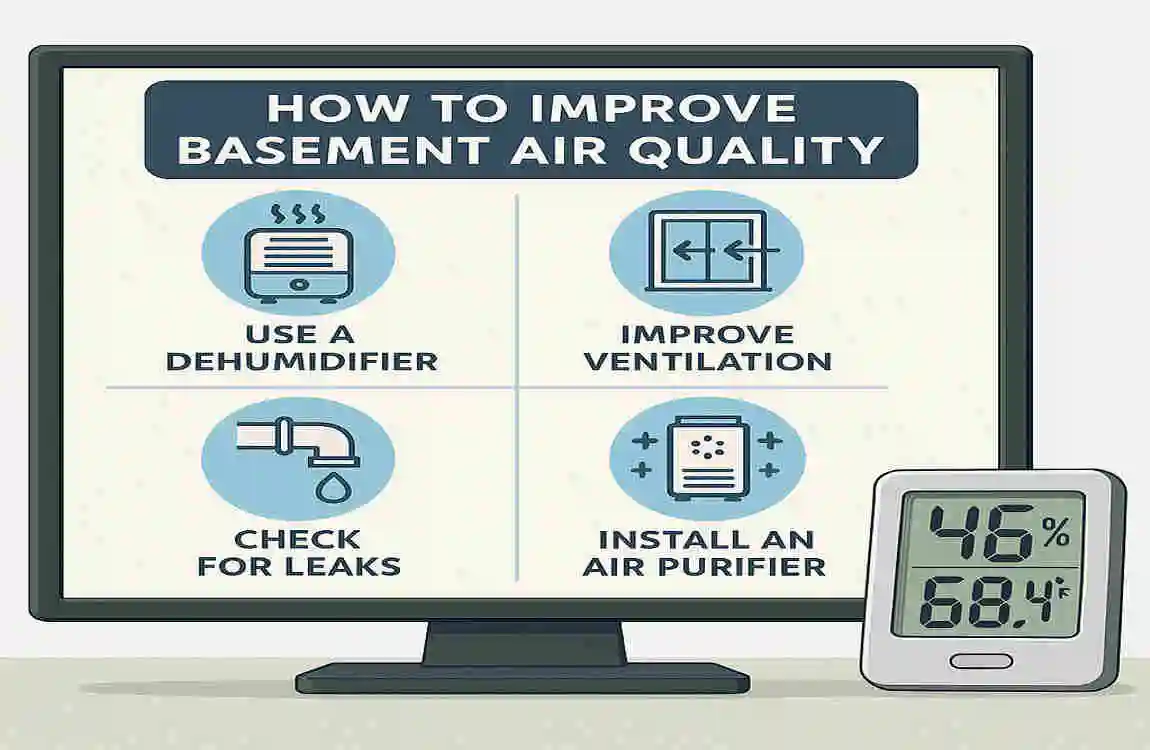
Knowledge is power, so use digital hygrometers to track humidity and radon levels. Set alerts for RH above 50%.
Place them around the basement and check daily. Pair with annual radon tests.
This proactive step ensures you catch issues early, tying into all aspects of basement humidity control.
Invest in one today—it’s your air quality watchdog.
Implementation Checklist
To make these tips stick, here’s a handy checklist. Print it out, pin it up, and check off as you go. It turns big ideas into bite-sized actions, helping you stay on track.
install the dehumidifier once the hygrometer
Add an exhaust fan, once a 50 CFM unit
Set up the HEPA purifier. Once the replacement filters
Seal cracks and leaks Quarterly Waterproof sealant
install transfer grilles. Once Grilles and tools
Upgrade to mould-resistant materials during renovations. Drywall/paint
Change HVAC filters Quarterly, New filters
Open windows strategically, as needed, Screens
Perform a cleaning routine, Weekly HEPA vacuum
Monitor with hygrometers, Daily Digital device
Sharing this checklist with friends? It could spark some great conversations about home improvements.
