

Plumbing is the backbone of any home, ensuring that water flows seamlessly to and from your taps, showers, and appliances. However, like most systems, plumbing pipes don’t last forever. Identifying bad house plumbing pipes early can save you from costly repairs, water damage, and even health hazards.
Understanding Different Types of House Plumbing Pipes
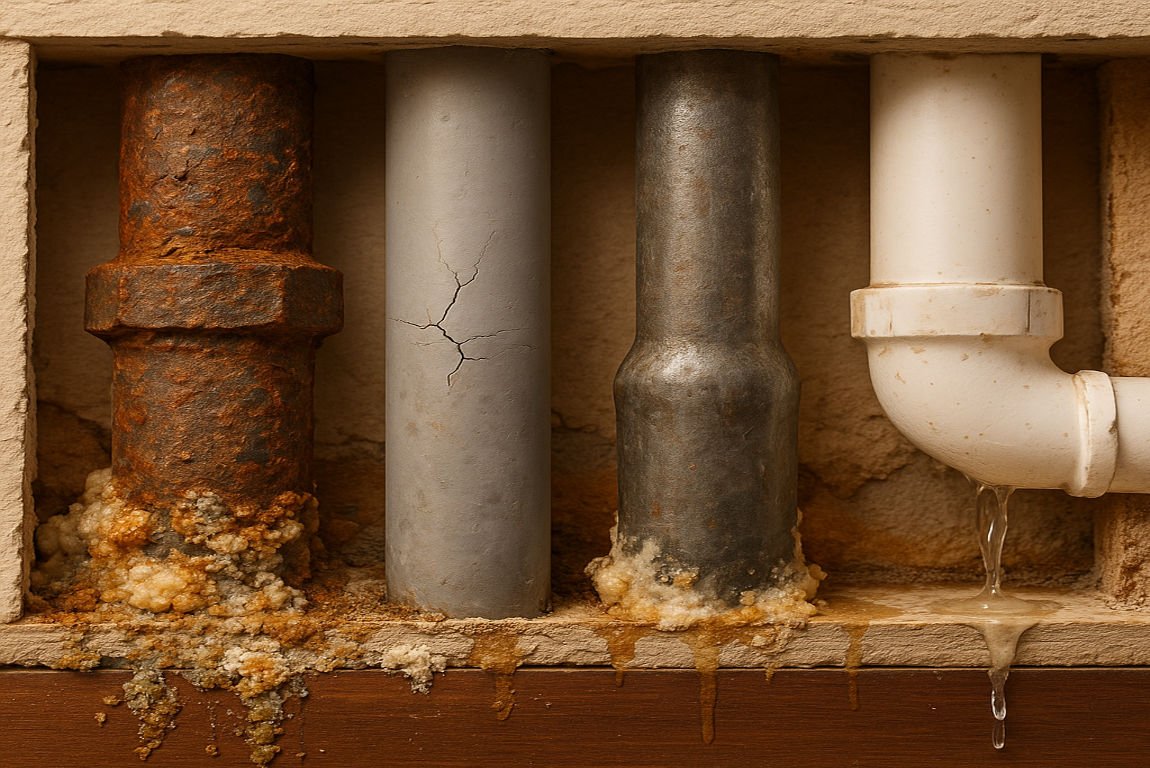
Not all plumbing pipes are created equal. Some materials age better than others, while certain types of pipes are notorious for causing problems.
Common Plumbing Pipe Materials
Here’s a breakdown of the most common materials used in plumbing systems:
Pipe MaterialTypical LifespanCommon Issues
Copper 50+ years Corrosion, pinhole leaks, green stains
Galvanized Steel 20-50 years Rust, corrosion, clogs
PVC (Plastic) 50+ years Cracking, brittleness over time
Cast Iron 50-100 years Rust, heavy sediment buildup, cracking
Lead 100+ years Toxicity, health hazards
Which Pipes Are Prone to Problems?
- Galvanized Steel Pipes: These pipes, commonly used in older homes, are prone to rust and corrosion, which can restrict water flow and lead to leaks.
- Lead Pipes: Though durable, lead pipes are highly toxic and should be replaced immediately if found.
- Old Cast Iron Pipes: While strong, cast iron pipes are susceptible to rust and cracking over time.
Knowing the material and age of your pipes is the first step to identifying what house plumbing pipes are bad in your home.
Common Signs That Indicate Bad Plumbing Pipes
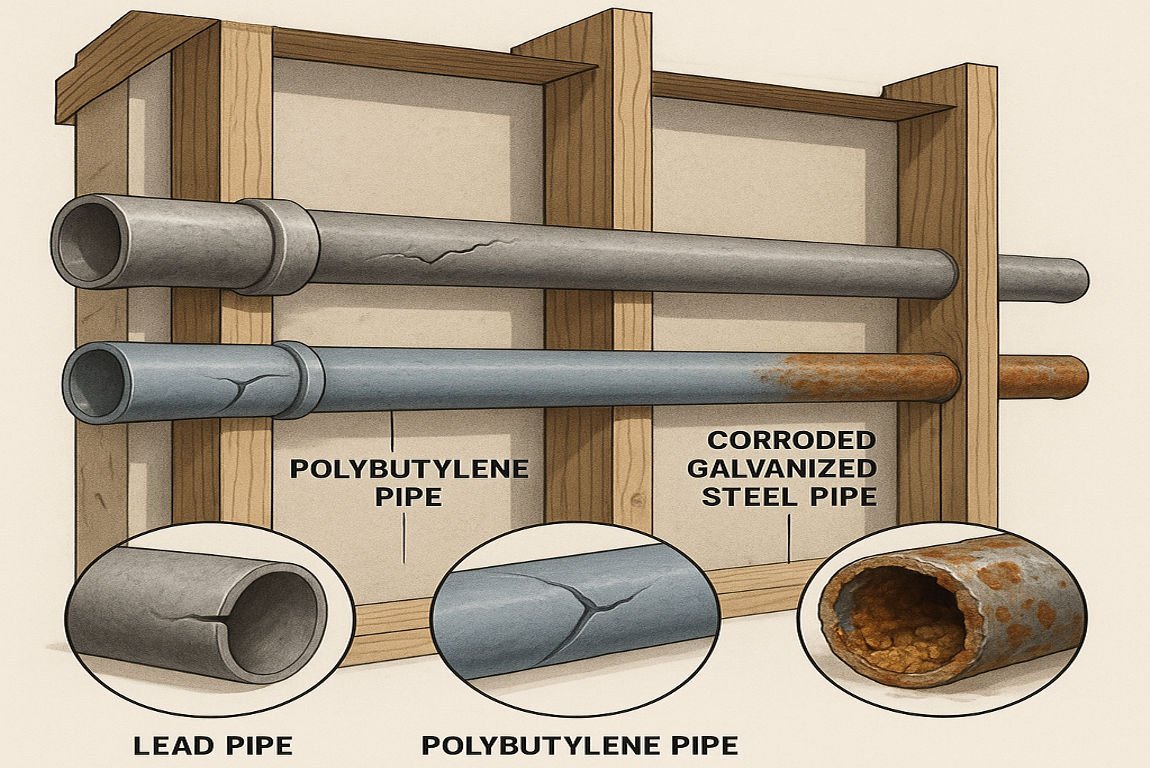
Your plumbing system often gives warning signs before major issues arise. Being vigilant can help you spot trouble early.
You may also read (how to understand the history of home plumbing).
Visible Pipe Damage
Inspect your pipes for:
- Corrosion and rust: These are clear indicators that the pipe material is deteriorating.
- Flaking or discoloration: This may signal internal damage.
- Pinhole leaks or dimples: Small leaks can worsen over time, leading to significant water loss.
Water Discoloration
- Brown or yellow water often indicates the presence of rust in galvanized steel pipes.
- Green-tinted water may indicate copper pipe corrosion.
Discolored water is a clear warning that your plumbing pipes are not in good condition.
Low or Uneven Water Pressure
- A sudden drop in pressure could mean sediment buildup or blockages inside the pipes.
- Uneven pressure in different faucets might indicate localized pipe damage.
Strange Noises
If your pipes are making odd sounds, such as:
- Whistling or screeching could mean that the water flow is restricted.
- Rattling or banging, which indicates loose or poorly secured pipes.
- Gurgling is often caused by blockages in drainage pipes.
Frequent Leaks
If you’re constantly fixing leaks, it’s a sign the pipes are reaching the end of their lifespan.
Signs in Your Home’s Walls and Floors
- Water stains, bubbling paint, or peeling wallpaper are signs of hidden leaks.
- Soggy spots or unusually lush patches in your yard could indicate underground pipe leaks.
Mold, Mildew, and Odors
Persistent leaks create damp environments that foster the growth of mold and mildew. If you notice musty odors or visible mold, check for bad plumbing pipes.
Why Certain Pipes Are Considered “Bad” for Your Home
Some pipes are inherently problematic due to their material, age, or susceptibility to damage.
Problematic Pipe Materials
- Lead Pipes: While durable, lead pipes leach toxic particles into the water, posing serious health risks, especially for children.
- Galvanized Steel Pipes: These pipes corrode over time, leading to rust, water contamination, and restricted flow.
- Old Cast Iron Pipes: Though long-lasting, they can crack and cause sediment buildup.
The Effects of Aging Pipes
As pipes age, they become more prone to:
- Corrosion that weakens the material.
- Sediment buildup that lowers water quality and pressure.
- Displacement due to shifting soil or poor installation.
Ignoring old or substandard pipes can result in water contamination, structural damage, and costly repairs.
How to Inspect Your Home Plumbing for Bad Pipes

A thorough inspection can help you spot potential issues. Here’s how to do it:
Step-by-Step Visual Inspection
- Check accessible pipes under sinks, basements, and crawl spaces.
- Look for:
- Rust patches
- Flaking or discoloration
- Moisture stains or leaks
Check Water Quality and Pressure
- Run your taps and observe the color and clarity of the water.
- Test water pressure to identify blockages or pipe damage.
Tools for Deeper Inspection
- Sewer cameras: Useful for inspecting underground pipes.
- Moisture meters: Detect hidden leaks behind walls.
You may also read (5 essential devices to prevent backflow in your home).
When to Call a Professional
If you’re unsure about the condition of your pipes, hire a licensed plumber to conduct a comprehensive inspection.
Consequences of Ignoring Bad Plumbing Pipes
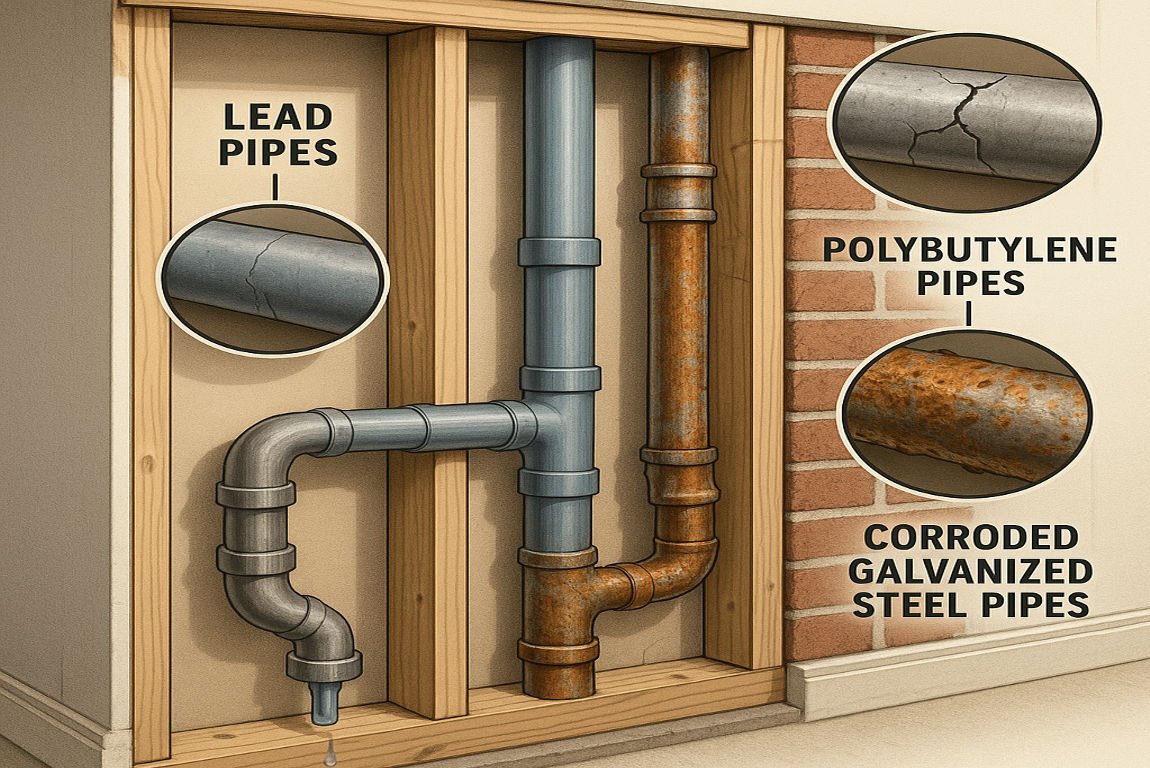
Failing to address bad pipes can lead to severe consequences, including:
- Water Damage: Leaks can ruin walls, floors, and even foundations.
- Mold Growth: Persistent dampness creates an ideal environment for mold.
- High Water Bills: Hidden leaks waste water and increase costs.
- Burst Pipes: Old, weakened pipes can burst, causing flooding and extensive damage.
Ignoring the signs of bad plumbing pipes can cost you far more in the long run.
Solutions and Next Steps When You Identify Bad Pipes
When you discover bad plumbing pipes, it’s essential to act quickly.
Repair vs. Replacement
- Repairs are suitable for minor issues, such as localized leaks or small cracks.
- Full replacement is necessary for old, corroded, or toxic pipes, such as lead or galvanized steel.
Modern Pipe Materials
Consider upgrading to:
- PEX Pipes: Flexible, durable, and resistant to freezing.
- PVC Pipes: Affordable, lightweight, and long-lasting.
- Copper Alternatives: Safer and more corrosion-resistant than older materials.
Preventive Maintenance
- Schedule regular plumbing inspections.
- Address minor issues before they escalate.
- Install water softeners to reduce mineral buildup.
You may also read (is moving house).
