
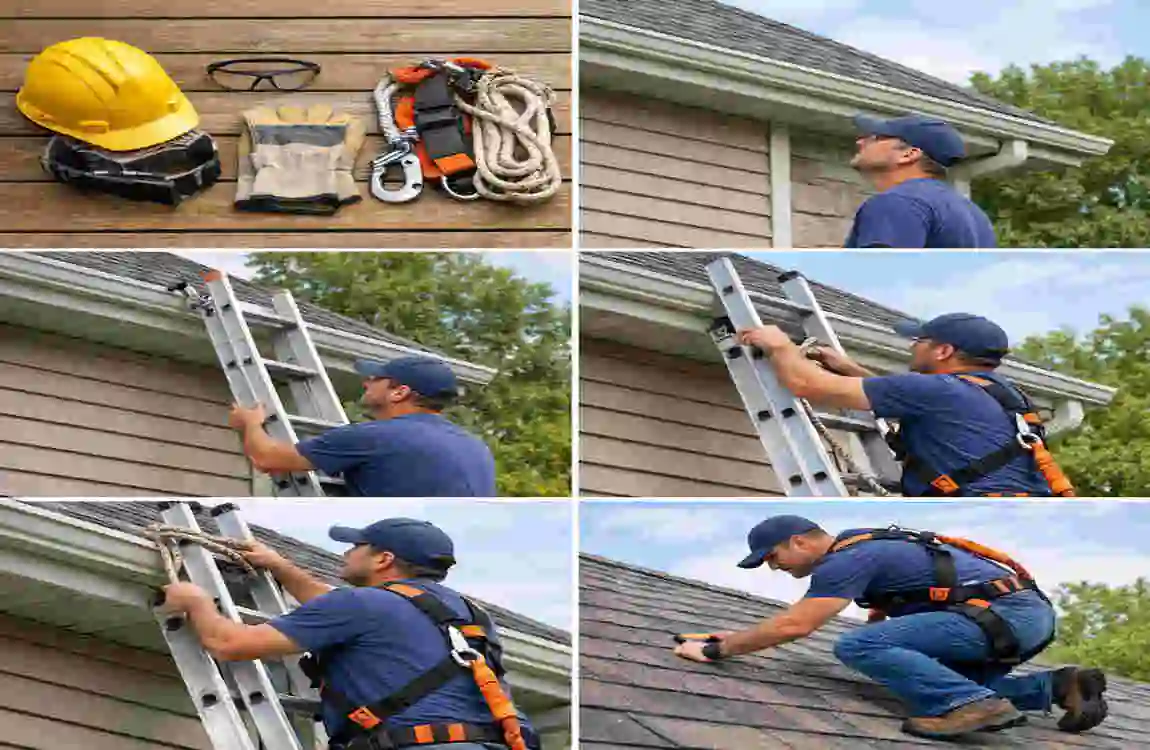
Maybe you want to clean the gutters, check for storm damage, remove a branch, inspect a leak, or look at your solar panels. These are common jobs for homeowners. But even a “quick look” can turn dangerous if you rush the process or skip basic precautions.
That is why getting onto the roof safely matters so much. A roof is not like a patio, driveway, or attic floor. It is elevated, angled, exposed to weather, and often more fragile than it looks. One wrong step, one unstable ladder, or one slippery patch can lead to a serious fall or expensive damage.
Many homeowners make the same mistake. They tell themselves, “I’ll only be up there for a minute.” That mindset is exactly what causes accidents. The truth is that how to get onto your roof safely is not about courage or balance alone. It is about planning, equipment, timing, and technique.
Why Roof Safety Matters for Homeowners
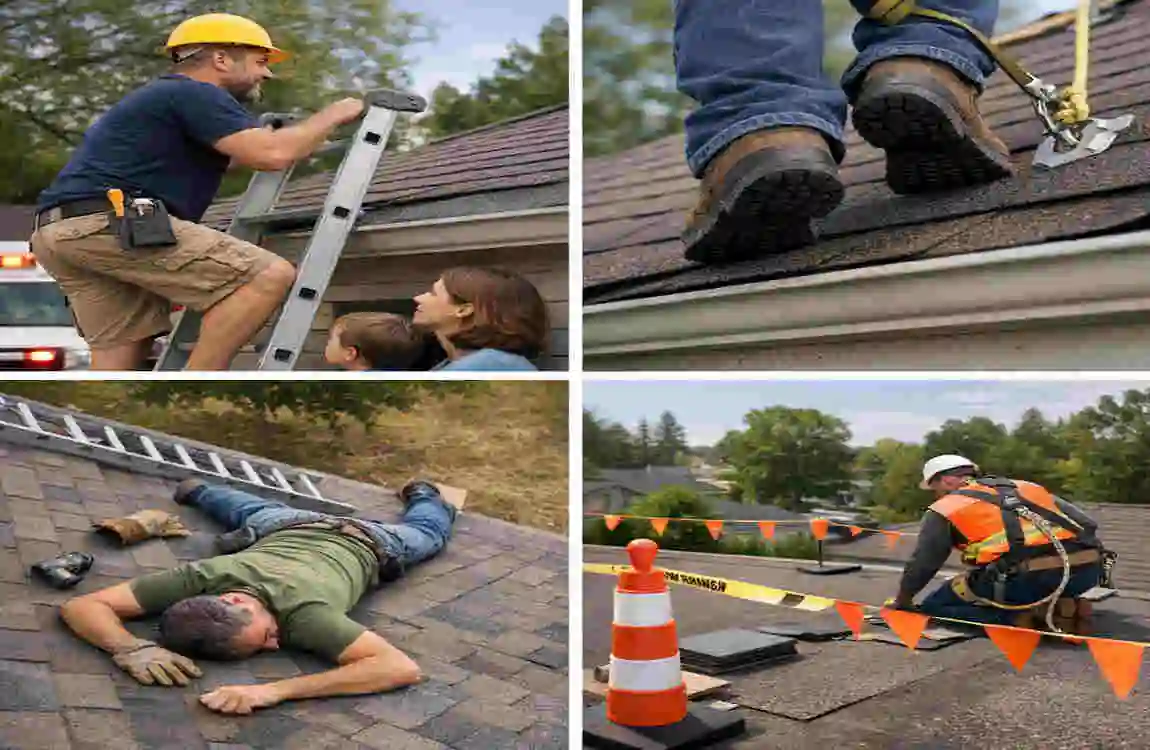
Roof work causes more injuries than many people realize.
Falls are the biggest danger, but they are not the only one. Homeowners can also slip on loose shingles, crack brittle tiles, step through weak decking, touch power lines with ladders, or lose balance while reaching too far. Even a low roof can be dangerous if you land badly.
The problem is that roofs feel familiar. It is your own house, after all. That sense of comfort can lower your guard. People often take more risks at home than they would at a commercial site or construction area. They skip gloves, use an old ladder, or go up in bad weather because they want to finish one quick job.
There is also a cost angle to think about. A fall can lead to medical bills, time off work, and long recovery periods. Damaging your roof while walking on it the wrong way can lead to repair bills, too. If someone helps you and gets injured because of an unsafe setup, liability can become a real issue.
Simply put, getting onto the roof safely reduces fall risk and prevents costly accidents. It protects your health, your home, and your peace of mind.
You do not need to be scared of your roof. But you do need to respect it. The moment you treat roof access as a proper safety task, you make better decisions from the start.
When You Should and Shouldn’t Go onto Your Roof
Not every roof job should be a DIY job.
Some tasks are reasonable for a careful homeowner. Others are best left to trained roofers with specialized equipment. Knowing the difference is one of the smartest parts of getting onto the roof safely.
Tasks Homeowners Can Usually Handle
In some cases, going onto the roof can make sense if the roof is low, the weather is good, and the surface is stable.
A homeowner may be able to do a quick visual inspection after a storm, look for missing shingles, check the vent flashing, or clear a small amount of light debris. Some people also handle minor gutter cleaning when the edge is easy to reach, and the ladder can be set up securely.
The keyword here is minor. If the job is small, simple, and low-risk, it may be manageable with proper preparation.
Tasks You Should Leave to Professionals
Some jobs should not be handled without training.
Large repairs, roof leak investigations, replacing tiles, storm-damage cleanup, carrying heavy materials, or working on steep roofs can quickly become dangerous. Fragile roofing materials, weak decking, and high rooflines add even more risk.
If your roof is older, cracked, sagging, or already damaged, walking on it could make things worse. In those cases, the safest move is not to “be careful.” The safest move is to stay off the roof.
Red-Flag Conditions That Mean “No”
Even simple tasks become unsafe in the wrong conditions.
Do not attempt to get onto the roof safely if any of these apply:
- The roof is wet, icy, frosty, or dusty
- Winds are strong enough to affect balance
- The ladder cannot sit on firm, level ground
- Roof edges look damaged or soft
- Tiles or shingles are loose
- You feel tired, rushed, or unwell
- There are nearby power lines
- You will be working alone, with nobody aware
Only attempt roof access when both the weather and the roof condition allow it. If either one is questionable, wait or call a pro.
Understanding Your Roof Type
Not all roofs behave the same way under your feet.
A major part of getting onto a roof safely on tile vs metal vs flat roofs is understanding the surface you are stepping onto. The same movement that feels fine on one roof could cause a slip or crack on another.
Pitched Tiled Roofs
Tile roofs, whether clay or concrete, can look strong but may be more fragile than they seem.
Individual tiles can crack if stepped on the wrong way. Some may already be loose from age or weather. On many tiled roofs, the safest place to put weight is along stronger support lines rather than in the middle of the tile surface.
These roofs can also be steep, which increases the risk of sliding. If the pitch is sharp, a harness becomes much more important.
Metal Roofs
Metal roofs are durable, but they can be very slippery.
Standing-seam metal roofs usually have raised seams that may offer better stepping guidance. Corrugated panels also have structural lines, but smooth painted metal can become dangerously slick, especially with dust, moisture, or morning dew.
On metal roofs, it is often safer to move along seams or areas supported beneath, not across open flat sections. You should also watch for heat buildup. In sunny weather, metal can become extremely hot and uncomfortable very quickly.
Flat or Low-Slope Roofs
Flat roofs feel safer because they are flatter, but that can be misleading.
They may hide soft spots, water pooling, weak membranes, or surface damage. A flat roof is not always designed for regular foot traffic. Some membranes puncture more easily than homeowners expect.
Low-slope roofs also create a false sense of security. You might move too casually, carry too much, or ignore edge safety because it “doesn’t feel steep.”
Quick Roof-Type Safety Comparison
Roof Type, Main Risk, Where to Step, Best for DIY Access?
Tile roof, Cracking tiles, slipping on slope, Near structural support lines, not loose edges. Sometimes, if low and stable.
Metal roof Slippery surface, heat Along seams or supported sections Only in dry, calm conditions
Flat/low-slope roof Soft spots, hidden damage, edge falls Designated walk paths or visibly solid areas Often easier, but still requires care.
Before you climb, take a moment to identify your roof type. That one step helps you plan how to move, where to place your feet, and whether the job is worth doing yourself at all.
Essential Safety Gear for Getting onto the Roof Safely
The right gear does not make you invincible, but it significantly lowers your risk.
If you are serious about getting onto the roof safely, do not treat equipment as optional. Even small jobs deserve the right basics.
Must-Have Safety Gear
Start with your shoes.
You need non-slip, rubber-soled footwear with good grip. Avoid smooth-soled sneakers, sandals, worn work boots, or anything loose around the foot. Your shoes are your point of contact with the roof, so they matter more than most people think.
Next, wear sturdy work gloves. Gloves improve grip on ladders, protect your hands from rough surfaces, and help when handling gutter debris, branches, or metal flashing.
A helmet or hard hat can also make sense, especially if you are working around tools, tree limbs, or hard surfaces. While not every homeowner uses one, it adds another layer of protection.
For higher roofs, steeper pitches, or repeat access, use a safety harness with a proper anchor point. This is especially important if a slip could lead to a long or direct fall.
Useful Extras That Make the Job Safer
A few extra items make the work smoother and safer.
A tool belt helps keep both hands free. That matters a lot on a ladder. You can also tie tools off with cords to prevent them from dropping.
A rope-based support system or fall-arrest system adds protection if you are doing more than a quick look. If you are using one, make sure every component is rated for fall protection and installed correctly.
Eye protection may help when clearing dusty gutters or working near branches. A long-sleeve shirt can protect against scrapes and sun exposure.
Simple Rule to Remember
Always wear proper safety gear when getting onto the roof. The idea is simple: if you would regret not having it after one bad step, wear it before you climb.
Choosing and Positioning the Right Ladder
A roof job often becomes dangerous before you even reach the roof.
That is because the ladder is where many falls begin. A shaky ladder, poor angle, uneven base, or rushed setup can undo everything else you do right.
Choose the Right Ladder Type
For most pitched roofs, an extension ladder is the best choice. It gives you enough height and can extend above the roof edge for a safer transition.
A step ladder may be suitable for very low work near the edge, but it is not the standard choice for climbing onto most roofs. If you need to get above the eaves and onto the roof surface, an extension ladder is usually the safer option.
Do not use a ladder that is too short. You should never stand on the top rungs trying to “make it work.” The ladder needs to extend high enough to give you a secure handhold when stepping onto or off the roof.
Follow the 4:1 Angle Rule.
The basic ladder angle rule is simple.
For every 4 feet of vertical height, place the ladder base 1 foot out from the wall. This creates a safe climbing angle that is neither too steep nor too flat.
If the ladder is too steep, it can tip backward. If it is too shallow, it can slide out at the bottom.
Place the ladder on firm, level ground. Avoid mud, shifting gravel, wet grass, loose pavers, or sloping surfaces. If the ground is uneven, use approved ladder-leveling tools instead of bricks, boards, or other random objects.
Add Stability Where You Can
If possible, use a ladder stabilizer or standoff attachment. This can help the ladder rest more securely and reduce side movement. It also keeps the ladder from pressing directly against gutters, which can bend or damage them.
Whenever possible, have a helper hold the base while you climb. They should not be your only safety system. Still, their support adds stability and gives you someone to spot problems immediately.
A stable ladder placed correctly makes getting onto the roof safely much easier. It also makes getting back down safer, which is just as important.
Climbing the Ladder Safely
Once your ladder is set, the next step is controlled climbing.
This is not the moment to multitask, carry extra items, or move too quickly. Safe climbing is the first part of getting onto the roof safely, and it deserves your full attention.
Use Three-Point Contact
Always face the ladder.
Keep three points of contact at all times. That means either two hands and one foot, or two feet and one hand. This simple habit keeps you more stable and reduces the chance of losing balance if one point slips.
Climb slowly. Place each foot firmly on the ground before shifting your weight. Do not rush because the roof is “right there.”
Never carry heavy tools, buckets, or loose items in your hands while climbing. Use a tool belt, hoist line, or have tools passed up after you are positioned safely.
Avoid Common Ladder Errors
Do not lean far to one side. If you cannot reach comfortably, climb down and reposition the ladder.
Do not step onto the top cap or top rungs beyond the ladder’s safety limit. These areas are not meant for secure standing or transition.
Keep your body centered between the rails. If your belt buckle moves outside the ladder rails, you are leaning too far.
Handle the Roof Transition Carefully
The most awkward part for many homeowners is moving from the ladder to the roof.
When you reach the top, pause and steady yourself. Make sure the ladder feels firm. Hold the rails, not the gutter. Step carefully onto the roof surface rather than swinging your body over in a quick motion.
That transition should feel controlled, not dramatic. If it feels unstable or awkward, come down and adjust the setup before trying again.
Stepping Onto the Roof: Dos and Don’ts
Getting onto the roof is one thing. Moving on it safely is another.
This is where homeowners often gain false confidence. The first safe step leads to a second, then a third, and before long, they are walking too casually. Proper technique for getting onto the roof safely reduces the chance of slipping, but only if you stay disciplined once you are up there.
Do Step Onto a Strong Area First
Step onto the roof near a strong structural point whenever possible.
Avoid loose edges, broken tiles, soft-looking spots, or areas with visible wear. If the roof is pitched, begin in the most stable position available and let your body settle before taking the next step.
Keep your weight low and centered. Slightly bent knees can help you stay balanced and react faster if the surface shifts.
Do Move Slowly and Test Each Step
Move one step at a time.
Test each footing before fully committing your weight. That is especially important on tile and metal roofs, where the difference between solid and slippery may not be obvious from above.
Walk deliberately. Quick steps, long strides, or sudden turns increase the risk of slips.
Try to move along stronger lines such as seams, ridges, or known support areas rather than unsupported flat sections.
Don’t Make These Common Movement Mistakes
Do not overreach to clean a gutter or grab a branch. Reposition yourself instead.
Do not stand on the very edge of the roof unless you are secured and know exactly what you are doing.
Do not step on loose tiles, cracked shingles, skylight edges, or visibly weak spots.
And most importantly, do not let one successful minute convince you that the next ten will be just as easy. Roof safety depends on staying alert at all times.
Using a Safety Harness and Anchor System
If your roof is steep, high, or otherwise risky, a harness should be part of the plan.
Pairing a ladder with a safety harness is one of the safest ways of getting onto a roof, especially for homeowners who are not used to roof movement or height exposure.
Why a Harness Matters
A harness will not prevent every incident, but it can stop a slip from becoming a devastating fall.
It gives you a backup if you lose footing, step on a weak area, or get surprised by movement underfoot. On steep roofs, it is often the difference between a near miss and a hospital visit.
Harnesses also help you work more carefully because they remind you that you are in a fall-risk zone.
Basic Setup Principles
A proper setup includes the harness, lanyard, connectors, and a secure anchor point.
The anchor point must attach to a structurally sound surface, such as a rated roof anchor or structural framing. Cosmetic features, gutters, vent pipes, and weak trim are not anchor points.
The lanyard should be adjusted so that if you slip, the system stops you before a full fall over the edge. Shorter and better-positioned is usually safer than long and loose.
Common Harness Mistakes to Avoid
Many people think wearing the harness is enough. It is not.
Common mistakes include:
- Attaching to a weak or decorative point
- Clipping into the wrong ring
- Leaving too much slack in the line
- Wearing the harness too loosely
- Using damaged or old equipment
If you are unsure how to install or use a fall-protection system, that is a sign to stop and call a professional. Fall gear helps only when it is the right gear, set up the right way.
Working on the Roof Without Endangering Yourself
Once you are on the roof, your goal is not just to finish the task. Your goal is to finish it without pushing your luck.
Staying safe while working on the roof starts with how you get onto the roof safely in the first place, but it also depends on how you behave once you are up there.
Keep Tools Controlled and Organized
Do not scatter tools around your work area.
Loose tools can slide, create tripping hazards, or fall off the roof. Keep them in a tool belt, a bucket, or a secured staging area. If something can roll, tie it off or place it where it cannot move.
Plan your work area so you are not constantly turning, bending, and reaching around yourself.
Avoid Overreaching and Unplanned Movement
If you find yourself stretching to reach the next gutter section or corner, stop.
Overreaching is one of the fastest ways to lose balance. Move yourself, move the ladder, or break the task into smaller sections. A few extra minutes are always better than one bad step.
You should also know your exit path before you start. Always keep track of where the ladder is, how you will return to it, and whether anything has changed in the area below.
Watch Fatigue, Heat, and Focus
Roof work is more tiring than it looks.
Sun exposure, heat, awkward body positions, and tension can wear you down quickly. In hot climates, surfaces can become dangerously hot, and dehydration can affect judgment and balance.
Keep sessions short. Take breaks. Drink water. If you feel tired, shaky, or mentally distracted, come down and continue later.
Use Ground-Based Options When Possible
Sometimes the safest roof job is the one you never climb for.
A gutter-cleaning wand, leaf blower attachment, camera pole, or binocular inspection from the ground can help you handle some tasks without stepping onto the roof. If a ground-based tool gets the job done, use it.
Going Back Down the Roof and Ladder
Many homeowners relax too early when the job is done.
But descent is not the “easy part.” In fact, people often lose focus on the way down because they are tired or relieved. Safe descent is just as important as getting onto the roof safely.
Move back toward the ladder slowly and deliberately. Do not rush because you are almost finished.
When you reach the roof edge, steady yourself and step back onto the ladder carefully. Do not jump down to a rung or twist your body awkwardly over the side. Keep your hands on the ladder rails and make the transition slowly and carefully.
As you descend, maintain three points of contact just as you did on the way up. Face the ladder, place each foot carefully, and avoid carrying anything bulky in your hands.
If someone is helping you, ask them to hold the ladder and watch your footing as you descend. One extra set of eyes can catch a problem before it becomes a fall.
When to Call a Professional Roofer
There is no prize for doing a roof job yourself.
In many cases, the smartest and safest decision is to call a professional. If your roof is steep, high, aging, storm-damaged, or structurally questionable, do not take the risk.
You should also avoid DIY roof access if you suspect rot, soft decking, major leaks, loose tiles, damaged flashing, or heavy debris buildup. These situations often require trained movement, proper fall-arrest systems, and experience spotting weak areas.
Professional roofers are trained in safely getting onto the roof and already have the equipment for the job. That includes ladders, harness systems, roof anchors, protective footwear, and methods that reduce damage to roofing materials.
There is also the insurance factor. A qualified contractor may carry coverage that protects against accidents or property damage, which adds another layer of peace of mind.
If you have any doubt at all, schedule an inspection instead. Paying for professional help is often much cheaper than paying for an injury or a damaged roof.
Common Mistakes Homeowners Make When Getting onto the Roof Safely
Even careful people make simple mistakes.
The problem is that on a roof, simple mistakes can have serious consequences. Avoid these errors to make getting onto the roof safely a routine, not a gamble.
- Using a damaged ladder
- Bent rails, loose feet, worn grips, or broken locks can cause a ladder to fail suddenly. Always inspect before use.
- Skipping proper shoes
- Smooth soles or worn-out footwear reduce traction fast, especially on dust, metal, or morning moisture.
- Working alone in risky conditions
- If something goes wrong, you may not be able to call for help quickly. A second person adds support and awareness.
- Ignoring the weather
- Wind, moisture, and heat all change roof safety. A surface that looked fine at noon may be slick at sunrise or unstable in gusty weather.
- Carrying tools by hand on the ladder
- This reduces your grip and balance. Use a tool belt or hoist system instead.
- Overreaching instead of repositioning
- Leaning too far causes many ladder and roof slips. Move yourself, not just your arm.
- Walking on the wrong parts of the roof
- Tile centers, weak membranes, or unsupported metal sections can crack, slip, or fail under weight.
- Skipping a harness on steep roofs
- A harness is not overkill. On the wrong roof, it is basic protection.
The good news is that these mistakes are preventable. Awareness alone puts you ahead of many rushed DIY attempts.
Quick Safety Checklist Before You Go Up
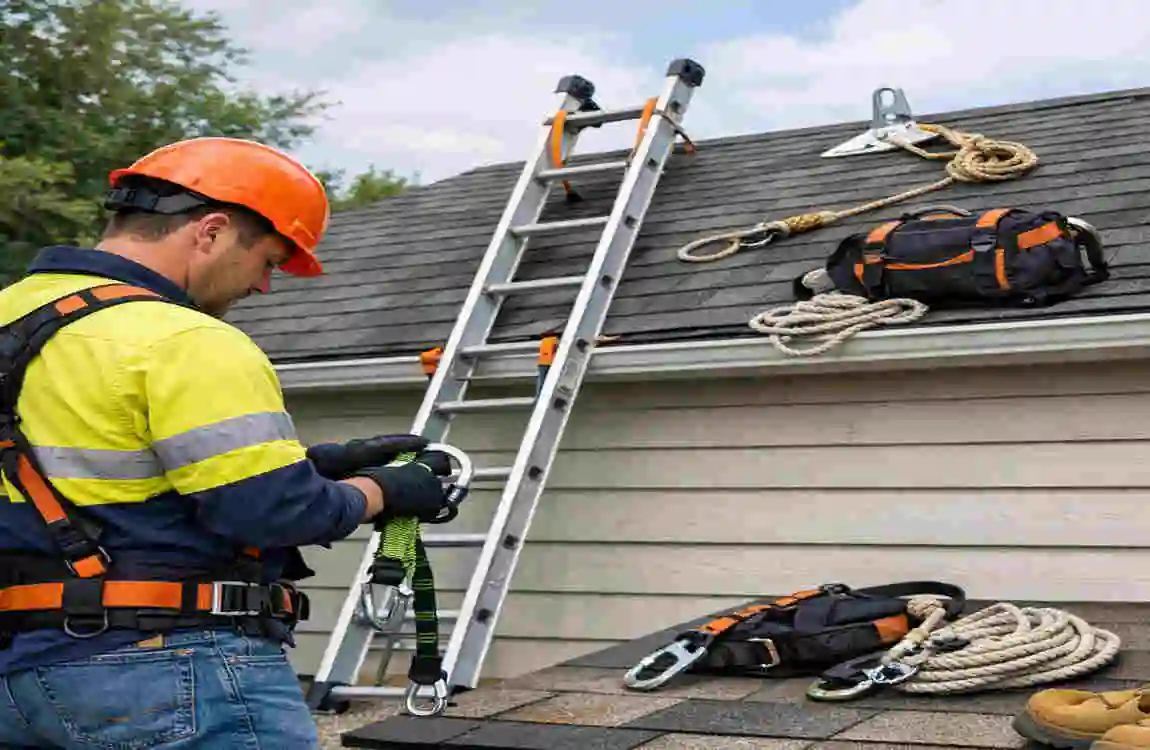
Use this checklist every time you plan to get onto the roof safely.
- Check the weather forecast
- Inspect the roof from the ground
- Make sure the ladder is in good condition
- Set the ladder on firm, level ground
- Follow the 4:1 ladder angle rule
- Wear non-slip shoes and work gloves
- Use a tool belt instead of carrying tools by hand
- Set up a harness and anchor system if needed
- Ask a helper to spot you or hold the ladder
- Tell someone you will be on the roof
- Plan your exit path before starting
- Stop immediately if the roof feels unstable
You can save this as a phone note, print it, or post it in your garage. A simple checklist helps you avoid careless decisions.
FAQ About Getting onto the Roof Safely
Can I get onto my roof safely without a harness?
Sometimes, yes, but only in lower-risk situations. If the roof is low, dry, stable, and not steep, some homeowners may do a quick inspection without a harness. But on higher or steeper roofs, a harness is strongly recommended. If you are unsure, treat that as a warning sign and avoid climbing.
How often should homeowners access their roof?
Most homeowners do not need to climb onto the roof often. A visual check after major storms and a periodic inspection may be enough. In many cases, you can inspect from the ground with binoculars or hire a roofer for a safer professional review.
What is the safest way to clean gutters from the roof?
Usually, the safest way is not to go on the roof at all. If possible, clean gutters from a stable ladder, use a gutter scoop with proper positioning, or use a ground-based extension tool. If your gutters are hard to reach or your roof edge feels risky, call a professional.
