

Hey there, homeowner! Have you ever peeked into your basement and felt a wave of dread from all the dust, stains, and mystery spots on the floor? You’re not alone. Many folks overlook their basements, treating them like forgotten storage spaces. But let me tell you, keeping that area clean isn’t just about looks—it’s crucial for your home’s health and your family’s well-being. Today, we’re diving into how to clean a basement floor effectively, with step-by-step tips that make the process straightforward and rewarding.
Imagine this: a damp, dirty basement floor quietly breeding mould and allergens. Over time, this can lead to bigger headaches, such as foundation cracks or even health issues from poor air quality. Neglecting it might seem harmless, but it can cost you thousands in repairs down the line. According to home maintenance experts, regular cleaning helps prevent moisture buildup, a top culprit of structural damage. That’s why learning how to clean a basement floor is more than a chore—it’s an investment in your home’s longevity
Why Clean Your Basement Floor Regularly
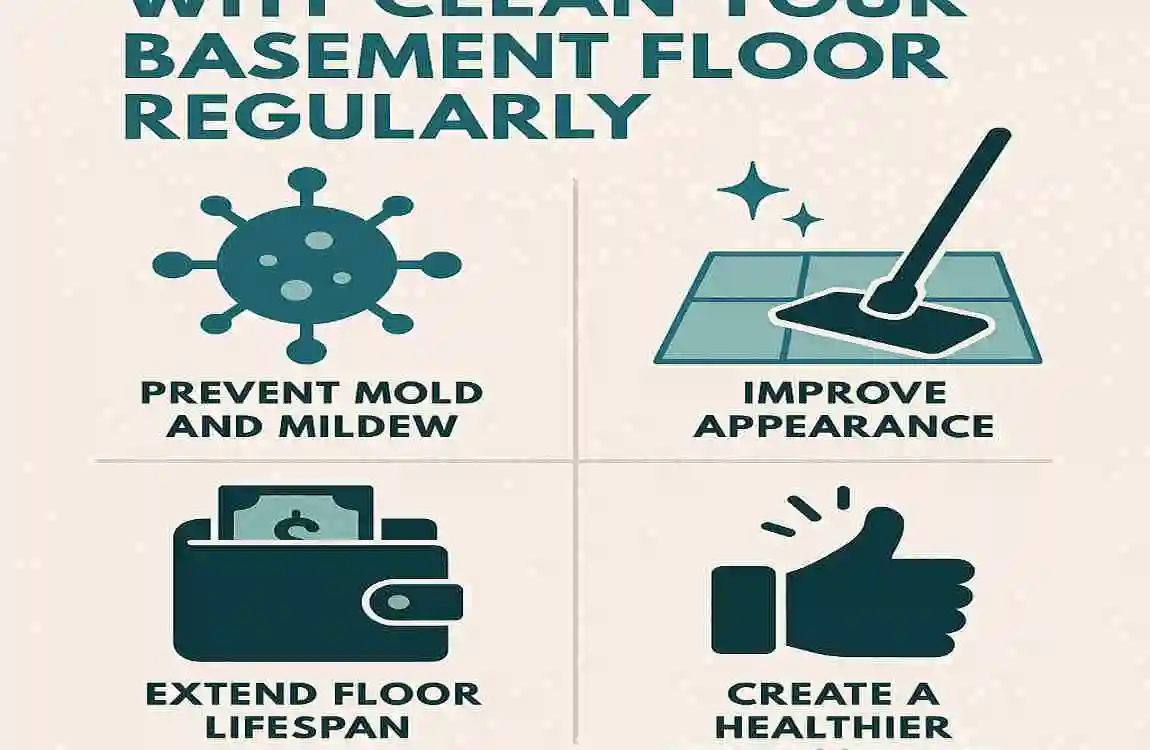
Let’s chat about something that might not cross your mind often: the real perks of keeping your basement floor tidy. You see, your basement isn’t just an out-of-sight area—it’s the base of your entire home. Regular cleaning helps ward off a bunch of issues that could sneak up on you. For starters, it reduces health risks. Dust, mould, and allergens love to hide in those cracks and crevices. If you’re breathing that in, especially if family members have allergies or asthma, it could lead to sneezing fits or worse.
Picture this: you skip cleaning for months, and suddenly, mould spots appear. Mould thrives in damp places, releasing spores that float upstairs and affect indoor air quality. Studies show that homes with unclean basements can have up to 40% higher levels of allergens. That’s no joke—regular basement floor cleaning tips like sweeping and mopping can slash those risks and keep your air fresher.
Beyond health, think about your home’s structure. Moisture is the enemy here. If water seeps in and sits on your floor, it can weaken the foundation over time. Cracks might form, leading to costly fixes. On average, basement water-damage repairs can cost $2,000 to $10,000, depending on the extent of the damage. By mastering how to clean the basement floor, you’re essentially extending your home’s life. It prevents issues like rot in wooden supports or erosion in concrete.
And hey, don’t forget the money side. A well-maintained basement boosts your property value. Real estate pros say a clean, dry basement can add 5-10% to your home’s worth. Buyers love seeing a spotless foundation—it’s a sign of reasonable care. Plus, if you’re selling, it avoids those awkward inspection surprises.
Now, let’s break down some common basement woes in a quick list:
- Moisture buildup: Leads to slippery surfaces and musty smells.
- Efflorescence: That white, salty deposit on concrete from mineral leaks—it’s a sign of water intrusion.
- Oil stains: From leaks or spills, these can seep deep and attract more dirt.
- Dust and debris: Accumulate quickly, turning your space into a dust-bunny haven.
Addressing these early with clean-concrete basement-floor methods saves you hassle. It’s not just about scrubbing; it’s preventive care. So, ask yourself: when was the last time you gave your basement some TLC? If it’s been a while, now’s the perfect moment to start.
Regular cleaning also makes your basement more versatile. Turn it into a home office or game room without worrying about grime. It fosters a sense of pride in your space. Trust me, once you see the difference, you’ll wonder why you waited so long.
In short, consistent upkeep isn’t a luxury—it’s essential. It safeguards health, protects your investment, and enhances daily living. Ready to dive deeper? Let’s move on to what you’ll need for the job.
Tools and Supplies Needed
Gearing up for how to clean the basement floor doesn’t have to be overwhelming. Think of it like packing for a quick adventure—you want the right gear to make things smooth. I’ll walk you through the essentials, so you can grab what you need without breaking the bank. These items are straightforward, and many are probably already in your garage or kitchen.
First off, safety comes first. Grab some gloves and goggles to protect your hands and eyes from splashes or dust. They’re cheap and make a big difference, mainly when used with cleaners.
For the basics, a good broom or vacuum is key. It sweeps away loose dirt before you get into the wet stuff. A stiff-bristled brush helps scrub those stubborn spots, like grout lines on tiled floors.
On the cleaning side, mild detergent or white vinegar works wonders for breaking down grime. Vinegar is natural and non-toxic, perfect for eco-conscious folks. If things are really tough, consider a pressure washer, but only for sealed surfaces—it blasts away deep dirt without much elbow grease.
Don’t forget to use drying tools like fans or a dehumidifier to speed up the process and prevent mould. And for those pesky stains, baking soda or specialised concrete cleaners can be lifesavers.
To make this more straightforward, here’s a handy table of must-haves:
ItemPurposeWhy It Works
Broom or vacuum: Remove loose debris. It gets. into cracks and prevents scratches.
Stiff brush Scrub tough stains Targets grime in textured areas
Mild detergent or vinegar breaks down dirt and grime. Safe, effective, and budget-friendly
Pressure washer (optional), deep cleaning sealed floors, and removes embedded dirt quickly
Gloves and goggles Personal safety Protects from chemicals and dust
Fans or dehumidifier Speed up drying, reduce moisture to avoid mould
See? With this setup, you’re ready to tackle any basement mess. Imagine assembling your toolkit like this—it’s empowering and sets you up for success. Pick quality items, and they’ll last for multiple cleanings. Now, with tools in hand, let’s prep the space.
Preparation Steps Before Cleaning
Before you jump into how to clean the basement floor, preparation is your best friend. It’s like laying the groundwork for a solid project—skip it, and things can go sideways. Start by clearing the space. Move out boxes, furniture, and any clutter. This gives you full access and prevents accidents. Ask a family member to help if it’s heavy lifting; teamwork makes it fun!
Next, inspect the floor closely. Look for cracks, leaks, or signs of water damage. If you spot major issues, like big fissures, you might need to address them first—perhaps with a sealant or pro help. Testing for moisture is smart, too. Place a plastic sheet over a section and tape it down; if condensation forms underneath after a day, you’ve got dampness to handle.
Ventilation is crucial. Open windows or use fans to circulate air. This keeps fumes from cleaners at bay and helps with drying later. Wear your safety gear now to get in the habit.
Here’s a simple numbered list to guide your prep:
- Clear the area: Remove all items to expose the entire floor.
- Inspect and repair: Check for damage and fix small cracks with filler.
- Test moisture levels: Use the plastic sheet method or a moisture meter.
- Ventilate the space: Ensure good airflow to stay safe and comfortable.
Proper prep ties directly into successful basement floor cleaning tips. It ensures no hidden surprises derail your efforts. Think about your basement—any wet spots? Addressing them now saves time. By preparing like this, you’re setting the stage for a thorough clean. Feels good, right? Now, onto the main event!
Step-by-Step Guide: How to Clean Basement Floor
Alright, this is the heart of our guide on how to clean a basement floor. We’ll break it down into clear steps, so you can follow along without feeling lost. Each part builds on the last, turning a grimy floor into a shining one. Remember, patience is key—rushing might leave spots behind. Let’s get into it, step by step.
Sweep and Vacuum debris
Start dry to avoid making a bigger mess. Grab your broom or vacuum and sweep away all loose dirt, dust, and cobwebs. Work from one corner to the opposite, pushing debris into a pile. Why dry? Wetting it first could turn dust into mud, leaving scratches on your floor.
For concrete basements, use a shop vac with a brush attachment—it sucks up fine particles that a broom misses. Pay attention to edges and corners where grime tends to hide. This step in how to clean a basement floor prevents abrasions later when you scrub.
Take your time here; a thorough sweep sets a strong foundation. If your floor is tiled, vacuum along the grout lines to remove trapped dirt. You’ll notice the space already looks better. Pro tip: Empty the vacuum outside to keep dust from resettling.
Repeat if needed until the floor feels clean underfoot. This initial removal makes the next steps easier and more effective. You’ve got this—see how simple it starts?
Tackle Stains and Grime
Now, let’s address those pesky basement floor stains. Identify what you’re dealing with—rust, oil, or that chalky efflorescence? For rust or mineral buildup on a clean concrete basement floor, mix equal parts water and vinegar. Apply it directly, let it sit for 10-15 minutes, then scrub with your stiff brush.
Vinegar’s acidity naturally breaks down stains without harsh chemicals. If it’s oil from a leak, sprinkle baking soda to absorb it, then make a paste with dish soap and water. Scrub in circular motions—active scrubbing lifts the grime.
For unsealed concrete, use alkaline cleaners such as trisodium phosphate (TSP). Dilute it as per instructions and apply. Let it dwell; this gives time for the solution to penetrate. Always test a small area first to avoid damage.
Got efflorescence? A wire brush after vinegar treatment works wonders. Rinse off residue thoroughly. This step in DIY basement cleaning requires elbow grease, but the results are worth it. Imagine wiping away years of buildup—satisfying.
Switch tools if needed—a scrubber pad for larger areas. For tough spots, repeat the process. By targeting stains early, you prevent them from setting deeper. Keep going; you’re making real progress.
Mop and Scrub Thoroughly
With stains handled, it’s time to mop and scrub the entire floor. Fill a bucket with warm water and add your mild detergent or a diluted bleach solution (one part bleach to 10 parts water) for disinfection. Avoid ammonia on sealed floors—it can dull the finish.
Dip your mop or brush in the solution, wring it out, and start scrubbing in sections. Use back-and-forth motions for even coverage. Let the cleaner sit for a few minutes—dwell time helps loosen embedded dirt.
For basement floor cleaning tips on grout or textured concrete, a scrub brush is ideal. Get on your knees if necessary for better leverage. Rinse your tools regularly to prevent grime from spreading.
If using a pressure washer, set it to a low PSI (around 1,500) to gently blast away residue. Move methodically across the floor. This deep clean removes allergens and refreshes the space.
Feel the difference as you go—the floor transforms from dull to vibrant. Take breaks if it’s a big area; staying consistent is better than rushing. This step ensures every inch gets attention in your how-to-clean-basement-floor routine.
Rinse and Dry Completely
Rinsing is crucial to remove any soap or cleaner residue that could attract more dirt. Use clean water from a fresh bucket or hose if outdoor access is available. Mop over the floor again, changing water as it gets dirty.
For thoroughness, do two rinse passes. This prevents streaks and ensures a spotless finish.
Now, dry it all out. Wipe up excess water with old towels or a wet vac. Set up fans and a dehumidifier to circulate air—aim for complete dryness in 24-48 hours. Why? Lingering moisture invites mould, undoing your hard work.
Check humidity levels; under 50% is ideal—open doors for cross-breezes. In how to clean a basement floor, drying is often overlooked but vital for long-term success.
Pat yourself on the back—your floor should look amazing now.
Optional Sealing/Coating
For extra protection, consider sealing your clean floor. After drying, apply a concrete sealer with a roller. It repels water and stains, making future cleanings easier.
Choose a penetrating sealer for unsealed concrete—it soaks in without changing the look. Let it cure as directed, usually for a day or two.
This step in how to clean the basement floor extends your efforts. It’s like armour for your foundation. If unsure, test on a small spot.
Sealing prevents efflorescence and boosts durability. Worth the effort for a lasting spotless home.
(Word count: 202 for this subsection)
Common Mistakes to Avoid
Even with the best intentions, slip-ups happen in how to clean basement floor projects. Let’s spotlight some common pitfalls so you can steer clear. Awareness is your shield—learn from others’ errors to keep your efforts on track.
Here’s a bullet list of key mistakes:
- Skipping the drying step: Rushing to put things back in place can lead to trapped moisture and mould growth. Always allow full drying time.
- Using harsh chemicals on unsealed concrete: These can etch the surface, causing permanent damage. Stick to mild options like vinegar.
- Ignoring underlying water problems: Cleaning over leaks without fixing them means stains return quickly. Inspect and repair first.
- Over-wetting the floor: Too much water can seep into cracks, worsening dampness. Use controlled amounts and rinse efficiently.
- Not wearing safety gear: Splashes or fumes can irritate skin or eyes. Gloves and goggles are non-negotiable.
Avoiding these keeps your basement safe and clean longer. For instance, if you use a pressure washer without checking seals, you might force water deeper. Take it slow—better safe than sorry.
Think back to your own projects; ever made one of these? No worries—now you know. By avoiding these, your basement floor-cleaning tips will yield pro-level results. Stay vigilant, and your foundation stays strong.
Advanced Tips for Tough Basement Floors
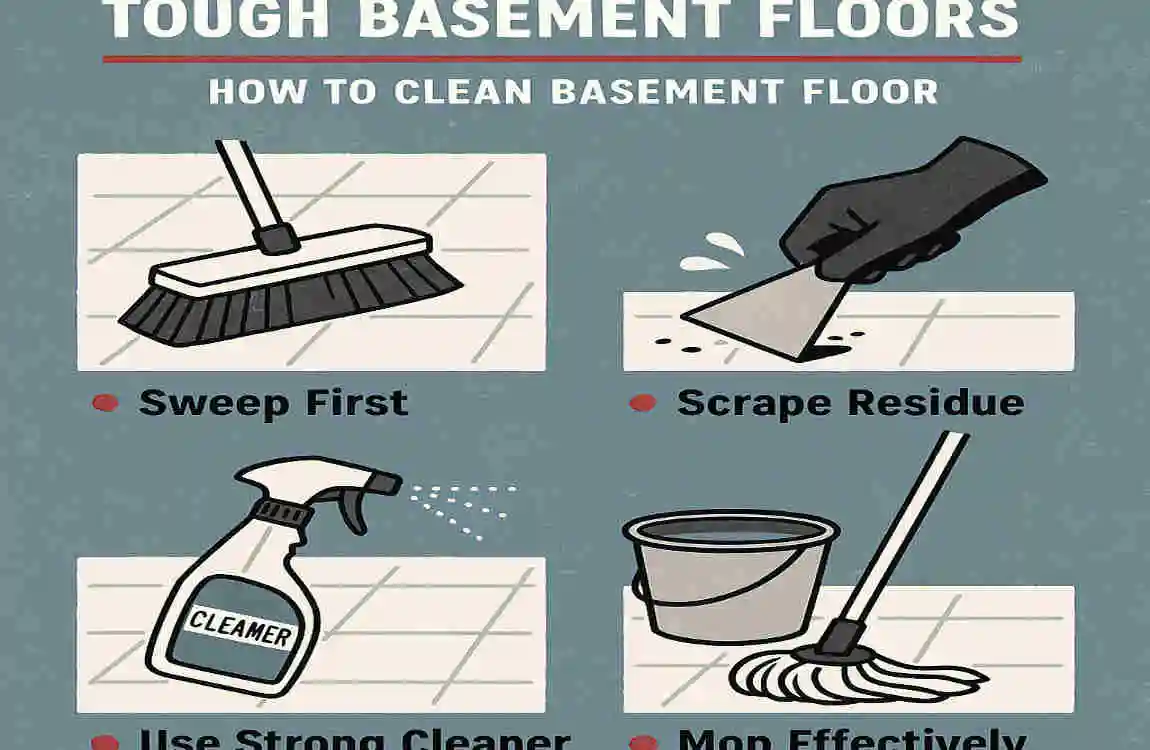
Got a basement that’s seen better days? For more challenging cases, like post-flood scenarios, amp up your approach. Start with eco-friendly cleaners—think plant-based detergents that are tough on grime but gentle on the planet.
For flooded floors, remove standing water first, then disinfect with bleach solutions. Dry aggressively with dehumidifiers.
If dampness persists, call in pros—they spot hidden issues like poor drainage. DIY basement cleaning has limits; experts handle persistent problems safely.
Try natural remedies, such as essential oils, for odour control after cleaning. These advanced basement floor cleaning tips elevate your game. What challenges does your space face? Tackle them head-on for lasting cleanliness.
