
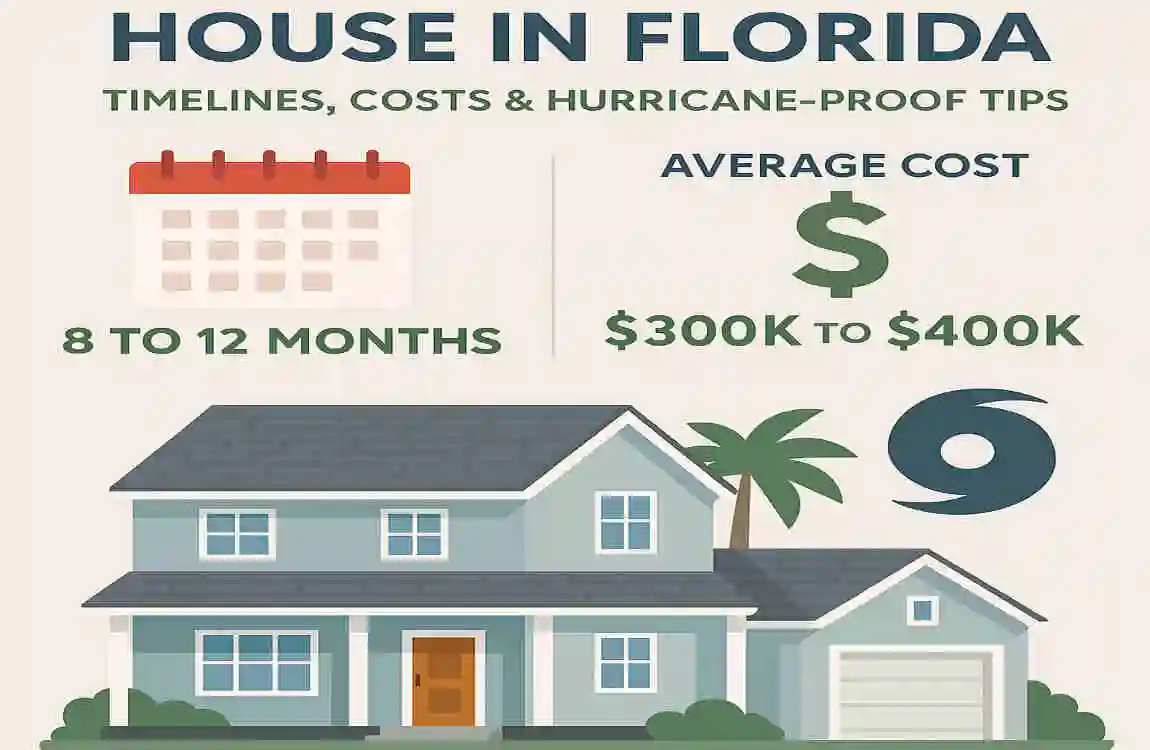
If you’re dreaming of a custom home in the Sunshine State, you’re probably asking: How long does it really take to build a house in Florida? The answer isn’t as simple as you might hope. The typical Florida house build timeline ranges from 9 to 24 months, with construction alone averaging 6 to 12 months. But that’s just the start. Factors like permitting, weather delays (especially during hurricane season), and site preparation can stretch your project even further.
Costs are another significant consideration. In 2026, building a new home in Florida costs between $150 and $350 per square foot. For a 2,000-square-foot home, that’s anywhere from $300,000 to $700,000—and that’s before you add hurricane-resistant features, which are a must in many parts of the state.
Standard Timeline Breakdown
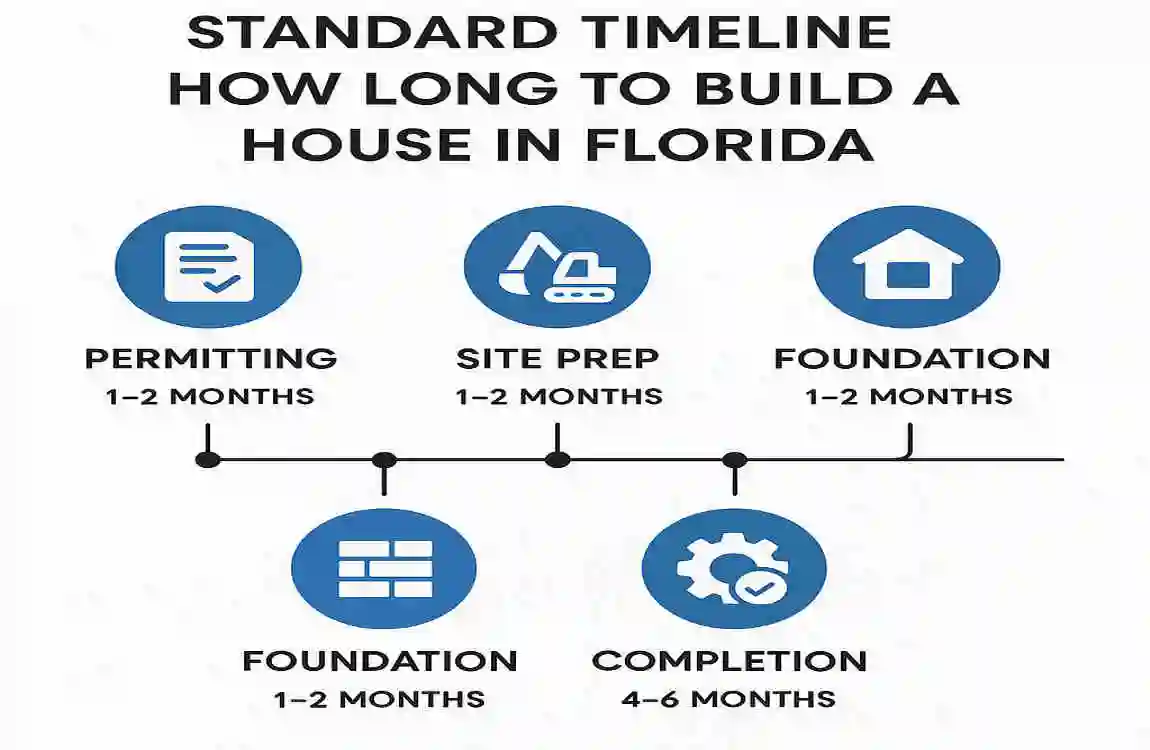
Building a house in Florida is a journey with several key phases. Each step comes with its own timeline, challenges, and opportunities to save time or money. Let’s break down the typical Florida house build timeline so you know what to expect.
Timeline Table: Florida House Build Phases
PhaseDurationKey Factors
Land Acquisition & Financing 1–6 months Site suitability, loans
Design & Planning 3–5 months, Custom vs modular, architectural reviews
Permits & Approvals 1–2 months, Florida’s strict codes, and local zoning
On-Site Construction 6–12 months, Weather delays, labour availability
Inspections & Finishing 1–3 months Final hurricane checks, punch list items
Land Acquisition & Financing 1–6 Months
Finding the right lot is your first big step. In Florida, you’ll need to consider flood zones, soil quality, and access to utilities. Securing financing can take weeks or even months, especially if you’re buying land and building at the same time. Lenders may require detailed plans and builder contracts before approving your loan.
Design & Planning 3–5 Months
This phase covers everything from architectural drawings to engineering reviews. Custom homes take longer to design than modular or pre-designed plans. Expect several rounds of revisions as you balance your wish list with your budget and local building codes.
Permits & Approvals 1–2 Months
Florida is known for its strict building codes, especially in coastal and hurricane-prone areas. Permitting can be a significant bottleneck, with some counties requiring extra reviews for wind resistance, flood mitigation, and environmental impact. Plan for at least a month, but it can take longer if your site is in a sensitive area.
On-Site Construction 6–12 Months
This is where your dream starts to take shape. Construction time depends on your home’s size and complexity, as well as the builder’s schedule. Weather is a big wild card—hurricane season (June to November) can cause significant delays, especially if storms disrupt supply chains or damage partially built structures.
Inspections & Finishing 1–3 Months
Before you can move in, your home must pass a series of inspections. These cover everything from structural integrity to hurricane-proofing features. Final touches like landscaping, driveways, and interior finishes can also add time, especially if you’re customising every detail.
Delays from Hurricane Season
Florida’s rainy and stormy months can add 1–3 months to your home build. Heavy rains can halt work, while hurricanes may force crews to evacuate or repair storm damage. Planning your build to avoid peak hurricane season can help, but sometimes Mother Nature has other plans.
Factors Affecting Build Time
Every home build is unique, but several key factors can dramatically impact your Florida house build timeline. Understanding these variables can help you plan smarter and avoid costly surprises.
Weather & Seasonality
Florida’s weather is both a blessing and a curse. While the mild winters allow for year-round construction, the hurricane season (June–November) can add 1–3 months to your timeline. Heavy rains, high winds, and storm threats can halt work, delay inspections, and disrupt material deliveries.
Tip:
If possible, start your home build in the dry season (December–May) to minimise weather-related delays.
Permits & Regulations
Building in Florida means navigating some of the strictest codes in the country. Coastal zones, in particular, require homes to meet high wind and flood standards. This can slow down the permitting process, especially if your plans need multiple rounds of review.
- Coastal and flood-prone areas: Expect longer wait times for permits.
- Inland sites: Permitting is usually faster and less expensive.
Site Conditions
Not all land is created equal.
If your lot has poor soil, drainage issues, or is in a flood zone, you may need extensive site prep. This can add weeks or even months to your timeline.
- Soil testing: Required before foundation work.
- Flood remediation: May involve raising the site or adding drainage systems.
Builder Experience & Labor
The right builder can make or break your timeline.
Experienced crews with strong local networks can cut build time by 20–30%. In contrast, inexperienced or understaffed teams may face delays due to scheduling conflicts or mistakes.
- Tip: Check your builder’s track record for on-time completions.
Material Lead Times
Supply chain issues are a genuine concern, especially after storms.
Key materials like roof trusses and impact windows can take 8–12 weeks to arrive, particularly if demand spikes after a hurricane.
- Tip: Order critical materials early and confirm delivery dates in writing.
Tips to Speed Up Your Florida House Build Timeline
- Choose modular or prefab homes: These can be built in 4–6 months total, cutting your timeline in half.
- Hire experienced, local builders: They know how to navigate Florida’s unique challenges.
- Start permitting early: Submit plans as soon as possible to avoid bottlenecks.
- Build during the dry season: Fewer weather delays mean faster progress.
- Order materials in bulk: Lock in prices and avoid shortages.
Costs Overview
How much does it cost to build a house in Florida
The answer depends on location, size, and hurricane-resistant features, but here’s a quick snapshot:
- Average cost per square foot: $150–$350
- 2,000 sq ft home: $300,000–$700,000
Regional Cost Table
RegionCost per Sq FtNotes
Miami/South FL $200–$350 Hurricane premiums
Tampa/Central $150–$275 Moderate demand
Orlando $160–$280 Family-friendly, growing
Cost Breakdown
- Materials: 40% of total cost (lumber, concrete, roofing, windows)
- Labour: 30% (builders, electricians, plumbers)
- Permits & Fees: $10,000–$24,000 (varies by county)
- Hurricane-proofing: Adds 10–20% ($20–$50/sq ft)
Build vs. Buy: Which Is Cheaper?
- Building: More control, but higher upfront costs and longer wait.
- Buying: Faster move-in, but may lack hurricane-resistant features or customisation.
Tip:
If you want a truly hurricane-proof home, building new is often the best way to ensure your investment is protected.
Hurricane-Proofing Tips
Florida’s building codes are designed to keep you safe—but going above and beyond can save you time, money, and stress in the long run. Here’s how to build a house in Florida that stands up to the most brutal storms.
Key Hurricane-Proof Features
- Elevated Foundations:
- Raising your home above flood level adds 2–4 weeks to your build, but can dramatically lower your insurance premiums and protect against storm surge.
- Impact Windows & Doors:
- These are required in many areas. Pre-ordering can help you avoid delays, especially after a major storm when demand spikes.
- Metal Roofing & ICF Walls:
- Metal roofs are more durable and quicker to install than traditional shingles. Insulated Concrete Form (ICF) walls offer superior wind resistance and energy efficiency.
- Generator-Ready Wiring:
- After the 2025 hurricane season, many Florida builders now include generator-ready electrical systems as standard.
- Cost Add-Ons:
- Expect to pay a 10–20% Premium for hurricane-proofing features—about $20–$50 per square foot.
Steps for Hurricane Code Compliance
- Hire a Florida-licensed architect:
- They’ll ensure your plans meet the latest wind and flood codes.
- Submit plans for review early:
- Some counties require extra engineering reports.
- Choose hurricane-rated materials:
- Impact windows, reinforced doors, and metal roofing are must-haves.
- Schedule inspections at key milestones:
- Don’t skip structural and wind-resistance checks.
- Consider modular construction:
- Factory-built homes can be assembled quickly and are often designed for hurricane zones.
Why Modular Homes Are a Smart Choice
- Faster build times: 4–6 months from start to finish.
- Consistent quality: Built in controlled environments.
- Hurricane-ready: Many modular homes are engineered for high winds and flooding.
Cost-Saving Strategies
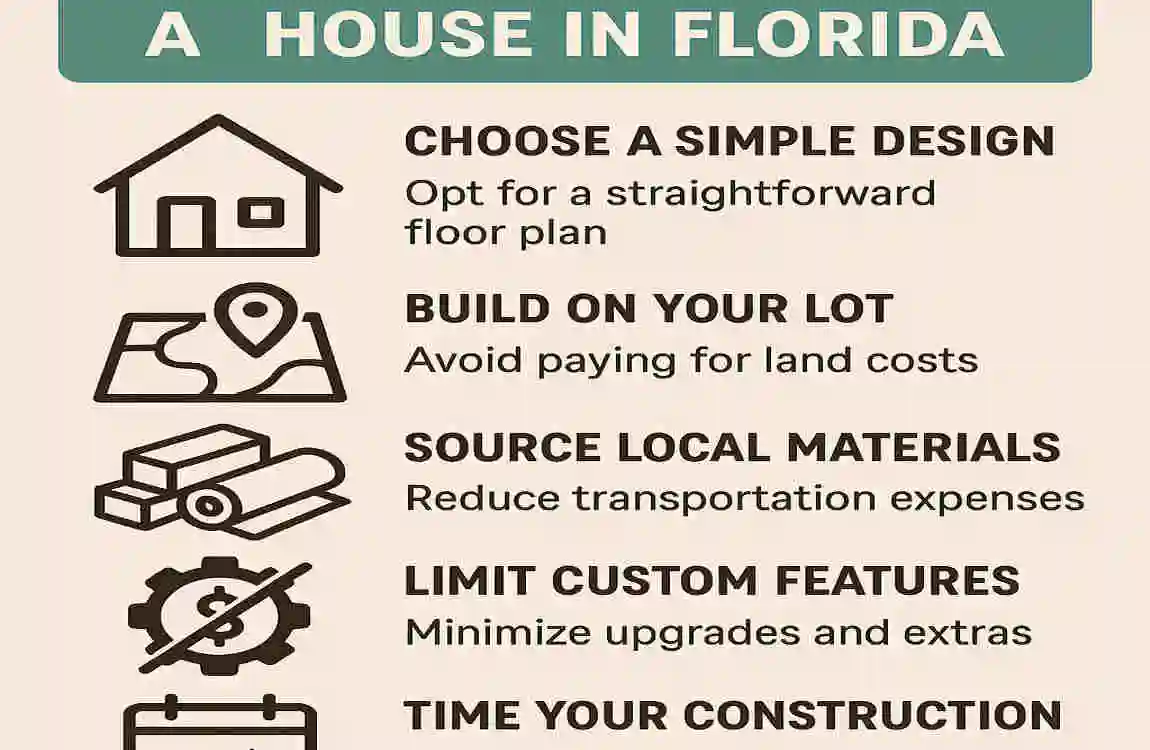
Building a house in Florida doesn’t have to break the bank. Here are some proven ways to save time and money—without sacrificing safety or quality.
Top Cost-Saving Tips
- Choose prefab or modular construction:
- These homes can be built in half the time and save 15–25% on labour and materials.
- Buy materials in bulk and early:
- Lock in prices before hurricane season, when costs can spike.
- Build inland:
- Sites away from the coast have lower permitting fees and less stringent codes, which can save thousands of dollars.
- Simplify your design:
- Fewer custom features mean faster builds and lower costs.
- Work with experienced builders:
- They can spot potential issues early and keep your project on track.
