

When designing a comfortable, functional home, one of the most important factors to consider is the size of your bedroom. After all, your bedroom is your personal sanctuary, the place where you start and end each day. But how big is an average bedroom, and why does it matter?
Understanding the Concept of ‘Average Bedroom Size
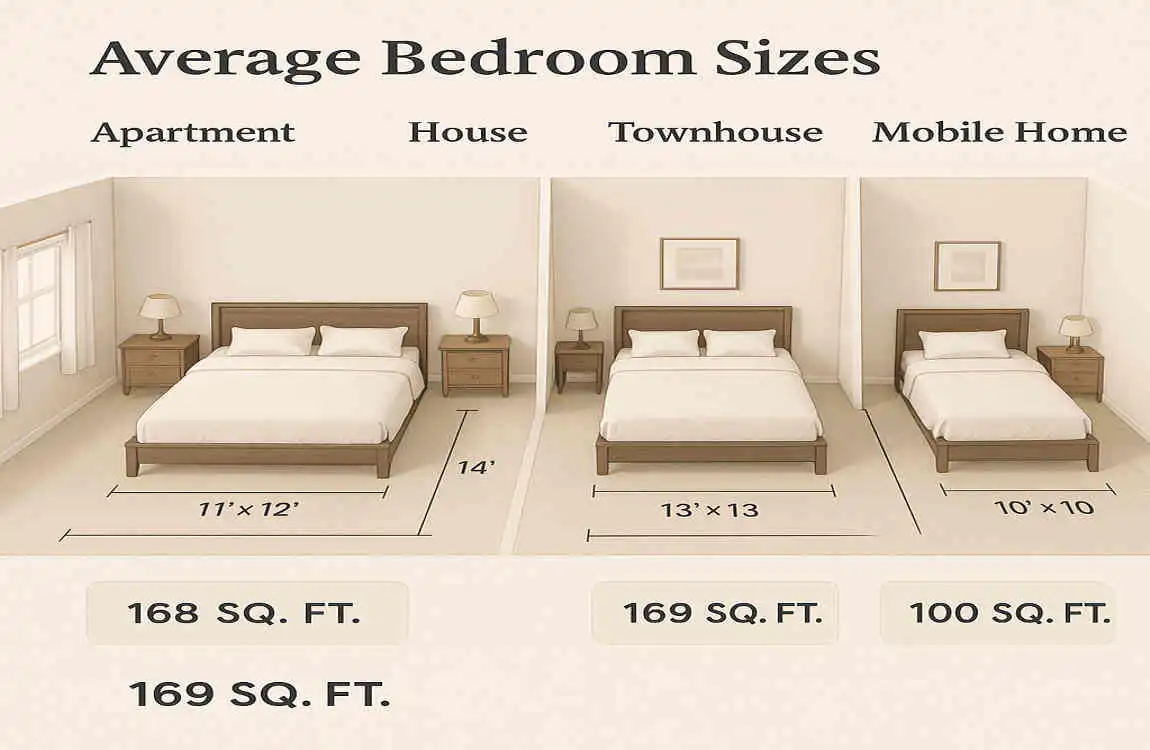
Before we dive into the specifics, let’s clarify what we mean by “average bedroom size.” When we talk about bedroom size, we’re referring to the usable space within the room, rather than the total dimensions from wall to wall. This is an important distinction, as it directly impacts how you can use and furnish your bedroom.
Bedroom sizes are typically measured in square feet or square meters, depending on the country. However, it’s worth noting that these measurements can vary significantly depending on the type of home. For example, bedrooms in apartments tend to be smaller than those in detached homes or condos.
National and Regional Averages for Bedroom Size
So, how big is an average bedroom in different parts of the world? Let’s take a closer look at some national and regional averages:
United States
In the U.S., the average bedroom size is around 132 square feet (12.3 square meters). However, this can vary significantly by region. For example, bedrooms in urban areas tend to be smaller than those in suburban or rural homes.
United Kingdom
Across the pond in the U.K., the average bedroom size is slightly smaller at around 118 square feet (11 square meters). Again, this can vary depending on the region and type of home.
Canada
In Canada, the average bedroom size is similar to that of the U.S., at around 130 square feet (12.1 square meters). However, bedrooms in newer homes tend to be larger than those in older properties.
Australia
Down under in Australia, the average bedroom size is around 129 square feet (12 square meters). However, this can vary significantly depending on the state and type of home.
As you can see, there’s no one-size-fits-all answer to the question of how big an average bedroom is. It all depends on where you live and the type of home you have.
Typical Dimensions of an Average Bedroom
Now that we’ve looked at some national and regional averages, let’s talk about the typical dimensions of an average bedroom. In the U.S., a typical average bedroom measures around 10×12 feet (about 120 square feet). However, this can vary depending on the size of the home and the number of bedrooms.
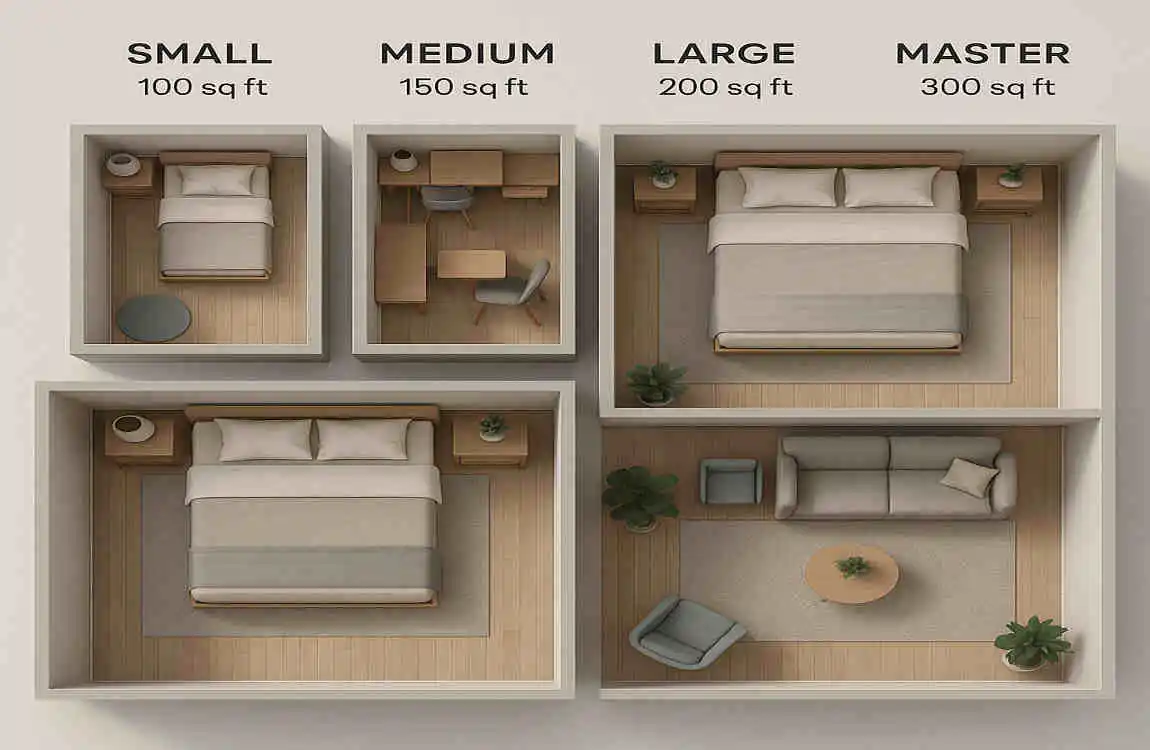
To give you a better idea, here’s a quick comparison of small, medium, and large bedrooms:
- Small bedroom: 8×10 feet (80 square feet)
- Medium bedroom: 10×12 feet (120 square feet)
- Large bedroom: 12×14 feet (168 square feet)
Of course, these are just rough estimates, and the actual size of your bedroom may vary. But in general, an average bedroom falls somewhere in the middle of this range.
Factors Influencing Bedroom Size in Modern Homes
So, what factors influence the size of bedrooms in modern homes? Let’s take a closer look:
Home Size and Floor plan Layout
One of the most significant factors influencing bedroom size is the home’s overall size. In general, larger homes tend to have larger bedrooms, while smaller homes have smaller bedrooms. The floor plan layout also plays a role, as some designs may prioritize larger living areas over bedroom space.
Number of Bedrooms
The number of bedrooms in a home can also impact its size. In homes with multiple bedrooms, the main bedroom is often larger than the secondary bedrooms. This is because the main bedroom is typically designed to accommodate a larger bed, more furniture, and possibly even a sitting area or walk-in closet.
Lifestyle and Family Needs
Your lifestyle and family needs can also influence the size of your bedroom. For example, if you work from home, you may need a larger bedroom to accommodate a home office or study area. Similarly, if you have young children, you may want a larger bedroom to accommodate a crib or toddler bed.
Trends in Home Design
Finally, trends in home design can also impact bedroom size. For example, the rise of open-plan living has led to smaller bedrooms in some homes, as living areas are prioritized over private spaces. On the other hand, the trend towards minimalism has led to larger bedrooms in some homes, as people seek to create more spacious and clutter-free living environments.
Optimal Bedroom Sizes for Comfortable Living
Now that we’ve looked at some factors that influence bedroom size, let’s discuss what constitutes an optimal bedroom size for comfortable living. In general, the minimum recommended size for a bedroom is around 70 square feet (6.5 square meters) for a single occupant. However, this can vary depending on the size of the bed and the amount of furniture you need to accommodate.
For a double bedroom, the minimum recommended size is around 100 square feet (9.3 square meters). This allows for a double bed, two nightstands, and additional furniture, such as a dresser or chest of drawers.
For a main bedroom, the minimum recommended size is around 150 square feet (14 square meters). This allows for a king-size bed, two nightstands, a dresser, and possibly even a sitting area or walk-in closet.
Of course, these are just minimum recommendations, and you may want a larger bedroom to accommodate your specific needs and preferences. The key is to find a balance between comfort and functionality, ensuring that your bedroom is a space where you can relax and recharge.
Bedroom Size and Functionality: Matching Size with Purpose
When it comes to bedroom size, it’s essential to consider the room’s purpose. Different types of bedrooms may require different sizes to function effectively. Let’s take a look at some examples:
Guest Bedrooms
Guest bedrooms are typically smaller than master bedrooms, as they don’t need to accommodate as much furniture or storage. A minimum size of around 100 square feet (9.3 square meters) is usually sufficient for a guest bedroom, allowing for a double bed, a nightstand, and some additional storage.
Children’s Bedrooms
Children’s bedrooms may require a larger size to accommodate a crib or toddler bed, as well as toys and other play equipment. A minimum size of around 120 square feet (11.1 square meters) is usually recommended for a child’s bedroom, allowing for a bed, a dresser, and some additional storage and play space.
Master Bedrooms
As we mentioned earlier, master bedrooms are typically the largest in a home because they need to accommodate a larger bed, more furniture, and possibly a sitting area or walk-in closet. A minimum size of around 150 square feet (14 square meters) is usually recommended for a main bedroom, allowing for a king-size bed, two nightstands, a dresser, and some additional storage and seating.
Multi-Purpose Bedrooms
In some homes, bedrooms may need to serve multiple purposes, such as a home office or study area. In these cases, a larger bedroom size may be necessary to accommodate the additional furniture and equipment. A minimum size of around 180 square feet (16.7 square meters) is usually recommended for a multi-purpose bedroom, allowing for a bed, a desk, a chair, and some additional storage and seating.
How to Measure Your Bedroom Correctly
Now that we’ve covered the basics of bedroom size, let’s talk about how to measure your bedroom correctly. This is an essential step in determining whether your bedroom is the right size for your needs and preferences.
To measure your bedroom, you’ll need a tape measure, a pencil, and a piece of paper. Start by measuring the length and width of the room, from wall to wall. Be sure to measure at multiple points, as walls may not be perfectly straight.
Next, measure the room’s height from floor to ceiling. This is important because it can affect how much furniture and storage you can accommodate.
Finally, measure any alcoves, nooks, or other irregular spaces in the room. These can be tricky to measure, but they can also provide valuable storage and display space.
Once you have all your measurements, you can calculate the total square footage of your bedroom. Multiply the length by the width to get the total area in square feet. If you prefer to work in square meters, you can convert your measurements using an online calculator or conversion chart.
Bedroom Size Guidelines by Design and Architecture Experts
When it comes to bedroom size, there’s no one-size-fits-all approach. However, design and architecture experts have developed some general guidelines to help homeowners make informed decisions about their living space.
According to the American National Standards Institute (ANSI), a bedroom should be at least 70 square feet (6.5 square meters) and have a minimum ceiling height of 7 feet (2.1 meters). However, this is just a minimum standard, and many experts recommend larger sizes for comfort and functionality.
Interior designers often recommend a minimum size of 100 square feet (9.3 square meters) for a single bedroom, 120 square feet (11.1 square meters) for a double bedroom, and 150 square feet (14 square meters) for a main bedroom. These sizes accommodate a bed, nightstands, a dresser, and additional storage and seating.
Architects may also consider the home’s overall layout and flow when determining bedroom size. For example, a bedroom that is too small may feel cramped and claustrophobic, while a bedroom that is too large may feel empty and uninviting. The key is to find a balance between comfort and functionality, ensuring that your bedroom is a space where you can relax and recharge.
How Bedroom Size Impacts Home Value and Market Appeal
When buying or selling a home, bedroom size can significantly impact value and market appeal. In general, larger bedrooms are more desirable to buyers because they offer more space for furniture, storage, and personal use.
According to a study by the National Association of Realtors, homes with larger bedrooms tend to sell for higher prices than those with smaller bedrooms. This is because buyers are willing to pay a Premium for the extra space and comfort that larger bedrooms provide.
However, it’s worth noting that bedroom size is just one factor that impacts home value and market appeal. Other factors, such as location, condition, and amenities, can also affect a home’s overall value.
As a real estate agent, it’s essential to consider a home’s bedroom size when marketing it to potential buyers. Highlighting the size and features of the bedrooms can attract buyers seeking a comfortable, functional living space.
Tips to Make Small Bedrooms Feel Bigger
If you have a small bedroom, don’t worry – there are plenty of ways to make it feel bigger and more spacious. Here are some tips to help you maximize your space:
Space-Saving Furniture and Layouts
One of the best ways to make a small bedroom feel bigger is to use space-saving furniture and layouts. For example, a platform bed with built-in storage can help you save space and keep your room organized. Similarly, a dresser with a mirror can serve as both a storage solution and a way to reflect light and create the illusion of space.
Color Schemes and Lighting
Another way to make a small bedroom feel bigger is to use light and neutral color schemes. Light colors, such as white, beige, and pastels, can help reflect light and create a sense of openness and airiness. Similarly, good lighting can help brighten up a small space and make it feel more inviting.
Use of Mirrors and Decor
Mirrors are another great way to make a small bedroom feel bigger. By reflecting light and creating the illusion of depth, mirrors can expand a room’s visual space. Similarly, strategic use of decor, such as artwork and plants, can help draw the eye and create a sense of interest and movement.
Vertical Space Utilization
Finally, don’t forget to use your vertical space! By installing shelves, cabinets, and other storage solutions on your walls, you can free up floor space and make your room feel more open and airy. This is especially important in small bedrooms, where every inch of space counts.
Designing Big Bedrooms for Comfort and Luxury
On the other hand, if you have a large bedroom, you can create a truly comfortable and luxurious living space. Here are some tips to help you design a big bedroom that feels both inviting and indulgent:
Layout Ideas for Spacious Bedrooms
When designing a large bedroom, the key is to create a layout that feels both spacious and cozy. One way to do this is to create distinct zones within the room, such as a sleeping area, a seating area, and a dressing area. This can help break up the space and make it feel more intimate and inviting.
Incorporating Seating Areas and Walk-In Closets
Another way to make a large bedroom feel more luxurious is to incorporate seating areas and walk-in closets. A comfortable seating area, such as a chaise lounge or a pair of armchairs, can provide a cozy spot to read, relax, or enjoy a cup of tea. Similarly, a walk-in closet can provide ample storage for your clothes, shoes, and accessories while adding a touch of luxury to your bedroom.
Creating Zones: Sleeping, Relaxing, Dressing
As we mentioned earlier, creating distinct zones within a large bedroom can help break up the space and make it feel more inviting. In addition to a sleeping area, consider adding a relaxing zone, such as a meditation corner or a reading nook, and a dressing zone, such as a vanity or a dressing table. This can help you create a bedroom that feels both functional and indulgent.
Integrating Technology and Smart Home Features
Finally, don’t forget to integrate technology and smart home features into your large bedroom. From bright lighting and temperature control to voice-activated assistants and entertainment systems, there are plenty of ways to make your bedroom feel more modern and convenient. By incorporating these features, you can create a truly luxurious and comfortable living space.
Bedroom Size Trends: What’s Changing in Modern Homes?
As home design trends continue to evolve, so too do bedroom sizes. Here are some of the key trends we’re seeing in modern homes:
Shifts in Bedroom Sizes Over Recent Decades
Over the past few decades, we’ve seen a general trend towards larger bedrooms in new homes. This is due in part to the increasing size of homes overall, as well as a growing demand for more space and comfort in the bedroom.
Impact of Remote Work and Home Offices on Bedroom Design
The rise of remote work and home offices has also affected bedroom design. Many homeowners are now looking for ways to incorporate a home office or study area into their bedroom, which can require a larger space to accommodate the additional furniture and equipment.
Future Predictions: Flexible and Adaptable Bedroom Spaces
Looking to the future, we can expect a continued trend towards flexible, adaptable bedroom spaces. As our needs and lifestyles continue to evolve, so too will our bedrooms. From multi-purpose rooms that can serve as bedrooms, offices, and gyms to modular furniture and storage solutions that can be easily reconfigured, the future of bedroom design is all about flexibility and adaptability.
Common Bedroom Size Mistakes to Avoid
When it comes to bedroom size, homeowners often make a few common mistakes. Here are some to watch out for:
Oversizing or Undersizing Rooms Relative to Home Size
One of the most common mistakes is oversizing or undersizing rooms relative to the home’s overall size. A bedroom that is too large can feel empty and uninviting, while a bedroom that is too small can feel cramped and claustrophobic. The key is to find a balance between comfort and functionality, ensuring that your bedroom is the right size for your needs and preferences.
Neglecting Storage Space and Furniture Flow
Another common mistake is neglecting storage space and the flow of furniture in the bedroom. A bedroom that lacks adequate storage can quickly become cluttered and disorganized, while a bedroom with poor furniture flow can feel cramped and uninviting. Be sure to consider your storage needs and furniture layout when designing your bedroom.
Ignoring Bedroom Functionality in Favor of Aesthetics
Finally, many homeowners make the mistake of prioritizing aesthetics over bedroom functionality. While it’s essential to create a bedroom that looks beautiful and inviting, it’s equally important to ensure that it functions well for your needs. Don’t sacrifice functionality for aesthetics – instead, find a balance between the two.
Summary and Final Recommendations
In conclusion, knowing how big an average bedroom is is essential for creating a comfortable and functional living space. From national and regional averages to optimal sizes for comfortable living, there are many factors to consider when determining the right size for your bedroom.
As a general rule, the minimum recommended size for a single bedroom is around 70 square feet (6.5 square meters), while the minimum recommended size for a double bedroom is around 100 square feet (9.3 square meters). For a main bedroom, the minimum recommended size is around 150 square feet (14 square meters).
However, these are just minimum recommendations, and you may want a larger bedroom to accommodate your specific needs and preferences. The key is to find a balance between comfort and functionality, ensuring that your bedroom is a space where you can relax and recharge.
Here’s a quick reference chart of average bedroom sizes and recommended sizes:
Bedroom Type Average Size (sq ft)Recommended Size (sq ft)
Single 100-120 70
Double 120-150 100
Master 150-200 150
Ultimately, the right size for your bedroom will depend on your individual needs and preferences. Whether you’re a homeowner, a real estate agent like me, or simply someone who loves home decor, I encourage you to assess your bedroom size and make any necessary changes to create a comfortable, functional living space.
