
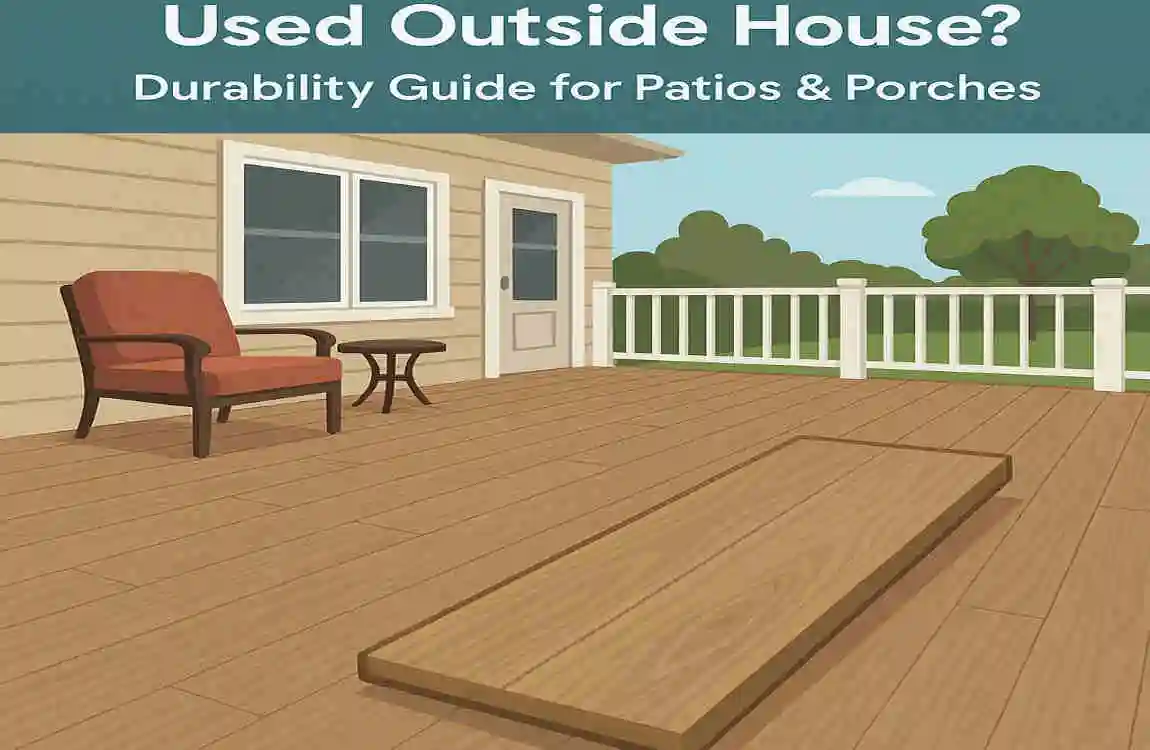
When creating a stylish and functional outdoor space, choosing the right flooring is crucial. Many homeowners dream of transforming their patios and porches into beautiful, low-maintenance areas where they can relax or entertain guests. But with weather exposure being a constant concern, the question arises: can vinyl plank flooring be used outside?
The short answer is yes, but with certain conditions. Not all vinyl plank flooring is designed for outdoor use, but outdoor-rated options provide an affordable, durable, and attractive solution for patios and porches. If installed and maintained correctly, they can withstand the elements and retain their beauty for years.
Understanding Vinyl Plank Flooring Basics
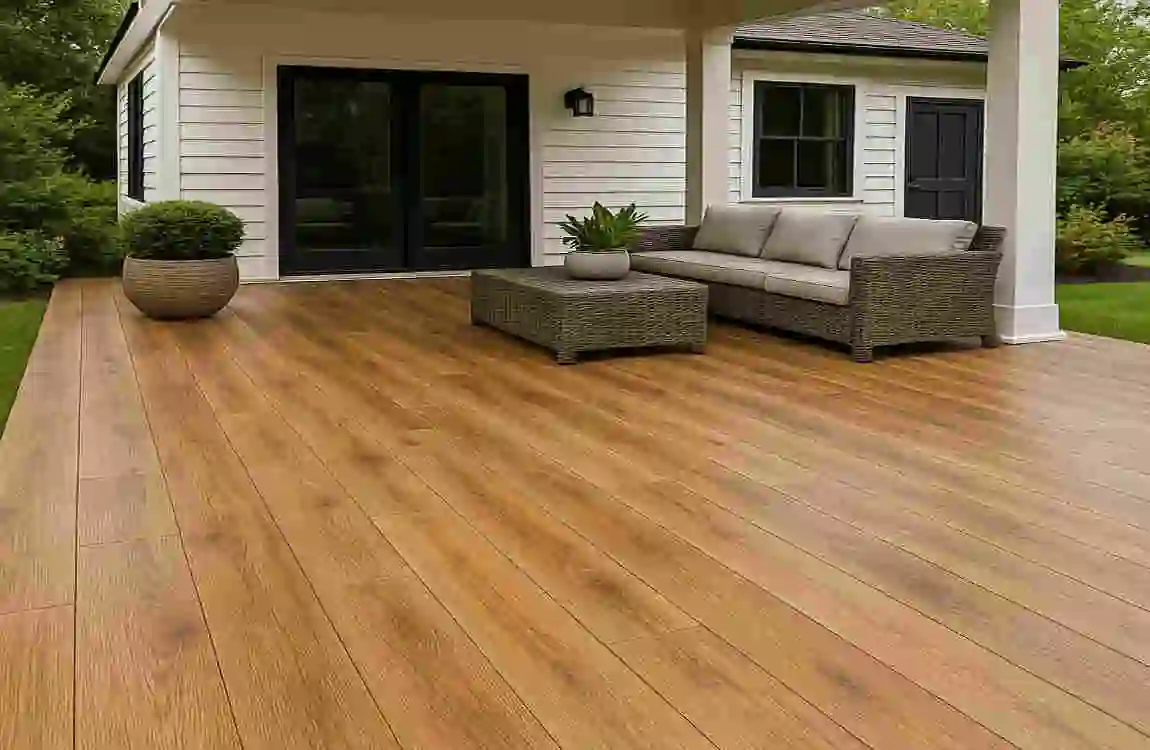
What Is Vinyl Plank Flooring?
Vinyl plank flooring is a synthetic, multi-layered material designed to mimic the look of natural wood or stone. Here’s what makes up a typical vinyl plank:
- Wear Layer: The top layer that resists scratches and stains.
- Decorative Layer: A printed design that provides the wood or stone aesthetic.
- Core Layer: The thickest layer, made of SPC (stone-plastic composite) or WPC (wood-plastic composite) for durability and stability.
- Underlayment: Some planks come with an attached underlayment for added comfort and sound insulation.
Indoor vs. Outdoor Vinyl Plank Flooring
Not all vinyl plank flooring is suitable for outdoor use. Here’s a quick comparison:
FeatureStandard Vinyl Plank Outdoor Vinyl Plank
UV Resistance Low High
Water Tolerance Moderate Excellent
Temperature Range 0-100°F -20-140°F
Cost per sq ft $2-5 $4-8
As you can see, outdoor vinyl plank flooring is specifically engineered to handle harsher conditions. It includes UV stabilizers, thicker wear layers, and better water resistance compared to standard indoor vinyl.
Durability Factors: Can Vinyl Plank Flooring Withstand the Elements?
When considering vinyl plank flooring for an outdoor space, durability is key. Let’s break down how it holds up under various environmental conditions.
1. UV Resistance and Fading
One of the biggest challenges for outdoor flooring is sun exposure, which can cause discoloration or fading over time. Unlike standard vinyl planks, outdoor-rated options are treated with UV stabilizers, such as rutile titanium dioxide, to prevent damage.
- Test Results: According to ASTM G154 standards, UV-tested outdoor vinyl planks retain over 95% of their original color after 1,000 hours of sun exposure.
So, if you’re installing vinyl plank flooring in a sunny area, choose outdoor-grade planks to avoid fading.
Water and Moisture Resistance
Outdoors, flooring is constantly exposed to moisture from rain, humidity, or even morning dew. Fortunately, vinyl plank flooring is waterproof—especially when you choose planks with an SPC or WPC core.
- Real-Life Example: Some brands have tested their planks by submerging them in water for 30 days. Results showed no swelling, warping, or structural damage, making them ideal for rainy climates or covered porches.
Temperature Extremes and Thermal Stability
Outdoor spaces experience fluctuating temperatures, especially in climates with harsh winters or sweltering summers. Vinyl plank flooring with an SPC core is designed to resist expansion and contraction in extreme conditions.
- Best Temperature Range: Outdoor vinyl planks can handle temperatures between -20°F and 140°F, making them suitable for most regions. However, in areas with frequent freeze-thaw cycles, additional precautions like sealing edges are recommended.
Foot Traffic and Impact Resistance
Outdoor spaces like patios often endure heavy foot traffic. This can lead to scratches, dents, and wear over time. To combat this, outdoor vinyl planks are built with a thicker wear layer (20-30 mil), ensuring long-lasting durability.
- Abrasion Tests: Comparisons show that outdoor vinyl plank flooring outlasts materials like bamboo by 2x in abrasion tests, such as the Taber test.
Pros and Cons of Using Vinyl Plank Flooring Outdoors
Let’s weigh the advantages and disadvantages of vinyl plank flooring for patios and porches.
Pros
- Affordable: Costing between $4-$8 per sq. ft., vinyl plank flooring is a budget-friendly alternative to natural stone or hardwood.
- Easy Installation: With click-lock systems, vinyl planks are DIY-friendly and don’t require grout or adhesives.
- Waterproof and Slip-Resistant: Perfect for rainy patios or poolside areas with textured surfaces.
- Low Maintenance: Requires minimal upkeep compared to wood or tile.
- Eco-Friendly Options: Some brands use recycled materials, making them a greener choice.
Cons
- Not Ideal for Direct Ground Contact: Vinyl planks need a solid subfloor, like concrete or pavers.
- Warranty Limitations: Many warranties are void if the product is not specifically rated for outdoor use.
- UV Chalking: In high-UV areas, additional sealants might be needed to prevent surface chalking.
Best Practices for Installation on Patios and Porches
To ensure your vinyl plank flooring performs well outdoors, proper installation is essential. Here are some best practices to follow.
Site Preparation
- Level the Subfloor: Start with a clean, even surface like concrete, pavers, or a wooden floor.
- Ensure Proper Drainage: Slope your patio or porch by 1/4 inch per foot to prevent water pooling.
Choosing the Right Product
- Look for outdoor-rated brands like Coretec Outdoor or Proximity Mills.
- Opt for planks with a thickness of 5-8mm and a wear layer of at least 20 mil.
Step-by-Step Installation Guide
- Acclimate the Planks: Store them in the installation area for 48 hours to adjust to temperature and humidity.
- Lay an Underlayment: Use a moisture barrier or underlayment for added protection.
- Install the Planks: Use a click-lock system and leave a 1/4-inch gap around edges to allow for expansion.
- Seal Edges: Apply a sealant around the perimeter for extra water resistance.
Real-World Applications and Maintenance Tips
Case Studies: Success Stories
- Texas Porch Transformation: A homeowner installed outdoor vinyl planks on their humid porch. After 2 years, there was no fading or warping, even with daily sun exposure.
- Rainy Climate Patio: A covered patio in the Pacific Northwest used SPC vinyl planks and reported excellent durability after 3 years of heavy rains.
Maintenance Tips
- Regular Cleaning: Sweep weekly and wash with mild soap and water.
- UV Sealant: Apply a UV sealant annually in areas with intense sunlight.
- Avoid Harsh Chemicals: Stick to pH-neutral cleaning products to prevent damage.
With proper care, outdoor vinyl planks can last 15-25 years.
Alternatives If Vinyl Plank Isn’t Ideal
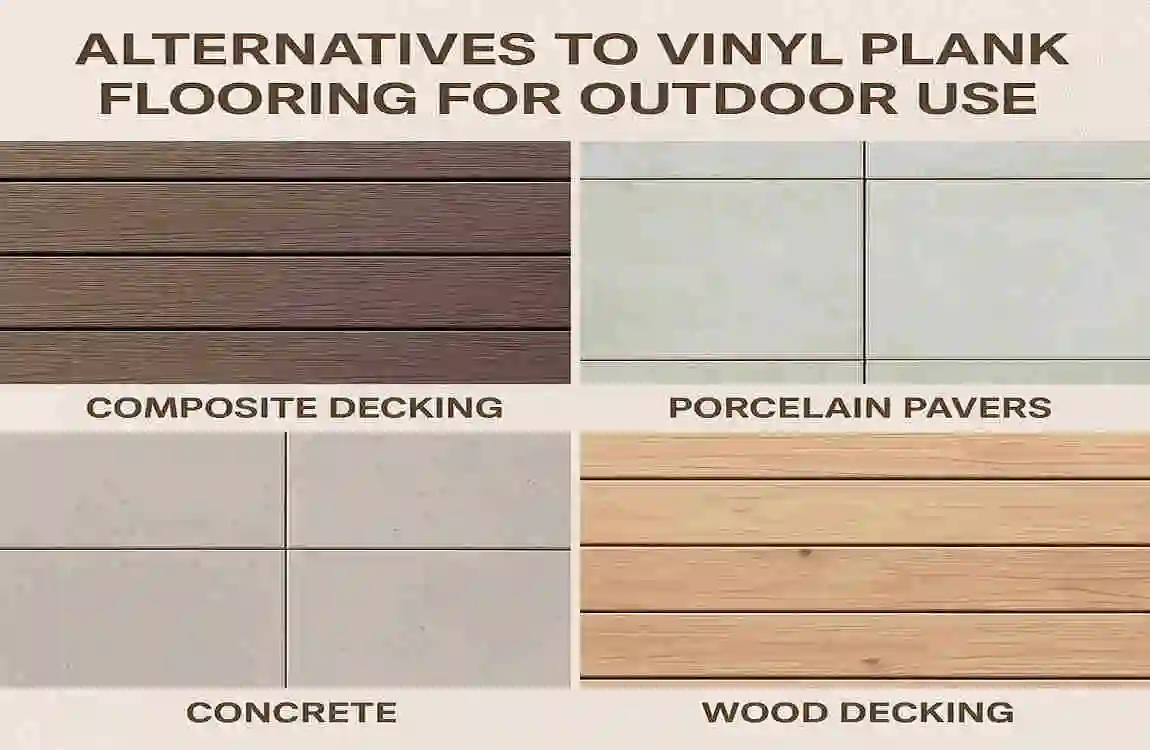
If vinyl plank flooring doesn’t meet your needs, here are some alternatives:
OptionCost/sq ftDurabilityInstall Ease
Vinyl Plank $4-8 High Easy
Composite Decking $6-12 Very High Moderate
Porcelain Tile $5-15 Highest Hard
