
Imagine this: It’s a scorching summer day, and the thermometer outside hits 100°F. Your shirt sticks to your skin, and the air feels thick enough to cut with a knife. You’re cranking up the thermostat, wondering if your cooling system can keep up. Can a heat pump cool a house in 100-degree weather? The short answer is yes—it absolutely can. But like most things in life, it’s not always straightforward. Heat pumps shine in many situations, especially with modern tech, but their cooling efficiency depends on a few key factors we’ll unpack here.
Think about folks in hot spots like Sacramento or Phoenix. They’ve dealt with triple-digit temps for years. One homeowner shared online how their heat pump held the indoors at a comfy 73°F even when it was 110°F outside. No sweat, literally. These real stories show that heat pumps aren’t just for mild climates anymore. They’re tough cookies that reverse their magic as they heat and cool seamlessly.
How Heat Pumps Work for Cooling
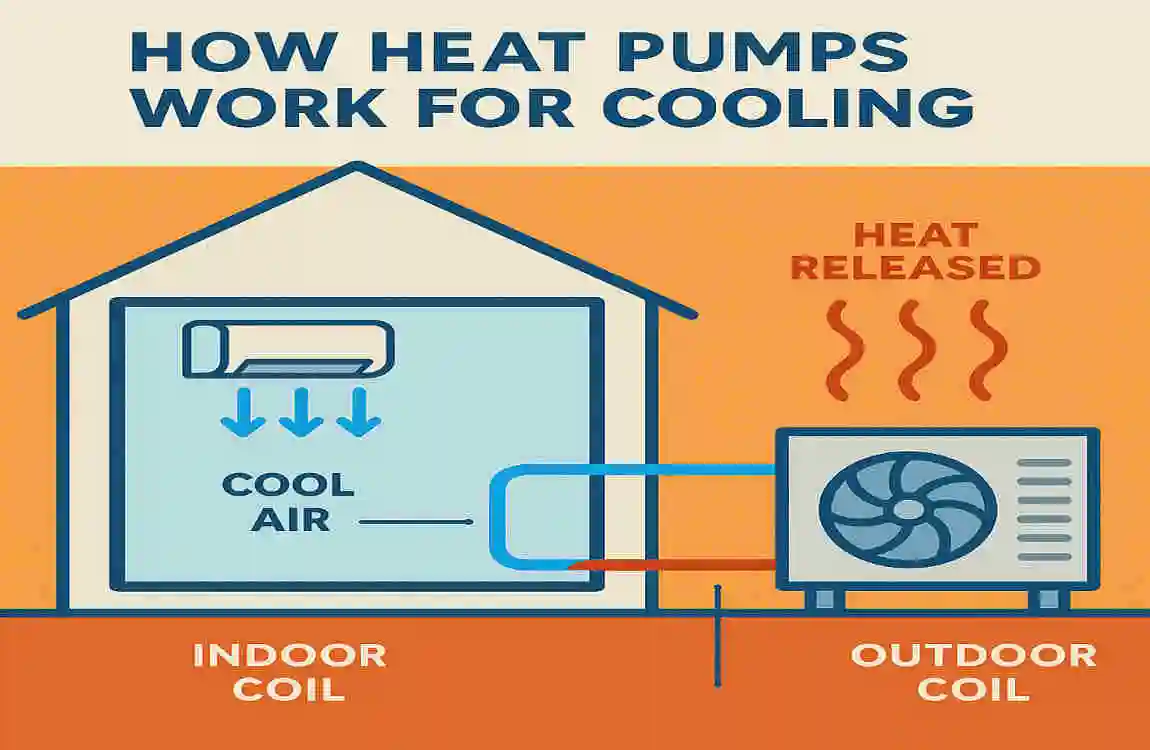
Heat pumps are like clever magicians when it comes to temperature control. They don’t “make” cold air out of thin air. Instead, they move heat around. In cooling Mode, a heat pump grabs heat from inside your home and dumps it outside. Yes, even when it’s blazing hot out there.
The Refrigeration Cycle Reversal
At the heart of it all is the refrigeration cycle. Picture a loop of refrigerant—a special fluid that loves to absorb and release heat. In summer, the cycle flips. The indoor coil gets super cold, pulling heat (and moisture) from your air. That warm refrigerant then travels to the outdoor coil, where a fan blasts it into the hot outdoors.
This works in 100-degree weather because the outdoor temperature isn’t a hard stop. Modern units push heat outside as long as there’s a temperature difference. The ideal setup keeps your home about 20°F cooler than the outside temperature. So on a 100°F day, aim for 80°F indoors max for peak heat pump cooling efficiency. Push lower? It still works, but it takes more effort.
Variable-Speed Compressors: The Game-Changer
Older heat pumps used single-stage compressors—like an on/off switch. Full blast or nothing. But today’s inverter-driven units? They’re variable-speed wonders. The compressor ramps up or down smoothly, matching your home’s needs. In extreme heat, this means steady cooling without short-cycling.
Why does this boost extreme heat performance? Short-cycling wastes energy and stresses parts. Inverters keep things consistent, maintaining 73-75°F indoors on 110°F days. Users in hot climates swear by them—no gasping for cool air.
Physics Made Simple: COP and Efficiency
Let’s break down the science without the jargon. Efficiency is measured by COP—Coefficient of Performance. It’s how much cooling you get per unit of electricity. In mild weather, COP hits 3-4 (three to four times more efficient than straight electric heat). As outdoor temps climb to 100°F, COP dips to 2-3. Still great! It beats old-school resistance heaters by miles.
Think of it like this: Your heat pump is a super-efficient truck hauling heat uphill. Hotter outside? The hill steepens, so it works harder. But with the right model, it never quits.
Real-World Performance in 100°F Heat
You’ve heard the theory—now let’s talk results. Homeowners across sun-baked regions prove that heat pumps deliver in 100-degree weather. They reliably cool homes to 70-75°F, though not as lightning-fast as beefy traditional ACs. The key? Proper setup.
Evidence from Hot Climates
In places like Texas or Arizona, where 100°F+ days string together, heat pumps hold their own. One Reddit user in Sacramento ran their ducted heat pump through a 110°F scorcher. Indoors? Steady 73°F. It took a couple of hours to recover from a hot morning, but comfort won out. Another in Florida hit 75°F setpoint on 105°F days with an inverter model. These aren’t flukes—thousands report similar wins.
Data backs it up. Studies show that modern air-source heat pumps maintain output up to 115°F at ambient temperatures. Cooling capacity drops 1-2% per degree above 95°F, but they still hit setpoints. Compare that to oversized ACs that blast cold, then idle—heat pumps run steady for better humidity control.
Key Factors Affecting Performance
Not all heat pumps perform the same in extreme heat. Here’s a table breaking down the big influencers:
FactorImpact on Cooling
Sizing (BTUs) Undersized struggles to hit setpoint; right-sized nails it
Insulation Poor seals let heat sneak in, overloading the unit
Humidity: High moisture makes air feel warmer, slows the “cool feel”
Model (Inverter vs. Single-Stage) Inverters sustain power; single-stage pulses and rests
Sizing is huge. Too small? It runs nonstop without cooling off enough. Use a Manual J calculation—it’s like a custom suit for your home’s heat load.
Insulation acts as your first defence. Seal gaps, add attic foam, and watch your heat pump work less. In humid areas, it pulls double duty as a dehumidifier, making 75°F feel like 70°F.
Humidity tricks your senses. A heat pump at 75°F with 40% humidity feels crisp. At 70%? Muggy. Inverters excel here, running longer for drier air.
User Testimonials and Lessons Learned
Real people cut through the hype. “My Mitsubishi inverter cooled my 2,000 sq ft home to 72°F on 108°F days,” says one forum poster. “Took 3 hours from 85°F start, but bills dropped 40%.” Another: “Oversized my old AC—froze coils. Heat pump? Goldilocks is perfect.”
Challenges? Undersized units or dirty filters falter. But with maintenance, they thrive. If you’re in a hot zone, these stories show extreme heat performance isn’t a myth—it’s everyday reality.
Limitations and Myths Busted
Heat pumps aren’t superheroes—they have limits. But many fears are overblown. Let’s clear the air on common myths about cooling in 100-degree weather.
Myth 1: Heat Pumps Fail Above 95°F
Busted. They don’t fail—they adapt. Efficiency dips, sure. At 100°F, output might drop 10-20% from peak. But they still cool below 80°F indoors. Set realistic expectations: 73°F on 110°F days is doable with inverters, not magic.
Older models effectively topped out around 95°F. New ones? Rated to 120°F. No hard cutoff.
Myth 2: They’re Weaker Than Traditional AC
Reality check. Matched by SEER rating and BTUs, they’re equals. Heat pumps deliver the same cooling punch. The difference? No reversing valve drama in pure cooling Mode. Traditional ACs edge on super-fast ramp-up if oversized, but that’s inefficient.
Defrost cycles? Mostly a winter thing. In summer heat, irrelevant.
Real Limitations to Watch
Capacity fades above 110°F—expect longer run times. High humidity demands a dehumidification Mode. Pair with a small backup for peaks if you’re picky.
Bottom line: Heat pumps match AC in cooling efficiency for most homes. Myths die with facts.
Tips to Maximise Cooling in Extreme Heat
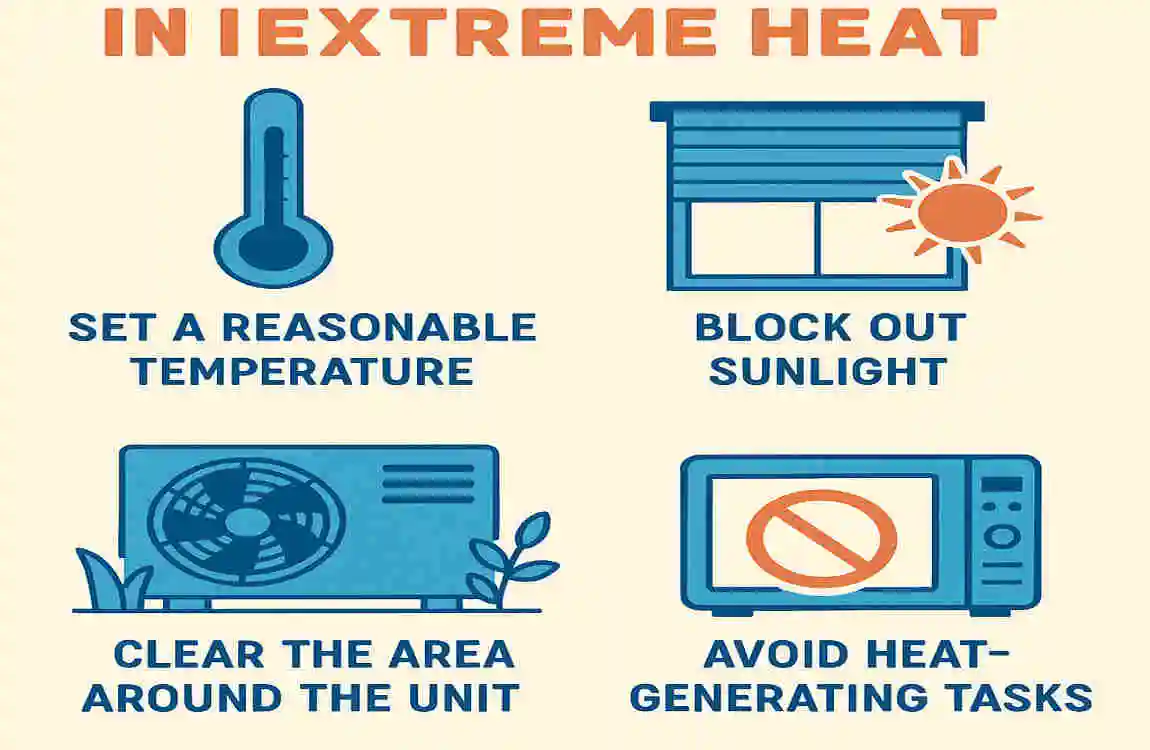
Want your heat pump to crush 100-degree weather? Follow these steps. Proper prep turns good Performance into great.
Choose the Right Model and Size
Go for high-SEER (20+) inverters designed for hot climates. Brands like Mitsubishi or Daikin excel in extreme heat performance. Size via Manual J—accounts for windows, insulation, and sun exposure. Oversize? Short cycles. Undersize? Endless runtime.
Everyday Maintenance Hacks
Clean filters monthly—clogged ones choke airflow. Hose coils yearly. Shade the outdoor unit to cut the sun load by 10°F.
Smart Habits for Peak Efficiency
- Pre-cool early. Start before noon on hot days.
- Seal your home. Caulk cracks, weatherstrip doors.
- Use fans. Ceiling fans let you set 2°F higher comfortably.
- Smart thermostat. Models like Ecobee optimise ramps.
Pre-Summer Checklist
Here’s your bullet-proof list:
- Schedule heat pump installation pros for a load calc.
- Test run in spring—check refrigerant levels.
- Insulate ducts if in the attic.
- Add window films to block solar gain.
- Plant shade trees long-term.
Do this, and you’ll sip cool air while others sweat. Your wallet thanks you, too.
Cost, Savings, and ROI
Upfront, heat pumps cost $4,000-$8,000 installed for a 3-ton unit. More than a basic AC? Yes, but dual-season use pays off.
Savings shine: 30-50% lower bills vs. AC alone. In hot/cold zones, overall efficiency hits 200-400%. Inflation Reduction Act rebates? Up to $2,000 federal, plus state perks.
ROI? 5-7 years in sunny spots. Example: $150/month AC bill drops to $100 with heat pump—annual save: $600. At a $6,000 cost minus a $2,000 rebate, the payback is in 7 years, then pure profit.
Factor in rising energy costs, and it’s faster. Long-term? Resale boost and eco wins.
