

Have you ever woken up after a rainy night to find a slimy, glistening trail winding its way across your kitchen floor? If so, you’re not alone. Slugs are notorious for sneaking into homes during damp weather, leaving behind sticky evidence of their midnight adventures. These soft-bodied garden pests aren’t just a nuisance—they can pose hygiene risks, damage property, and make your cosy home feel less inviting.
Why do slugs invade your space? The answer is simple: slugs love moisture, darkness, and easy access to food. When outdoor conditions are wet, and your garden is lush, slugs seek warmth and safety indoors. They can squeeze through the tiniest cracks—sometimes as small as 1mm!—and often find their way in through gaps, vents, or even under doors. If your garden is close to the clean house or you have mulch, compost, or damp leaves nearby, you’re even more likely to see these uninvited guests.
- How to seal up your home against slug invaders
- Natural slug barriers that deter them from crossing thresholds
- Repellents that use scent and texture to drive slugs away
- How to encourage natural slug predators for long-term control
By the end, you’ll have a step-by-step action plan to tackle slugs head-on, save money on pest control, and protect your indoor space—naturally. Ready to say goodbye to slug trails and hello to a healthier home? Let’s dive in!
Why Slugs Invade Homes

To truly master how to stop slugs from coming into the house, it helps to understand what makes your home so appealing to them in the first place.
Slug Biology: Masters of Moisture
Slugs are soft-bodied, moisture-loving creatures. Their bodies are made up almost entirely of water, which means they’re always searching for damp, cool environments to avoid drying out. Unlike insects, slugs lack a hard shell so that they can squeeze through surprisingly tiny openings—sometimes as narrow as a single millimetre!
Common Entry Points
Slugs are expert escape artists. Here are some of the most common ways they make their way inside:
- Gaps under doors: Even a small space can be a welcome mat for slugs.
- Cracked window seals: Moisture and warmth attract them to these weak spots.
- Foundation cracks: Slugs can crawl through tiny fissures in your home’s base.
- Vent openings: Air bricks and vents offer dark, moist entryways.
Triggers for Slug Invasions
Slugs are most active during:
- Wet weather: Rain softens the ground, making it easy for slugs to move around.
- Nighttime: Darkness and cool air let slugs roam safely.
- Proximity to gardens or mulch: Slugs love hiding in damp leaves, compost, or mulch close to the house.
Risks of Indoor Slugs
Beyond the “ick” factor, indoor slugs pose problems, such as:
- Property damage: Slugs can chew holes in fabrics, paper, and even wallpaper.
- Hygiene issues: Their slime can carry bacteria and is hard to clean.
- Spread from garden pests: They may bring in soil, plant debris, or even parasites.
Now that you understand the enemy, let’s get your home prepared for defence!
Preparation Steps
Before you deploy your eco-friendly defences, preparation is key. A little groundwork ensures your efforts work efficiently and last longer.
Inspect Your Home at Night
Slugs are nocturnal, so the best time to spot their activity is after dark. Grab a flashlight and take a slow walk around the inside and outside of your home. Look for:
- Slime trails: Silvery tracks on floors, walls, or windows.
- Hidden slugs: Check under mats, behind flowerpots, and in dark corners.
Seal Up Entry Points
Once you’ve identified where slugs are slipping in, it’s time to block their path. Focus on:
- Silicone caulk: Seal any cracks around windows, doors, and foundations.
- Weatherstripping: Add to door frames for a tight seal against the floor.
- Draught excluders: Place at the base of exterior doors for extra protection.
Reduce Outdoor Attractiveness
Prevent slugs from gathering near your home by:
- Clearing away debris: Remove fallen leaves, mulch, and damp wood near entrances.
- Fixing leaks: Ensure gutters, pipes, and faucets aren’t dripping.
- Drying out gardens: Use gravel paths and keep mulch away from walls.
With your home inspected and sealed, you’re now ready to deploy the seven eco-friendly defences that make all the difference!
Proven Eco-Friendly Defences
Each of these methods is designed to keep your home slug-free—safely, naturally, and effectively. Let’s explore each one in detail.
Copper Barriers: Zap Slugs at the Source
Copper tape is one of the best ways to stop slugs at doors and windows. When slugs try to cross copper, a mild electrical reaction occurs between their slime and the metal, giving them a harmless but unpleasant shock.
How to Apply Copper Tape
- Clean the surface where you’ll apply the tape—dirt or dust can weaken the adhesive.
- Cut 2-inch-wide strips of copper tape.
- Wrap or stick the tape around door frames, window sills, or any entry point you’ve found.
- Check for plant “bridges”—ensure no leaves or twigs touch both sides of the barrier, as slugs can use these as a shortcut.
Pros:
- Long-lasting; rarely needs replacing.
- Completely safe for pets, children, and wildlife.
- Visually subtle.
Cons:
- Initial investment is higher than that of some other methods.
- It must be kept clean and free of debris to work well.
Sheep Wool Pellets: Nature’s Slug Shield
If you’re looking for a biodegradable, pet-safe barrier, sheep wool pellets are a fantastic choice. When exposed to moisture, these organic pellets swell up, creating a dense, fibrous mat that irritates and repels slugs.
How to Use Wool Pellets
- Scatter pellets in a band 2-3 inches deep at thresholds, under doors, and around vents.
- Water lightly to help them expand and lock together.
- Reapply after rain or heavy watering.
Benefits:
- 100% natural and biodegradable.
- Doubles as a mulch, enriching soil if used outdoors.
- Safe for children, pets, and wildlife.
Drawbacks:
- May need topping up after heavy rain.
- Can have a mild “sheep” smell when wet (fades quickly).
Rough Surface Deterrents: Make It Uncomfortable
Slugs hate crawling over sharp, gritty surfaces. Materials like crushed eggshells, diatomaceous earth, or horticultural grit form a physical barrier that slugs avoid.
Steps to Create a Rough Barrier
- Gather materials: Save eggshells, buy diatomaceous earth, or use sharp sand/grit.
- Crush eggshells finely so pieces are sharp but not too powdery.
- Spread a 2-3-inch-wide band at entry points—along door thresholds, window sills, or vents.
- Refresh after rain, as water can flatten or wash away the barrier.
Pros:
- Cheap and easy to find.
- No chemicals; safe for the environment.
Cons:
- Needs frequent reapplication in wet weather.
- Diatomaceous earth can be dusty—handle with care.
Scented Slug-Repelling Plants: Beautify and Protect
Certain aromatic plants naturally repel slugs. Scents like rosemary, fennel, wormwood, and rue are unpleasant for these pests, making them excellent living barriers.
How to Use Plants as Slug Repellents
- Plant rosemary, fennel, wormwood, or rue near doors, windows, and patios.
- Use pots or planters if space is limited or you want mobility.
- Combine with other barriers for layered protection.
Benefits:
- Adds beauty and fragrance to your home’s entrance.
- It can be harvested for cooking or herbal remedies.
- Provides long-term, low-maintenance defence.
Drawbacks:
- Takes time for plants to grow large enough to be effective.
- Some plants (like rue) should be handled with gloves, as they can irritate skin.
Encourage Natural Predators: Nature’s Cleanup Crew
One of the most sustainable ways to prevent slugs in the home is to attract their natural predators. Birds, frogs, hedgehogs, and even some beetles love to snack on slugs.
Tips to Attract Predators
- Install bird feeders and baths near the clean house to draw birds.
- Create a small pond or water dish to invite frogs and toads.
- Leave small gaps in fences (about 13cm wide) for hedgehogs to pass through.
- Build or buy a hedgehog house and place it in a quiet, shady spot.
Pros:
- Reduces slug populations naturally and sustainably.
- Boosts garden biodiversity and enjoyment.
- No maintenance once setup is complete.
Cons:
- It may take time for predators to discover your garden.
- Some areas may not have all these wildlife species.
Beer Traps and Boards: Old-School, Effective
Slugs are drawn to the smell of yeast and seek moist hiding places. You can harness this to trap and remove them.
How to Set Beer Traps and Boards
- Half-bury a shallow container filled with stale beer near entry points.
- Place wooden boards or upturned pots nearby.
- Check traps each morning—slugs will have drowned in the beer or hidden under the boards for easy removal.
- Empty beer traps daily to prevent attracting other pests.
Benefits:
- Simple, affordable, and effective.
- No chemicals; just household leftovers.
Drawbacks:
- Requires daily maintenance.
- Beer traps can attract other insects if not cleaned regularly.
Eco-Note: Always use stale beer or leftover yeast water to keep this method waste-free..
Seaweed or Garlic Sprays: Natural Slug Repellents
Seaweed and garlic both act as strong, natural irritants for slugs. Seaweed is salty, dries quickly, and is full of minerals, while garlic releases a strong scent that slugs avoid.
How to Use Seaweed or Garlic Spray
- Seaweed mulch: Spread fresh or dried seaweed in a band around the foundation or entrances. Replace every few weeks.
- Garlic spray recipe:
- Peel and crush 2-3 garlic cloves.
- Boil in 1 litre of water for 10-15 minutes.
- Strain and allow to cool.
- Pour into a spray bottle and apply to entry points weekly.
Pros:
- Inexpensive and easy to make at home.
- Completely safe for people and pets.
- Seaweed enriches soil if used in gardens.
Cons:
- Garlic spray needs regular reapplication.
- Seaweed may not be accessible everywhere.
Additional Tips and Maintenance
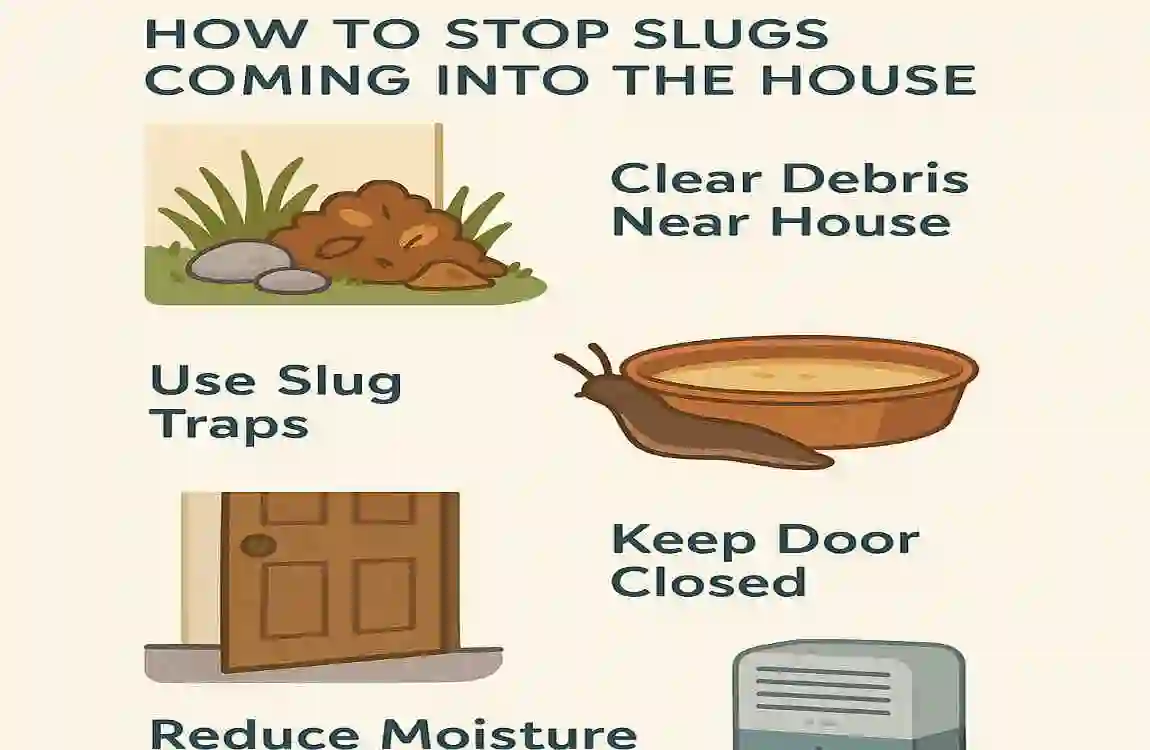
Combining these eco-friendly defences is the best way to stop slugs from coming into the house for good. Here are a few extra tips to keep your home slug-free:
- Monitor regularly, especially after rain—slugs are most active in wet conditions.
- Troubleshoot issues: If slugs keep appearing, check for missed entry points or barriers that need refreshing.
- Maintain a drier garden: Use gravel or slate chips close to the clean house foundation.
Quick Reference Table
Defence Best For Reapplication Frequency
Copper Tape [3] Doors/Windows None
Wool Pellets [1] Thresholds After rain
Eggshells [9] Floors Weekly
Don’t forget: Combining several methods creates layers of defence that slugs can’t overcome.
