
If you’ve ever wondered, “Is it worth rewiring a house?”—especially in 2026, when energy costs are higher than ever—you’re not alone. Many homeowners face the tough choice between living with old, possibly unsafe wiring and making a major investment in their home’s future.
Old electrical systems come with risks—from frequent power outages to the very real threat of fire. At the same time, a full rewiring job isn’t cheap. For a typical 1,500 square foot house, you could be looking at $10–$20 per square foot, or a total of $15,000–$30,000. Why spend that much? The answer lies in the long-term benefits: improved safety, better energy efficiency, and even savings on your insurance bill.
Signs You Need Rewiring
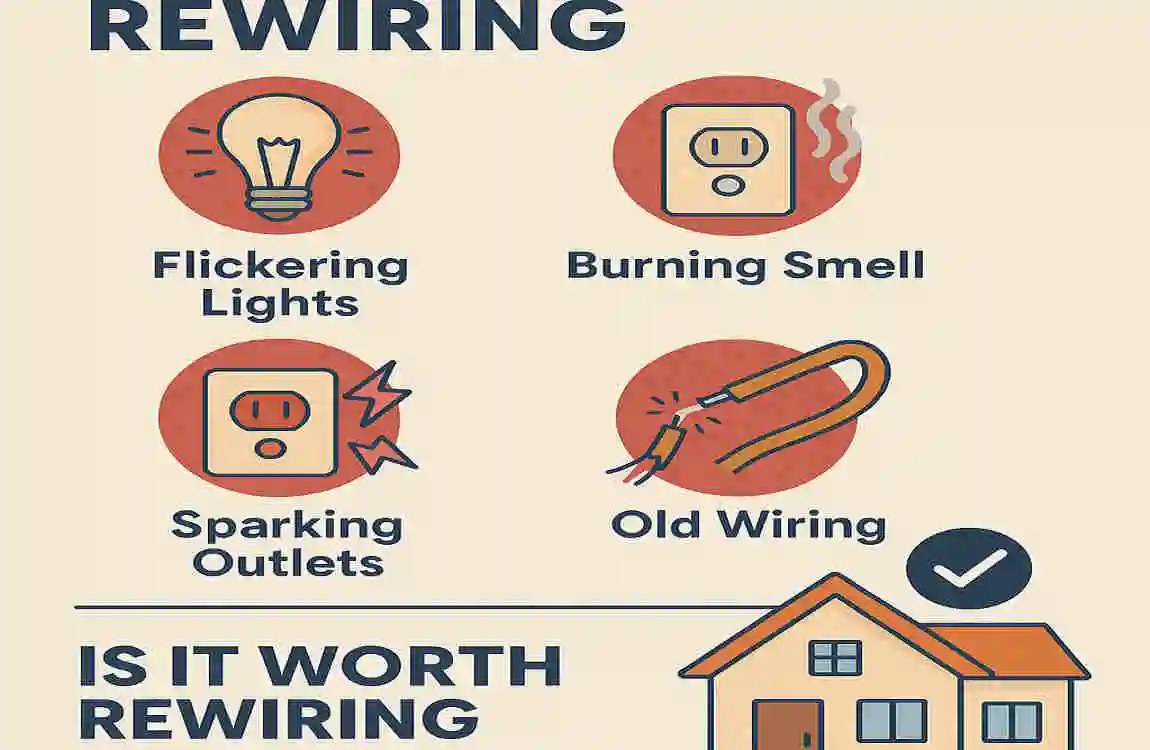
When it comes to home safety, your wiring matters more than you might think. Outdated electrical systems can put your house, family, and even your investment at risk. So, how do you know if it’s time for an upgrade? Here are the most common warning signs that rewiring your house is worth considering:
Top Warning Signs
- Frequent breaker trips or flickering lights: These are classic signals that your system is overloaded or struggling to keep up with modern demands.
- Knob-and-tube or aluminum wiring: Common in homes built before the 1960s, these types are notorious fire hazards.
- Burning smells or warm outlets: If outlets are hot to the touch or you notice a persistent burning odor, that’s a major red flag.
- Two-prong outlets (no grounding): Grounded outlets became standard after the 1960s; older two-prong types increase shock risk.
- Visible cloth-insulated wires: These deteriorate faster than modern insulation and can become brittle, leading to shorts.
- Sparking outlets or switches: If plugging in appliances causes sparks, call an electrician immediately.
- Buzzing sounds or humming from outlets/panels: This often means loose connections or internal damage.
- Insurance denial or premium hikes: Many providers won’t insure homes with outdated wiring or will charge much higher rates.
- Inability to support modern appliances: If your circuits can’t handle an EV charger, air conditioner, or smart home devices, rewiring might be needed.
- Frequent use of extension cords or power strips: This isn’t just inconvenient—it’s a sign your home’s wiring can’t keep up.
Risk and Urgency Table
| Sign | Risk Level | Urgency |
|---|---|---|
| Frequent outages | High | Immediate [3] |
| Ungrounded outlets | Medium | 1-2 years |
| Cloth-insulated wires | Critical | Now [7] |
| Burning smell/warm outlet | Critical | Now |
| Insurance issues | High | Immediate |
| Flickering lights | Medium | Within 1 year |
Take action if any of these apply to you. These red flags make rewiring worth it—and next, we’ll break down exactly what it’ll cost.
Rewiring Costs Breakdown
Rewiring a house is a significant investment, but understanding the costs can help you plan—and even save money. Let’s look at what affects pricing, how it varies by room, and some smart ways to reduce your outlay.
Factors Affecting Cost
Several elements influence the final price tag of your house rewiring project:
- Home size: The bigger your house, the higher the cost. For example, a 1,000 sq ft home could range from $6,000–$10,000, while a 2,500 sq ft home might hit $15,000–$25,000. [3]
- Age and accessibility: Older homes with plaster or lathe-and-plaster walls can increase labor by 20–50%.
- Wiring materials: Copper is the gold standard but costs $2–$4 per foot. Aluminum is cheaper but less desirable due to safety concerns.
- Code upgrades: Adding modern safety features like GFCI (ground fault circuit interrupter) and AFCI (arc fault circuit interrupter) outlets adds to materials and labor.
- Location: Urban electricians often charge $100/hour or more, while rates may be lower in rural areas. [9]
- Permits and inspections: Don’t forget city inspection and permit fees, usually $500–$2,000.
Cost by Room/Area
Here’s a quick look at typical rewiring costs by area:
| Area | Cost Range | Key Upgrades |
|---|---|---|
| Kitchen | $1,500–$3,000 | GFCI, 240V appliances [5] |
| Bedrooms | $1,000–$2,000 | USB outlets, AFCI |
| Bathrooms | $800–$1,500 | GFCI, humidity protection |
| Living Room | $1,200–$2,500 | Extra outlets, lighting circuits |
| Full House (1,500 sq ft) | $15,000–$30,000 | Panel upgrade ($2k–$4k extra) [1][7] |
Ways to Save on Rewiring
- Partial rewiring: If only certain rooms are at risk, you might pay $4,000–$12,000 instead of a full rewire.
- DIY prep: Removing drywall yourself can cut labor costs, but leave wiring to the pros for safety.
- Off-peak scheduling: Booking during the slower winter season can net discounts.
- Financing and grants: Ask your utility company or city about rebates for energy-efficient upgrades.
Is It Worth Rewiring a House Financially?
Absolutely—if you factor in the long-term ROI. Modern wiring can boost your home’s energy efficiency by 20–30%, which means lower electric bills. In many cases, you’ll recoup your investment in 5–10 years through savings and higher resale value.
Benefits of Rewiring
Still on the fence? Let’s dig into the biggest reasons why rewiring your house is worth it.
Safety First
Safety is the number one reason to rewire. According to the National Fire Protection Association, outdated wiring causes about 70% of home electrical fires. Modern systems, built to code (NEC 2023), slash your risk dramatically.
- Eliminates fire hazards: No more brittle wires, loose connections, or overloaded circuits.
- Protects your family: Peace of mind every time you plug in an appliance.
Energy Efficiency & Savings
Upgrading your wiring means you can finally use energy-efficient tech—like LED lighting, smart thermostats, and EV chargers.
- Lower bills: Expect to save 15–25% on electricity.
- Eco-friendly: Reduced energy waste is better for the planet.
- Attracts buyers: Modern wiring is a selling point, especially for families and remote workers.
- Easier insurance and inspections: No more red tape when renewing or selling.
Modern Features and Future-Proofing
Today’s living needs are very different from those of the 1950s:
- Smart home integration: Voice assistants, smart thermostats, and security systems all need modern wiring.
- Convenient outlets: More outlets, USB charging, and dedicated circuits for home offices.
- Ready for future upgrades: 2026 code changes may require even more robust wiring.
Cost vs. Benefit ROI Table
| Benefit | Upfront Cost | Long-Term Savings/Value |
|---|---|---|
| Safety | $15,000 | Avoids $50,000+ fire claims |
| Efficiency | $2,000 (panel) | $300/year energy [5] |
| Value | Full rewire | +$20,000 resale [1] |
When to Rewire: Decision Guide
It’s not always obvious when to take the plunge. Here’s a simple decision guide to help you decide if rewiring your house is worth it.
Decision Flowchart (Described)
Start with your home’s age:
- Older than 40 years?
- Yes: Check for warning signs (see above).
- No: Move to next question.
Any urgent red flags (burning smells, frequent outages, insurance issues)?
- Yes: Do it now.
- No: Continue.
Are you planning renovations or selling in the next 1–2 years?
- Yes: Plan to rewire soon.
- No: Consider partial rewiring or upgrades only.
No symptoms and house less than 30 years old?
- You may be able to wait or just upgrade the panel.
Pros and Cons Table
| Pros | Cons |
|---|---|
| Improved safety, code compliance | High upfront cost |
| Energy efficiency, lower bills | Disruption (3–7 days) [1] |
| Increased property value | Dust, mess, cleanup |
| Modern tech support | Need for permits/inspections |
Alternatives to Full Rewiring
Not every home needs a complete overhaul. Sometimes, targeted upgrades can give you the benefits you need without the full price tag.
- Panel upgrades only: Replacing just your electrical panel can cost $2,000–$5,000 and may be enough for newer homes.
- Partial rewiring: Focusing on problem areas (like kitchens or bathrooms) runs $1,000–$3,000 per room.
- Surge protectors and safety inspections: For less than $500, these can extend the life of your existing system and add peace of mind.
When do these alternatives make sense?
- Homes under 40 years old with no major symptoms.
- When budget is tight but you want to address the worst risks first.
Case Studies & Real Costs

Case Study 1: 1950s Home, Full Rewire
- Size: 1,200 sq ft
- Cost: $12,000
- Outcome: Qualified for standard insurance, saving 40% on premiums. Home sold for $30,000 above market average.
Case Study 2: Modern Partial Rewire
- Area: Kitchen and bathroom only
- Cost: $4,000
- Outcome: Passed city inspection, enabled installation of a new induction stove and dishwasher.
Case Study 3: Energy Efficiency Payback
- Size: 1,500 sq ft, panel and lighting upgrade
- Cost: $7,000
- Savings: $900/year on utility bills. Payback in under 8 years.
These stories highlight the real ROI and peace of mind that comes with rewiring.
