
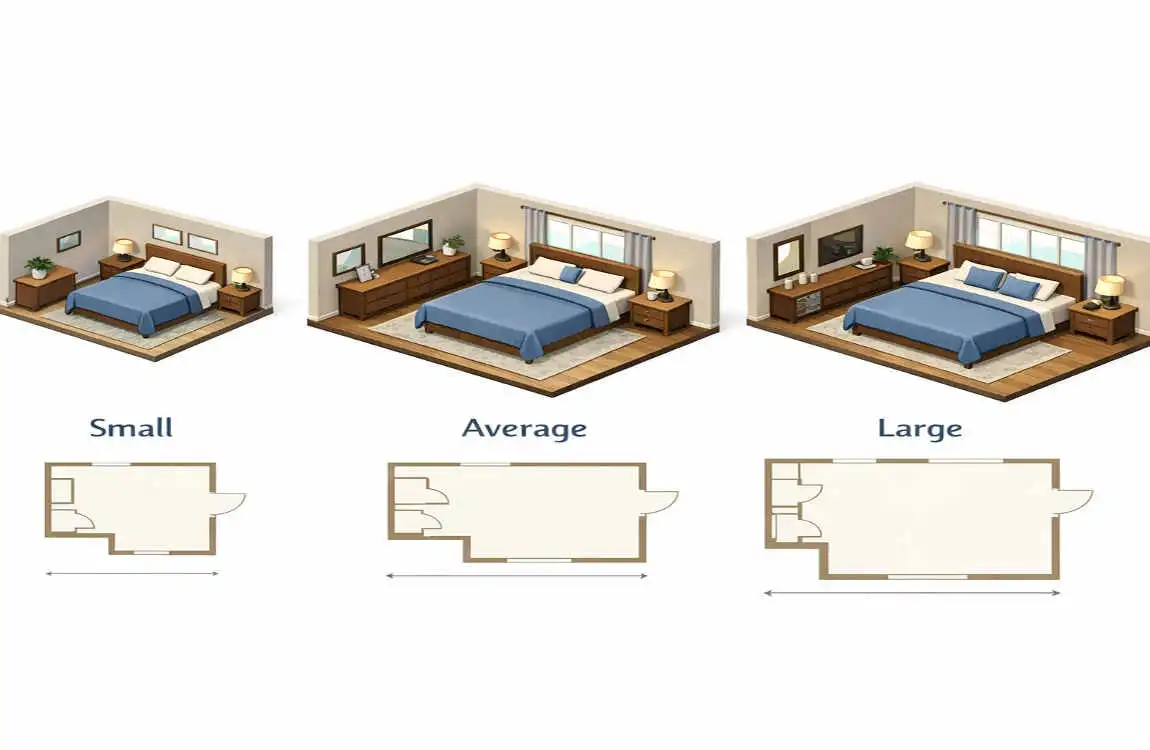
A main bedroom is usually the main sleeping space in a home. It often feels more private and more important than the other bedrooms because it is where people rest, relax, and recharge.
So, how big are master bedrooms? The answer depends on the type of home, the floor plan, and the amount of available space. In many homes, a main bedroom is around 12 × 14 feet to 15 × 20 feet, though some are smaller and others much larger.
What Is the Average Main Bedroom Size?
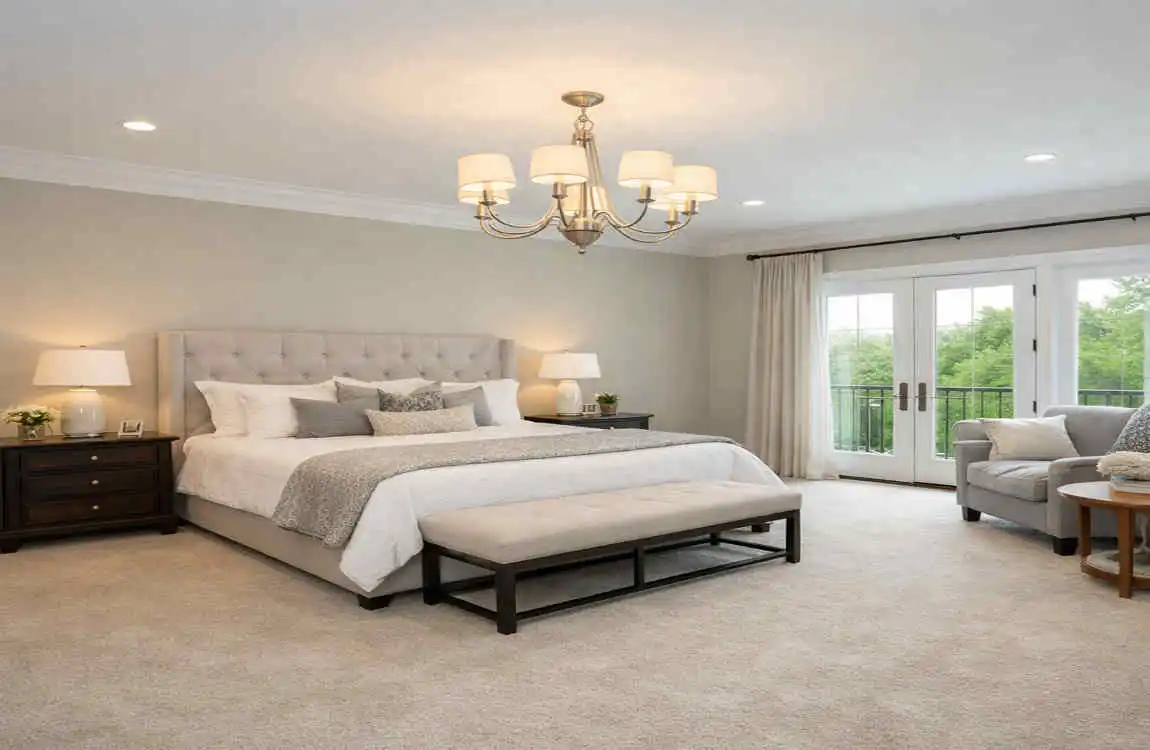
Typical Master Bedroom Dimensions
Many master bedrooms fall into a few common size ranges. Some of the most typical dimensions are:
- 12 × 14 feet
- 14 × 16 feet
- 15 × 20 feet
These sizes work well for many homes because they give enough room for a bed, nightstands, and other basic furniture without feeling too crowded.
A smaller main bedroom may still be perfectly usable if the layout is smart. A larger one may feel more luxurious, but it should still be planned carefully so the space does not feel empty.
Average Main Bedroom Square Footage
Square footage helps you compare rooms more easily. You calculate it by multiplying the room’s length by its width.
For example:
- 12 × 12 = 144 sq. ft.
- 12 × 14 = 168 sq. ft.
- 14 × 16 = 224 sq. ft.
- 15 × 20 = 300 sq. ft.
In general, a small main bedroom may be around 120–150 sq. ft., while an average one often lands between 150–250 sq. ft. Larger bedrooms may be 250 sq. ft. or more.
Keep in mind that some listings include only the bedroom itself, while others talk about the full primary suite, which may also include a bathroom and closet.
Master Bedroom Size by Home Type
Different homes usually have different-sized bedrooms.
Apartments and Condos
These often have smaller master bedrooms because space is limited. A well-planned room matters more than a huge footprint.
Small Single-Family Homes
These homes often use practical bedroom sizes, usually large enough for a queen bed and a few key pieces of furniture.
Mid-Size Family Homes
This is where you often see the most balanced main bedroom sizes. The room usually fits a larger bed, dressers, and some walking space.
Large or Luxury Homes
These homes may have spacious master bedrooms with sitting areas, built-in storage, and extra open space.
What Is a Good Size for a Main Bedroom?
Small but Functional Master Bedrooms
A smaller main bedroom can still feel comfortable if you plan it well. The key is to choose furniture that fits the room instead of forcing oversized pieces into it.
You should leave enough room to walk around the bed and access closets or windows easily. Even a compact bedroom can feel pleasant if the layout is clean and simple.
Comfortable Average-Size Master Bedrooms
This is the sweet spot for many homeowners. A room in this range often fits a queen or king bed, two nightstands, a dresser, and maybe a chair or bench.
It gives you enough room to move around without wasting space. That balance is what makes a bedroom feel easy to live in.
Large Master Bedrooms
A large main bedroom gives you more options. You can create separate areas for sleeping, reading, dressing, or relaxing.
But very large rooms can also feel less cozy if they are not arranged well. You do not want the room to feel empty or disconnected.
How Much Space Do You Need for Bedroom Furniture?
Bed Size and Room Dimensions
The bed usually decides how the rest of the room works. A queen bed is easier to place in a smaller space, while a king bed needs more room around it.
Here is a simple guide:
- Queen bed: flexible for smaller master bedrooms
- King bed: better for medium to large rooms
- California king: needs extra length and width planning
- Twin or smaller beds: usually not used in a main bedroom, but possible in compact homes
Recommended Clearance Around the Bed
You need walking space around the bed so the room feels usable rather than squeezed.
A good rule is to keep enough clearance for:
- Walking paths
- Door swings
- Closet access
- Window access
- Nightstand use
If the room is too tight, even a nice bed can make the whole space feel uncomfortable.
Other Furniture to Consider
Think beyond the bed. Many master bedrooms also include:
- Nightstands
- Dressers
- Wardrobes
- Benches
- Reading chairs
- TV or media furniture
The more pieces you add, the more important room size becomes.
Main Bedroom Size for a King Bed
Minimum Space for a King Bed
A king bed needs more room than many people expect. It is not just about placing the bed in the middle of the room. You also need enough space to move around it comfortably.
A small room may fit the bed, but that does not always mean it will feel good to use.
Comfortable Room Size for a King Bed
A king bed works best in a room that gives you good circulation on both sides and at the foot of the bed. That makes the space feel calm and practical.
If you want a king bed plus dressers or a sitting area, a larger room is usually the better choice.
Large King-Bedroom Ideas
If your room is big enough, you can add:
- A sitting area
- A reading corner
- Built-in storage
- A bench at the end of the bed
Just make sure the room still has open walking paths.
Main Bedroom Size for a Queen Bed
Why Queen Beds Work in Smaller Rooms
Queen beds are a popular choice because they fit more easily into a wide range of room sizes. They give you comfort without taking over the whole room.
That makes them a smart option for smaller master bedrooms or homes where space is limited.
Ideal Layout for a Queen-Bed Main Bedroom
A queen-bed room usually works well when you plan the layout carefully.
Try to keep in mind:
- Bed placement
- Nightstand space
- Dresser location
- Closet access
- Walking room on both sides
This helps the room feel open and organized.
How to Plan a Master Bedroom Layout
Start With the Bed
The bed should usually be the main focus. It often works best on the largest wall or the wall that gives the best balance in the room.
You should also think about windows, doors, and natural light before deciding where it goes.
Create Comfortable Traffic Flow
A good bedroom layout lets you move around easily. You should not have to squeeze past furniture or avoid bumping into corners.
Clear movement makes the room feel bigger and more peaceful.
Use the Room’s Shape Efficiently
A rectangular bedroom often gives you more layout choices than a square one. But both can work well if you plan carefully.
If the room has awkward corners, built-ins or compact furniture may help make the most of the space.
Master Bedroom Size vs. Primary Suite Size
A main bedroom usually means the sleeping room itself. A primary suite usually includes the bedroom and connected spaces such as a private bathroom, closet, or dressing area.
That means a primary suite can be much larger than the bedroom alone.
This is important when comparing home listings. A bedroom-only number is not the same as a full suite size.
How to Make a Small Main Bedroom Feel Bigger
Choose the Right Furniture
Use furniture that matches the room’s scale. Oversized pieces can make a small room feel crowded very quickly.
Improve Lighting
Good lighting helps a room feel larger. Use a mix of natural light, ceiling lighting, and lamps.
Use Colors and Materials Wisely
Light colors and simple finishes often make a room feel more open. Too many heavy patterns can make it feel smaller.
Keep Clutter Under Control
Storage is very important in small bedrooms. Use under-bed storage, vertical shelving, or built-in storage when possible.
How to Make a Large Main Bedroom Feel Cozy
A large room can feel beautiful, but it still needs warmth and purpose.
You can make it feel better by:
- Creating separate zones
- Using an area rug
- Adding a seating area
- Choosing properly sized furniture
- Using layered lighting
Without these touches, a large room may feel empty.
Master Bedroom Size and Home Value
Bedroom size can influence buyer interest, but it is not the only thing that matters. Buyers usually care about the overall feel of the home.
A balanced layout with a good bedroom, practical storage, and a functional bathroom can be more appealing than a room that is simply oversized.
So, bigger is not always better.
Quick Main Bedroom Size Guide
Bedroom TypeApproximate SizeBest For
Small Main Bedroom 120–150 sq. ft. Compact homes and apartments
Average Main Bedroom 150–250 sq. ft. Most family homes
Large Main Bedroom 250–400 sq. ft. Spacious homes and larger furniture
Luxury Primary Bedroom 400+ sq. ft. High-end homes and suite-style layouts
Tips for Choosing the Right Master Bedroom Size
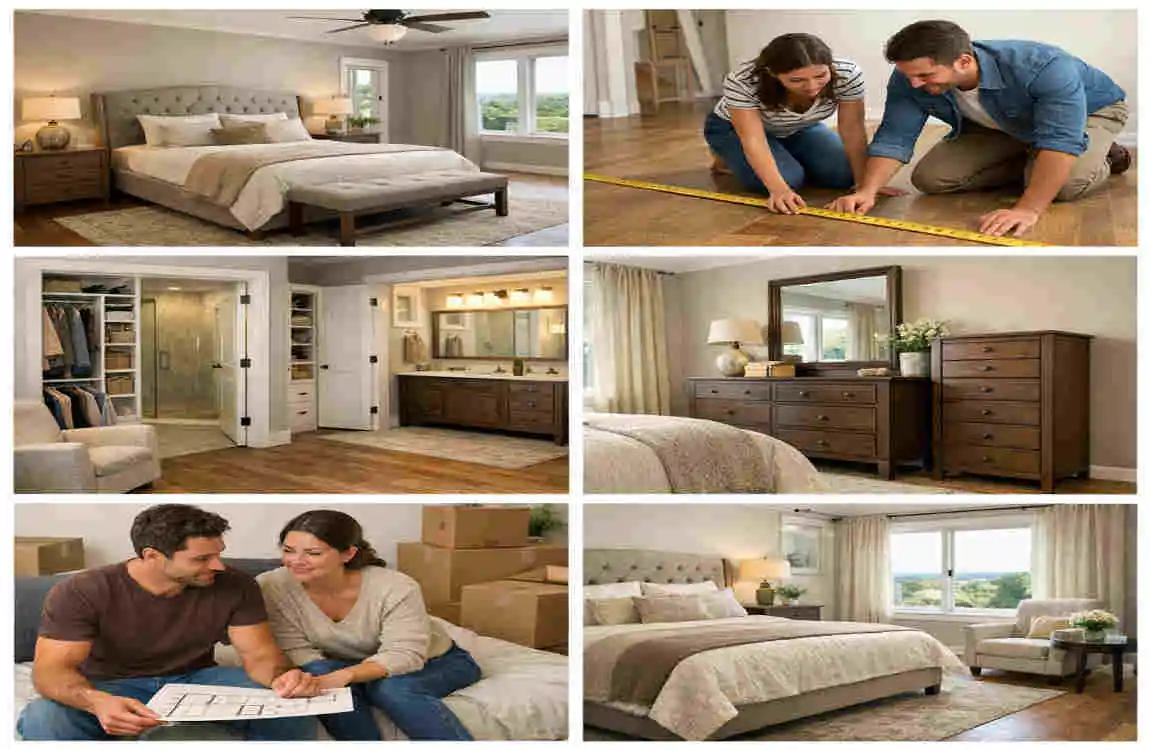
Keep these simple points in mind:
- Start with your bed size
- Measure all major furniture
- Leave enough walking space
- Think about closet and bathroom access
- Plan for natural light
- Balance bedroom space with the rest of the home
These choices help you find a room that feels comfortable and works well every day.
FAQ: How Big Are Master Bedrooms?
What is the average size of a main bedroom?
A common range is about 150–250 square feet, though sizes vary by home type.
Is a 12 × 12 bedroom big enough for a main bedroom?
It can work, especially with smart furniture choices, but it may feel tight with a king bed.
Is a 12 × 14 bedroom a good size?
Yes, this is often a practical size for a smaller main bedroom.
Is a 14 × 16 bedroom considered large?
Yes, many people would consider it a comfortable and flexible main bedroom size.
How big should a main bedroom be for a king bed?
You need enough room not just for the bed, but also for clear walking paths and other furniture.
How big should a main bedroom be for a queen bed?
A queen bed usually fits more easily in smaller master bedrooms and gives you more layout flexibility.
What is a good size for a couple’s main bedroom?
It depends on the bed, storage needs, and lifestyle, but many couples do well with a medium-sized room.
Can a main bedroom be too big?
Yes. A bedroom that is too large can feel empty or less cozy if it is not planned well.
| Master Bedroom Type | Typical Size | Best For |
|---|---|---|
| Small Master Bedroom | 12 × 12 ft | Compact homes |
| Average Master Bedroom | 14 × 16 ft | Most family homes |
| Large Master Bedroom | 16 × 20 ft | Spacious layouts |
| Luxury Master Bedroom | 20 × 20+ ft | High-end homes |
| Comfortable Minimum | About 12 × 12 ft | Bed, storage, and basic furniture |
