
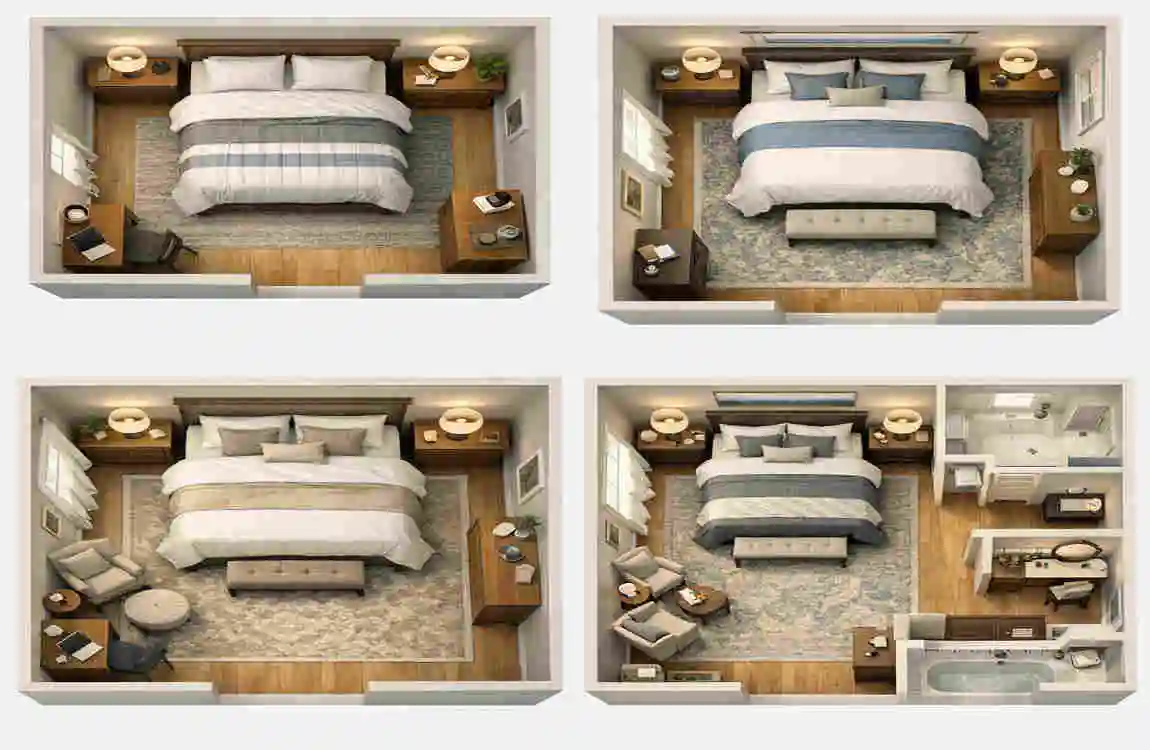
If you have ever looked at a floor plan and wondered what an average-sized bedroom is, you are not alone. It is one of the most common questions buyers, homeowners, renters, and renovators ask when planning a home. Bedroom size matters more than many people think. It affects comfort, furniture placement, storage, privacy, and even resale value.
In simple terms, the average bedroom in many modern homes usually falls between 10×10 feet and 12×12 feet. That means a standard bedroom often gives you about 100 to 144 square feet of space. A larger primary or main bedroom is usually much bigger, often ranging from 200 to 400 square feet, depending on the style of the house.
But bedroom sizes vary from place to place.
A small city home may have more compact bedrooms. A suburban family house may offer a more spacious layout. A luxury property may include a large main suite with a sitting area, walk-in closet, and attached bath. Even local building rules can shape what counts as a legal bedroom.
Understanding Bedroom Sizes
Before we answer what an average-sized bedroom is, it helps to understand what the word average really means in home design.
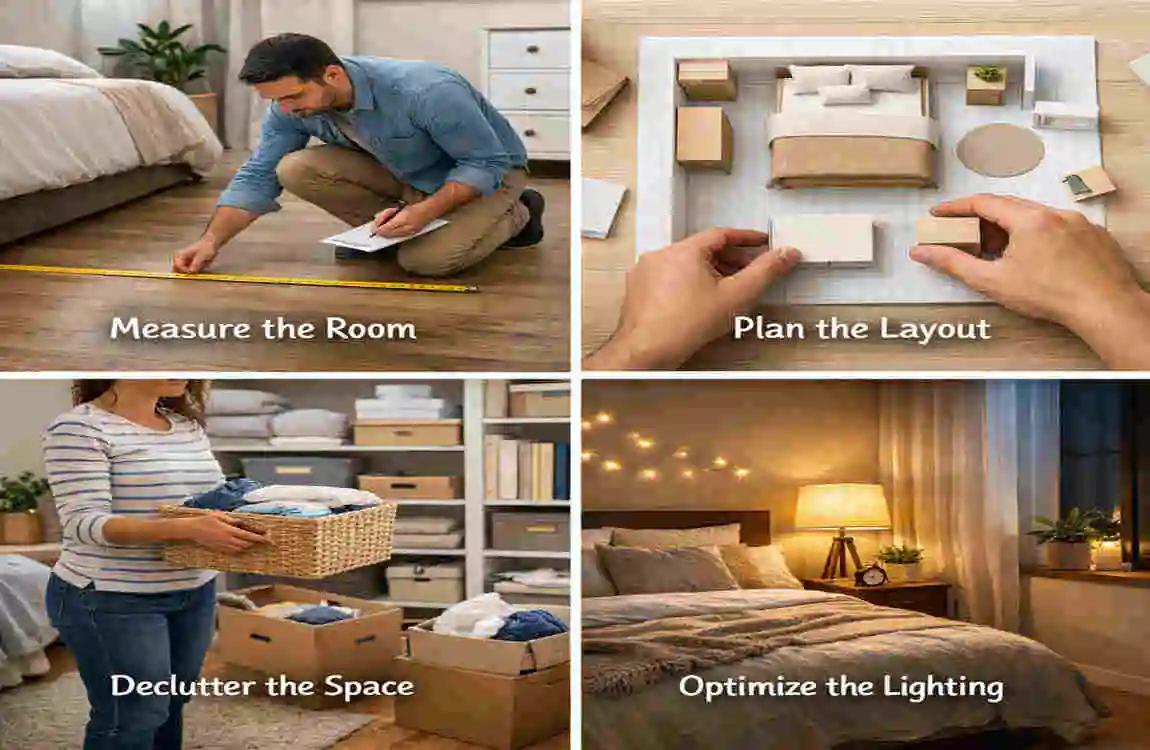
An average bedroom is not one exact number. Instead, it is a common size range seen across many homes. In the United States, a standard secondary bedroom often measures around 11×12 feet, though many fall between 10×10 and 12×12 feet. That gives enough room for a bed, a nightstand, and a dresser without making the room feel too crowded.
In many parts of the world, the average can be smaller. Dense urban areas usually have compact house floor plans, while larger suburban homes often allow more space for bedrooms. So when people ask what an average-size bedroom is, the right answer is usually a range, not a single measurement.
Standard vs. Master Bedroom Breakdown
The easiest way to understand bedroom sizing is to compare standard bedrooms with master or primary bedrooms.
Bedroom Type Common Dimensions (ft)Approx. Sq Ft Common in Houses
Standard Bedroom 10×10 to 12×12 100 to 144 3-4 bedroom homes
Larger Standard Bedroom 11×13 to 12×14 143 to 168 Newer family homes
Master/Primary Bedroom 14×16 to 20×20 224 to 400 4+ bedroom and luxury homes
Compact Urban Bedroom 9×10 to 10×10 90 to 100 Apartments and smaller houses
This table gives you a strong starting point. Most people will find that a normal secondary bedroom sits in the 100 to 144 square foot range. A main bedroom usually starts at a much higher price.
What Shapes Bedroom Size?
Several factors influence bedroom dimensions.
First, there are building codes. In the U.S., a legal bedroom usually needs at least 70 square feet, and no horizontal dimension should be less than 7 feet. That means a tiny box room may not legally count as a bedroom, even if it fits a bed.
Second, there is location. Homes in major cities tend to make smarter use of smaller footprints. Homes in suburban or rural areas often have larger bedrooms because land is less constrained.
Third, there is the age of the home. Older houses often have smaller rooms. Newer homes, especially those built for families, often include larger bedrooms and bigger closets.
Finally, buyer expectations matter. Today, people want bedrooms to do more than hold a bed. Many also want room for a desk, storage, a reading chair, or a workout corner. That demand has changed how house floor plans are designed.
So if you are still asking what an average-sized bedroom is, the short answer is this: most standard bedrooms are around 120 square feet. In contrast, larger primary bedrooms can be much bigger.
Standard Bedroom Dimensions
When most people ask what an average-sized bedroom is, they are usually talking about a standard bedroom, not the main suite.
A standard bedroom is the kind you often find in children’s rooms, guest rooms, or secondary bedrooms in a family home. These rooms are made to be practical. They need to fit basic furniture, allow easy movement, and meet code requirements.
What is an average-sized bedroom?
The clearest answer is this: a standard average bedroom is usually around 10×12 feet, or about 120 square feet.
This size works well in many suburban homes because it provides enough space for:
- A queen bed or full bed
- One or two nightstands
- A dresser
- Basic walking space around the furniture
That is why 10×12 feet is often seen as the “sweet spot” for a standard bedroom. It is large enough to feel useful without taking up too much floor space.
Rooms measuring 10×10 feet are also common. They are a little tighter, but they still work well as children’s rooms, guest rooms, or compact secondary bedrooms. On the other hand, rooms closer to 12×12 feet feel more open and flexible.
In practical terms, if you are comparing house floor plans, a bedroom around 120 square feet is very typical.
How Standard Bedroom Sizes Changed Over Time
Bedroom sizes have changed over the decades.
In older homes built in the 1940s and 1950s, bedrooms were often smaller. A room of 80 to 100 square feet was not unusual. Families used bedrooms mostly for sleeping and dressing, so large footprints were less common.
As homes became bigger, bedroom expectations changed. In the 1980s, 1990s, and 2000s, standard bedroom dimensions began to grow. Builders started offering slightly larger rooms to fit bigger beds, more furniture, and changing lifestyles.
Today, bedrooms are often expected to do more. People use them for:
- Working from home
- Studying
- Relaxing
- Watching TV
- Extra storage
Because of that, newer house floor plans may push standard bedrooms closer to 11×12, 11×13, or 12×12 feet.
Regional Differences in Standard Bedroom Dimensions
Not every region treats space the same way.
In the U.S., average bedroom sizes tend to be larger than in many parts of Europe and Asia. It is common to see compact bedrooms around 9×10 feet in older city apartments or smaller international homes.
Urban living pushes designers to use every foot wisely. That often means built-in wardrobes, multi-purpose furniture, and tighter layouts.
In suburban North America, where homes are often larger, bedrooms usually have more breathing room. Buyers often expect enough space for a queen bed and multiple storage pieces.
So the answer to what is an average-sized bedroom depends a little on geography. Still, 100 to 144 square feet remains a strict general rule for standard bedrooms.
Furniture Fit Guide
A bedroom may sound large on paper, but what matters most is how well the furniture fits.
Here is a quick look at common bedroom furniture sizes:
- Queen bed: about 60×80 inches
- King bed: about 76×80 inches
- Twin bed: about 38×75 inches
- Nightstand: about 18 to 24 inches wide
- Dresser: often 18 to 24 inches deep
A room should not only fit the furniture; it should also fit the people. It should also allow you to move around easily.
A simple rule is to leave 2 to 3 feet of walkway space around major furniture pieces wherever possible. This makes the room feel more comfortable and less cramped.
For example, if you place a queen bed in a 10×10 bedroom, it can fit, but the room may feel tight if you also add a wide dresser. In a 10×12 room, the layout usually feels easier to manage.
A Practical Space Formula
You can use this simple idea when planning your room:
Bed size + furniture depth + walkway clearance = comfortable room size
So if your bed is about 6.5 feet long and your dresser is another 2 feet deep, you still need walking space. That is why small room planning matters so much.
A useful design tip is to keep doorways at least 36 inches wide when possible for better movement and accessibility. This matters even more if you are renovating or thinking long term.
Master Bedroom Dimensions
A main bedroom, now often called a primary bedroom, is larger and more private than a standard bedroom. It is usually the main sleeping room in the house and often connects to an ensuite bathroom or walk-in closet.
If standard rooms answer the question of what is an average-size bedroom for general use, then main bedroom sizes answer what homeowners expect from comfort and value.
Ideal Master Suite Sizes
The average master or primary bedroom is often around 15×20 feet, which gives you about 300 square feet.
That amount of space usually allows room for:
- A king-size bed
- Two larger nightstands
- A dresser or chest
- Extra walking room
- A small sitting area or bench
- Better separation between sleeping and dressing space
Many master bedrooms fall between 14×16 feet and 16×18 feet. In larger homes, they may stretch to 18×20 feet or more.
Once you move into luxury homes, the primary suite can feel like a private apartment. These spaces may include:
- A seating area
- Fireplace wall
- Dual walk-in closets
- Attached spa-style bathroom
- Home office corner
That is why the luxury main suite can reach 400 square feet or more.
Why Primary Bedrooms Are Larger
The main bedroom is usually designed for adults who need more than just a place to sleep.
Homeowners want the room to feel like a retreat. They often expect privacy, room to unwind, and space for larger furniture. That is very different from a guest room or a child’s room, where the needs are simpler.
A large main suite also supports daily routines better. You can move around comfortably, make the bed more easily, and avoid the cluttered feeling that comes from squeezing too much into one room.
Master vs. Standard Bedroom Comparison
Here is a side-by-side comparison of the differences.
FeatureStandard BedroomMaster/Primary Bedroom
Typical Size 100 to 144 sq ft 224 to 400 sq ft
Common Dimensions 10×10 to 12×12 ft 14×16 to 20×20 ft
Bed Size Usually Used: Full or Queen, Queen or King
Storage: Basic closet, Walk-in closet, often included
Bathroom Access Shared bath common Ensuite bath common
Extra Uses: Guest room, kid’s room, office, sitting area, dressing zone, retreat
This table makes the difference very clear. A standard bedroom is functional. A main bedroom is designed for space, comfort, and lifestyle.
Adding Value to Houses
A larger, well-designed primary bedroom can enhance resale appeal.
Many buyers look closely at the main suite before making a decision. If the room feels cramped, outdated, or poorly planned, it can affect the rest of the house. On the other hand, a spacious main bedroom with good light and storage often creates a strong first impression.
In some markets, a larger, more comfortable primary suite can boost resale value by 5% to 10%, especially when paired with a walk-in closet and a private bathroom.
That value usually comes from livability. Buyers love homes that feel easy to live in. A big main bedroom supports that feeling.
Design Ideas That Make a Main Bedroom Feel Better
Size alone is not everything. Layout matters too.
A few features can make a primary bedroom much more useful:
- Walk-in closets of about 50 square feet or more
- Bay windows or larger windows for natural light
- A small reading nook
- Space for a bench at the end of the bed
- Better wall placement for dressers and TV units
If you are planning a renovation, it is usually smarter to improve both size and function together.
Bedroom Sizes by House Type
One of the best ways to answer what is an average-sized bedroom is to look at the type of house. Bedroom size often corresponds to the home’s total square footage.
A small house cannot offer the same room dimensions as a large real estate. Builders have to balance living room space, kitchen size, bathrooms, hallways, and storage.
Small Houses Under 1,500 Square Feet
In smaller homes, bedrooms are often more compact. A common average is around 9×11 feet or 10×10 feet.
These rooms usually focus on the basics:
- Bed
- Small side table
- Closet
- Limited extra furniture
That does not mean they are bad rooms. A compact bedroom can feel cozy and practical when the layout is smart. It means you need to plan furniture more carefully.
Smaller homes often use space-saving tricks like:
- Sliding closet doors
- Under-bed storage
- Narrow dressers
- Wall-mounted shelves
Mid-Size Family Homes
In many mid-size homes, standard bedrooms usually average about 11×13 feet. This is a comfortable size for children, teens, or guests.
These rooms often provide a better balance between sleeping space and storage. A queen bed fits more naturally, and the room may still have space for a desk or reading chair.
This size range is especially common in 3-bedroom and 4-bedroom family homes. If someone asks what an average-sized bedroom in a 3-bedroom house is, this is often the most realistic category.
Luxury Estates and Large Homes
Luxury homes usually offer more generously proportioned rooms.
A standard secondary bedroom in a large house may already be the size of a small primary bedroom in a modest home. Primary suites in these homes often start around 18×20 feet and can go much larger.
This extra space allows for features like:
- Sitting lounges
- Bigger window walls
- Attached dressing rooms
- Separate sleeping and relaxation zones
In these homes, the size of the bedrooms is often part of the luxury appeal.
Specific Bedroom Sizes
Bedroom sizes in Pakistan can vary widely depending on city, plot size, and home style.
In denser urban areas, such as row houses or compact homes in Lahore, smaller room sizes are common. Bedrooms around 8×10 feet or 10×10 feet are often seen, especially where plot sizes are limited.
Larger independent houses may offer more generous rooms, but practical space planning still matters because many families prefer extra common space for gathering, dining, or guest use.
This is a great reminder that the answer to what is an average-sized bedroom depends heavily on local housing patterns. In many Pakistani homes, the average size may be smaller than in suburban U.S. homes, but that does not reduce functionality when the space is well planned.
Building Codes and Legal Minimums
Bedroom size is not just about comfort. It is also about legal standards.
If you are building, remodeling, or trying to list a room as a bedroom, you need to understand the minimum code requirements.
U.S. Minimum Bedroom Size Rules
Under common U.S. residential standards, a bedroom generally must have:
- At least 70 square feet of floor area
- At least 7 feet in one horizontal direction
- Proper ceiling height
- Safe access and exit
This means a very narrow room may not qualify, even if its total square footage seems enough.
A room smaller than these limits may still be useful as an office, nursery, or storage room, but it may not legally count as a bedroom.
For reference, many local jurisdictions base their rules on versions of the International Residential Code (IRC). You can review code information through resources like.
Egress Windows and Safety
A legal bedroom also usually needs an egress window. This is a window large enough to provide an emergency escape route.
A common standard is an opening of at least 5.7 square feet, though exact rules can vary by floor level and local code.
This requirement matters for safety. A bedroom should always have a way out in case of fire or emergency.
Renovations and Expansions
If you want to enlarge a bedroom, you may need permits.
This is especially true if your project includes:
- Moving walls
- Changing windows
- Altering structure
- Expanding into a garage or attic
- Updating electrical or HVAC systems
Always check with your local authority before starting work. If you are in Pakistan, it is smart to review your city’s building rules or development authority guidelines before planning an addition.
Bedroom Design
Bedroom design keeps changing because the way people live keeps changing too. Looking ahead to 2026, several strong trends are shaping how bedrooms are sized and used.
Multi-Functional Bedrooms
Bedrooms are no longer only for sleeping.
Many homeowners now use them as part-time offices, study zones, reading spaces, or wellness rooms. Because of that, a room around 12×14 feet is becoming more attractive than a tighter 10×10 layout.
People want a room that can hold a bed and still leave enough space for a desk or a lounge chair. This is especially true in homes where every room needs to work harder.
Flexible and Sustainable Layouts
Sustainability is also influencing house floor plans.
Designers are using flexible layouts that can change over time. For example, a bedroom may include modular storage, movable dividers, or built-in furniture that makes a modest room feel more useful.
Instead of always building much bigger rooms, some homeowners are choosing a smarter design. That means the future of the average bedroom may be shaped by efficiency as much as size.
Smart Home Integration
Technology is becoming part of bedroom design, too.
Smart lighting, hidden charging stations, automated shades, and climate controls are being added without taking up much floor space. This helps rooms feel modern without shrinking usable space.
In fact, smart design can make a smaller bedroom feel better than a larger but poorly planned one.
Will Bedroom Sizes Keep Growing?
There is a good chance average bedroom expectations will continue to rise slightly, especially in homes built for remote work and flexible living. Some market watchers expect average room sizes in newer homes to trend upward after the lifestyle changes of recent years.
People want more comfort at home. That often translates into slightly bigger bedrooms or better layouts.
How to Measure and Optimize Your Bedroom
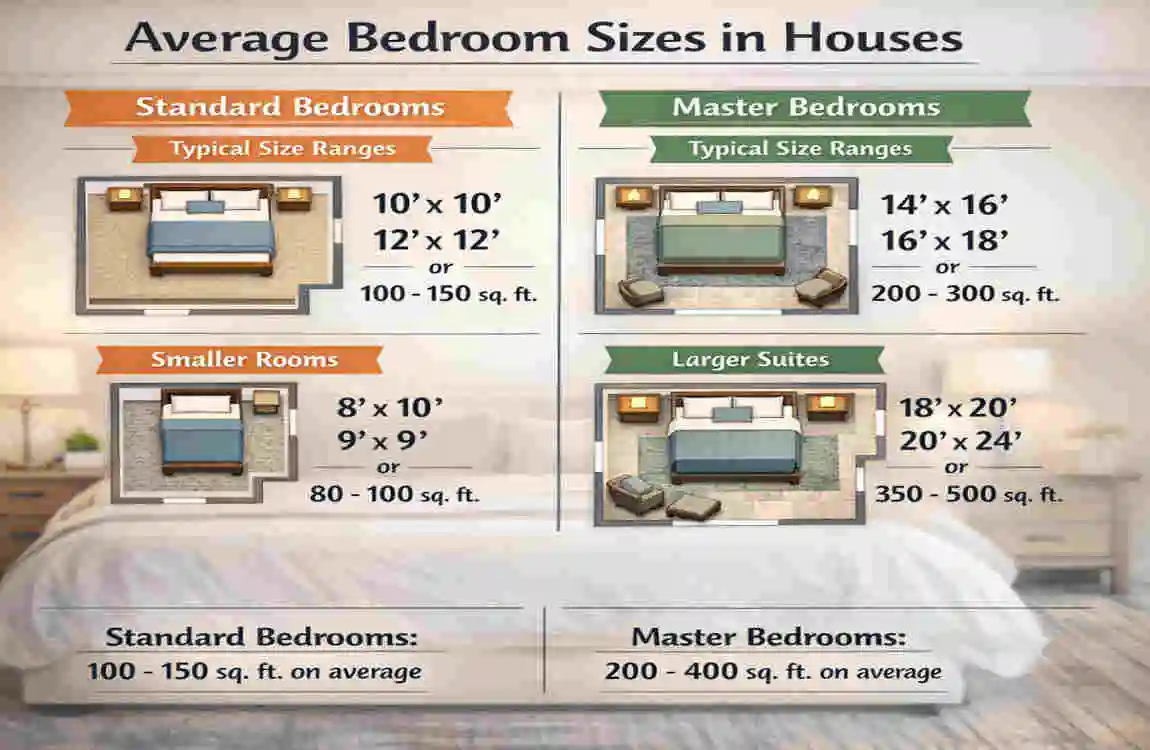
If you want to compare your room to the average, the first step is easy: measure it correctly.
Step-by-Step: How to Measure a Bedroom
Use a tape measure and follow these steps:
- Measure the length of the room in feet.
- Measure the width of the room in feet.
- Multiply the two numbers.
So if your room is 10 feet by 12 feet, the total is:
10 x 12 = 120 square feet
That tells you where your bedroom falls within standard bedroom dimensions.
Easy Ways to Make a Bedroom Feel Bigger
Even if your room is below average, you can improve how it feels.
Try these simple ideas:
- Use mirrors to reflect light
- Choose vertical storage
- Avoid oversized furniture
- Let in as much natural light as possible
- Use lighter colors on walls and bedding
- Keep floor space clear
A small room does not always need a costly renovation. Sometimes smart layout choices create the biggest improvement.
Common Mistakes
When thinking about what an average-sized bedroom is, many people focus only on square footage. That is helpful, but it is not the whole story.
Common Bedroom Planning Mistakes
A room can meet the size standard and still feel uncomfortable if the layout is poor.
Some common mistakes include:
- Ignoring HVAC vents
- Blocking windows with furniture
- Forgetting outlet placement
- Choosing a bed that is too large for the room
- Overlooking closet swing or door clearance
- Not planning for natural light
These details affect daily comfort more than people expect.
FAQ: What People Usually Ask
What is an average-sized bedroom?
A standard average bedroom is usually around 120 square feet, often measuring 10×12 feet. Many standard bedrooms range from 100 to 144 square feet.
What is the average size of a bedroom in a 3-bedroom house?
In a typical 3-bedroom family home, secondary bedrooms often measure around 10×11, 10×12, or 11×13 feet. The primary bedroom is usually larger.
Can I make my bedroom bigger?
Yes, but it depends on your house’s layout and structure. You can remove or move a wall, combine rooms, or extend into unused space. In most cases, you should check permits and building rules first.
What is the best bedroom size for a king bed?
A room of at least 12×12 feet is usually a more comfortable minimum for a king bed, though 12×14 feet or larger feels much better.
Is a 10×10 bedroom too small?
Not necessarily. A 10×10 bedroom can work well for a child, a guest, or a compact setup. It may feel tight with a queen bed and lots of furniture, but it is still a common and usable size.
What size should a main bedroom be?
A good average primary bedroom is around 14×16 to 15×20 feet. Larger homes may offer much more space.
