
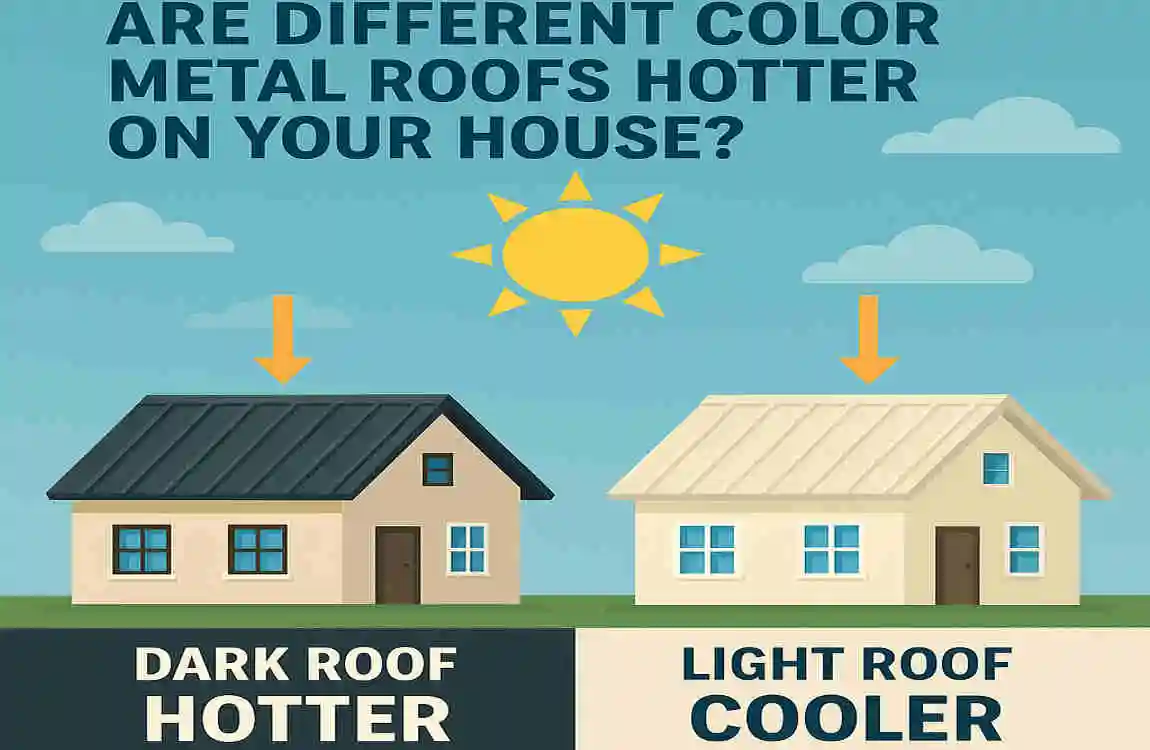
Have you ever stood under a scorching sun and wondered if the color of your metal roof could be turning your home into an oven? It’s a question many homeowners ask when choosing between dark shades like black or charcoal and lighter ones like white or beige. You’re not alone in this—plenty of people worry that a dark metal roof might make their house feel like a sauna during summer. But is that really the case?
The Science of Heat Absorption
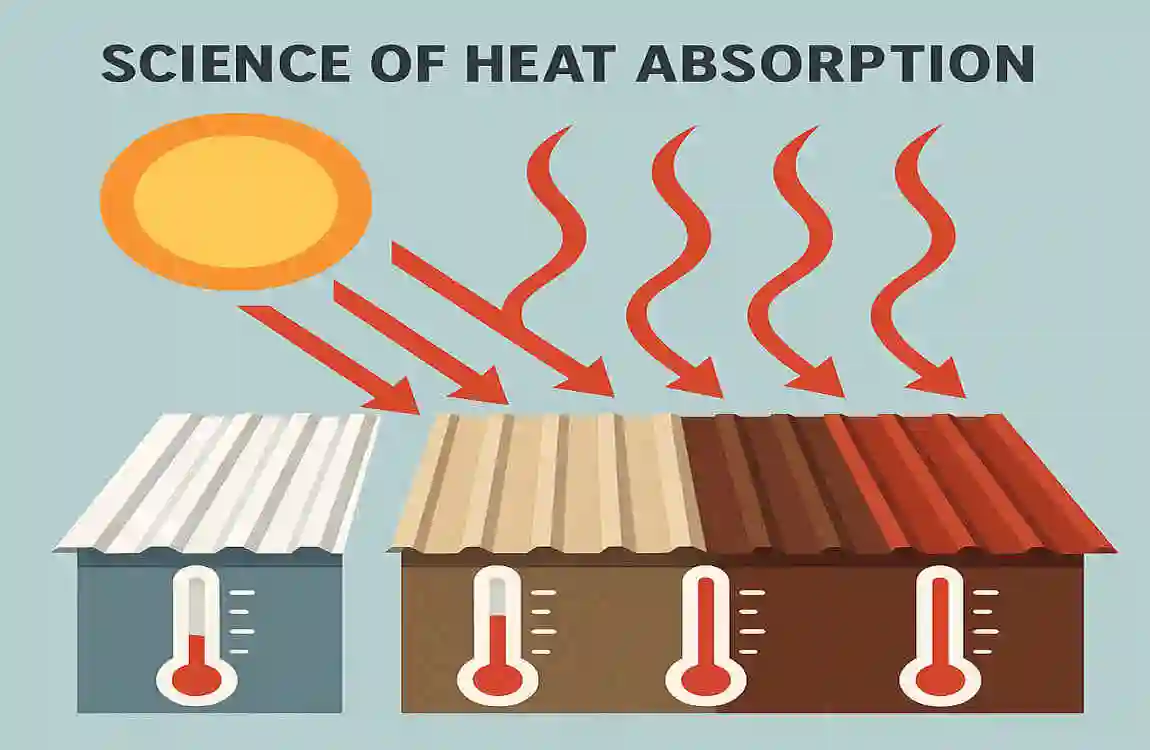
Understanding how color influences your metal roof’s temperature starts with some basic science. But don’t worry—I’ll keep it simple and break it down into bite-sized pieces. Think of your roof as a giant sponge for sunlight. The color determines how much of that sunlight it absorbs or reflects.
How Color Affects Roof Temperature
Colors play a significant role in something called solar absorptance. This is basically how much sunlight a surface takes in as heat. Dark colors, like black or deep gray, have a high solar absorptance—around 0.7 to 0.9. That means they absorb 70% to 90% of the sun’s rays. Picture a black car parked in the sun; it gets piping hot fast. The same happens with dark metal roofs.
On the flip side, light colors such as white or beige have a low solar absorptance, often between 0.2 and 0.4. They reflect 60% to 80% of sunlight away. This keeps the roof cooler. In fact, on a sunny day, a black metal roof can reach surface temperatures of 140 to 180 degrees Fahrenheit. That’s hot enough to fry an egg! But a white one might stay 80 to 120 degrees cooler, dropping that down by about 50 degrees.
Now, you might be thinking, “Does this mean my attic turns into a furnace?” Not necessarily. There’s a difference between radiant heat—the warmth that bounces around—and conduction, which is heat moving through materials. Metal roofs are excellent at conducting heat but shed it quickly once the sun goes down. This rapid cooling helps balance things out.
Let me ask you: Have you ever touched a metal surface at night? It’s often cooler than you’d expect. That’s because metal doesn’t retain heat as well as other materials do. So, while dark colors absorb more during the day, the metal’s properties help release it fast.
Metal vs. Other Roofing Materials
Metal roofs have some unique advantages over traditional options like asphalt shingles. For starters, even a dark metal roof reflects about 70% more sunlight than dark asphalt. Asphalt traps heat like a thick blanket, but metal lets it go.
Here are a few key benefits in a simple list to make it easy to follow:
- High emissivity: This means metal roofs release stored heat quickly, especially at night. It’s like the roof “exhales” the warmth.
- Cool roof coatings: These special paints or finishes increase the amount of heat the roof reflects, even for dark colors.
- Ventilation and insulation: Proper setup under the roof blocks heat from entering your home, no matter the color.
Compared to shingles, metal is more efficient overall. Shingles might crack or warp from heat buildup, but metal stands up to it. If you’re in a hot area, this could mean lower repair costs over time. Think about your own roof—does it feel like it’s working against you in summer? Metal could change that.
We’ll build on this science in the next section with a direct comparison. But first, remember: color is just one piece of the puzzle. Installation and add-ons make a huge difference.
Dark vs. Light: Heat Comparison
To really see how dark and light metal roofs stack up, let’s look at the numbers side by side. I’ve put together a straightforward table that compares key aspects. This visual will help you quickly grasp the differences without wading through walls of text.
AspectDark Metal Roofs (e.g., Black, Charcoal)Light Metal Roofs (e.g., White, Beige)
Solar Absorptance (SA) High (0.7+): Absorbs more heat. Low (0.3-): Reflects 70%+ sunlight.
Peak Surface Temp 140-180°F 90-130°F (20-50°F cooler)
Indoor Impact Minimal with coatings; +2-5°F attic Lowest heat gain; saves 10-20% AC
Best For Colder climates, aesthetics, hot climates, and energy efficiency
Energy Cost Effect Neutral-long term (durable) Reduces bills $200-500/year
Looking at this table, you can see that light roofs generally do a better job of keeping things cool. They reflect more sunlight, lowering surface temperatures and reducing heat infiltration into your home. Imagine saving 10% to 20% on your air conditioning bills—that’s real money back in your pocket.
But dark roofs aren’t all bad. In colder climates, that extra heat absorption can actually help warm your home naturally during winter. Plus, with modern coatings, the indoor impact is often minimal—just a 2 to 5-degree rise in attic temperature. It’s not like your living room suddenly becomes unbearable.
Take a moment to consider your location. If you’re in a sunny, hot spot, light colors might be your best bet for energy efficiency. But if style is king and you love that bold, dark look, don’t worry—advances in technology can make it work without turning your house into a heat trap.
We analyzed data from various studies, and it shows that while light roofs edge out in pure heat reflection, dark ones offer excellent durability. They last longer and can look sleek for decades. Coatings can even equalize the performance, making dark roofs reflect heat almost as well as light ones without losing their color.
What does this mean for you? It depends on your priorities. If cutting energy costs is top of mind, go light. For a mix of style and function, coated dark roofs are a smart middle ground. Let’s debunk some myths that might be clouding your judgment.
Myths and Realities About Metal Roof Colors
Plenty of homeowners get hung up on old wives’ tales about roof colors. You might have heard that dark roofs always overheat your home, or that light ones fade away in no time. Let’s clear the air with some straight facts. I’ll bust these myths one by one, using real insights to set the record straight.
First off, myth: Dark roofs always make your home hotter inside. Reality check: With sound insulation and airflow, the heat stays on the surface. Modern metal roofs don’t transfer much warmth indoors. Studies show that proper ventilation can keep your attic comfortable, even with a black roof.
Another big one: Myth: Color is the only thing that matters for heat. Not true at all. Things like special pigments, protective coatings, and the roof’s slope play a bigger role. A well-designed dark roof with reflective tech can outperform a basic light one.
Then there’s the myth: Light roofs fade quickly and look dingy. Actually, high-quality paints like Kynar last 40 years or more without much fading. They stand up to sun, rain, and dirt better than you might think.
To drive this home, consider stats from energy studies. The Department of Energy found that “cool” white roofs can reduce cooling needs by up to 15% in hot areas. But dark roofs with infrared-reflective coatings achieve similar results. I’ve seen case studies of homeowners in sunny regions switching to coated dark roofs and barely noticing a difference in indoor temps.
Don’t let these myths steer you wrong. Talk to a pro and get the complete picture for your specific setup. Up next, we’ll explore factors beyond just color that can make or break your roof’s performance.
Factors Beyond Color That Influence Heat
Color gets all the attention, but it’s not the whole story. Many other elements affect how hot your metal roof gets and how much of that heat impacts your home. Let’s break this down into key areas so that you can see the bigger picture.
Coatings and Technology
Start with coatings—these are like superheroes for your roof. Cool roof pigments increase something called the Solar Reflectance Index (SRI), even for dark colors. This means a black roof can reflect heat almost as well as a white one, without looking washed out.
Infrared reflective technology is another game-changer. It lets dark colors bounce back invisible heat waves from the sun. You get the bold look you want, plus better efficiency. If you’re eyeing a dark roof, ask about these options—they can make a huge difference.
Climate and Installation
Your local weather matters a lot. In hot places with intense summers, light colors or high-SRI dark ones are ideal. Aim for an SRI over 0.65 to keep things cool. Ventilation is key too—think soffits and ridge vents that let hot air escape, cutting attic heat by up to 30%.
Insulation under the roof is your best friend. Go for at least an R-30 rating to block heat transfer. Proper installation ensures no gaps where warmth can sneak in. Imagine your roof as a shield; a good setup makes it impenetrable.
Aesthetics and Durability
Beyond function, there’s style. Dark roofs hide dirt well and give your home a bold, modern vibe. They can boost curb appeal in neighborhoods where looks count. Light roofs offer a clean, contemporary feel but might need annual cleaning to stay bright.
Both types are durable—metal lasts 2 to 3 times longer than asphalt. That means fewer replacements and less hassle. Weigh what matters most: Do you want eye-catching style or low-maintenance efficiency? Mixing in tech like coatings lets you have both.
Recommendations for Homeowners
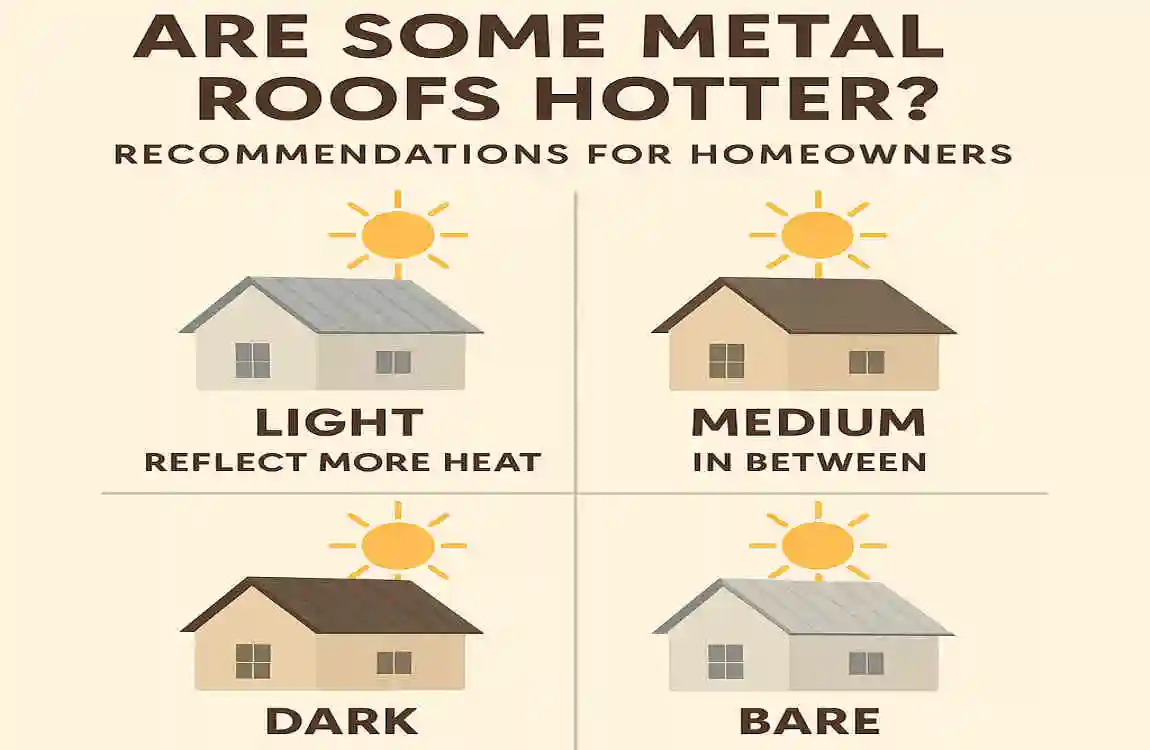
Choosing the right metal roof color doesn’t have to be overwhelming. Based on what we’ve covered, here are some tailored tips to help you decide. Remember, your climate, budget, and style preferences should guide you.
For hot climates, go with light colors like white or beige. They reflect the most sunlight and can cut your cooling costs by 10% to 15%. If you love dark shades, opt for ones with cool coatings—they’re SRI-certified and perform nearly as well.
Calculate potential savings: A light roof saves you $200 to $500 on your yearly energy bills. That’s like free money! Popular picks include Gallery Blue for a balanced look or Ash Gray as a superb dark option.
